Launching Hardware: Where to Post and What to Answer
7 min read
The short answer
Hardware stands out on software-dominated launch boards, so the visibility is easier than you would expect. What is harder is credibility: publish real specifications, say plainly where you are in manufacturing, and answer shipping, certification and repairability before anyone asks. Maker communities and specialist forums produce better feedback than general boards.
Almost everything on a launch board is software, which means a physical product gets noticed simply by being different. That is a real advantage and it comes with a matching disadvantage: the questions are harder, and vagueness that passes unnoticed on a software launch gets caught immediately here.
Say where you actually are
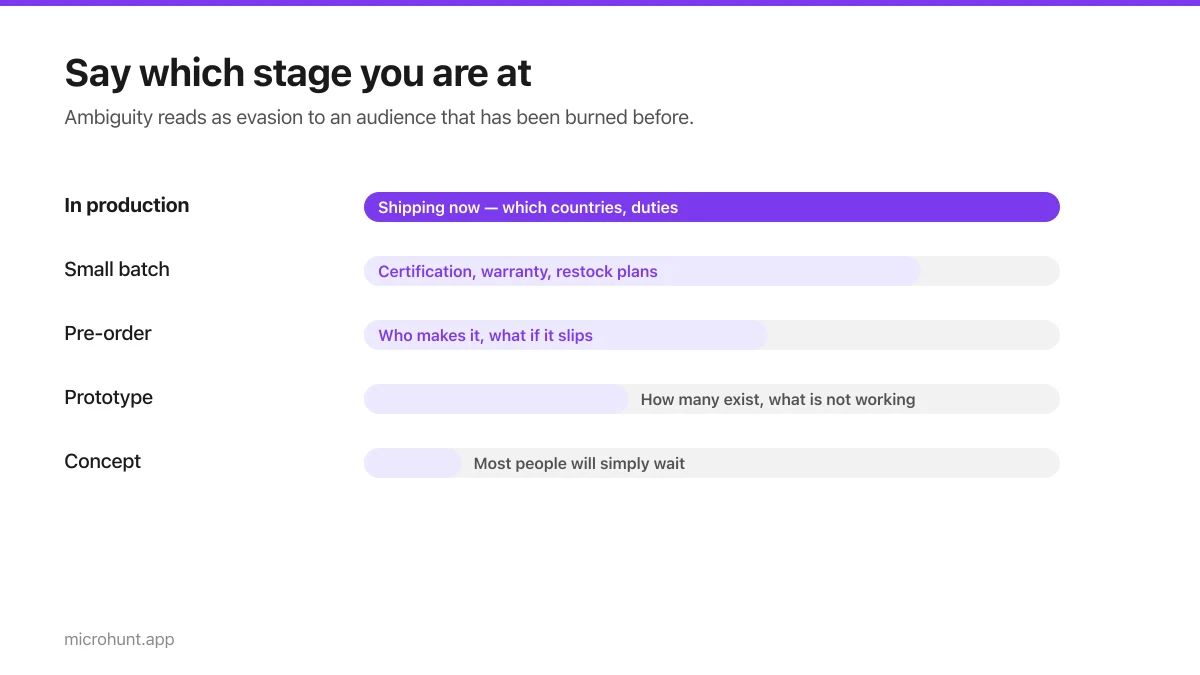
The first thing a hardware-literate reader wants to know is what stage you are at, because it changes what every other claim means. Ambiguity here reads as evasion, and this audience has watched a lot of projects fail between prototype and delivery.
| Stage | What to say | What people will ask |
|---|---|---|
| Concept | "Design stage, no working unit yet" | Almost nothing — most will wait |
| Prototype | "Working prototype, hand-assembled" | How many exist, what is not working |
| Pre-order | "Manufacturing starts in March" | Who is making it, what happens if it slips |
| Small batch | "40 units, shipping in two weeks" | Certification, warranty, restock plans |
| In production | "Shipping now from stock" | Which countries, duties, support |
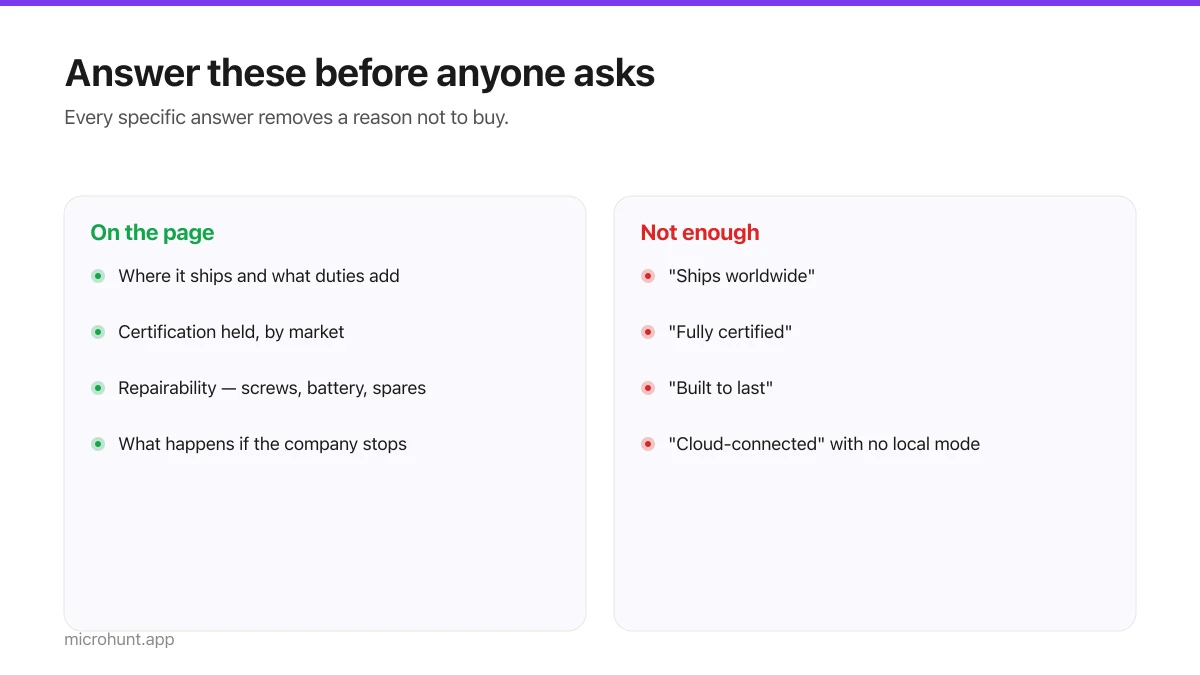
The questions to answer on the page
- **Where does it ship, and what will duties add?** An advertised price that becomes 30% higher at customs generates the angriest support emails you will get.
- **What certification does it hold?** Radio hardware in particular is restricted by market, and buyers in regulated regions will check.
- **Can it be repaired?** Standard screws, replaceable battery, available spares, published disassembly. This audience cares more than most.
- **What happens if the company stops?** Local control, open protocols and published firmware are the difference between a device and a brick.
- **What is the warranty, and who honours it across borders?** Frequently the difference between a good and a miserable ownership experience.
Where to post
| Where | What you get |
|---|---|
| Maker and electronics communities | Knowledgeable feedback, hard questions, genuine interest |
| Specialist forums for your niche | The people who will actually buy |
| Launch boards | Novelty value against a wall of software, plus a permanent page |
| Hacker News | Scrutiny of the engineering, especially if open |
| Vuru | Hardware category browsers and a durable listing |
Photographs do the persuading, specifications do the deciding
Both matter and they do different jobs. Good photographs of the actual unit — not a render — get people to look. A specifications table gets them to commit. Publish dimensions, weight, materials, power draw, connectors, tolerances, and measured performance rather than theoretical maximums, because someone will find the gap.
Show the unit in a hand or on a desk for scale. Renders are fine for illustrating a concept and read as unfinished for anything claiming to be real.
The general preparation applies as it does anywhere — the seven-day checklist covers it — with an extra day for the specifications table, which is the part this audience reads first.
Frequently asked questions
- Where should I launch a hardware product?
- Maker and electronics communities and the specialist forum for your niche produce the best feedback and the most likely buyers. Launch boards add visibility and a permanent page, and hardware stands out there precisely because almost everything else is software.
- Should I launch hardware before it ships?
- You can, provided you say exactly what stage you are at. Pre-order launches work when the manufacturing plan and timeline are stated plainly; they go badly when the page implies a product is ready and it is not.
- What do hardware buyers check that software buyers do not?
- Shipping destinations and duties, certification for their market, repairability, warranty across borders, and what happens to the device if the company shuts down.
- Are renders acceptable in a hardware listing?
- For a concept, yes. For anything claiming to be real, photographs of the actual unit are much stronger — renders read as unfinished, and this audience notices immediately.
Keep reading
Best Product Hunt Alternatives for Launching in 2026
Where else to launch when Product Hunt is not the right fit — what each platform is actually good at, who shows up, and what it costs.
Product Screenshots and Demo Videos That Do the Selling
Your first screenshot is your social preview and often the only thing a visitor looks at. Here is how to make it earn that.
The Seven-Day Launch Checklist
A day-by-day plan for the week before you launch, weighted towards the things that actually change the outcome.