Hardware
Devices, wearables, peripherals and physical products.
Nothing launched in this category yet.
Be the firstAbout Hardware
Hardware launches are the rarest thing on a software board and the most demanding to get right. A bug ships in a box, a redesign takes months rather than an afternoon, and the gap between a working prototype and a manufactured product is where most projects quietly end. The launches collected here have crossed at least part of that gap, which is worth acknowledging before anything else.
What appears in this category spans desk peripherals and input devices, measurement and test equipment, wearables and sensors, single board computers and the accessories around them, audio hardware, and the growing set of small devices that exist mainly to run a model locally. Some are manufactured at scale. Many are small runs, assembled by one or two people, sold in batches that sell out.
The most important question about any hardware launch is what happens when the company stops. Software degrades gracefully — an abandoned app usually keeps working. Hardware that depends on a hosted service becomes a brick when the service is switched off, and this has happened often enough that it should be the first thing you check. The good signals are local control, an open protocol, published schematics, firmware that can be flashed without permission, and an explicit commitment about what happens if the company winds down. A device that talks to your own network rather than a vendor cloud will outlive its maker.
Repairability is the related concern. Standard screws, replaceable batteries, available spare parts and published disassembly guides all indicate a product designed to be owned rather than replaced. This is not purely ethical: it correlates strongly with a maker who expects you to still be using the thing in five years, which tends to correlate with everything else being considered too.
Shipping realities deserve honest attention from buyers as much as makers. Lead times slip. Customs and duties can add meaningfully to an advertised price. Regional certification determines whether a device is legal to sell where you live, and radio hardware in particular varies by market. Warranty and return logistics across borders are frequently the difference between a good and a miserable experience with an otherwise excellent product. None of this shows up in a feature list, and all of it shows up in the first month of ownership.
The most interesting recent movement in this category is hardware that talks directly to a browser. WebSerial, WebUSB and WebBluetooth let a device present its interface as a web page with no driver, no installer and no platform-specific application to maintain. For small makers this removes an enormous amount of work and an entire class of support burden. For buyers it means a tool that still works on whatever operating system arrives next.
For makers launching here, photographs do the persuading, but specifications do the deciding. Publish dimensions, materials, power draw, connector types, tolerances and the actual measured performance rather than the theoretical maximum. This audience reads datasheets and will find the gap.
From the blog
Reading on launching, ranking and hardware.
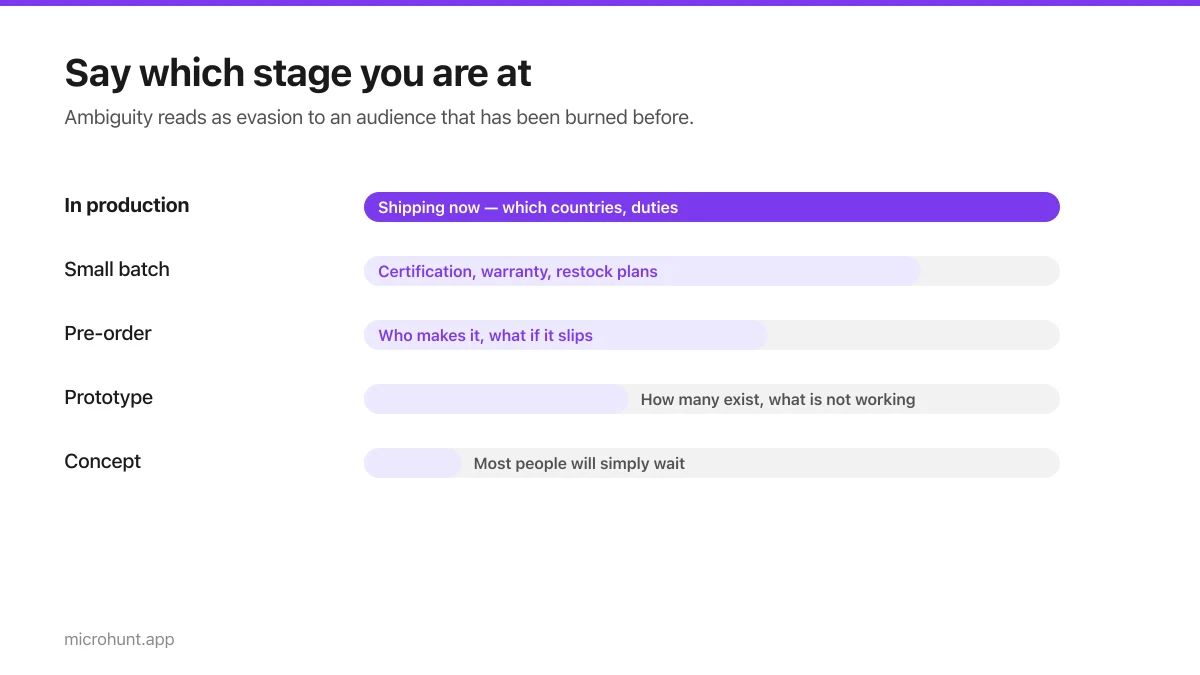
Launching Hardware: Where to Post and What to Answer
Hardware is rare on launch boards, which works in your favour. The questions get specific fast, so have the answers on the page.
7 min read
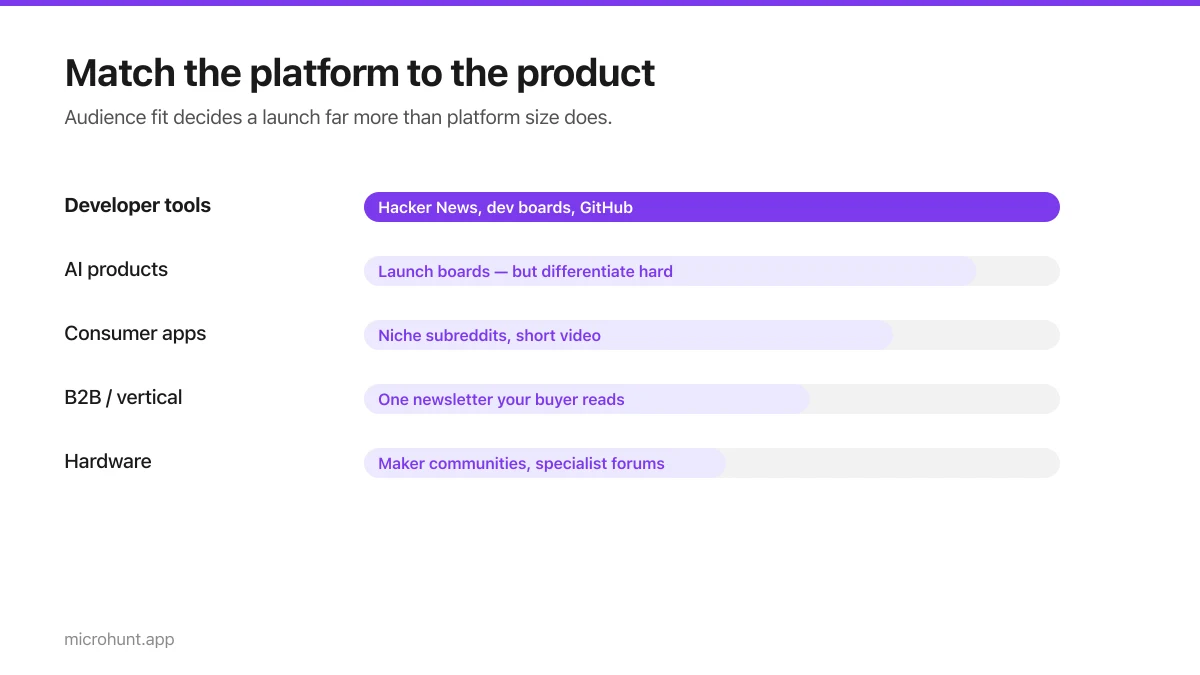
Best Product Hunt Alternatives for Launching in 2026
Where else to launch when Product Hunt is not the right fit — what each platform is actually good at, who shows up, and what it costs.
8 min read
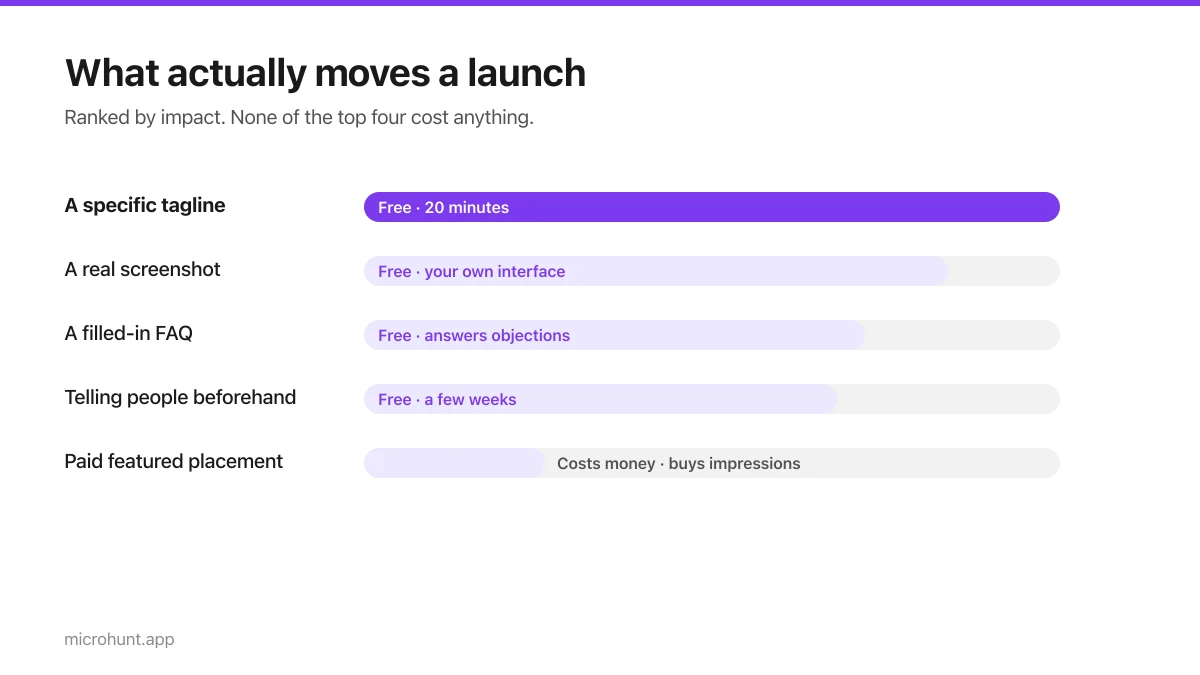
Free Launch Platforms for Indie Makers (No Budget Needed)
You do not need to pay to launch. Here are the places that are genuinely free, what each expects from you, and where paying is actually worth it.
7 min read
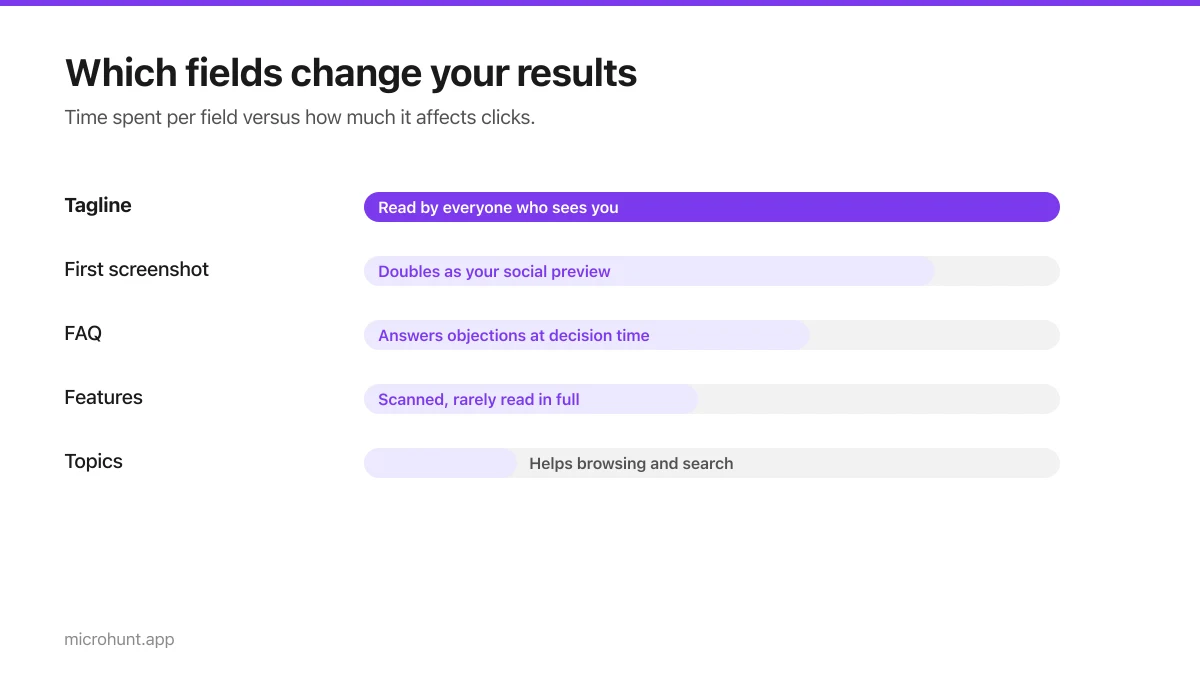
How to Submit a Product on Vuru (Step by Step)
A walk through the submission form, what each field does to your page, and the fields most people leave empty that they shouldn't.
7 min read
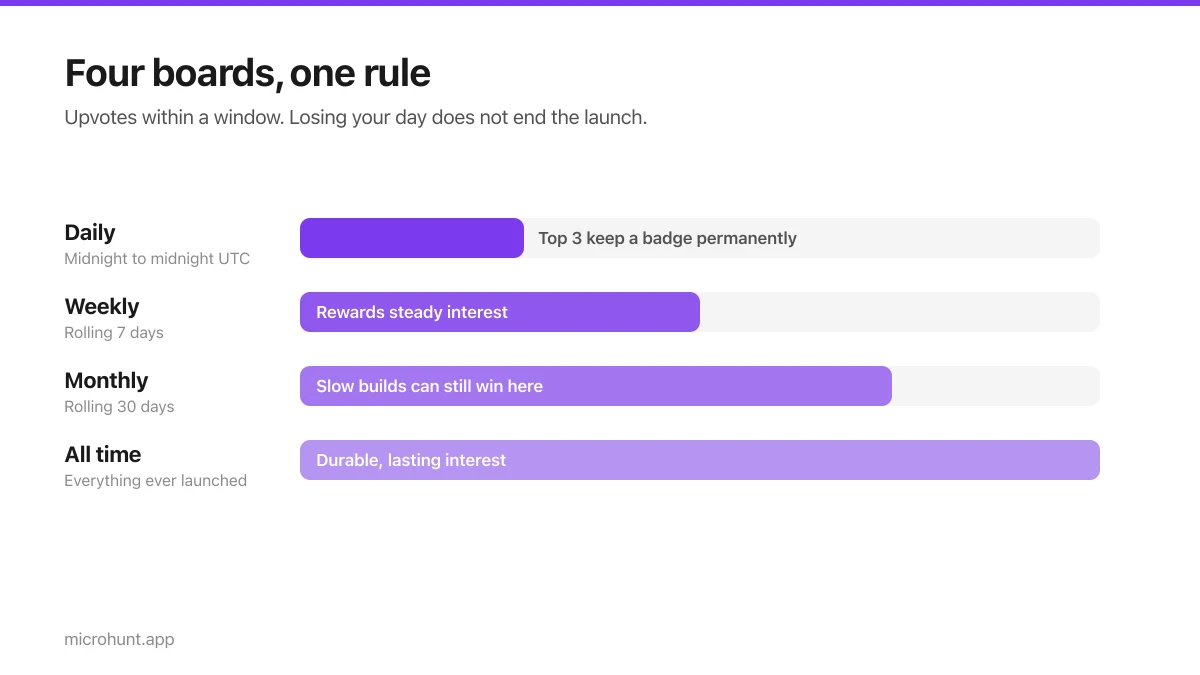
How Vuru Ranking Works (And How to Win a Badge)
Launch windows, upvotes, podium badges and what we do about vote manipulation — the whole ranking system explained plainly.
7 min read
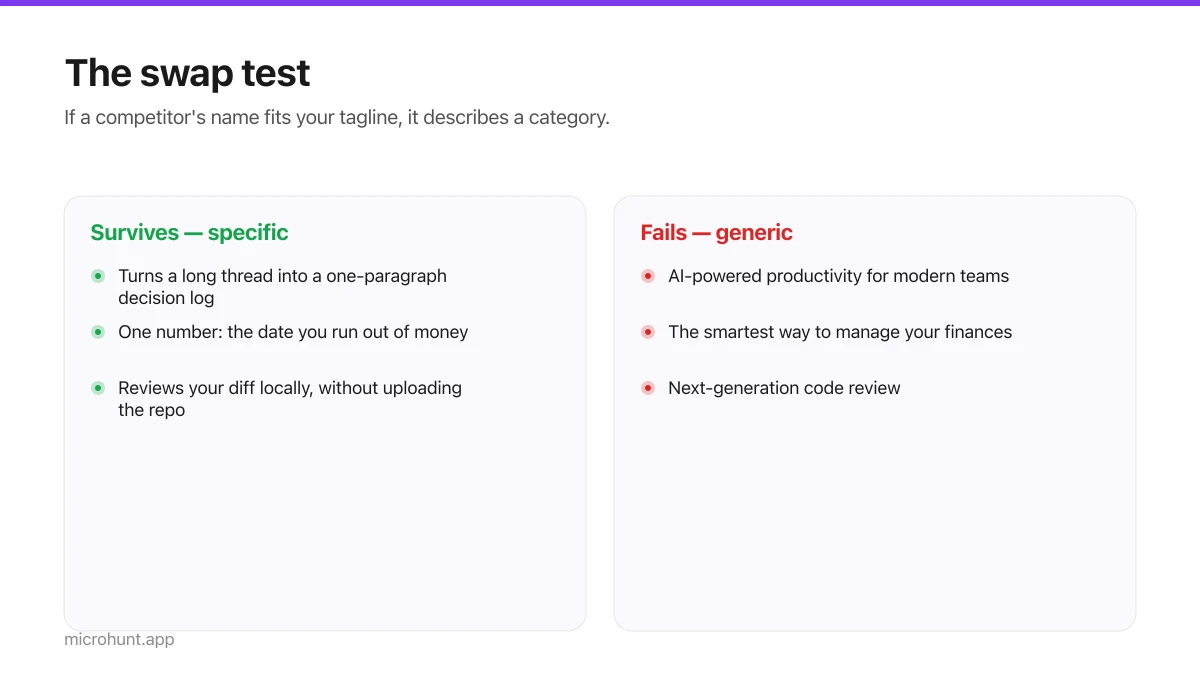
How to Write a Product Tagline That Actually Gets Clicked
The one line most people will ever read about your product, and a simple test for whether yours is doing any work.
7 min read
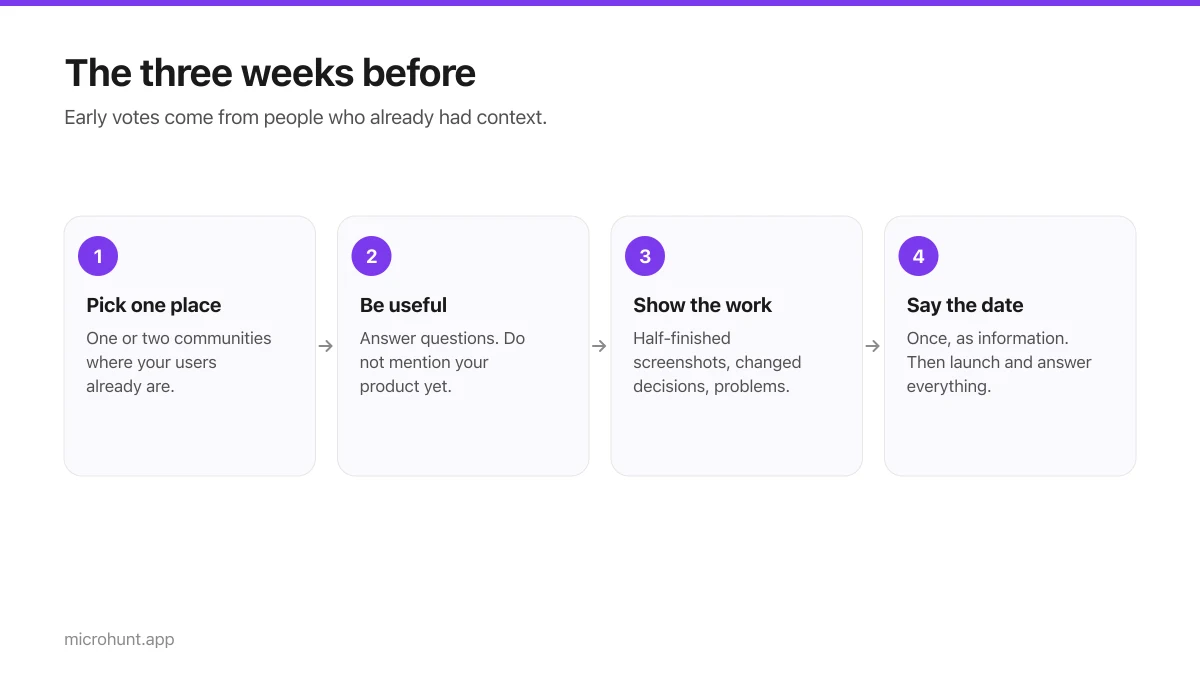
How to Get Your First Upvotes Without Begging
What actually generates early votes, why vote-for-vote groups do not work, and the approach that keeps paying off after launch day.
7 min read
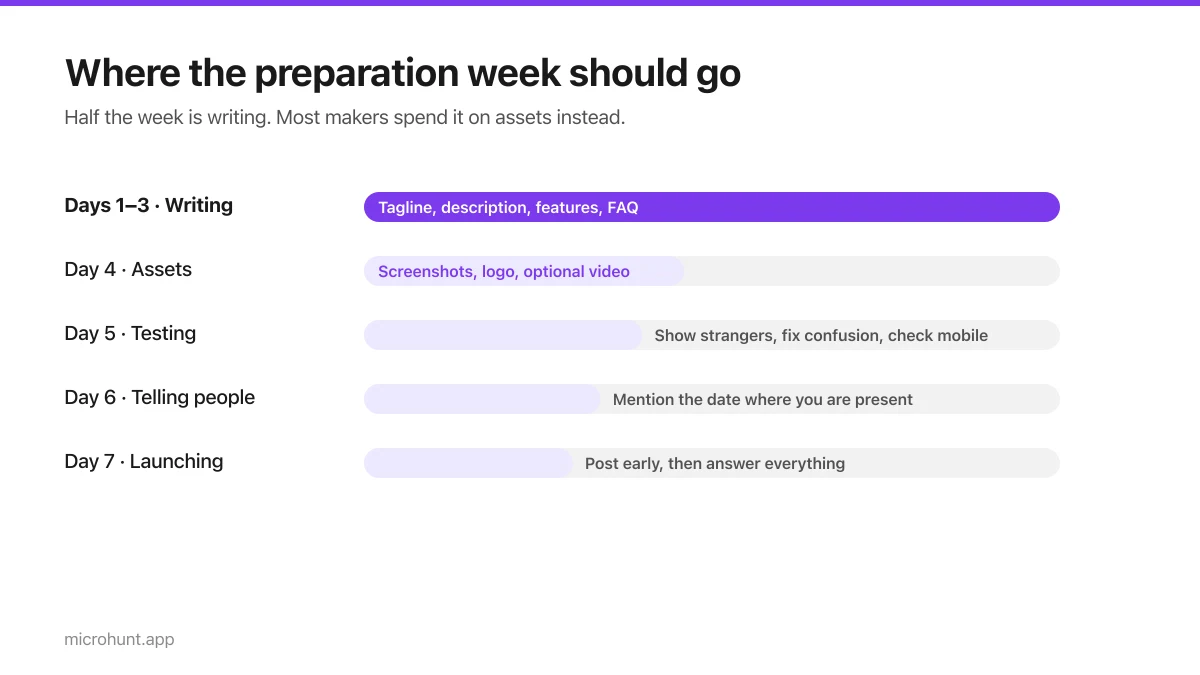
The Seven-Day Launch Checklist
A day-by-day plan for the week before you launch, weighted towards the things that actually change the outcome.
8 min read