Wearables
Watches, rings, trackers and body sensors.
Nothing launched in this category yet.
Be the firstAbout Wearables
Wearable devices — watches, rings, bands and the increasingly varied set of sensors people attach to themselves — occupy an interesting position: genuinely useful for some things, systematically overinterpreted for others, and marketed in a way that blurs the line.
What they measure well is movement and timing. Step counts, activity duration, workout detection and heart rate during steady exercise are reasonably accurate on current devices, and the trends over weeks are meaningful. Sleep timing — when you fell asleep and woke — is also decent.
What they estimate rather than measure includes energy expenditure, sleep stages, stress, and the composite readiness or recovery scores that many devices now lead with. These are models built on the signals above, and they can be substantially wrong for an individual. Treating an estimated calorie figure as a budget, or letting a readiness score determine whether you train, is putting more weight on the number than it can carry. The trend over a month is informative; a single day's score is not.
There is a specific failure mode worth naming, because it is common: the device increases anxiety rather than health. Someone sleeps fine, sees a poor score, and feels tired. Someone with a tendency toward health anxiety acquires a continuous stream of ambiguous physiological data. If a wearable is making you worry more than it is helping you act, taking it off is a legitimate and underused option.
The medical-adjacent features are the exception and deserve credit. Irregular rhythm notification in particular has a genuine evidence base and has led to real diagnoses. Blood oxygen and temperature sensing are more variable. The framing to hold is that these features can prompt you to see a doctor; they do not substitute for one, and none of them diagnose anything.
Practical buying considerations: battery life determines whether you actually wear it overnight, which determines whether the sleep data exists at all; and data portability determines whether years of history is yours or the vendor's. Check the export path before committing to an ecosystem.
Health data is among the most sensitive there is. Read what is shared, with whom, and whether an insurance or employer programme is involved.
From the blog
Reading on launching, ranking and wearables.
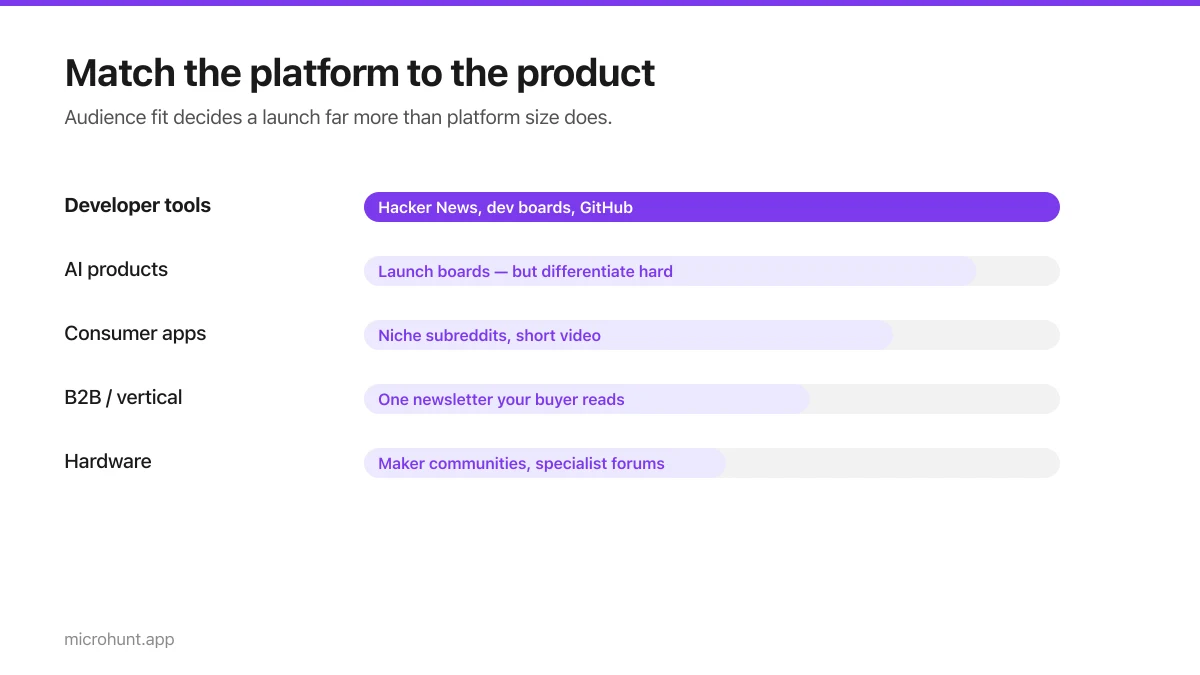
Best Product Hunt Alternatives for Launching in 2026
Where else to launch when Product Hunt is not the right fit — what each platform is actually good at, who shows up, and what it costs.
8 min read
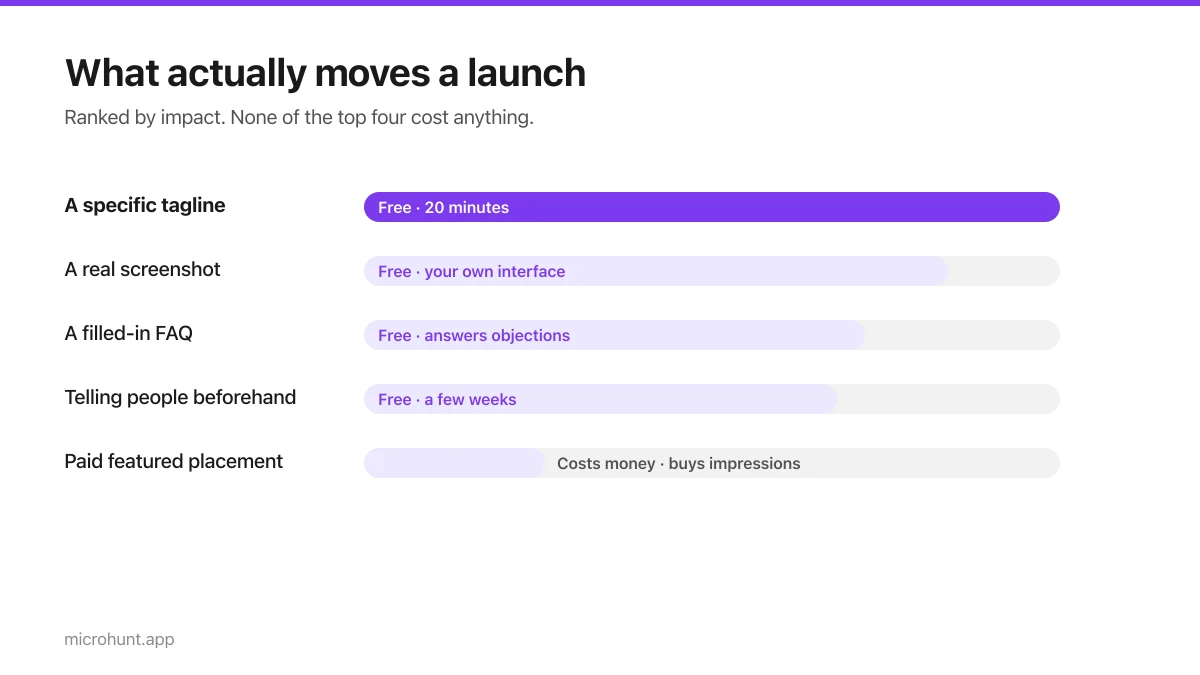
Free Launch Platforms for Indie Makers (No Budget Needed)
You do not need to pay to launch. Here are the places that are genuinely free, what each expects from you, and where paying is actually worth it.
7 min read
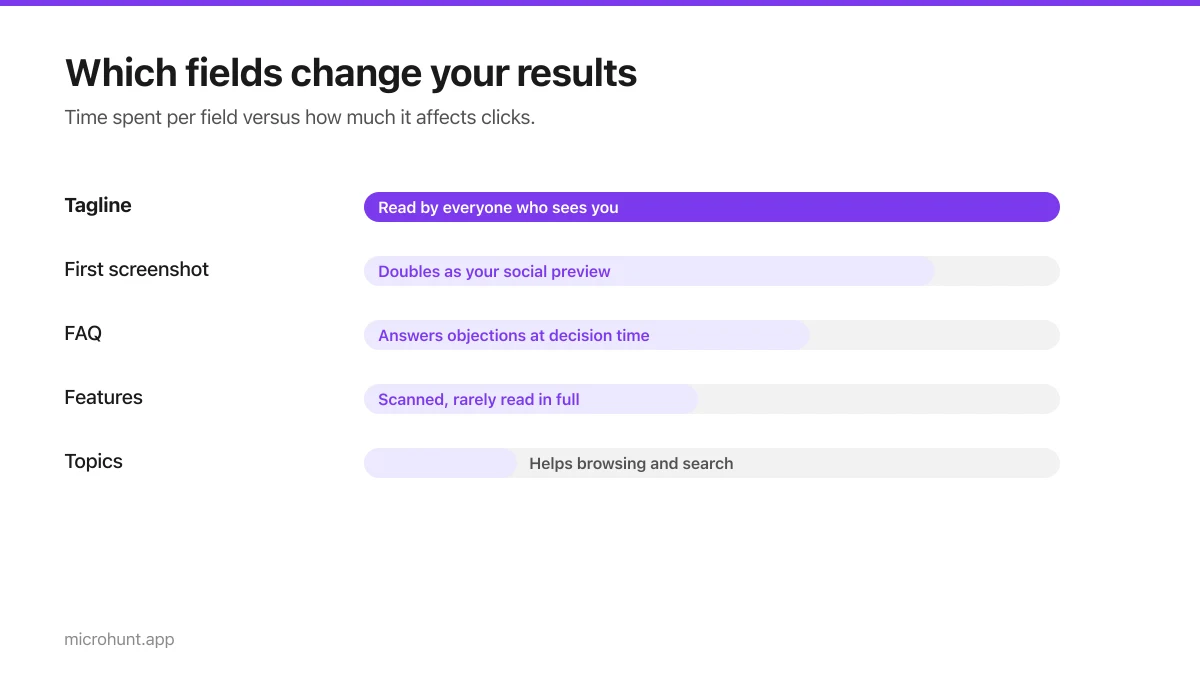
How to Submit a Product on Vuru (Step by Step)
A walk through the submission form, what each field does to your page, and the fields most people leave empty that they shouldn't.
7 min read
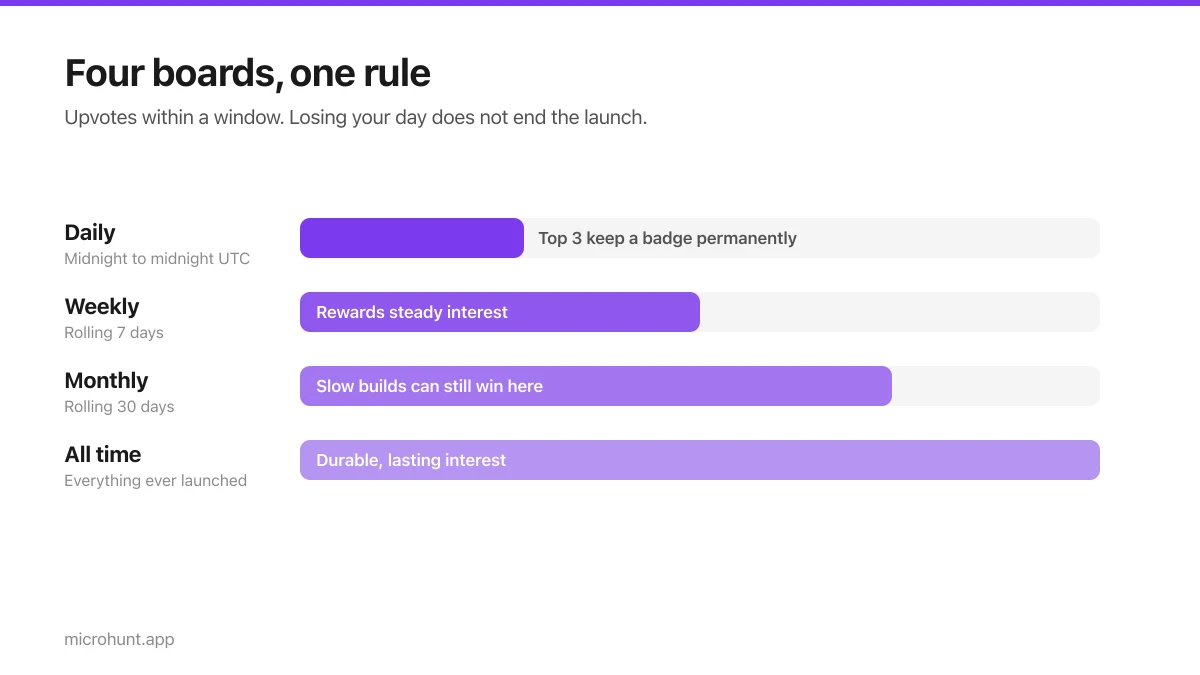
How Vuru Ranking Works (And How to Win a Badge)
Launch windows, upvotes, podium badges and what we do about vote manipulation — the whole ranking system explained plainly.
7 min read
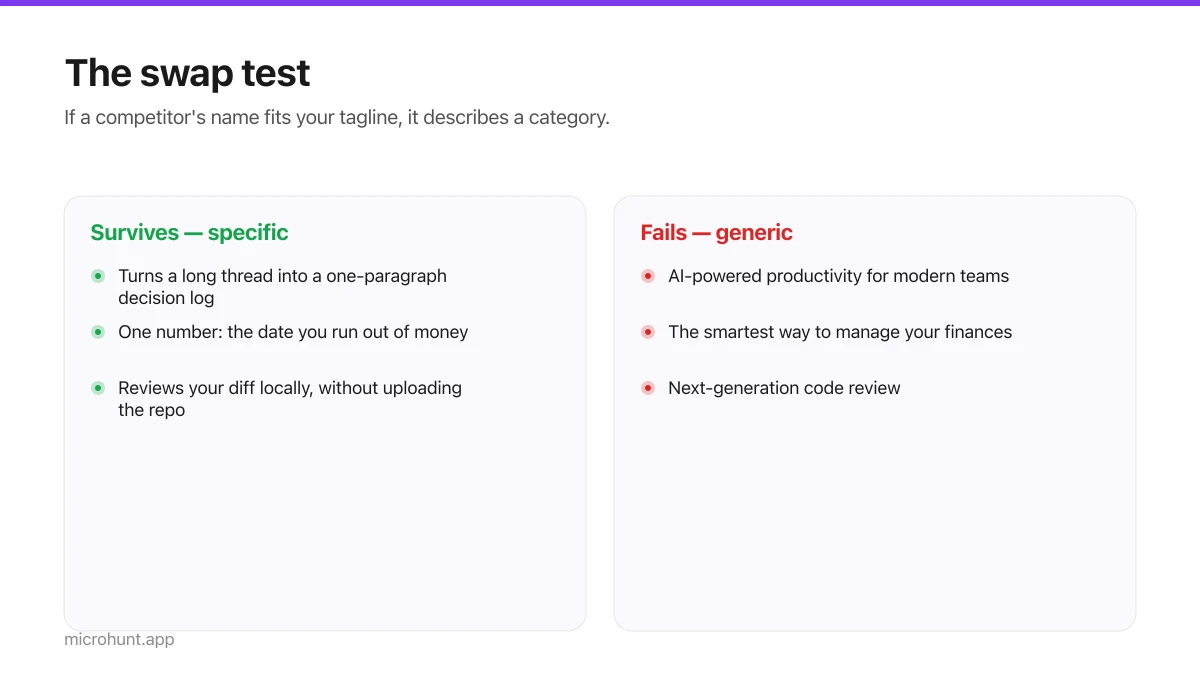
How to Write a Product Tagline That Actually Gets Clicked
The one line most people will ever read about your product, and a simple test for whether yours is doing any work.
7 min read
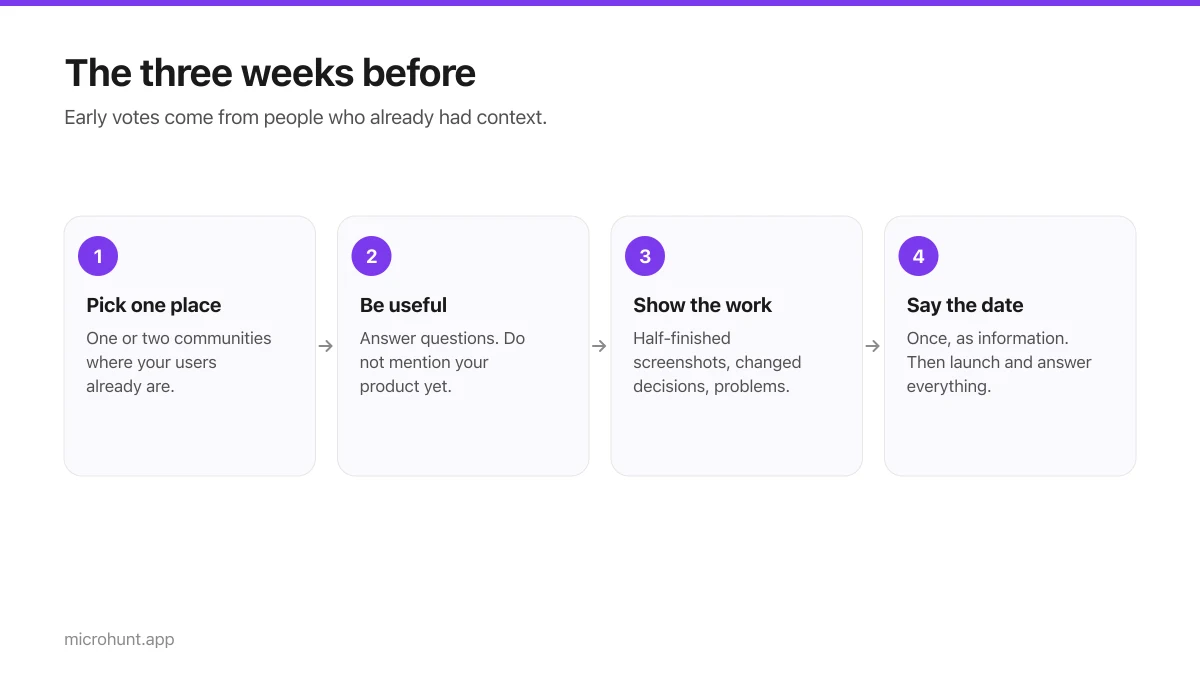
How to Get Your First Upvotes Without Begging
What actually generates early votes, why vote-for-vote groups do not work, and the approach that keeps paying off after launch day.
7 min read
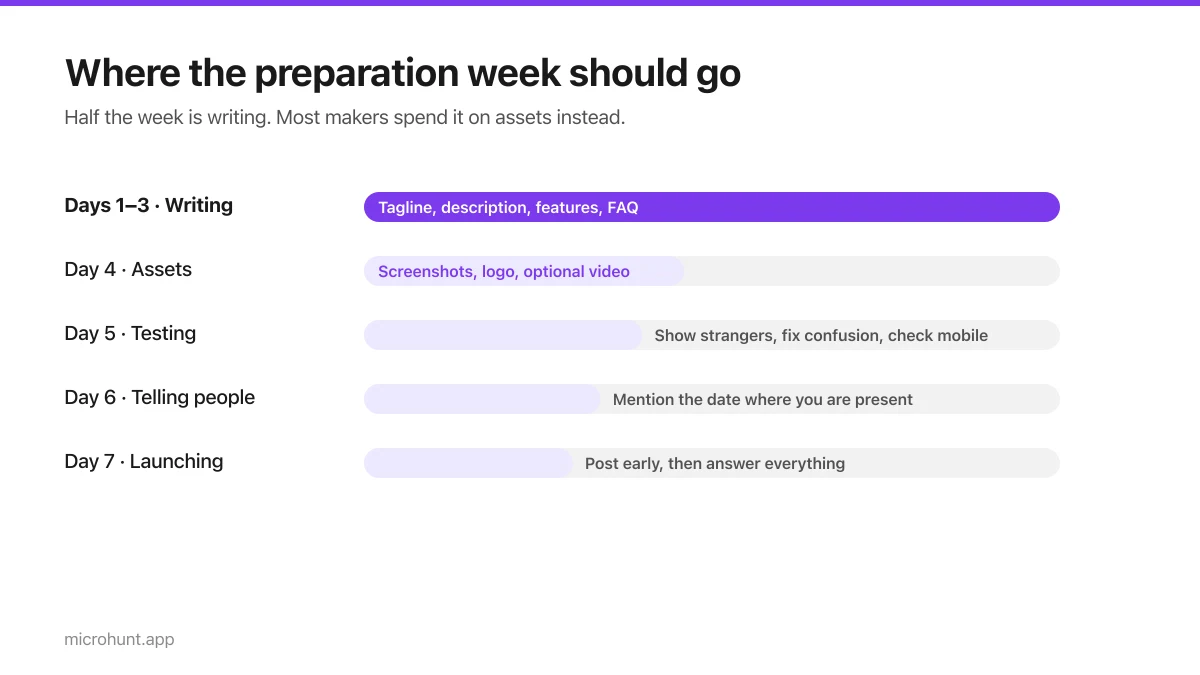
The Seven-Day Launch Checklist
A day-by-day plan for the week before you launch, weighted towards the things that actually change the outcome.
8 min read
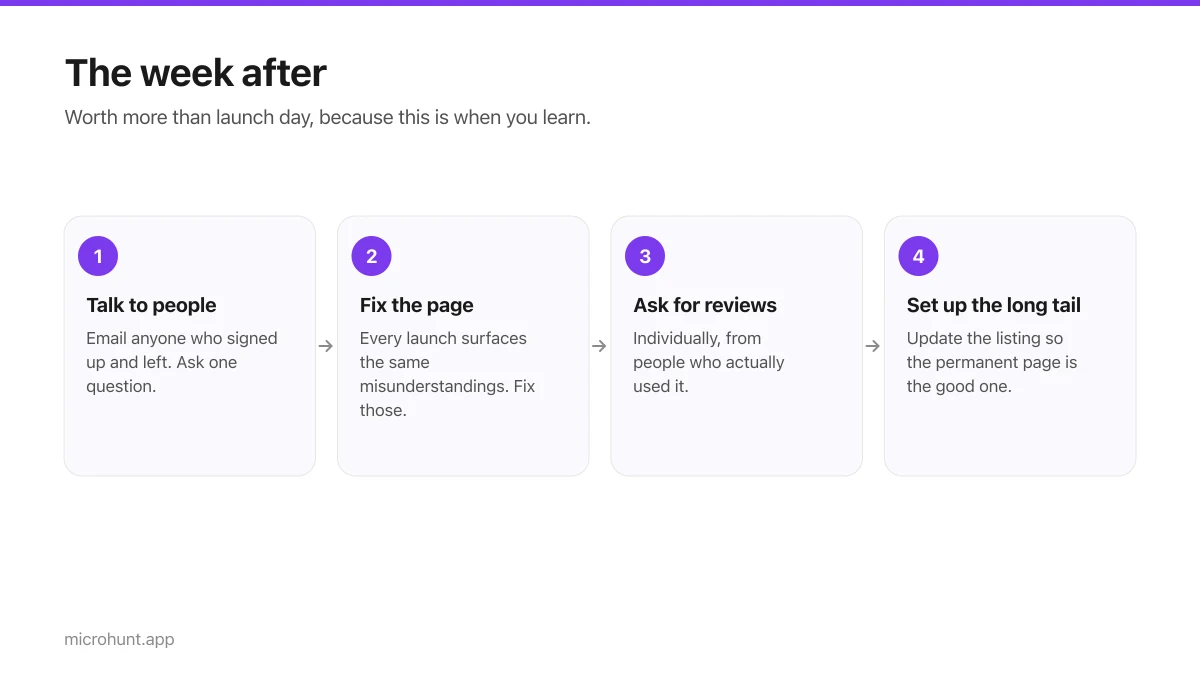
What to Do the Week After Launch Day
The traffic spike is over. Here is how to turn a day of attention into something that lasts longer than the graph.
7 min read