Audio Hardware
Microphones, interfaces and headphones.
Nothing launched in this category yet.
Be the firstAbout Audio Hardware
Audio hardware covers headphones, microphones, interfaces, speakers and the small devices that sit between them. It is a category with an unusually large gap between price and benefit, and knowing where that curve flattens saves a great deal of money.
For microphones, the single most consequential factor is not the microphone. It is distance and room. A modest microphone six inches from your mouth in a room with soft furnishings beats an expensive one across a desk in a bare room, every time. If you are improving your recorded audio, spend on a stand or arm that gets the microphone close before spending on the microphone.
The second thing is pickup pattern. A directional microphone rejects the room and picks up what is in front of it, which is what you want for a single voice. Multi-pattern microphones offer flexibility most people never use. The common error is buying a well-reviewed microphone with a pattern suited to a treated studio and using it in a kitchen.
Connection type is a practical fork. Devices that connect directly to a computer are simpler and sufficient for speech; ones requiring a separate interface offer better preamps and expandability and add cost and complexity. For podcasting, streaming and meetings, direct connection is usually correct and the upgrade path is oversold.
For headphones, the meaningful distinction is closed versus open. Closed designs isolate and prevent bleed into a microphone, which matters if you are recording. Open designs sound more spacious and leak in both directions. For monitoring your own recording, closed; for listening at a desk alone, open is frequently more comfortable for long sessions.
Noise cancellation is genuinely effective against constant low-frequency sound — engines, air conditioning, transit — and much less so against speech. Expectations set by marketing tend to exceed this.
Wireless has become good enough for listening and remains a compromise for recording, where latency and compression are real. Wired for anything you are producing.
The most common overspend in this category is buying studio-grade equipment for a use case where the limiting factor is the room, the technique or the source material.
From the blog
Reading on launching, ranking and audio hardware.
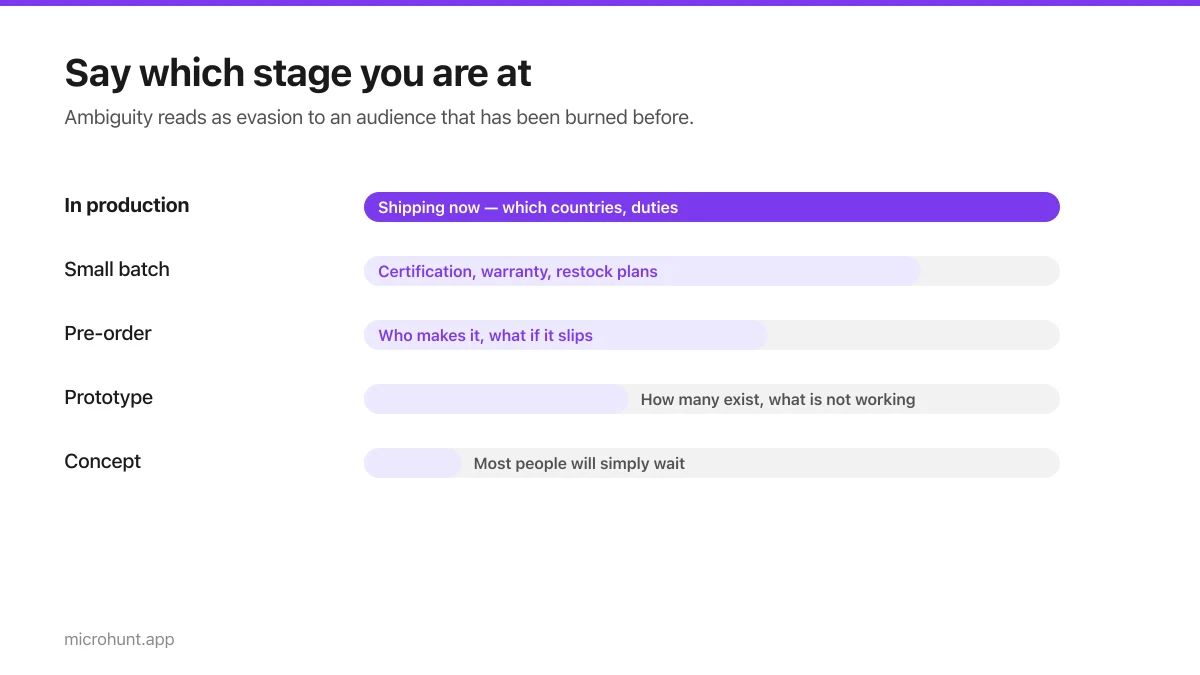
Launching Hardware: Where to Post and What to Answer
Hardware is rare on launch boards, which works in your favour. The questions get specific fast, so have the answers on the page.
7 min read

Best Product Hunt Alternatives for Launching in 2026
Where else to launch when Product Hunt is not the right fit — what each platform is actually good at, who shows up, and what it costs.
8 min read

Free Launch Platforms for Indie Makers (No Budget Needed)
You do not need to pay to launch. Here are the places that are genuinely free, what each expects from you, and where paying is actually worth it.
7 min read

How to Submit a Product on Vuru (Step by Step)
A walk through the submission form, what each field does to your page, and the fields most people leave empty that they shouldn't.
7 min read

How Vuru Ranking Works (And How to Win a Badge)
Launch windows, upvotes, podium badges and what we do about vote manipulation — the whole ranking system explained plainly.
7 min read
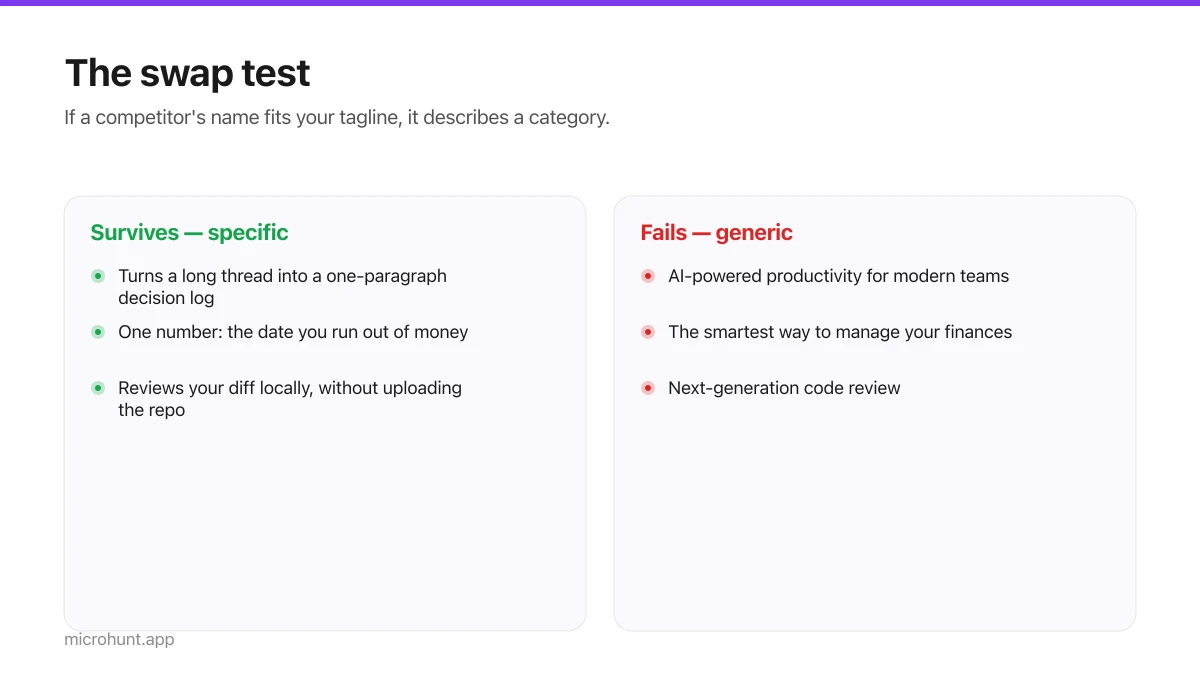
How to Write a Product Tagline That Actually Gets Clicked
The one line most people will ever read about your product, and a simple test for whether yours is doing any work.
7 min read
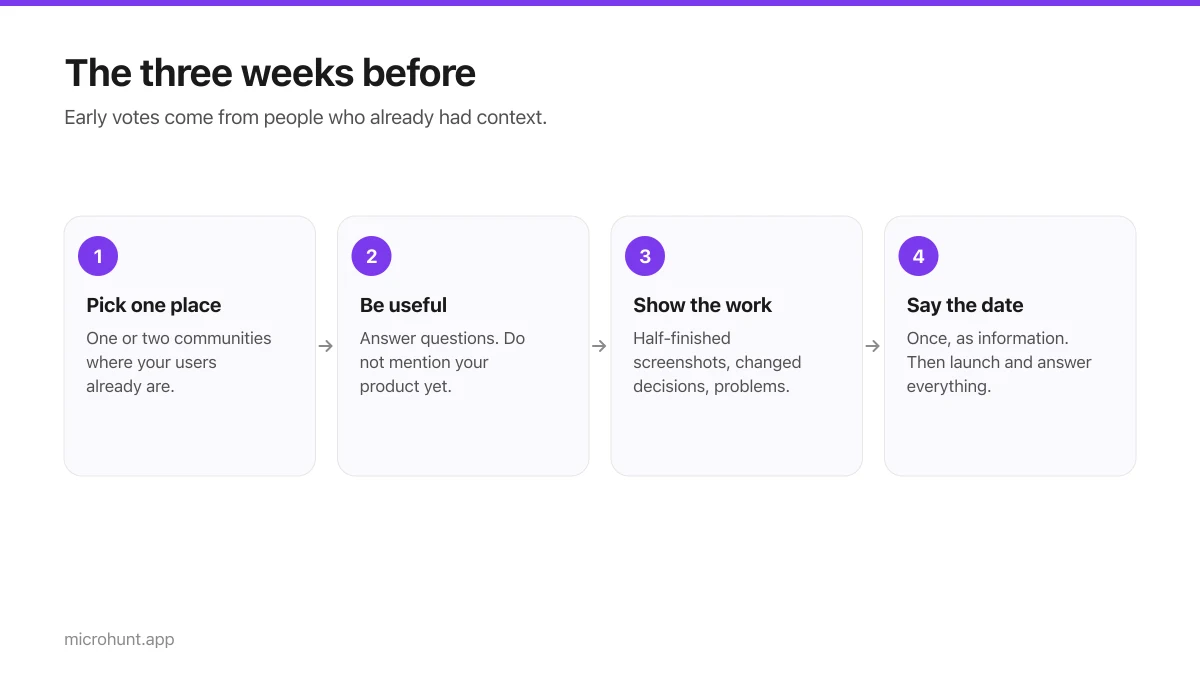
How to Get Your First Upvotes Without Begging
What actually generates early votes, why vote-for-vote groups do not work, and the approach that keeps paying off after launch day.
7 min read
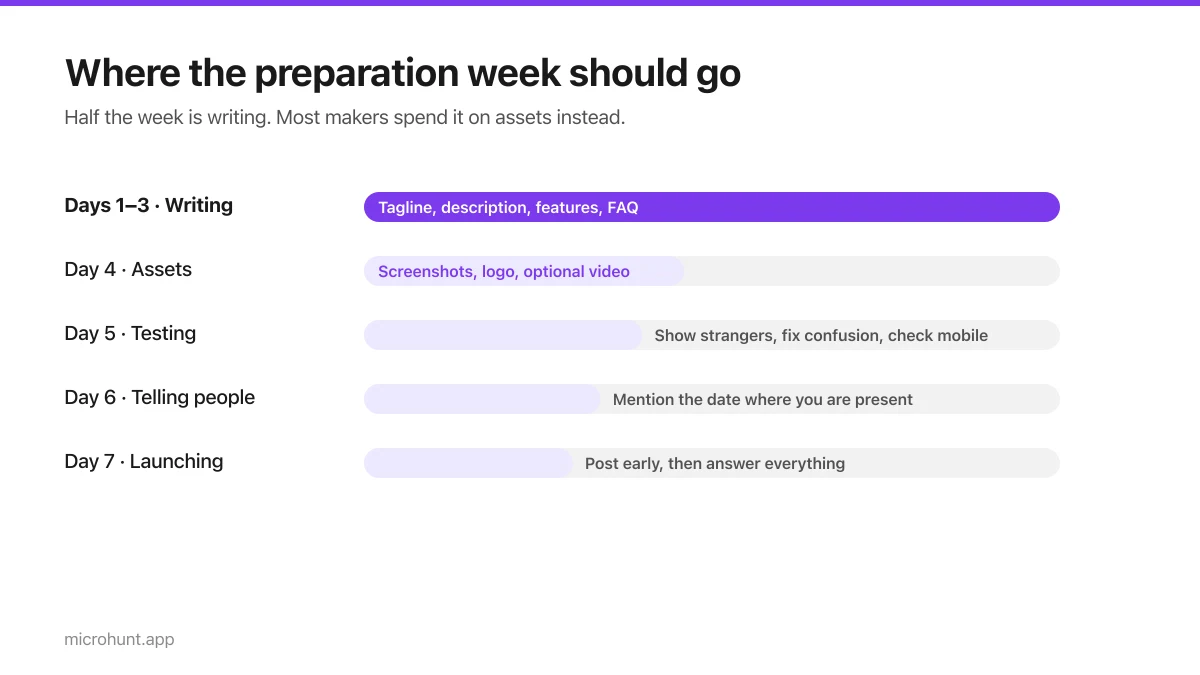
The Seven-Day Launch Checklist
A day-by-day plan for the week before you launch, weighted towards the things that actually change the outcome.
8 min read