DIY & Electronics
Boards, sensors, test gear and kits.
Nothing launched in this category yet.
Be the firstAbout DIY & Electronics
The maker and electronics corner covers development boards, sensors, kits, prototyping tools, home automation projects and the software around all of it. It is the most hands-on subcategory on this site and a genuinely good place to browse, because the projects people build here are frequently more inventive than commercial products in the same space.
The board ecosystems have settled into a useful division. Microcontroller boards are simple, run one program deterministically, use very little power and are the right answer for anything sensing or actuating. Single-board computers run a full operating system, handle networking and complexity well, and are the right answer when you need a real system rather than a control loop. Choosing the powerful option for a task that needs a microcontroller is the most common beginner mistake, and it usually shows up as reliability problems and a project that cannot run on a battery.
Wireless-capable microcontrollers have made connected projects dramatically easier, and the home automation subcategory has grown around them. The advice worth giving there is to prefer local control over cloud dependence: a light switch that stops working because a company shut down a service is a worse light switch than the one it replaced. The open home automation platforms exist largely for this reason and are worth the setup.
On safety, one firm line. Low-voltage electronics are forgiving and a good place to learn. Anything involving mains electricity is not, and it is not a place for experimentation without proper knowledge — the failure modes are fire and electrocution. Use certified power supplies, use proper enclosures, and get anything permanently installed checked by someone qualified. Lithium batteries deserve similar respect: correct charging circuitry, protection, and no punctured or swollen cells.
For the software side, the tooling has improved enormously. Modern editors with board support, over-the-air updates for deployed devices, and higher-level languages running on small hardware have all lowered the barrier considerably from where it was a decade ago.
The best projects in this subcategory tend to solve one small annoyance in the maker's own house, which is also the best advice for what to build first.
From the blog
Reading on launching, ranking and diy & electronics.

Best Product Hunt Alternatives for Launching in 2026
Where else to launch when Product Hunt is not the right fit — what each platform is actually good at, who shows up, and what it costs.
8 min read
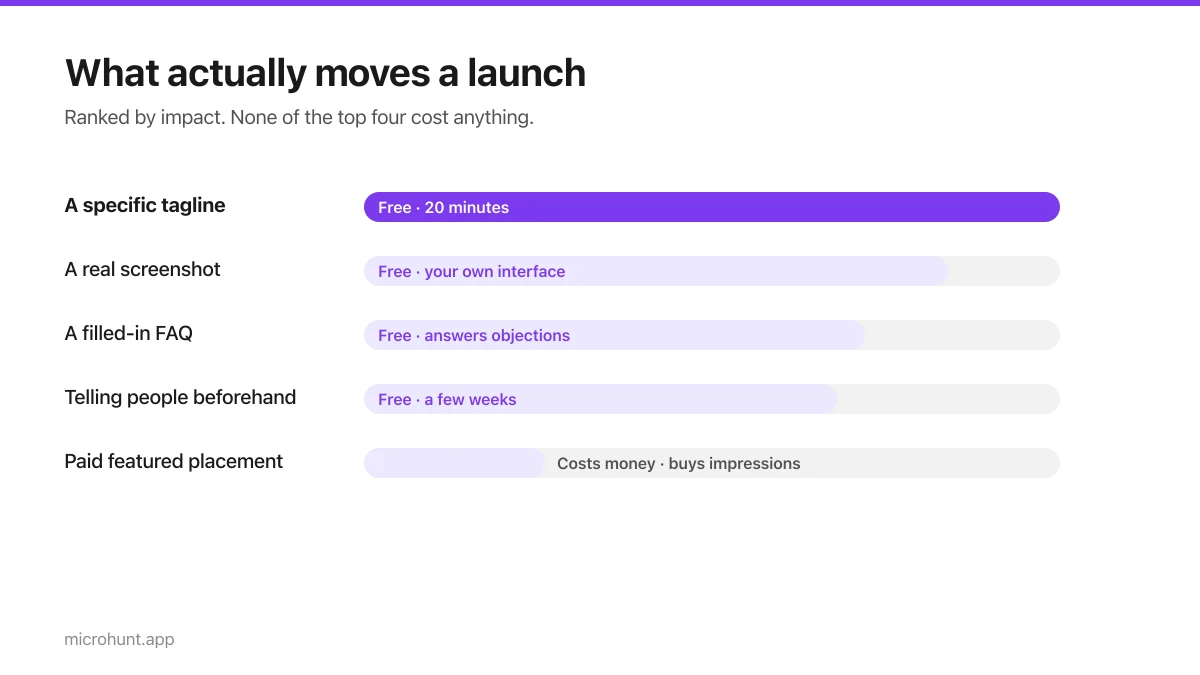
Free Launch Platforms for Indie Makers (No Budget Needed)
You do not need to pay to launch. Here are the places that are genuinely free, what each expects from you, and where paying is actually worth it.
7 min read
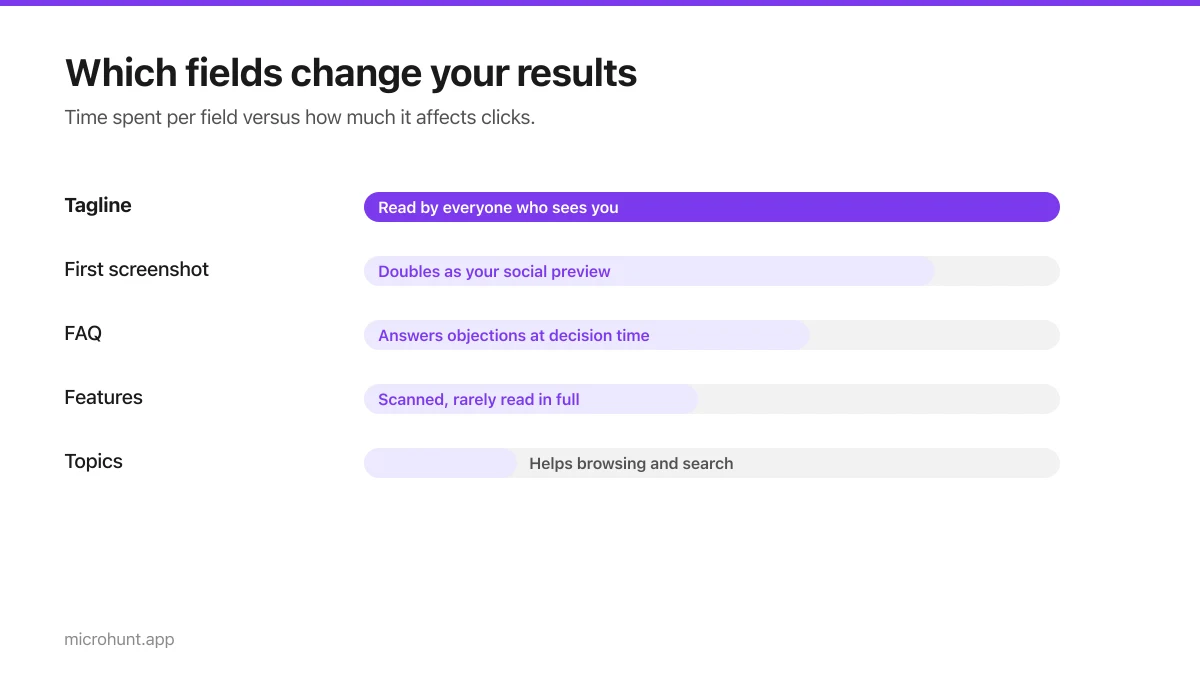
How to Submit a Product on Vuru (Step by Step)
A walk through the submission form, what each field does to your page, and the fields most people leave empty that they shouldn't.
7 min read
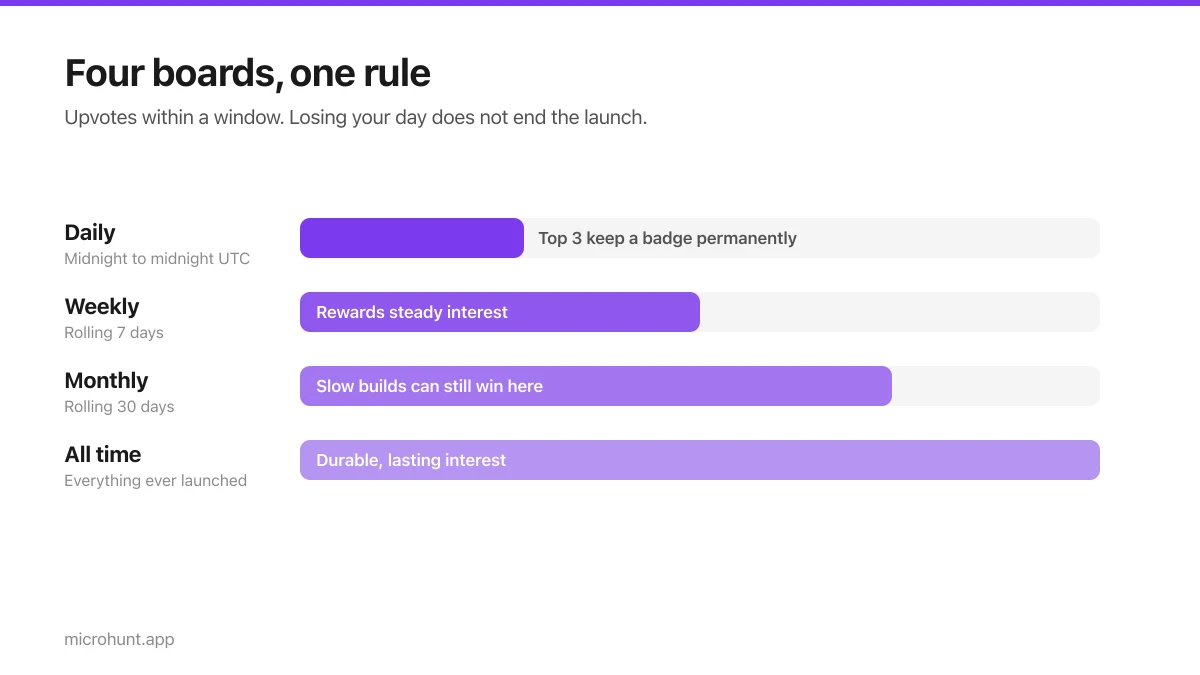
How Vuru Ranking Works (And How to Win a Badge)
Launch windows, upvotes, podium badges and what we do about vote manipulation — the whole ranking system explained plainly.
7 min read
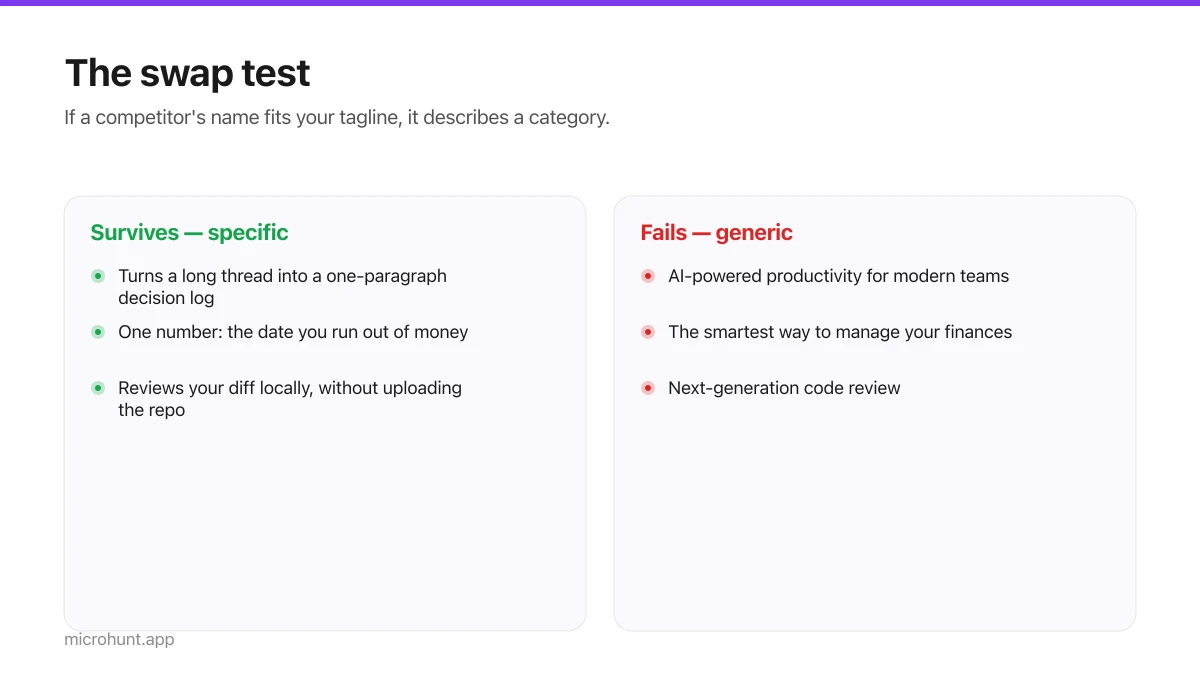
How to Write a Product Tagline That Actually Gets Clicked
The one line most people will ever read about your product, and a simple test for whether yours is doing any work.
7 min read
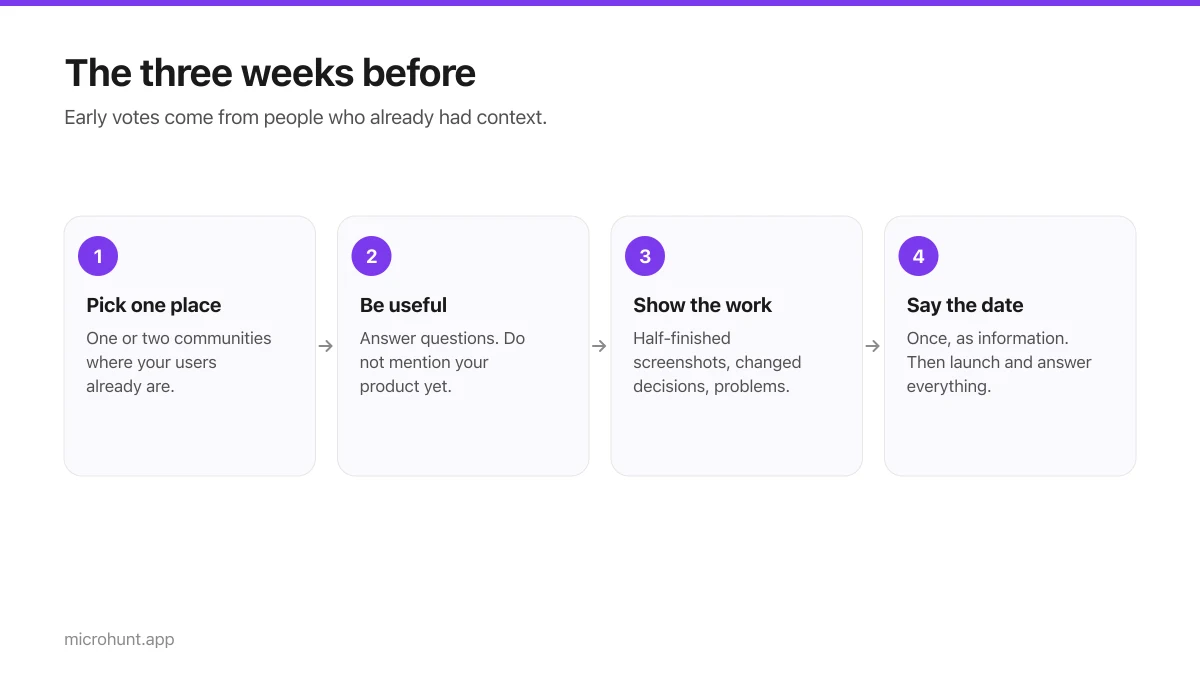
How to Get Your First Upvotes Without Begging
What actually generates early votes, why vote-for-vote groups do not work, and the approach that keeps paying off after launch day.
7 min read
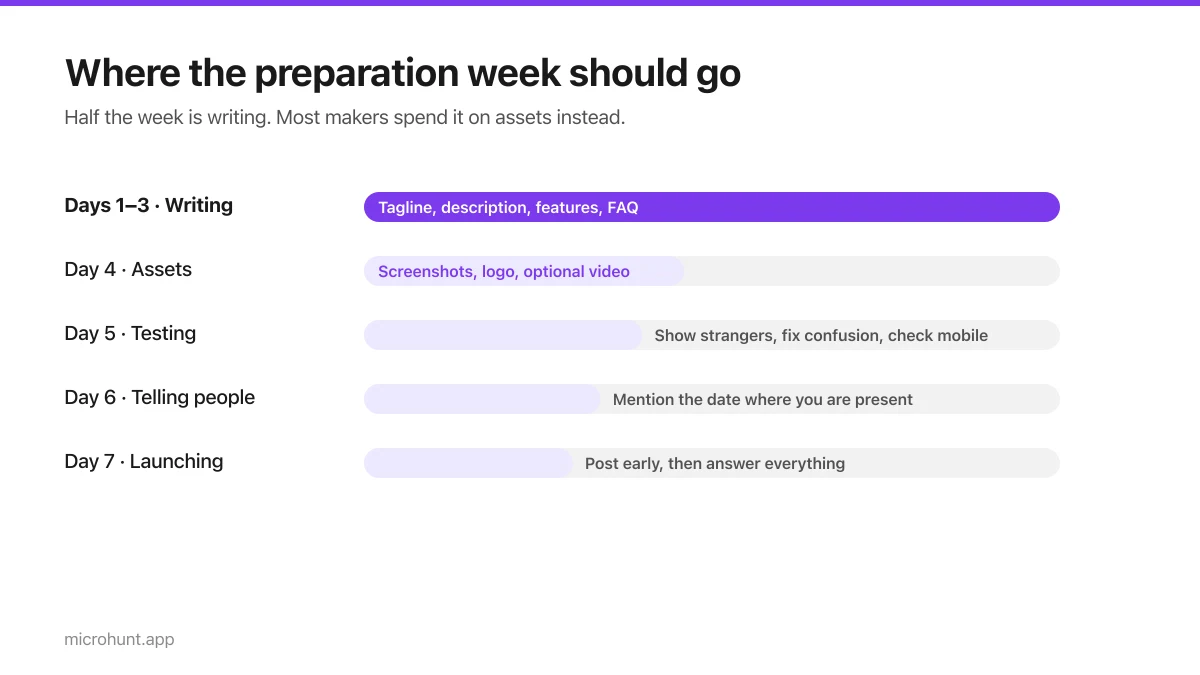
The Seven-Day Launch Checklist
A day-by-day plan for the week before you launch, weighted towards the things that actually change the outcome.
8 min read
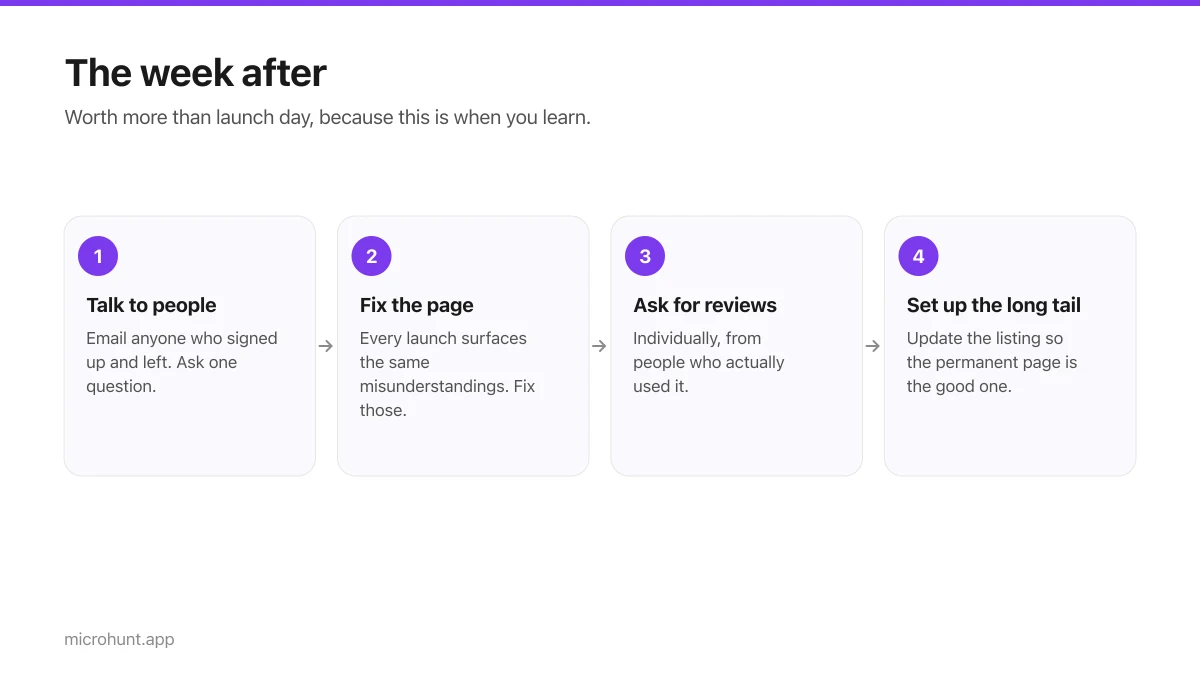
What to Do the Week After Launch Day
The traffic spike is over. Here is how to turn a day of attention into something that lasts longer than the graph.
7 min read