When to Relaunch a Product (And When Not To)
6 min read
The short answer
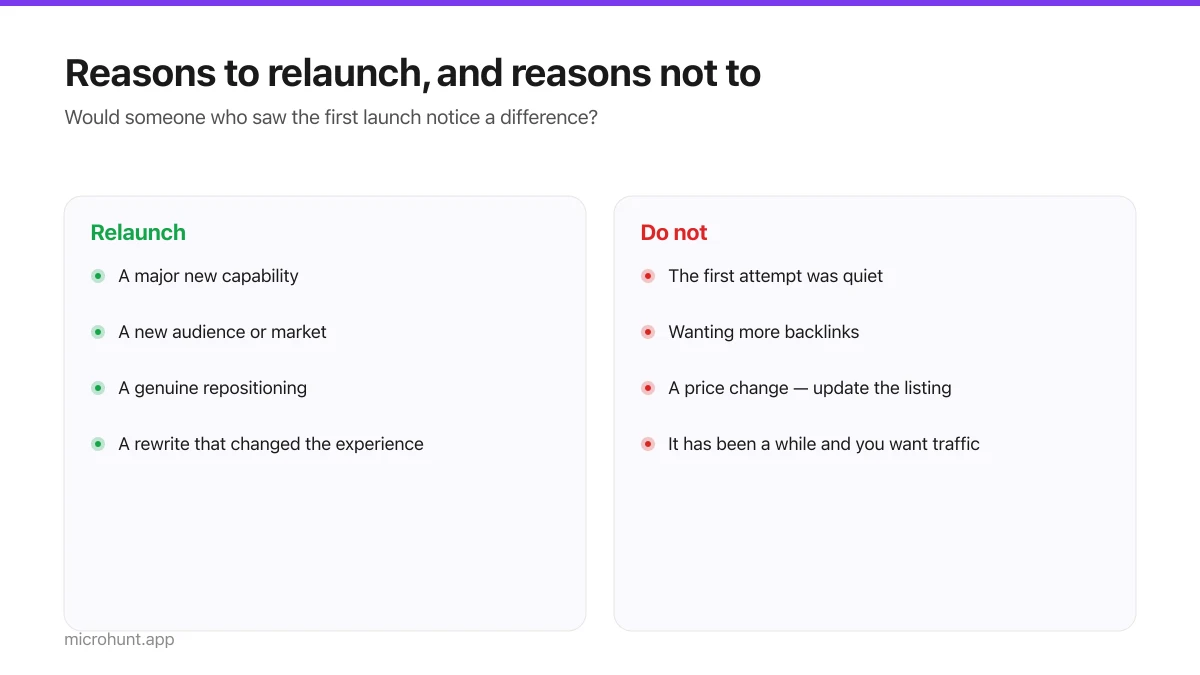
Relaunch when something material has changed — a major feature, a new audience, a real repositioning, or a rewrite that makes it a different product. Do not relaunch because the first attempt was quiet, since the same page shown to the same audience produces the same result. Six months is a reasonable minimum gap.
A quiet launch is a bad feeling, and the obvious response is to try again. Sometimes that is right. More often the second attempt produces the same result, because nothing that determined the first one has changed.
The test
Ask what a person who saw your first launch would notice is different. If the honest answer is "not much", you are not relaunching — you are reposting, and the audience can tell.
| Reason | Relaunch? | Why |
|---|---|---|
| Major new capability | Yes | Genuinely different product to evaluate |
| New audience or market | Yes | Different people, different pitch |
| Real repositioning | Yes | Solves a different problem now |
| Rewrite or major redesign | Usually | If the experience actually changed |
| The first one was quiet | No | Same page, same audience, same outcome |
| Wanting more backlinks | No | Does nothing for search, annoys people |
| A price change | No | Update the listing instead |
What to do instead of relaunching
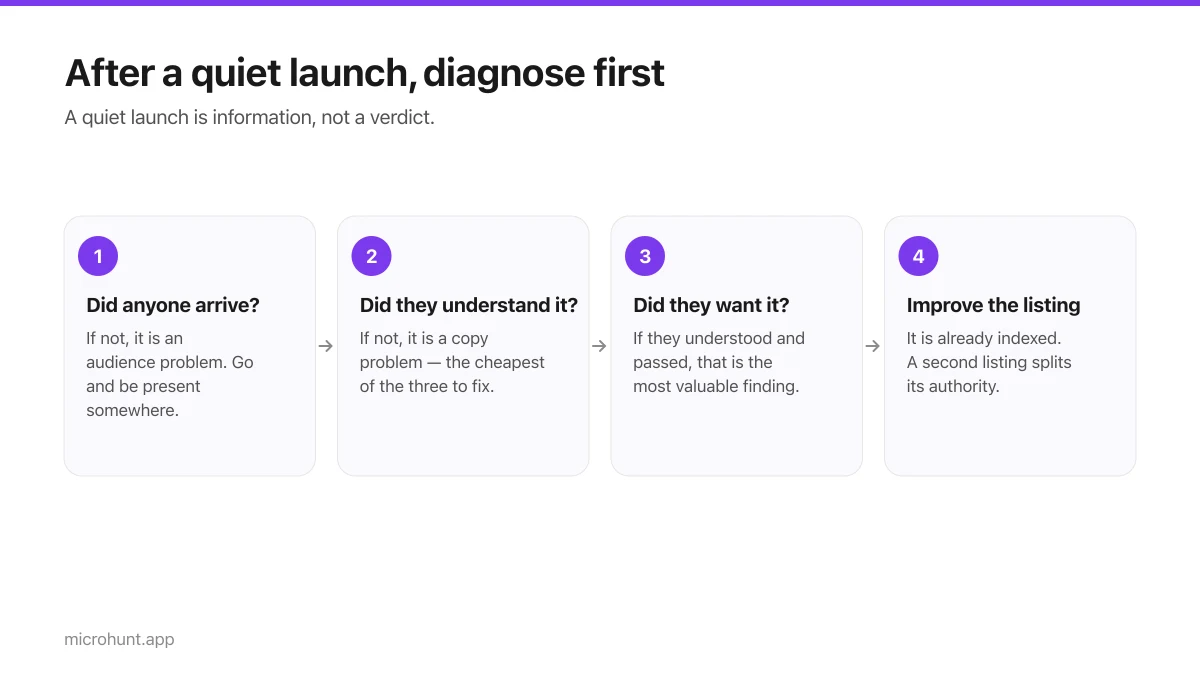
If the first launch was quiet, the useful work is diagnostic rather than promotional. A quiet launch is information, and it usually points at one of three things.
- **Nobody arrived.** An audience problem. The fix is a few weeks of being genuinely present somewhere — see building an audience before launch.
- **People arrived and did not understand.** A copy problem, and the cheapest of the three to fix. Rewrite the tagline and show it to strangers.
- **People understood and did not want it.** The most valuable finding, and the one nobody wants. Better to learn it now than after another six months of building.
How to relaunch properly
- 1Lead with what changedThe tagline should describe the new thing, not the original product. People who saw you before need a reason to look again.
- 2Acknowledge the first launchSaying "we launched this a year ago and rebuilt it around X" is honest and reads far better than pretending it is new.
- 3Bring the evidenceA second launch benefits from what the first produced — reviews, users, numbers. Use them.
- 4Tell the people from last timeAnyone who tried it and bounced is now a warm audience for a version that fixes their reason.
How long to wait
Six months is a sensible floor, and the real answer is however long it takes for the change to be substantial. Relaunching every quarter trains your audience to ignore you, which is expensive in a way that is hard to notice until it has happened.
And if you do relaunch, treat it as a full launch rather than a repost — the seven-day checklist applies exactly as it did the first time.
Frequently asked questions
- Can I launch the same product twice?
- Yes, when something material has changed — a major feature, a new audience, or a genuine repositioning. Reposting an unchanged product mostly annoys the people who already saw it.
- How long should I wait before relaunching?
- Six months is a reasonable minimum, and the real test is whether the change is substantial enough that a returning visitor would notice. Relaunching quarterly trains people to ignore you.
- My launch flopped — should I try again immediately?
- No. Find out why first. If nobody arrived it is an audience problem; if they arrived and were confused it is a copy problem; if they understood and passed, that is the most useful information you have.
- Should I create a new listing or update the old one?
- Update the old one. It is already indexed and accumulating traffic, so improving it compounds, while a second listing splits whatever authority the first built.
Keep reading
What to Do the Week After Launch Day
The traffic spike is over. Here is how to turn a day of attention into something that lasts longer than the graph.
Nine Launch Day Mistakes We See Every Week
The recurring problems that cost people a good launch, and what to do instead. Most of them are copy problems, not product problems.
Building an Audience Before You Launch (Without a Big Following)
You do not need thousands of followers. You need thirty people who know what you are building — here is how that actually happens.