Analytics
Product and web analytics, privacy-conscious where possible.
Nothing launched in this category yet.
Be the firstAbout Analytics
Product and web analytics has spent several years reorganising itself around two pressures: privacy regulation, and the realisation that most teams were collecting far more data than they ever looked at. The launches in this subcategory reflect both, and the interesting ones are notably smaller and more opinionated than the previous generation.
The privacy-first group is the clearest trend. Tools that avoid cookies, do not track individuals across sites, and aggregate at collection rather than storage can frequently run without a consent banner, which has a measurable side benefit: you see all your traffic rather than the sixty or seventy percent who accepted. For most sites the loss in analytical depth is smaller than people fear, because the questions that actually get asked — where did traffic come from, which pages get read, what converts — do not require individual-level tracking.
For product analytics specifically, the meaningful decision is event granularity, and the common failure is tracking everything. A schema with four hundred events is one nobody can query with confidence, because no one remembers which of the three similar events is the one that fires. Twenty well-named events covering the actual funnel produce better decisions than four hundred covering everything.
Self-hosted options are unusually strong in this category and worth considering, because analytics data is exactly the kind you may prefer not to hand to a third party, and the workload is light enough to run cheaply.
The thing no tool provides is the question. Analytics answers questions and generates none, and a dashboard opened daily with no specific question is a habit rather than a practice. The teams that get value from this category tend to work the other way: write down what you believe, decide what number would change your mind, then go look.
Attribution deserves a warning. Multi-touch attribution models are assumptions rendered as charts, and different models will confidently give you different answers from identical data. They are useful for comparing periods under a consistent model and misleading when read as truth about which channel deserves credit.
From the blog
Reading on launching, ranking and analytics.
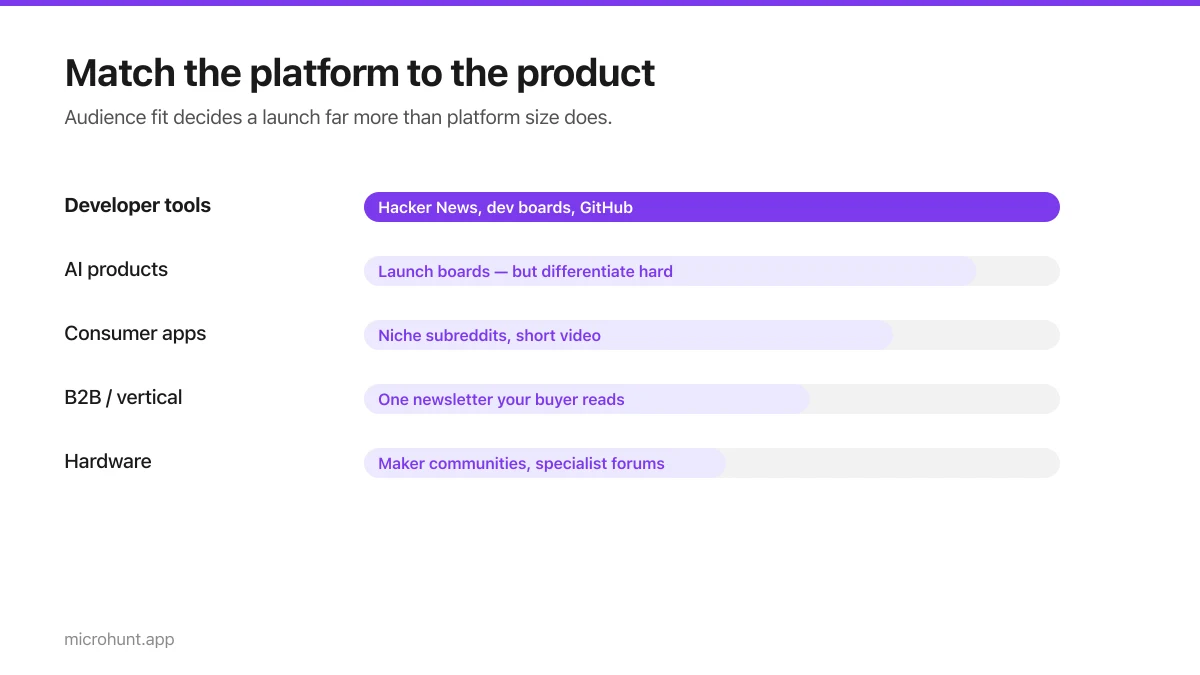
Best Product Hunt Alternatives for Launching in 2026
Where else to launch when Product Hunt is not the right fit — what each platform is actually good at, who shows up, and what it costs.
8 min read
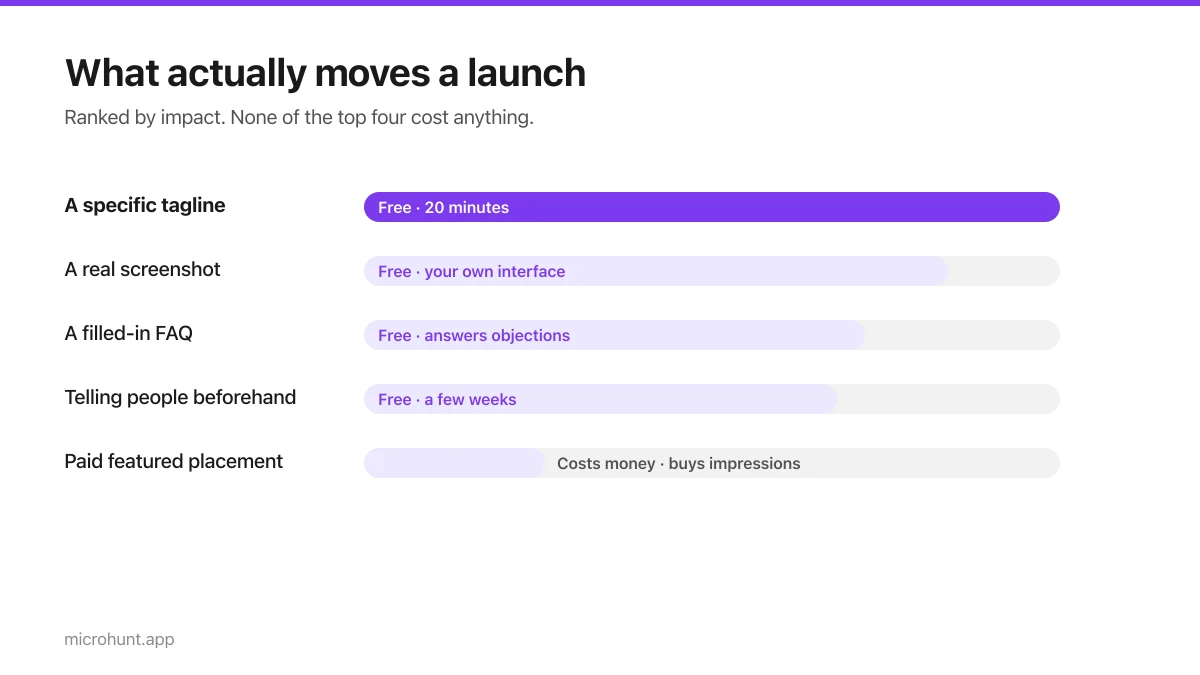
Free Launch Platforms for Indie Makers (No Budget Needed)
You do not need to pay to launch. Here are the places that are genuinely free, what each expects from you, and where paying is actually worth it.
7 min read
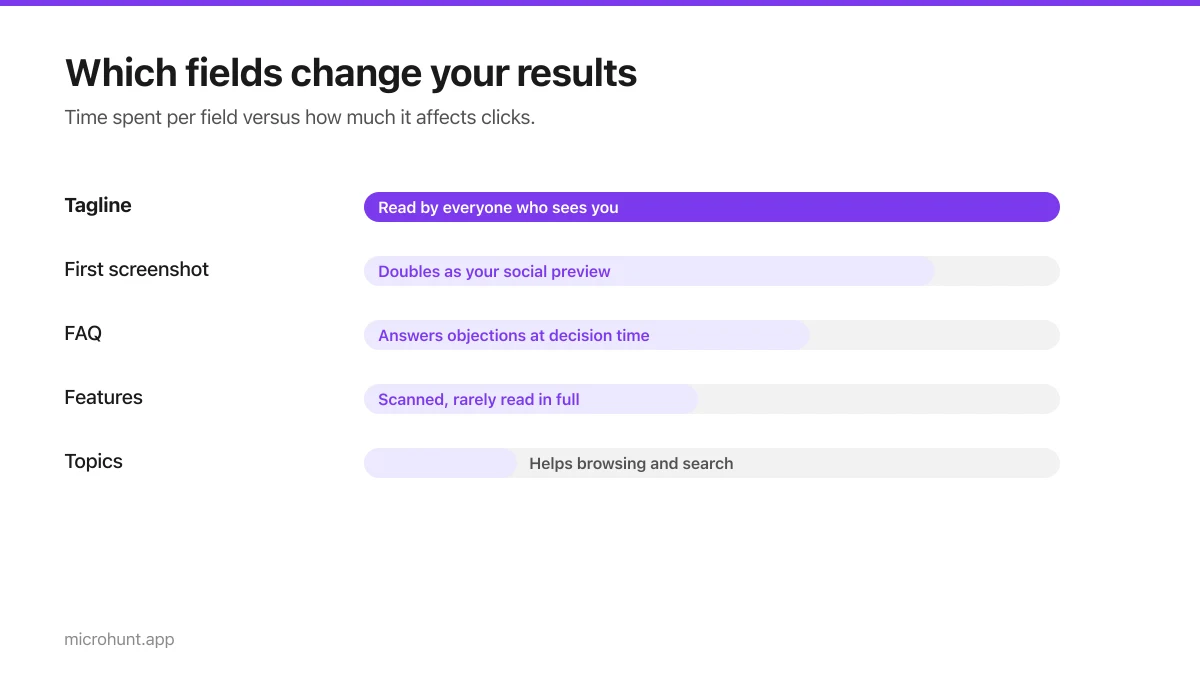
How to Submit a Product on Vuru (Step by Step)
A walk through the submission form, what each field does to your page, and the fields most people leave empty that they shouldn't.
7 min read
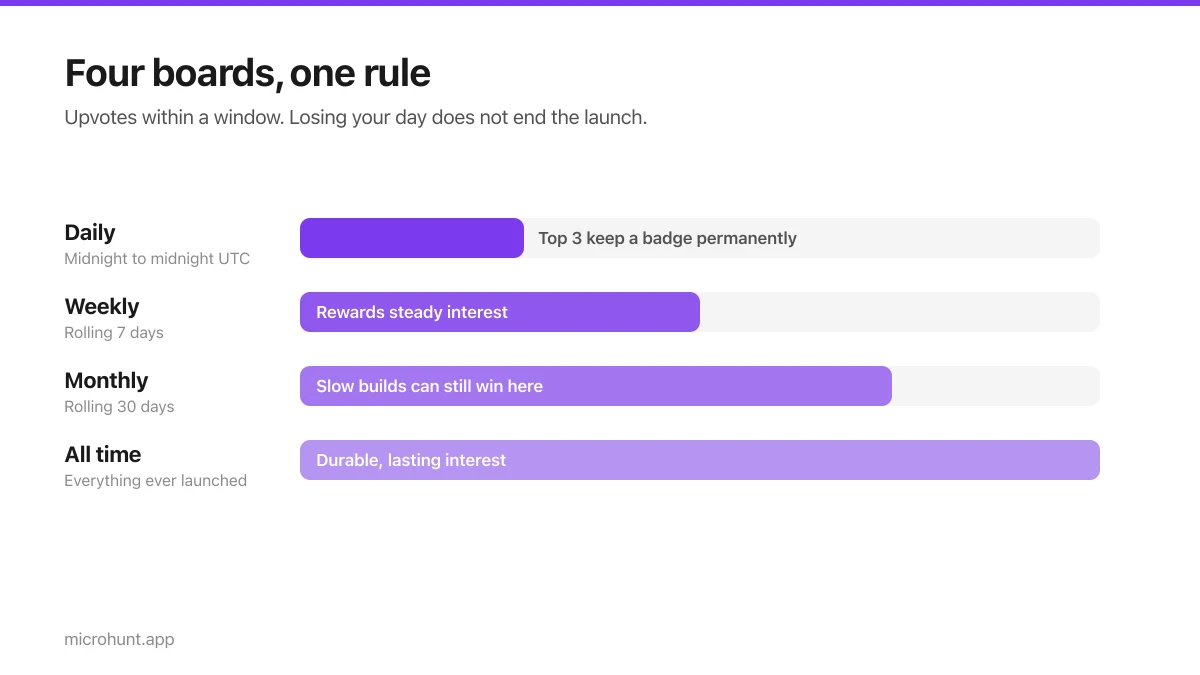
How Vuru Ranking Works (And How to Win a Badge)
Launch windows, upvotes, podium badges and what we do about vote manipulation — the whole ranking system explained plainly.
7 min read
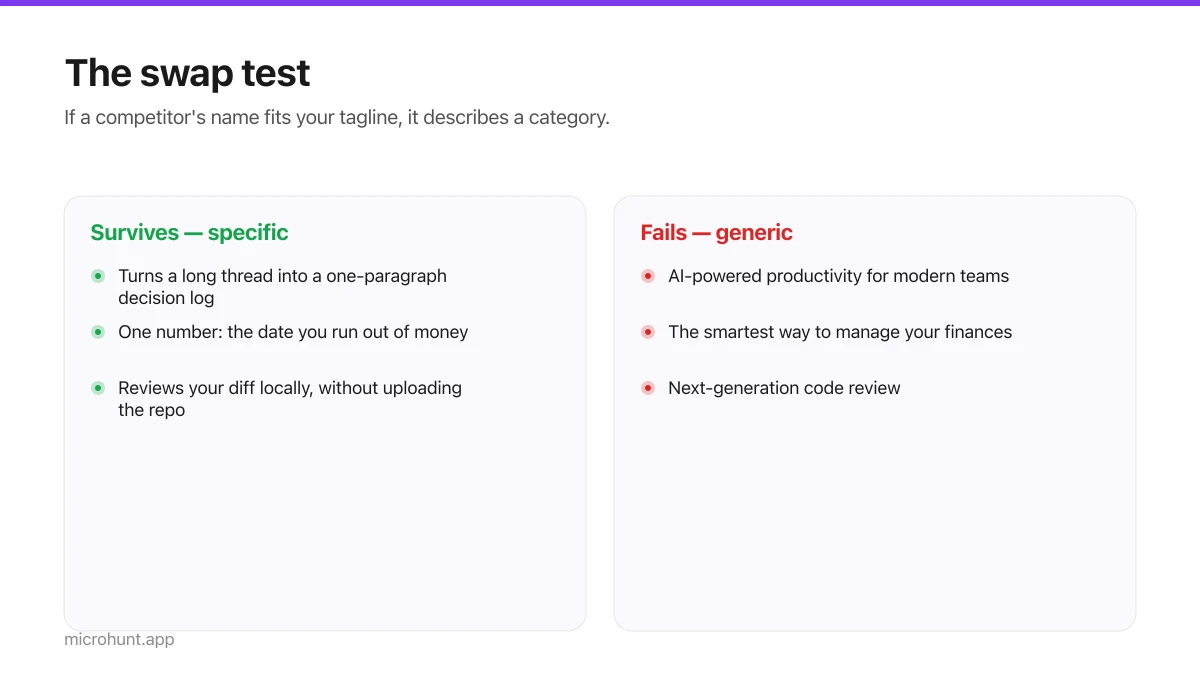
How to Write a Product Tagline That Actually Gets Clicked
The one line most people will ever read about your product, and a simple test for whether yours is doing any work.
7 min read
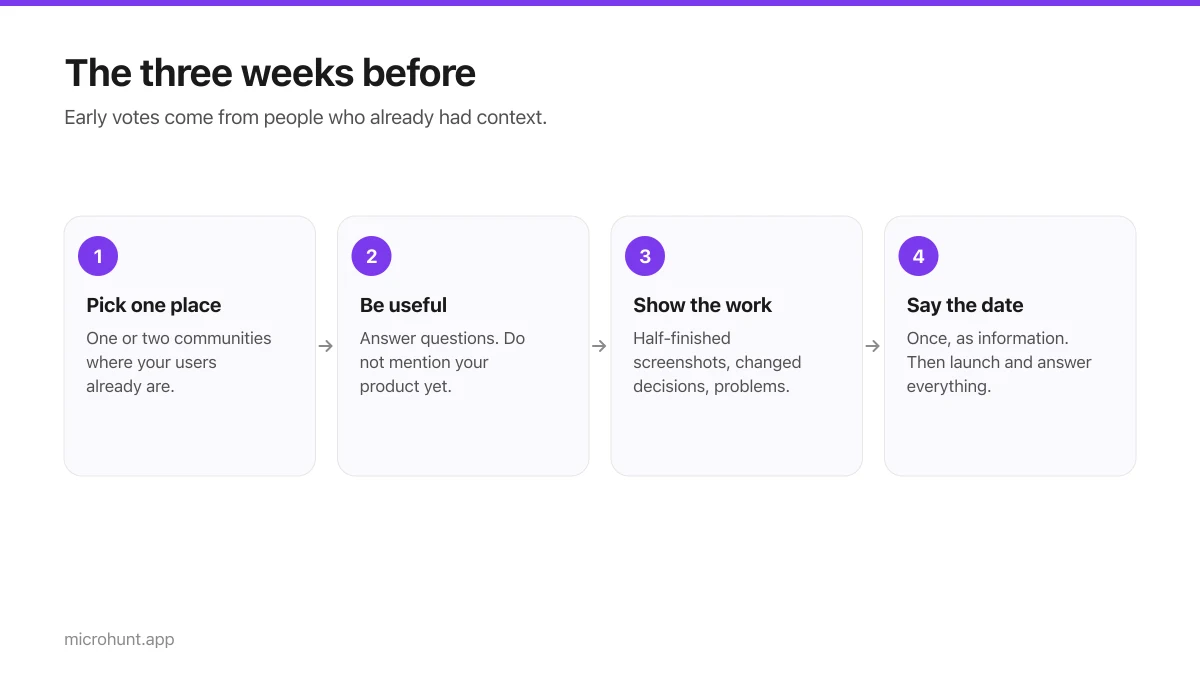
How to Get Your First Upvotes Without Begging
What actually generates early votes, why vote-for-vote groups do not work, and the approach that keeps paying off after launch day.
7 min read
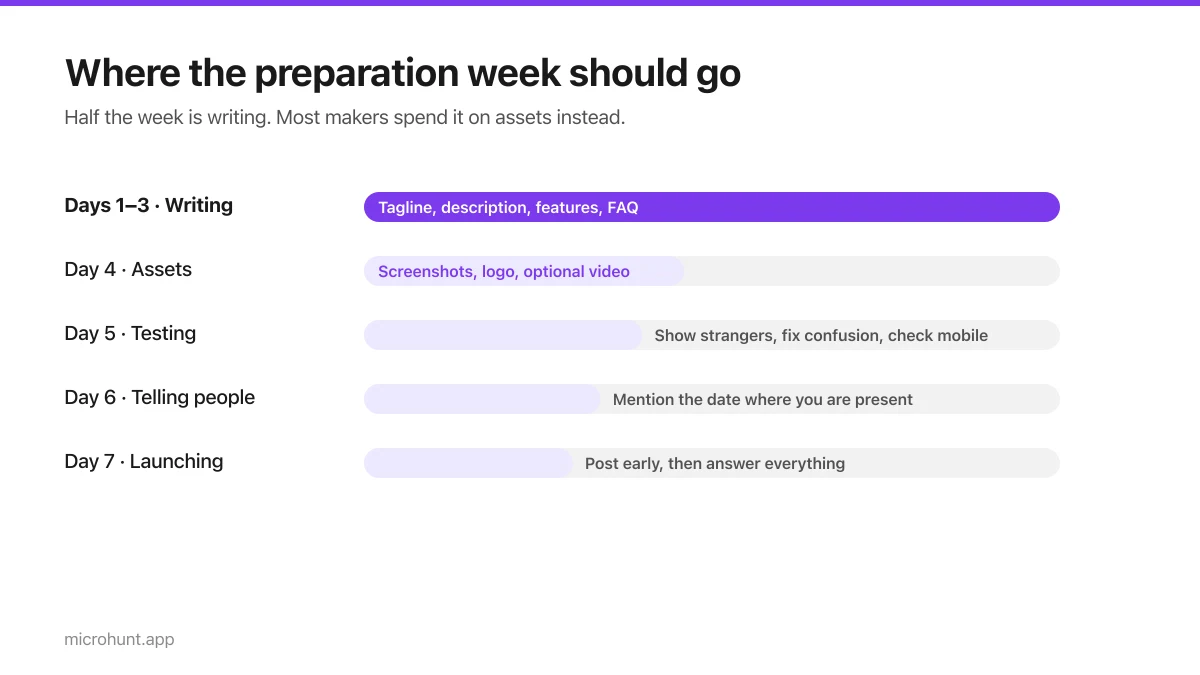
The Seven-Day Launch Checklist
A day-by-day plan for the week before you launch, weighted towards the things that actually change the outcome.
8 min read
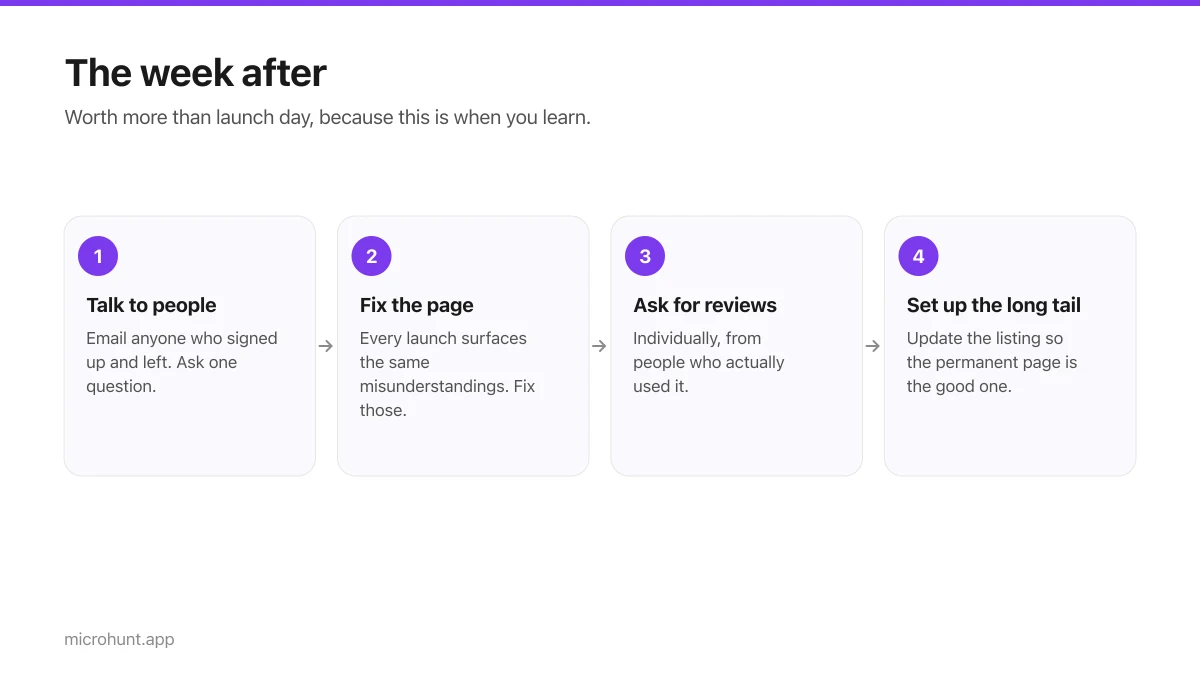
What to Do the Week After Launch Day
The traffic spike is over. Here is how to turn a day of attention into something that lasts longer than the graph.
7 min read