APIs & Testing
API clients, mocking, contract testing and docs.
Nothing launched in this category yet.
Be the firstAbout APIs & Testing
The tooling around APIs has quietly become one of the healthier corners of developer software, mostly because the problems are well understood and the feedback is fast. The launches here cover clients for making requests, mocking and stubbing, contract and schema testing, documentation generation, and the growing set of tools that watch a live API and tell you when it changed.
For clients, the meaningful axis is not features — every client can send a request — it is how well it handles the boring parts of real work: environments and secrets, sharing a collection with a colleague without leaking a token, scripting a sequence of dependent calls, and diffing two responses. Tools that store collections as plain files in your repository are markedly easier to live with than ones that keep them in a proprietary cloud, because they version, review and merge like everything else you own.
Mocking is the most underused thing in this subcategory. Being able to develop a front end against a mock that matches the contract, before the back end exists, removes the single most common source of integration delay. The good mocking tools generate from a schema rather than from recorded traffic, so the mock stays honest as the contract evolves.
Contract testing is the grown-up version of the same idea and is where teams find bugs that unit tests structurally cannot see. The value is not in catching a broken endpoint — you will notice that — it is in catching the field that silently changed type, or the optional property that quietly became required. Tools that fail loudly on both directions of drift are doing the job.
Documentation generators are judged almost entirely on whether the output stays true. Docs generated from the schema at build time stay correct. Docs written by hand alongside the schema do not, no matter how good the intention, and the gap between them is where support tickets come from.
Pricing here is usually per-seat and generally sane, with the exception of anything hosting your mocks or monitors, where the meter is request volume. If you are running a monitor every thirty seconds against twenty endpoints, do the multiplication before you commit.
From the blog
Reading on launching, ranking and apis & testing.
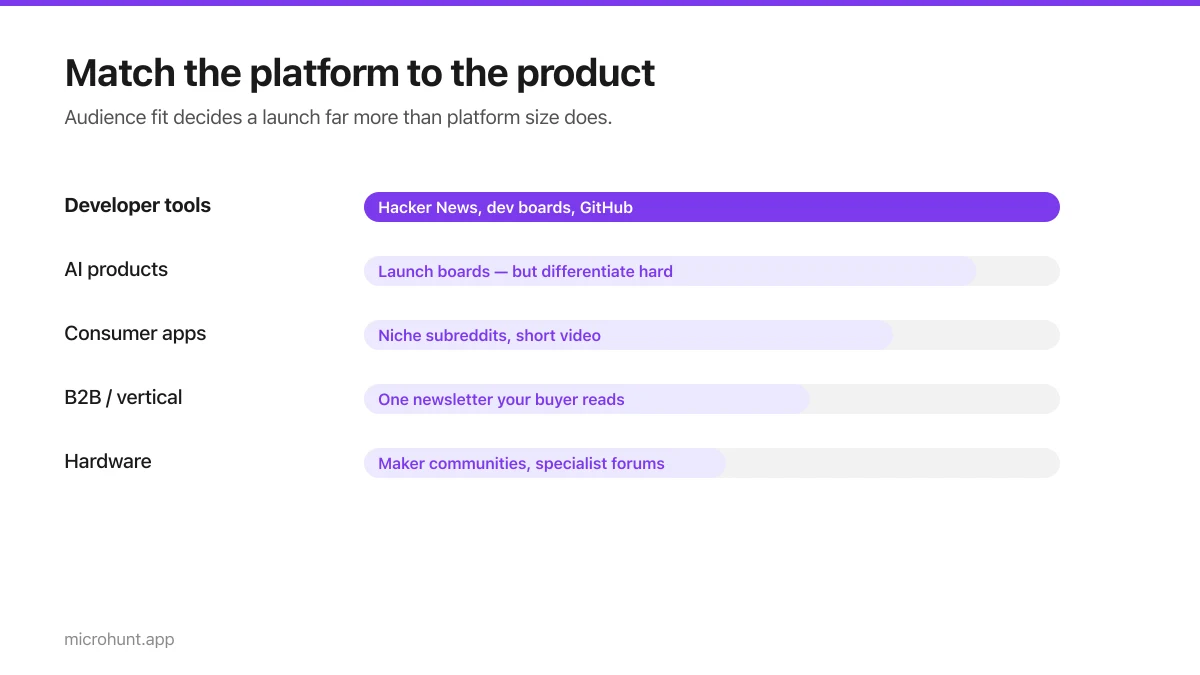
Best Product Hunt Alternatives for Launching in 2026
Where else to launch when Product Hunt is not the right fit — what each platform is actually good at, who shows up, and what it costs.
8 min read
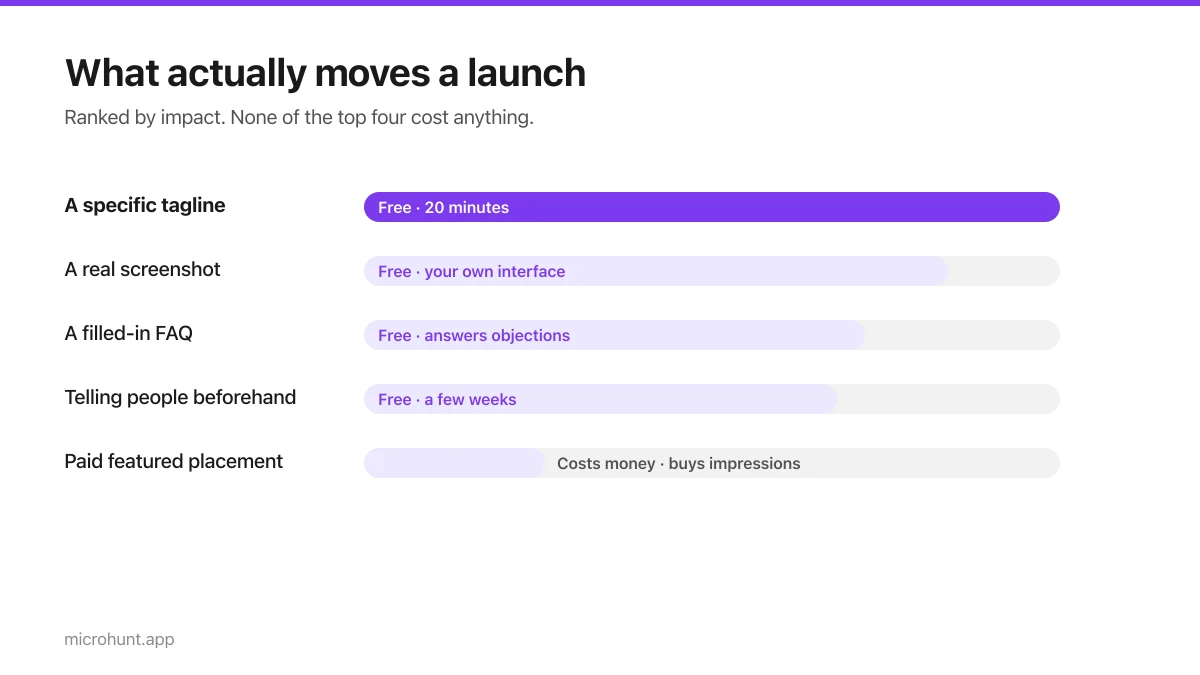
Free Launch Platforms for Indie Makers (No Budget Needed)
You do not need to pay to launch. Here are the places that are genuinely free, what each expects from you, and where paying is actually worth it.
7 min read
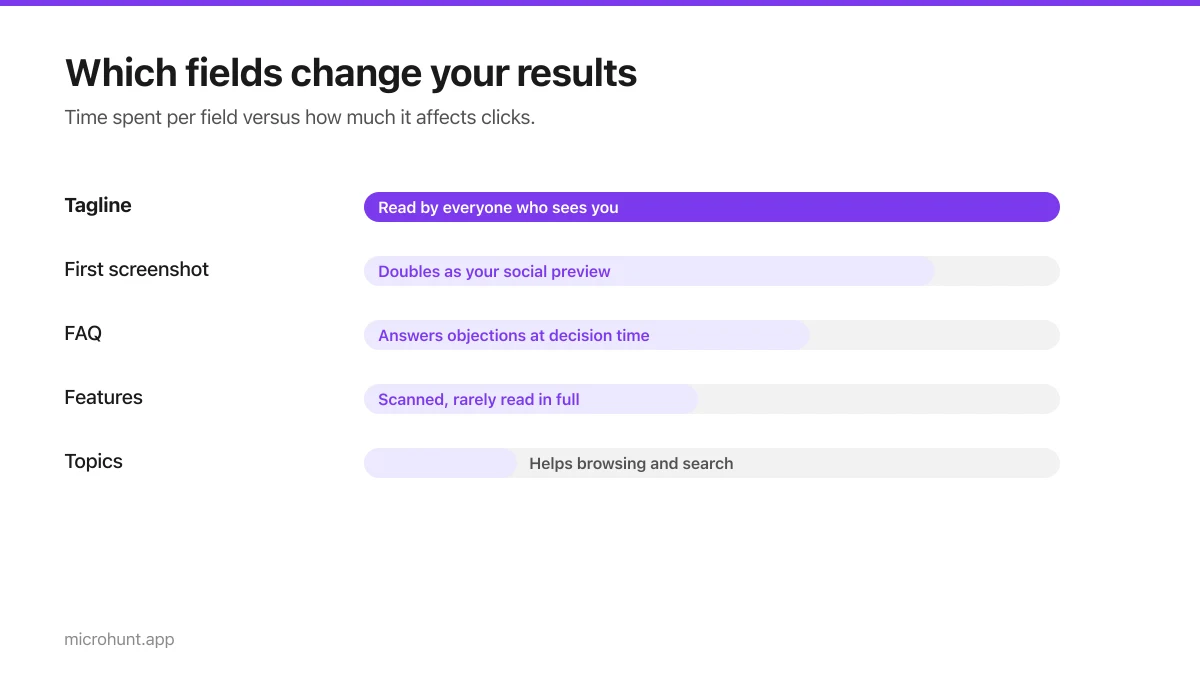
How to Submit a Product on Vuru (Step by Step)
A walk through the submission form, what each field does to your page, and the fields most people leave empty that they shouldn't.
7 min read
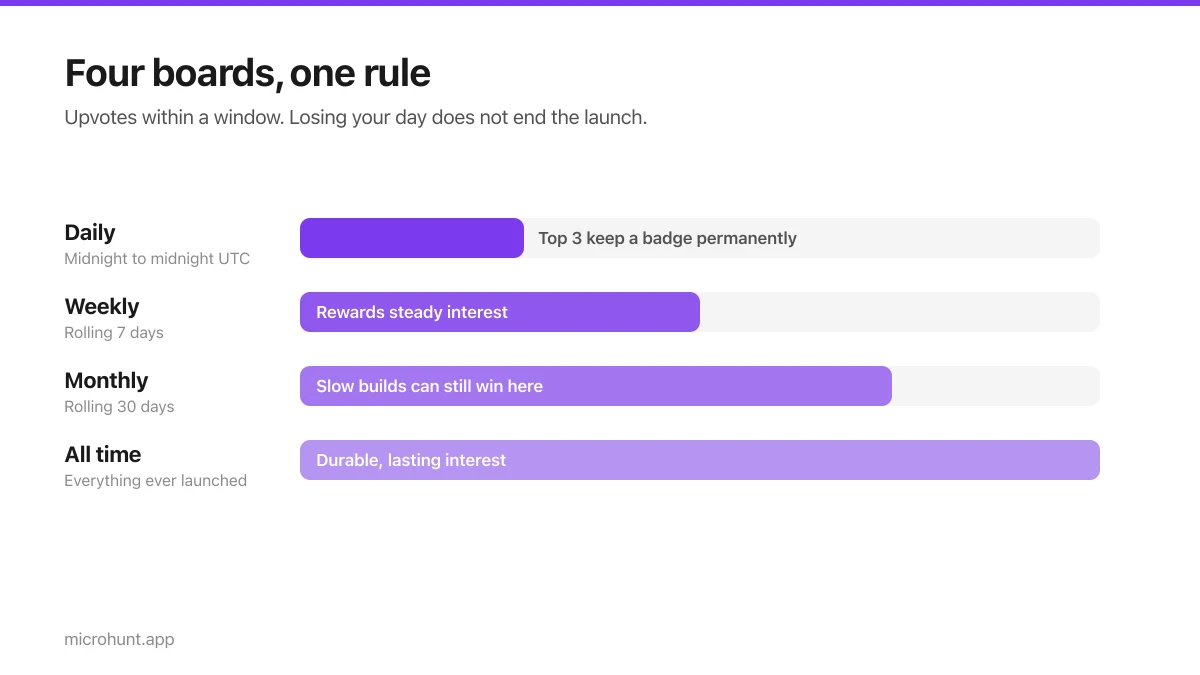
How Vuru Ranking Works (And How to Win a Badge)
Launch windows, upvotes, podium badges and what we do about vote manipulation — the whole ranking system explained plainly.
7 min read
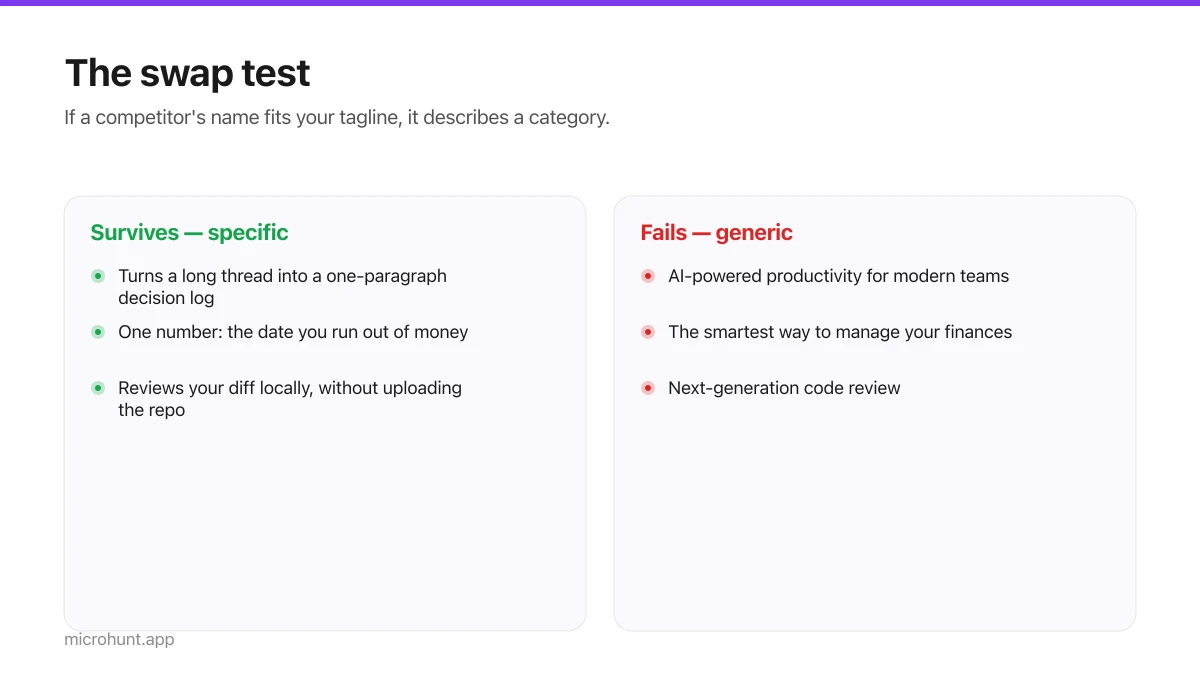
How to Write a Product Tagline That Actually Gets Clicked
The one line most people will ever read about your product, and a simple test for whether yours is doing any work.
7 min read
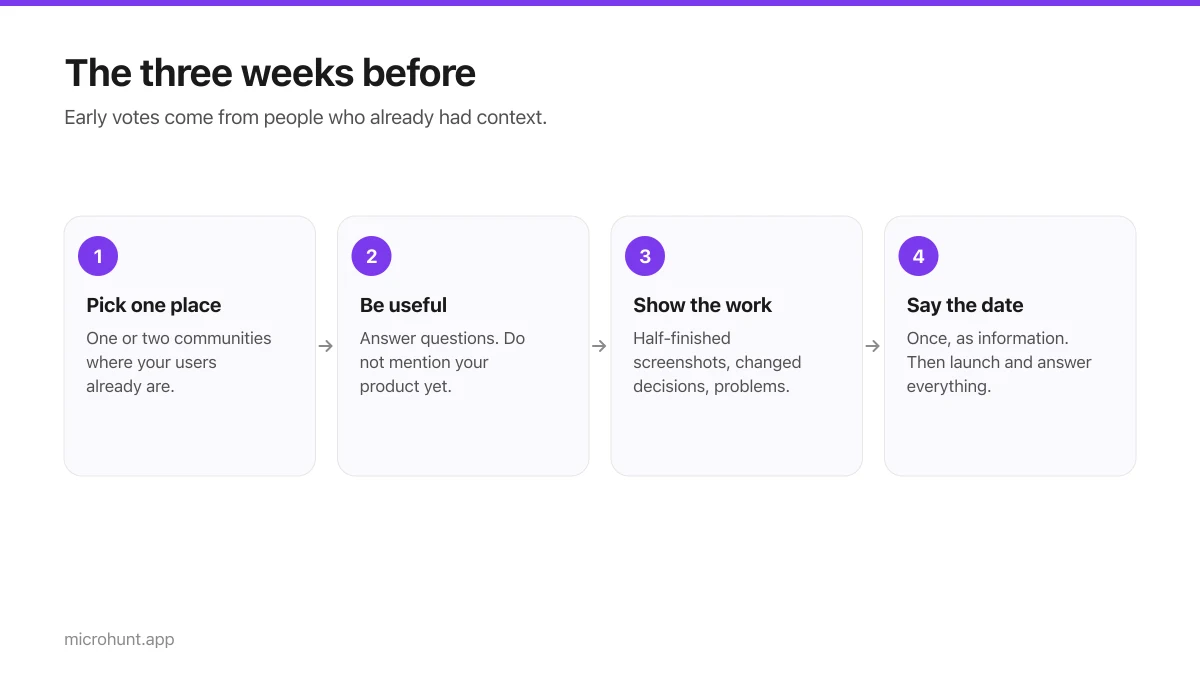
How to Get Your First Upvotes Without Begging
What actually generates early votes, why vote-for-vote groups do not work, and the approach that keeps paying off after launch day.
7 min read
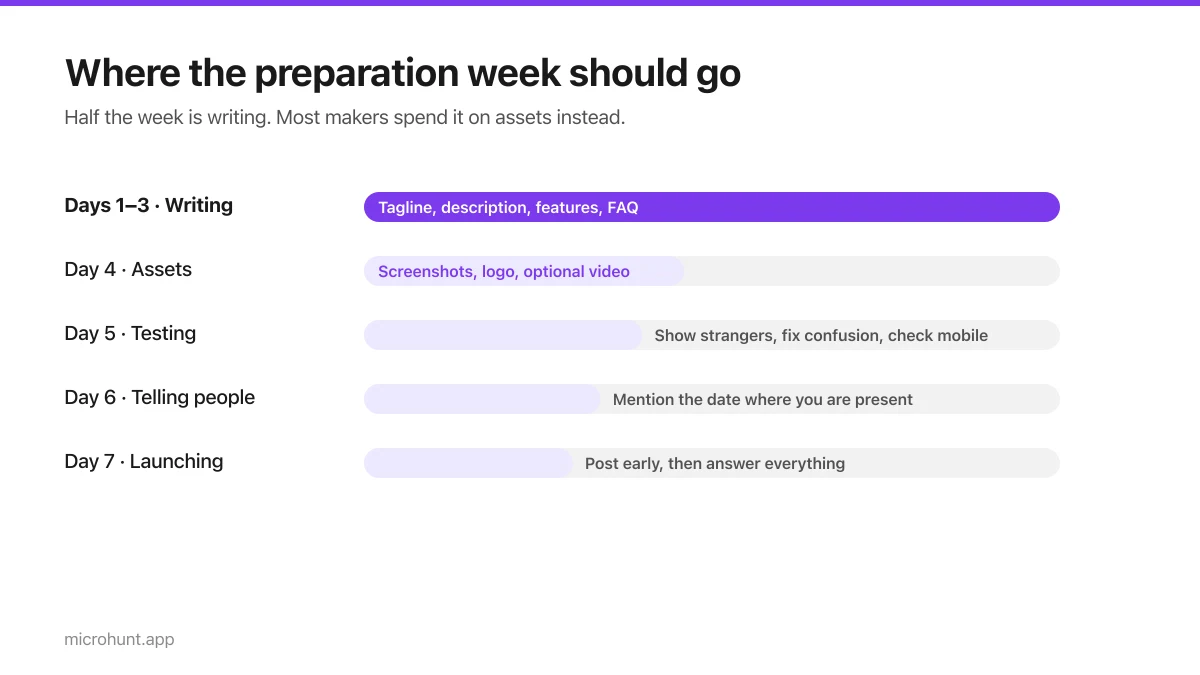
The Seven-Day Launch Checklist
A day-by-day plan for the week before you launch, weighted towards the things that actually change the outcome.
8 min read
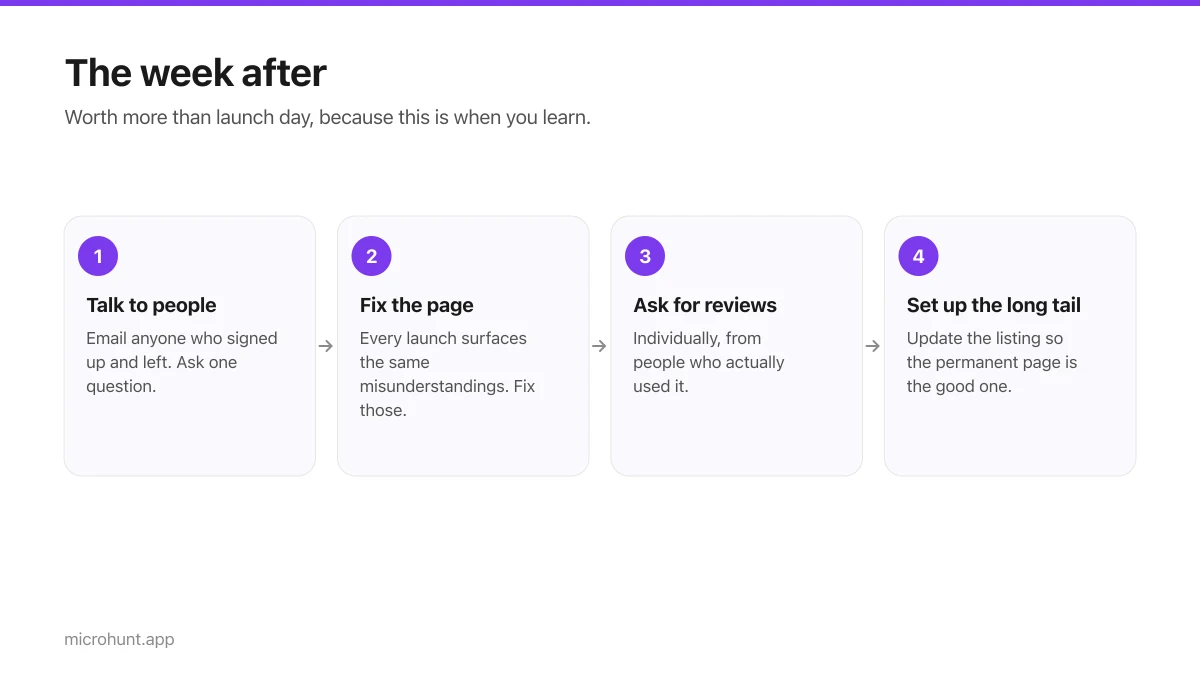
What to Do the Week After Launch Day
The traffic spike is over. Here is how to turn a day of attention into something that lasts longer than the graph.
7 min read