Code Editors
Editors, IDEs and the extensions around them.
Nothing launched in this category yet.
Be the firstAbout Code Editors
Editors are the most personal tool a developer owns, which makes this an unusually hard subcategory to give advice about and an unusually fun one to browse. Someone has spent a year of evenings on a modal editing layer, a terminal-first workflow, a language server that finally understands a framework properly, or an extension that fixes the one thing that has annoyed them since 2019. Most of it is free, most of it is open source, and a surprising amount of it is genuinely better than what ships in the mainstream tools.
The launches here fall into a few groups. Full editors and IDEs are the rarest and the hardest to switch to, because the cost is not installing them, it is rebuilding the muscle memory and the twenty small configurations you have forgotten you rely on. Extensions and plugins are the highest-value things in the category for most people: low commitment, immediately useful, and easy to abandon. Then there are the adjacent tools — themes, fonts built for code, keymap layers, and the small utilities that sit beside the editor rather than inside it.
The AI-assisted editors deserve a note of their own, because the category moved fast and the differences are real. The meaningful question is scope of context. An assistant that sees the current file gives you plausible completions. One that has read the repository, understands your imports and knows the conventions in your own codebase gives you completions you actually keep. The second kind is dramatically more useful and correspondingly more expensive to run, and increasingly some of it runs locally.
When evaluating anything here, the honest test is a week of real work rather than an afternoon of trying features. Editor tools have a distinctive failure pattern: delightful in a demo, slightly wrong in a way that costs you fifteen seconds forty times a day. That only shows up under real use, which is also why the reviews on these launches are worth reading closely — the useful ones are written a month later.
For makers shipping in this space, the audience here is technical, sceptical and generous in roughly equal measure. They will find the edge cases, and they will also send patches. Being specific about what your tool does not do is more persuasive to this group than any feature list. See [where to launch a developer tool](/blog/best-product-hunt-alternatives) for how these launches tend to go.
From the blog
Reading on launching, ranking and code editors.
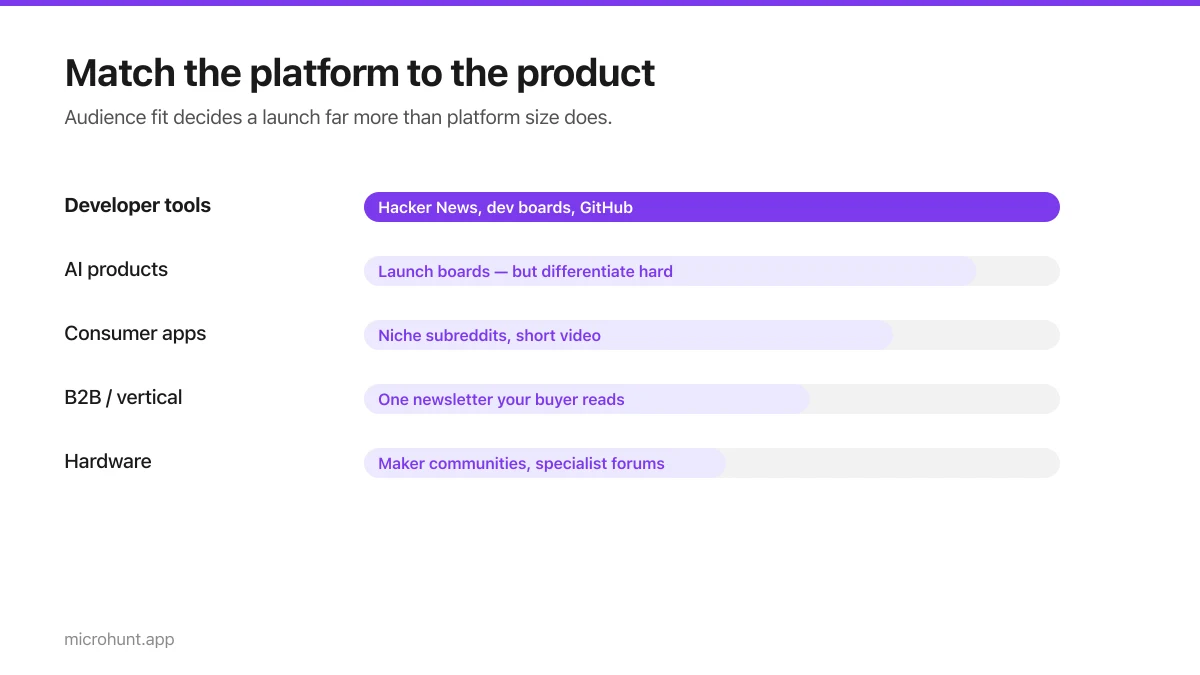
Best Product Hunt Alternatives for Launching in 2026
Where else to launch when Product Hunt is not the right fit — what each platform is actually good at, who shows up, and what it costs.
8 min read
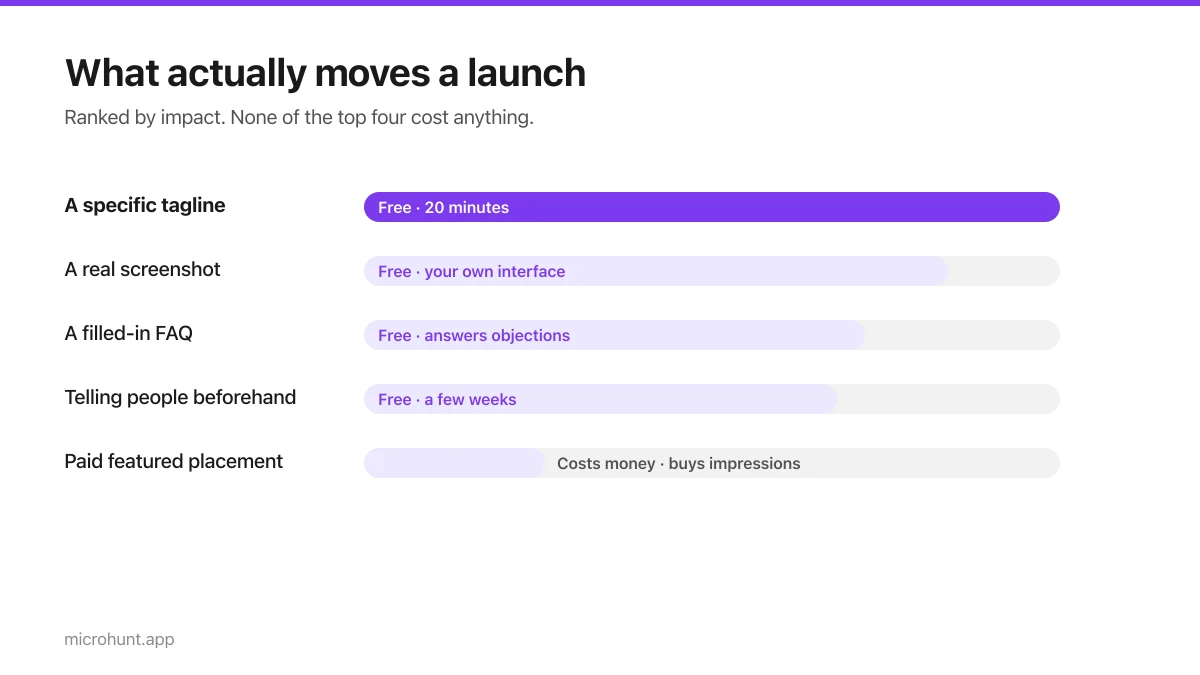
Free Launch Platforms for Indie Makers (No Budget Needed)
You do not need to pay to launch. Here are the places that are genuinely free, what each expects from you, and where paying is actually worth it.
7 min read
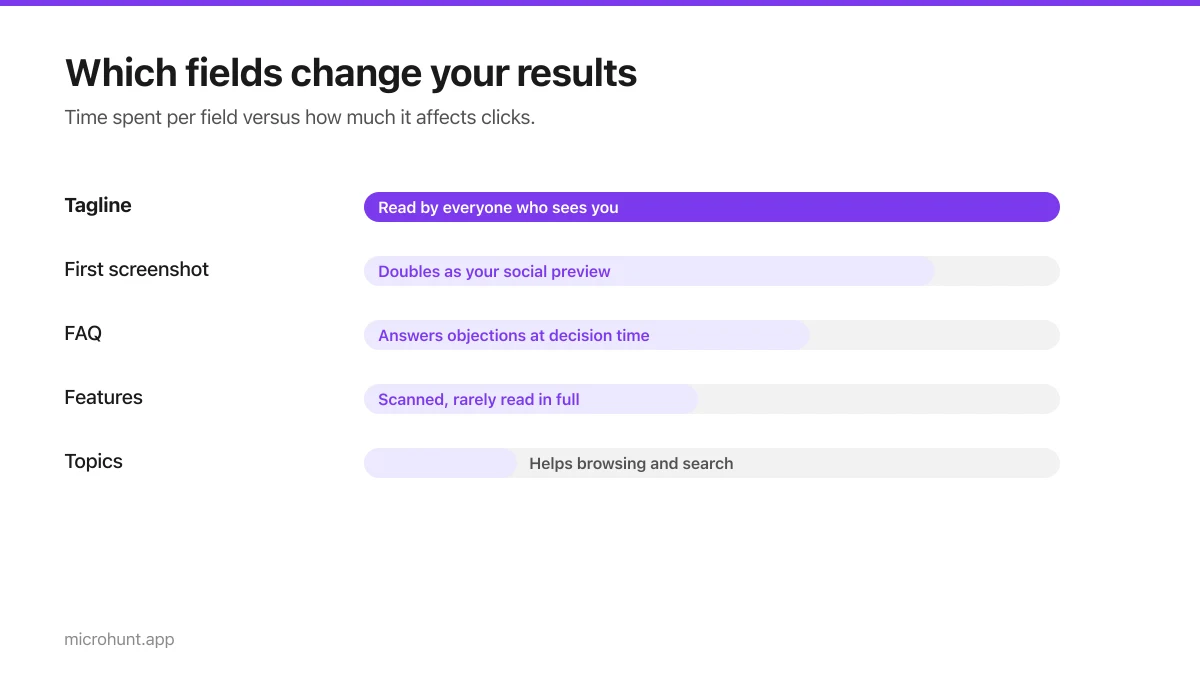
How to Submit a Product on Vuru (Step by Step)
A walk through the submission form, what each field does to your page, and the fields most people leave empty that they shouldn't.
7 min read
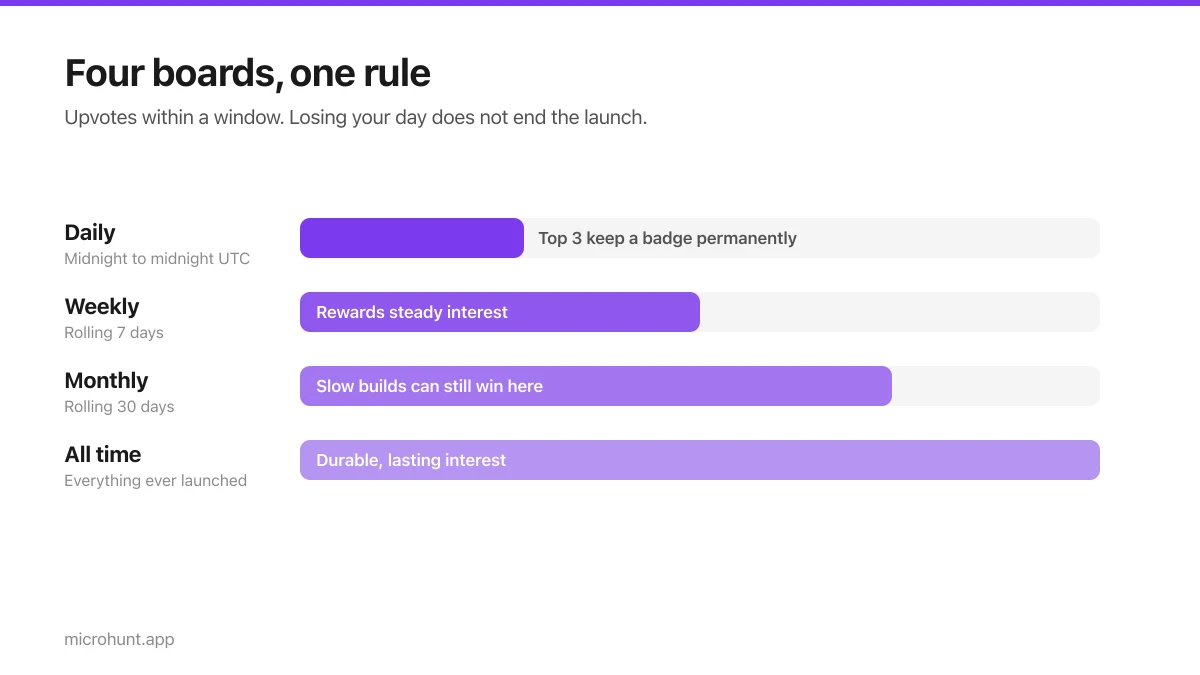
How Vuru Ranking Works (And How to Win a Badge)
Launch windows, upvotes, podium badges and what we do about vote manipulation — the whole ranking system explained plainly.
7 min read
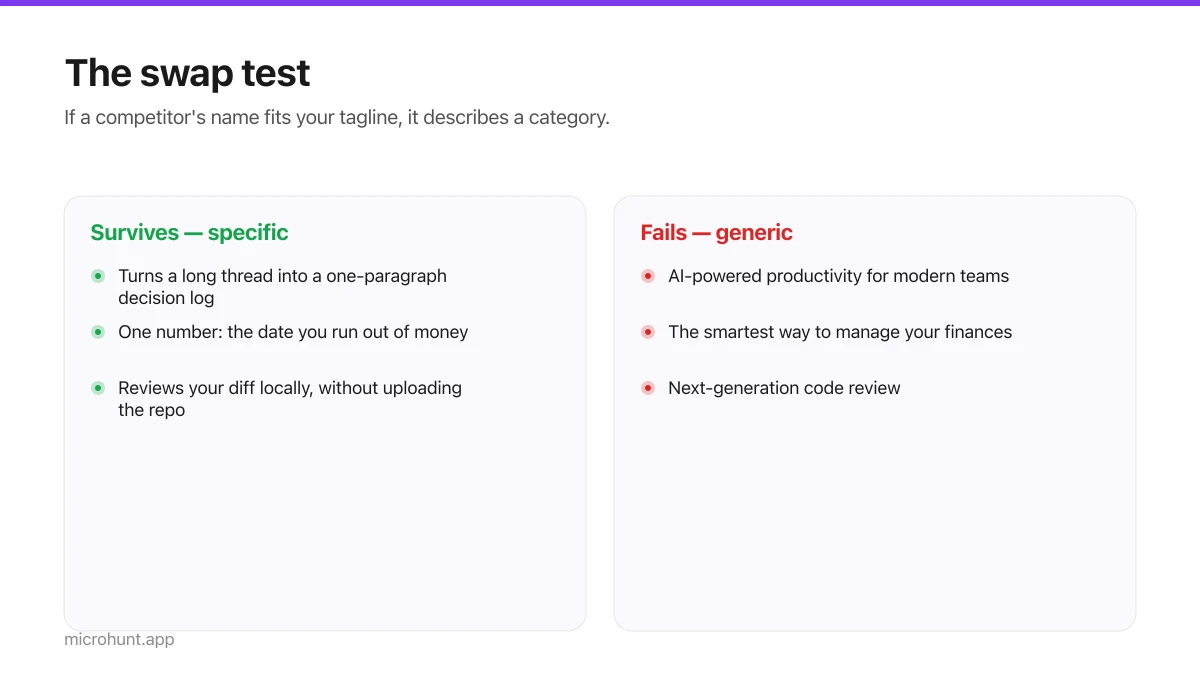
How to Write a Product Tagline That Actually Gets Clicked
The one line most people will ever read about your product, and a simple test for whether yours is doing any work.
7 min read
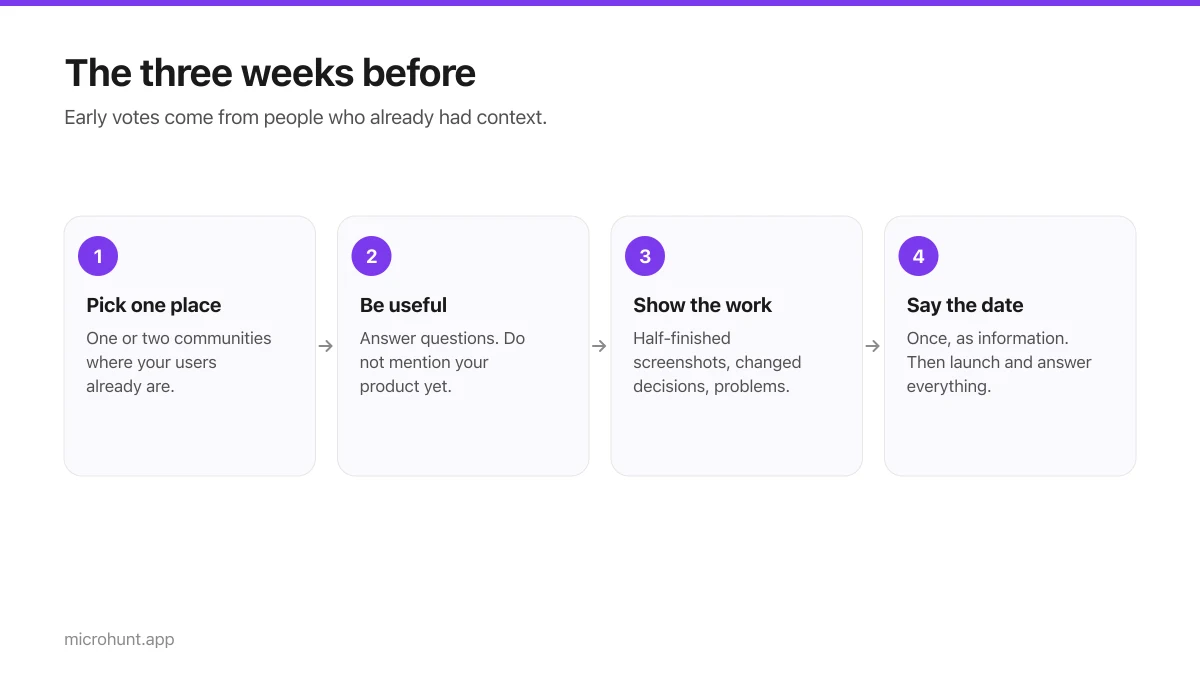
How to Get Your First Upvotes Without Begging
What actually generates early votes, why vote-for-vote groups do not work, and the approach that keeps paying off after launch day.
7 min read
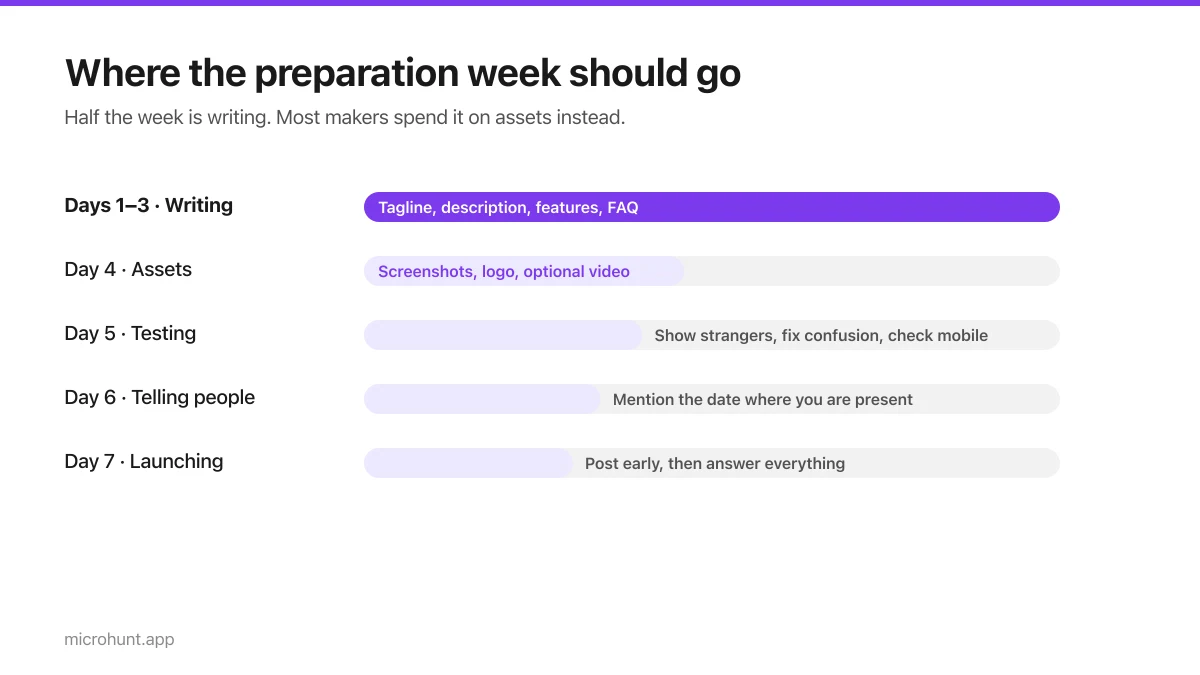
The Seven-Day Launch Checklist
A day-by-day plan for the week before you launch, weighted towards the things that actually change the outcome.
8 min read
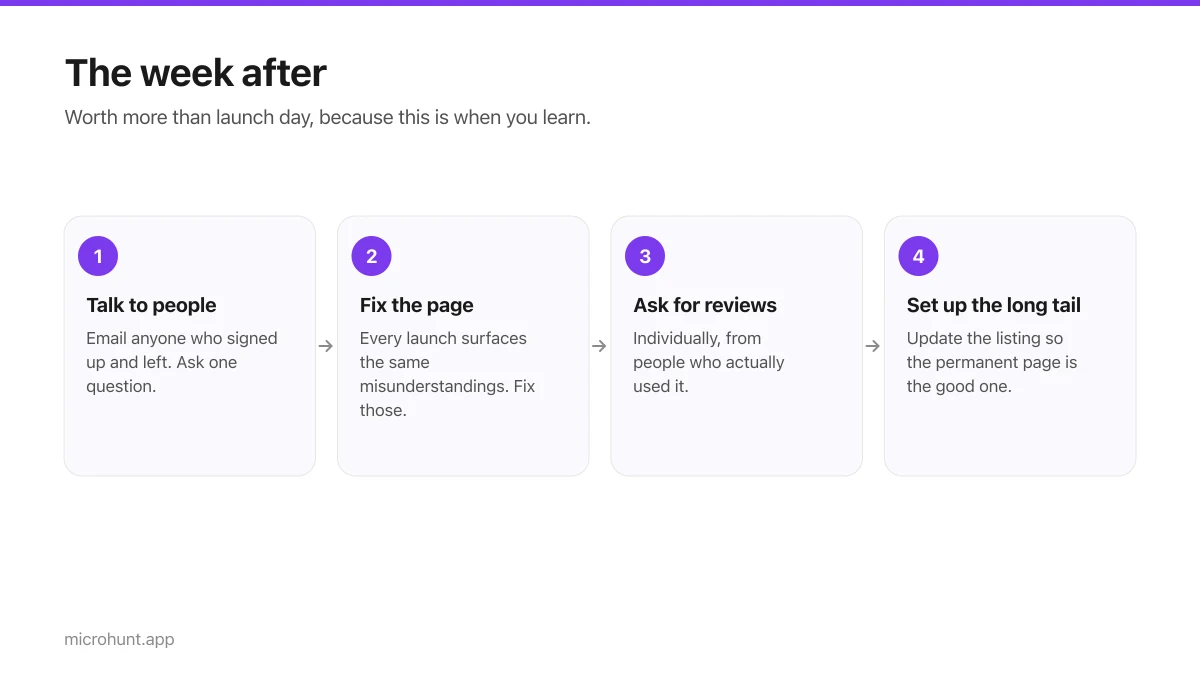
What to Do the Week After Launch Day
The traffic spike is over. Here is how to turn a day of attention into something that lasts longer than the graph.
7 min read