DevOps & Deploys
CI, pipelines, hosting and release tooling.
Nothing launched in this category yet.
Be the firstAbout DevOps & Deploys
Deployment tooling has spent a decade oscillating between two poles: hand me a container and stop asking me questions, or give me every knob because I have a specific reason. Both are legitimate, and the tools in this subcategory sit somewhere along that line. Knowing where you are on it is most of the work of choosing well.
At the simple end are the platforms that take a repository and produce a running application, with sensible defaults for TLS, environments, rollbacks and logs. They are excellent until the day you need something they did not anticipate, and the relevant question is how gracefully they let you out. Platforms that generate a config file you can read and eventually own are kinder than ones where the escape hatch is a rewrite.
At the other end are the pipeline and infrastructure tools — CI runners, deployment orchestrators, infrastructure-as-code, secret injection, migration runners. Here the differentiators are speed, cache behaviour and how comprehensible the failure output is. A CI system that fails with a clear message about which step and which file has saved more engineering hours than any feature.
Cost in this subcategory has a specific trap: build minutes and bandwidth. Compute for running your app is usually easy to predict. Compute for building it is not, particularly for anything with a large dependency install, and a repository that builds forty times a day can cost more to build than to run. Look for cache behaviour and what happens to pricing on a cache miss.
The self-hosted options are worth a look even if you do not end up using them, because they clarify what you are paying for elsewhere. Running your own CI runner or deploy target is cheaper in cash and more expensive in attention, and the trade is reasonable when you already have someone whose job includes the infrastructure and unreasonable when you do not.
One thing that consistently separates good tools here from bad ones is what happens when a deploy goes wrong at two in the morning. Fast rollback, readable logs, and a clear indication of what is currently running are worth more than any amount of green-path polish. Tools whose landing page discusses failure are usually the ones built by people who have been paged.
From the blog
Reading on launching, ranking and devops & deploys.
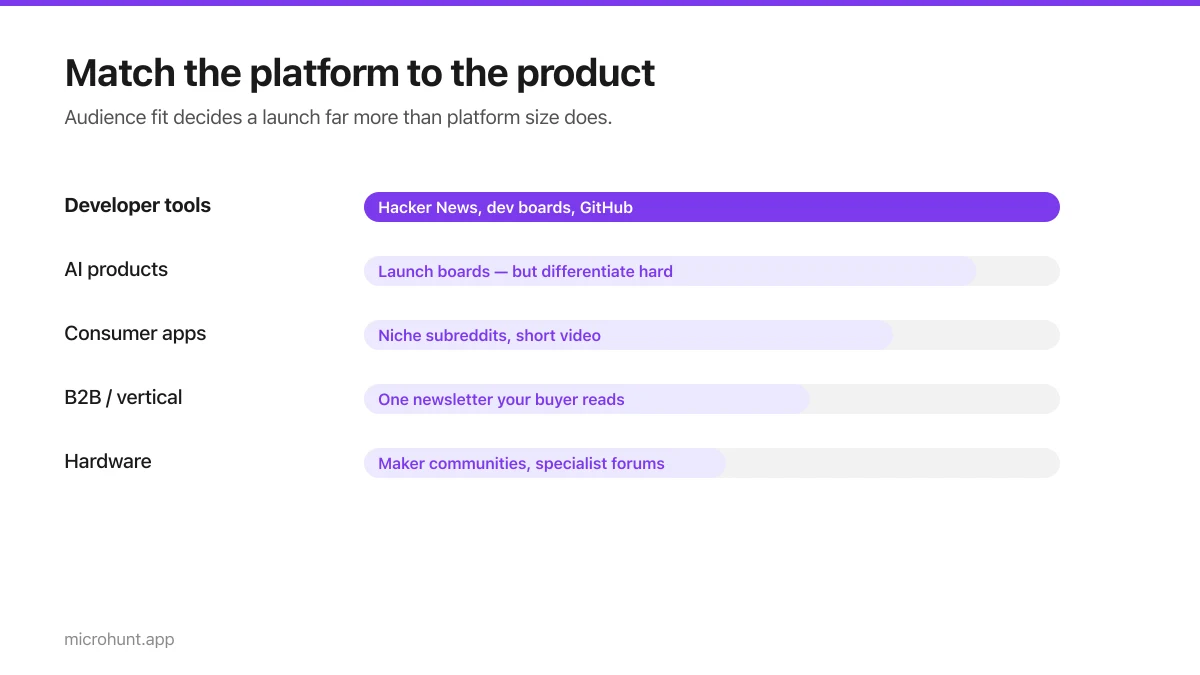
Best Product Hunt Alternatives for Launching in 2026
Where else to launch when Product Hunt is not the right fit — what each platform is actually good at, who shows up, and what it costs.
8 min read
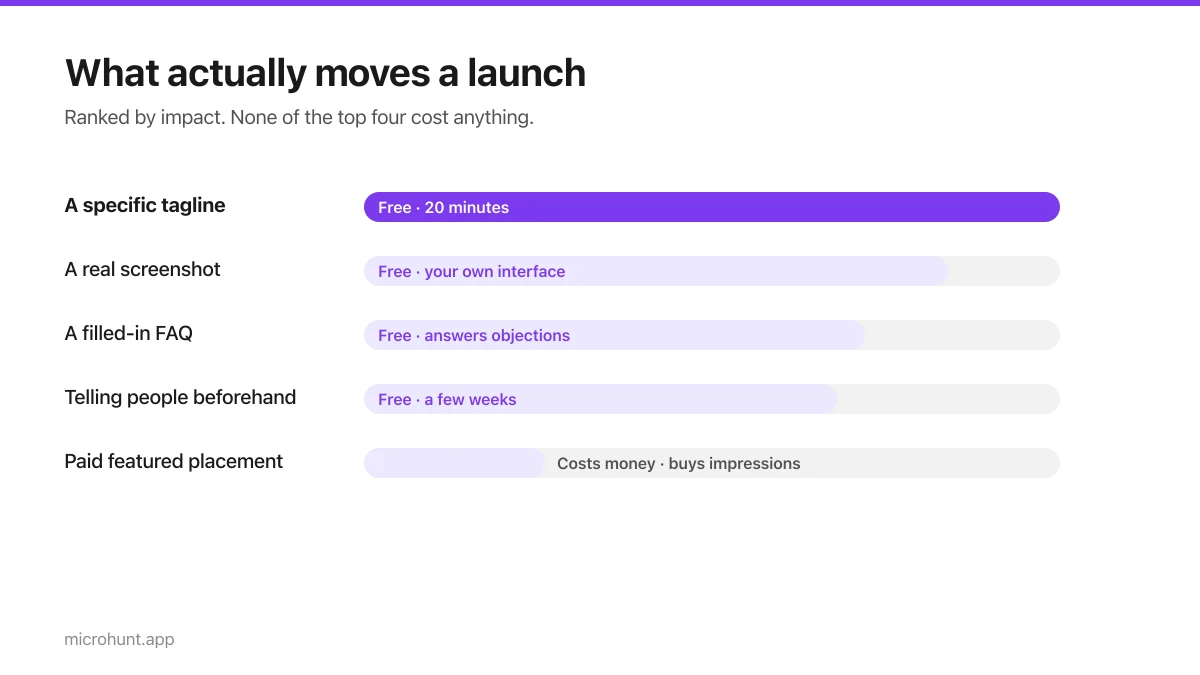
Free Launch Platforms for Indie Makers (No Budget Needed)
You do not need to pay to launch. Here are the places that are genuinely free, what each expects from you, and where paying is actually worth it.
7 min read
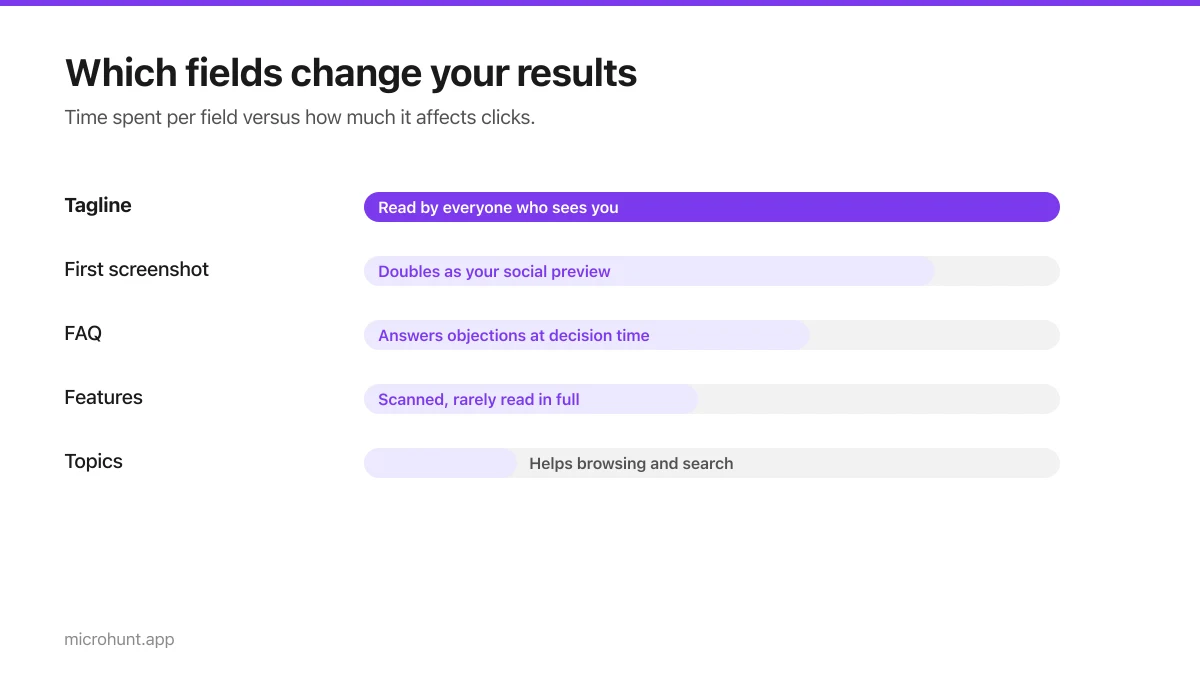
How to Submit a Product on Vuru (Step by Step)
A walk through the submission form, what each field does to your page, and the fields most people leave empty that they shouldn't.
7 min read
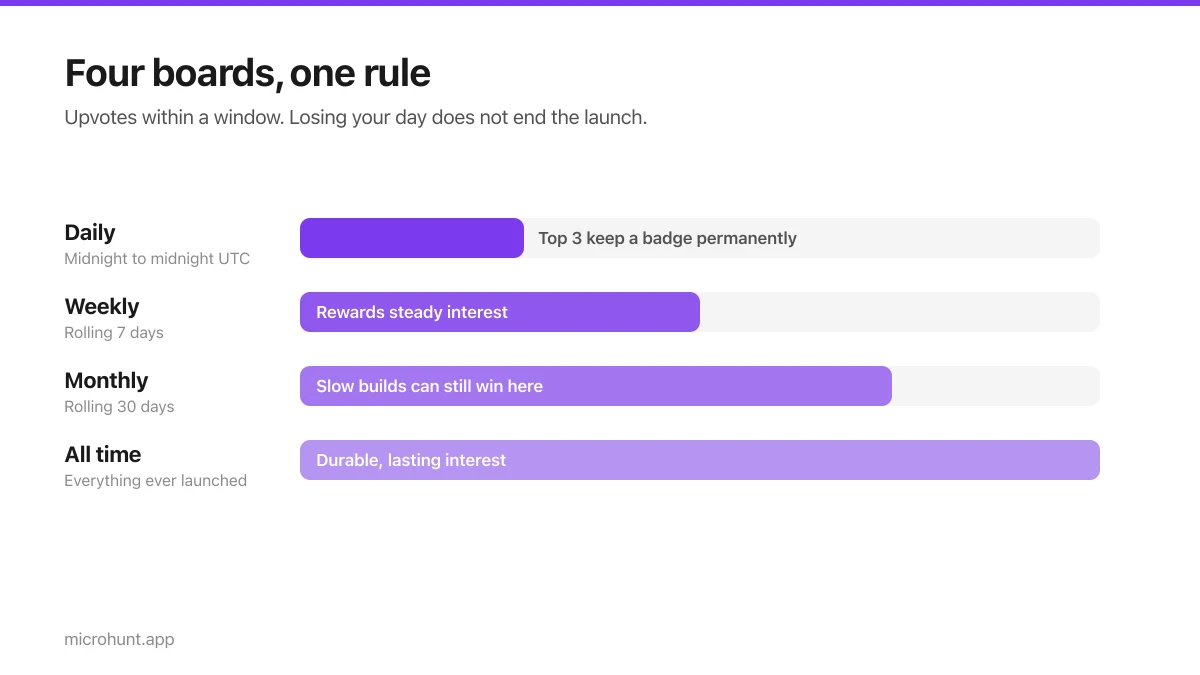
How Vuru Ranking Works (And How to Win a Badge)
Launch windows, upvotes, podium badges and what we do about vote manipulation — the whole ranking system explained plainly.
7 min read
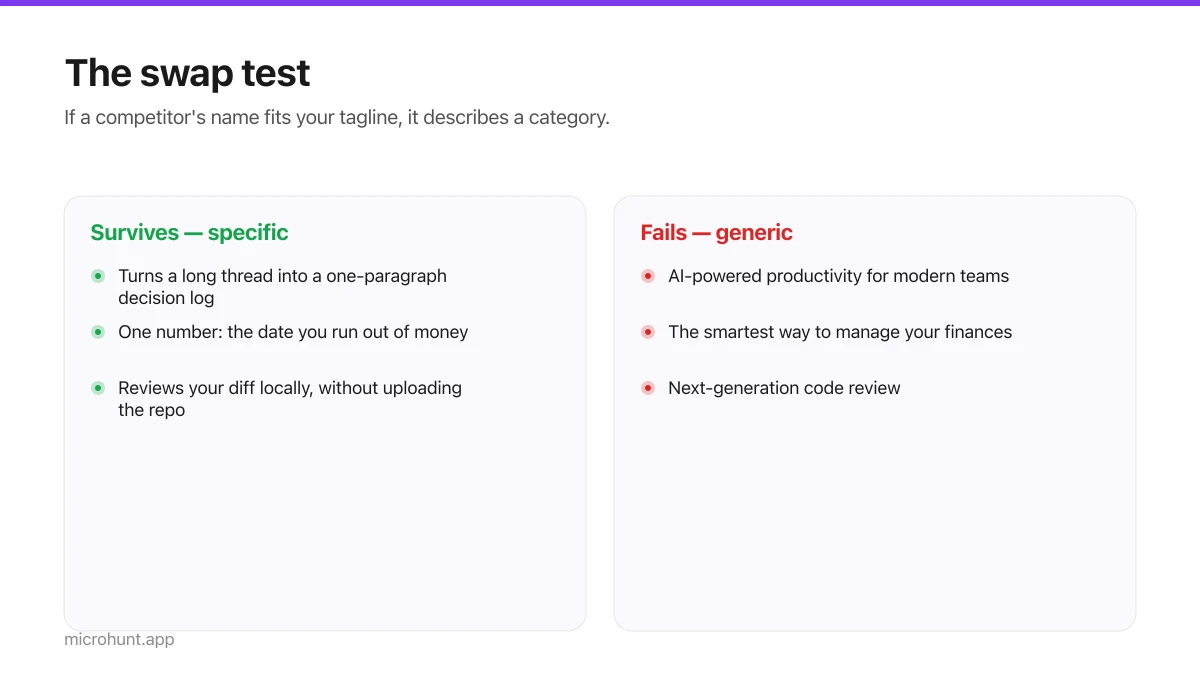
How to Write a Product Tagline That Actually Gets Clicked
The one line most people will ever read about your product, and a simple test for whether yours is doing any work.
7 min read
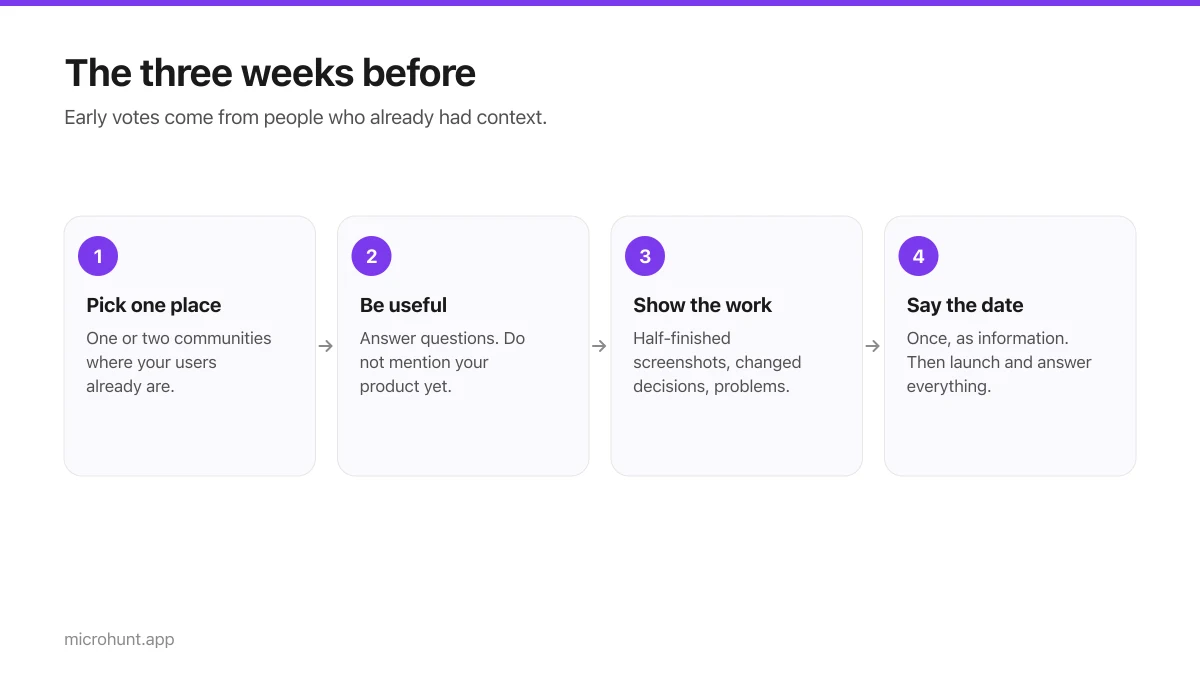
How to Get Your First Upvotes Without Begging
What actually generates early votes, why vote-for-vote groups do not work, and the approach that keeps paying off after launch day.
7 min read
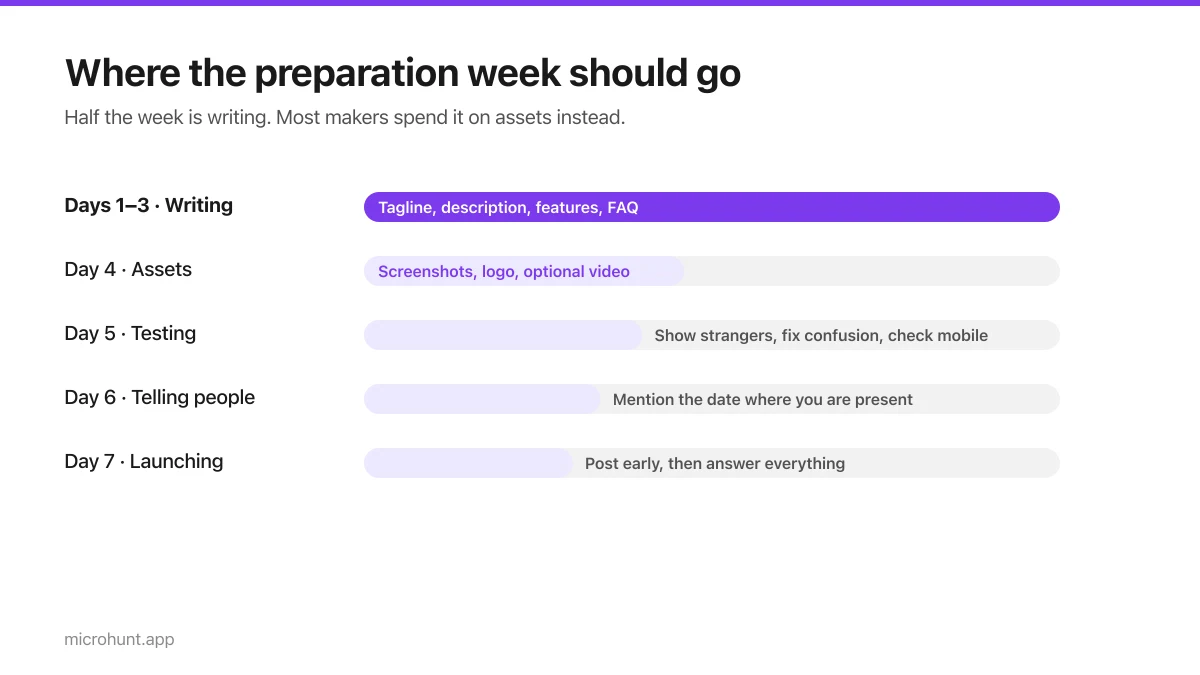
The Seven-Day Launch Checklist
A day-by-day plan for the week before you launch, weighted towards the things that actually change the outcome.
8 min read
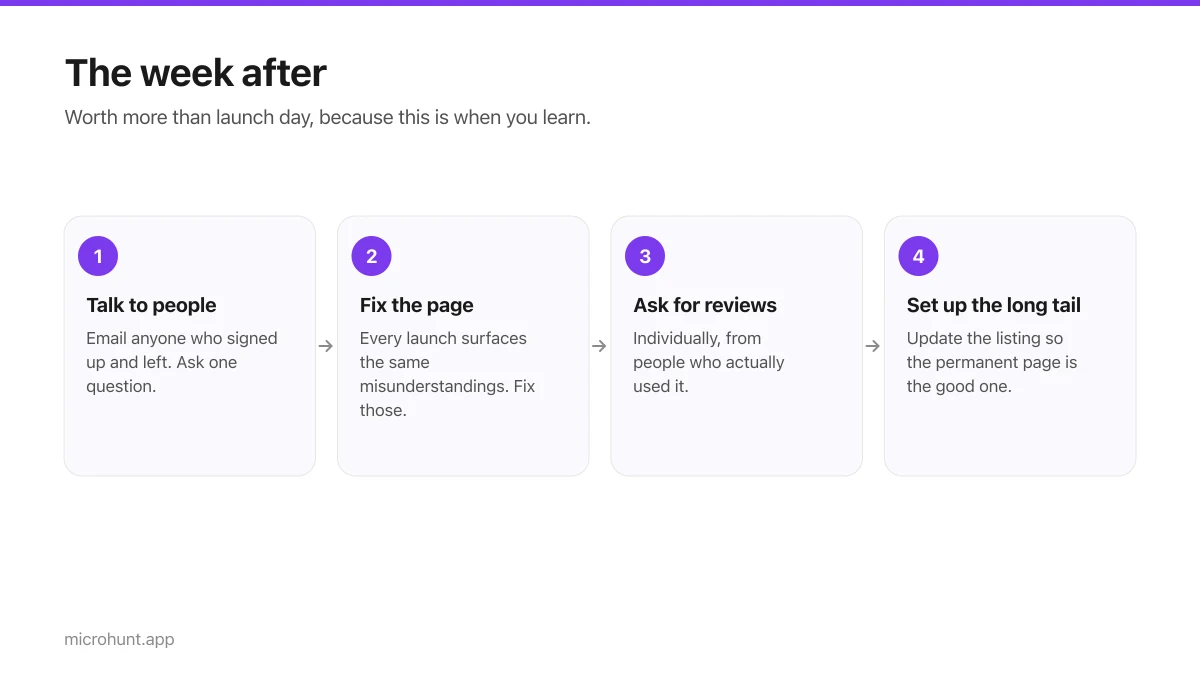
What to Do the Week After Launch Day
The traffic spike is over. Here is how to turn a day of attention into something that lasts longer than the graph.
7 min read