Landing Pages
Page builders, forms and conversion tooling.
Nothing launched in this category yet.
Be the firstAbout Landing Pages
Landing page tooling covers builders, templates, testing tools and the analytics layer that tells you whether a change helped. The category is crowded, and the differences that matter in practice are narrower than the feature comparisons suggest.
Speed is the underrated one. A landing page exists to convert traffic that frequently arrives on a phone on a mediocre connection, and every second of load costs a measurable share of it. Many builders produce pages weighed down by scripts nobody asked for. Before committing to a tool, build a representative page and measure it on a throttled mobile connection rather than on your laptop.
Structurally, pages that convert tend to share a small number of properties: they say what the thing is within the first screen without requiring a scroll or a video, they show the product rather than describing it abstractly, they answer the two or three objections a sceptical reader will actually have, and they ask for one thing. The most common failure is offering three equally weighted actions, which reliably converts worse than offering one.
On testing, the arithmetic deserves honesty. Detecting a small improvement requires far more traffic than most small products have, and a test declared after a few hundred visitors is usually reading noise. If your traffic is modest, you will learn more from five recorded sessions of real people using the page, or from asking five customers what nearly stopped them, than from a split test you cannot power. Reserve testing for pages with real volume, and test large changes rather than button colours.
Forms are where conversion quietly leaks. Every additional field costs completions, and fields you could infer or ask for later cost the most. If you are collecting something you will not act on this month, remove it.
Social proof works when it is specific and concrete, and is ignored when it is generic. A named customer describing what changed for them outperforms five anonymous five-star quotes. If you have no customers yet, saying so plainly is better than manufacturing proof, and considerably better than the alternative if anyone checks.
See [how to write a product tagline](/blog/how-to-write-a-product-tagline) for the sentence at the top, which does more work than the rest of the page combined.
From the blog
Reading on launching, ranking and landing pages.
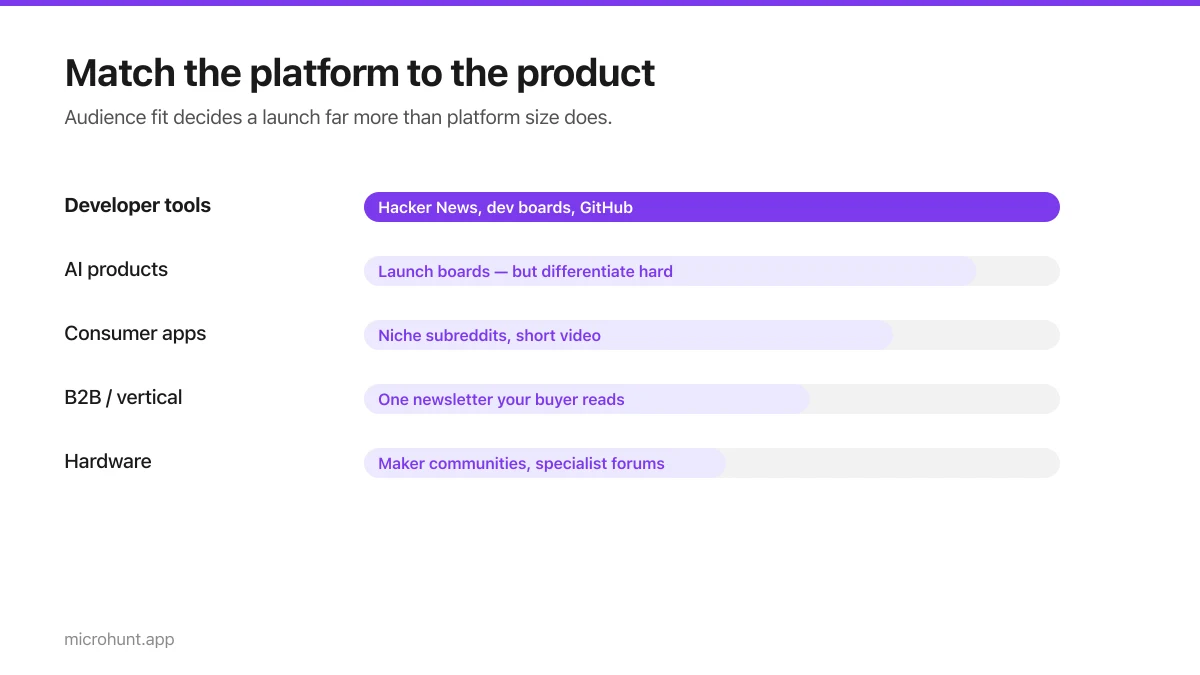
Best Product Hunt Alternatives for Launching in 2026
Where else to launch when Product Hunt is not the right fit — what each platform is actually good at, who shows up, and what it costs.
8 min read
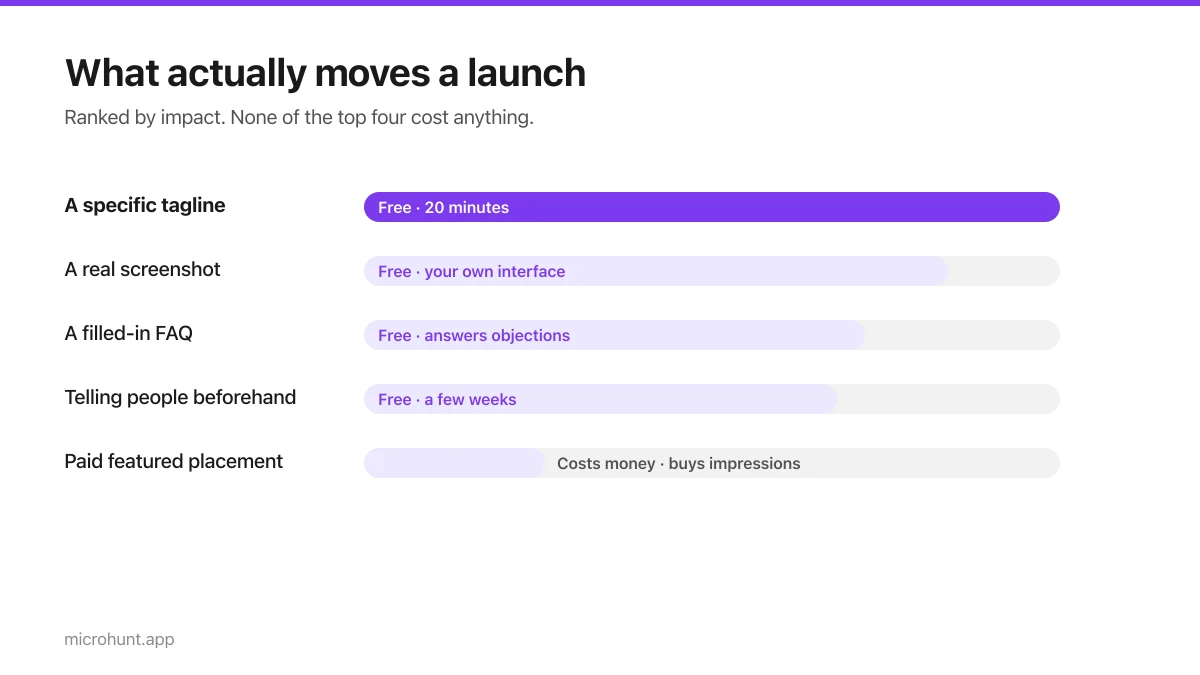
Free Launch Platforms for Indie Makers (No Budget Needed)
You do not need to pay to launch. Here are the places that are genuinely free, what each expects from you, and where paying is actually worth it.
7 min read
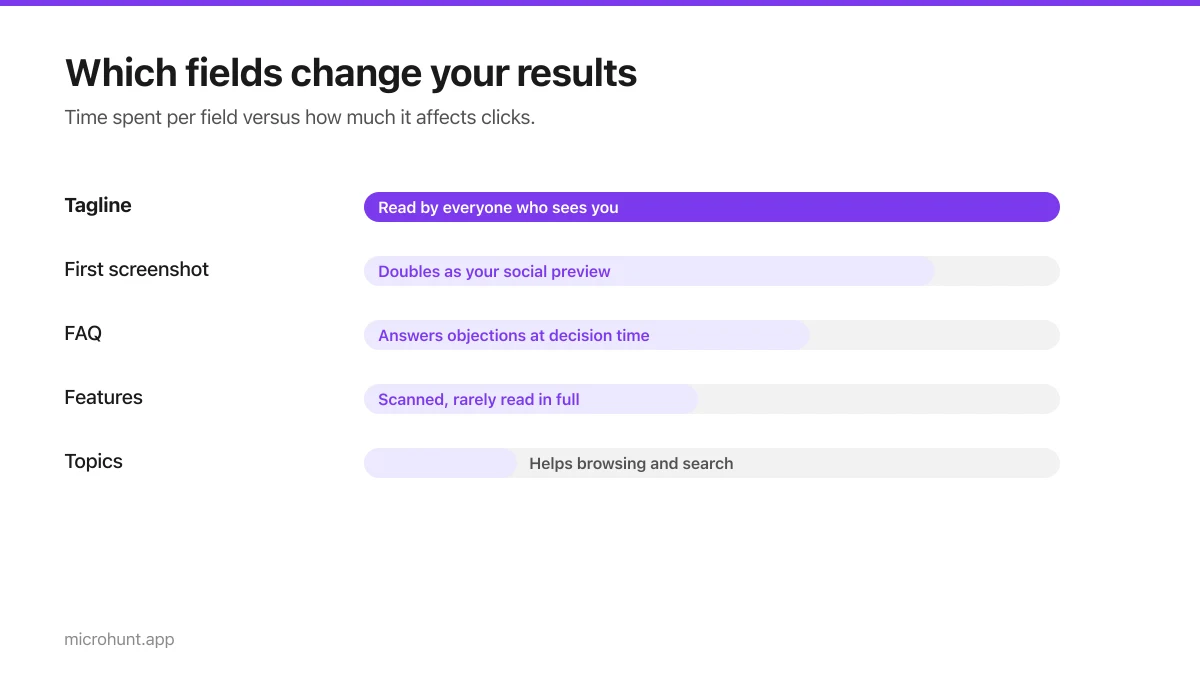
How to Submit a Product on Vuru (Step by Step)
A walk through the submission form, what each field does to your page, and the fields most people leave empty that they shouldn't.
7 min read
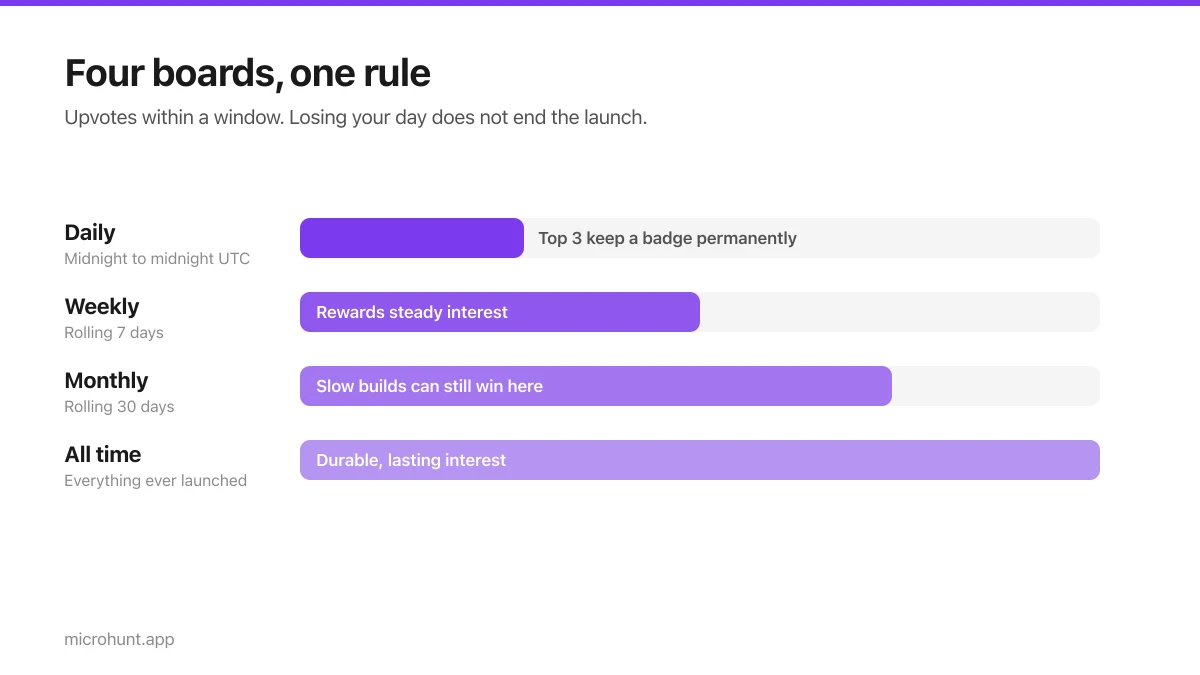
How Vuru Ranking Works (And How to Win a Badge)
Launch windows, upvotes, podium badges and what we do about vote manipulation — the whole ranking system explained plainly.
7 min read
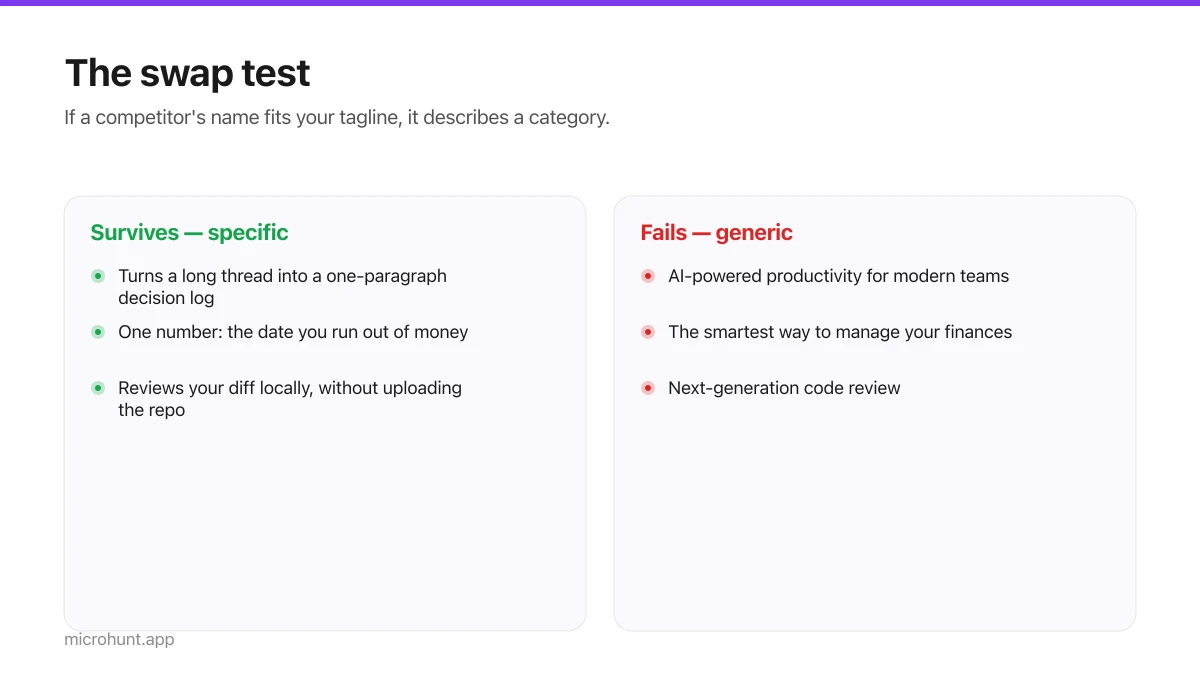
How to Write a Product Tagline That Actually Gets Clicked
The one line most people will ever read about your product, and a simple test for whether yours is doing any work.
7 min read
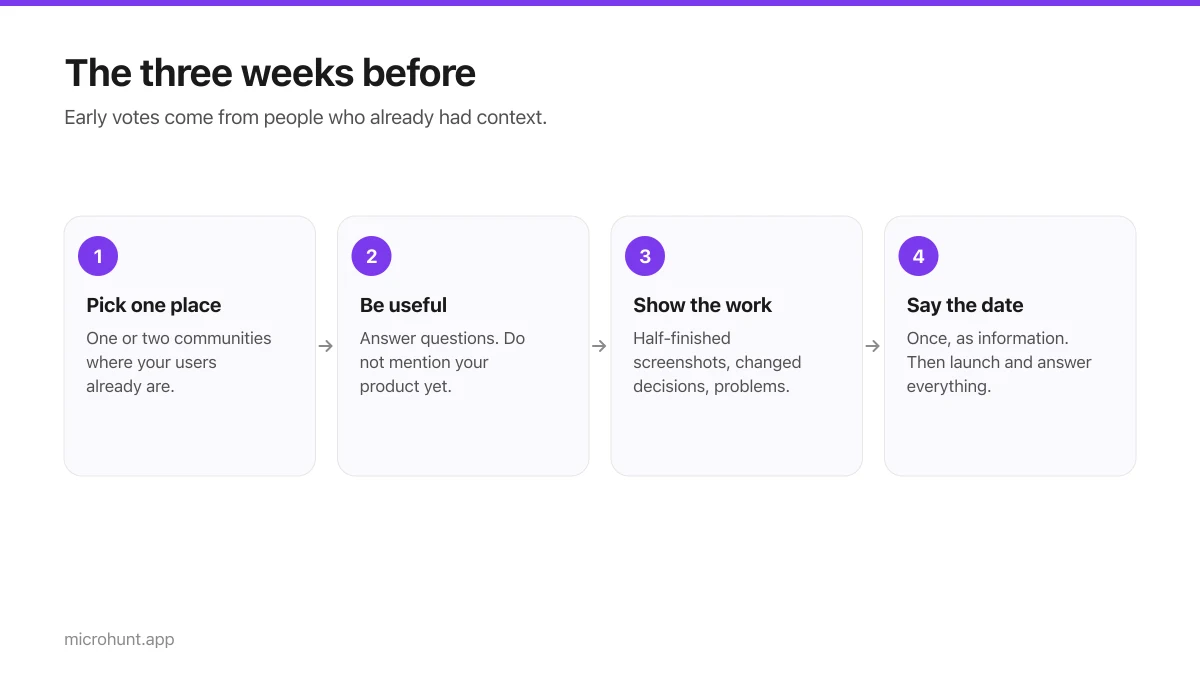
How to Get Your First Upvotes Without Begging
What actually generates early votes, why vote-for-vote groups do not work, and the approach that keeps paying off after launch day.
7 min read
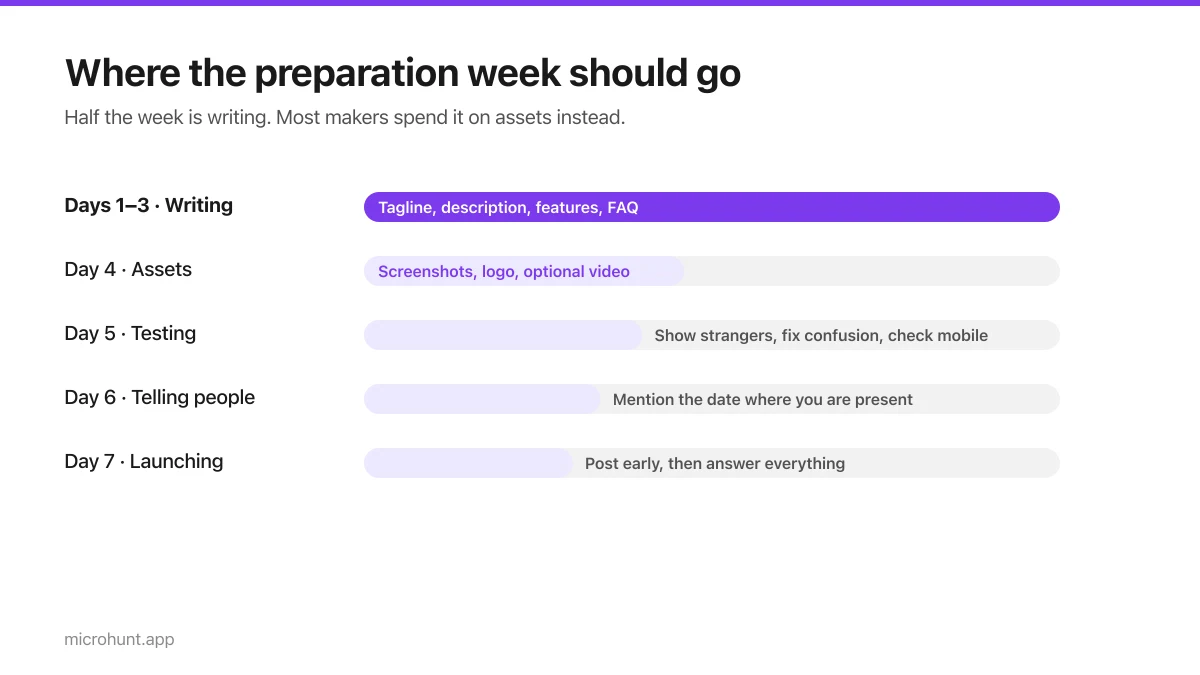
The Seven-Day Launch Checklist
A day-by-day plan for the week before you launch, weighted towards the things that actually change the outcome.
8 min read
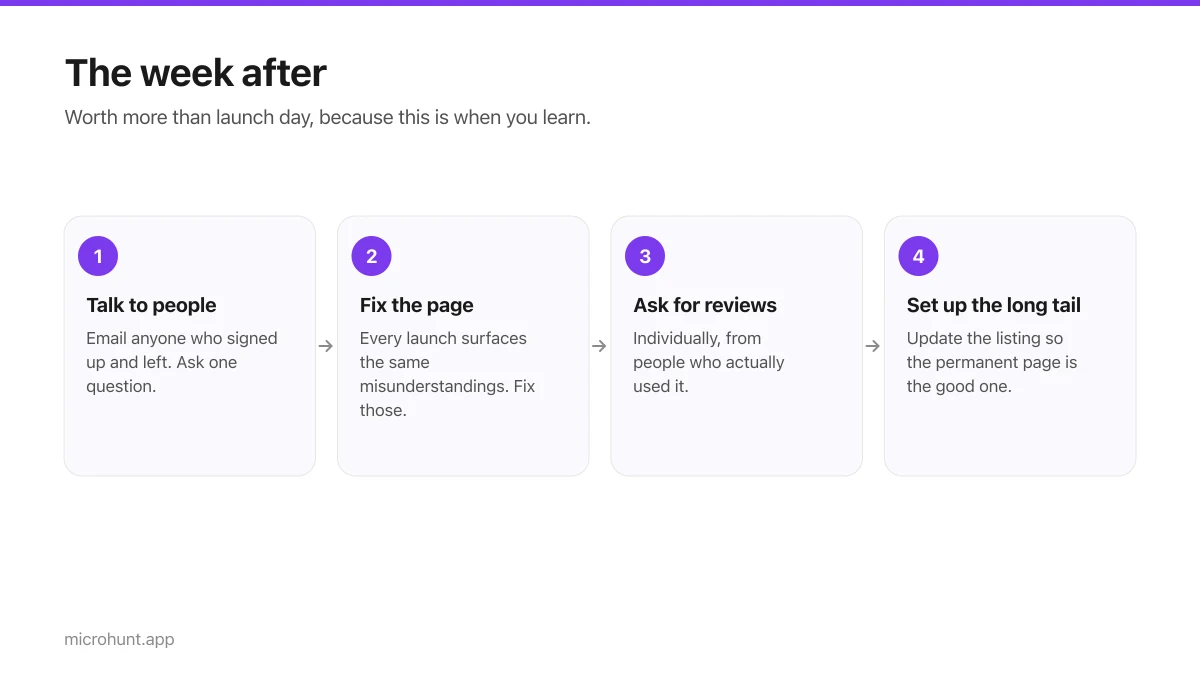
What to Do the Week After Launch Day
The traffic spike is over. Here is how to turn a day of attention into something that lasts longer than the graph.
7 min read