Moderation
Keeping a community healthy at scale.
Nothing launched in this category yet.
Be the firstAbout Moderation
Moderation tooling covers filtering, reporting, queues, reputation systems and the increasingly capable automated classifiers that flag content before a person sees it. Anyone running a space where users post is doing moderation whether or not they planned to, and the difference between doing it deliberately and reactively is large.
Automated filtering handles volume and handles it bluntly. Word lists catch the obvious and produce the classic failure of blocking legitimate words containing forbidden substrings. Classifier-based tools are substantially better and still make characteristic errors: they miss context, they misread reclaimed language and in-group speech, and they are weaker outside the languages they were trained on. The sound configuration is automation as triage rather than judge — flag for review, restrict reach pending review, and reserve automatic removal for the unambiguous.
Human review is unavoidable for the difficult cases, and the tooling should support the people doing it. Queues that batch similar items, context shown alongside the report, one-click actions with an audit trail, and — importantly — features that limit exposure to distressing material, such as blurring by default. Moderator wellbeing is a real design consideration and not an afterthought.
Rate limiting and friction do more work than most people expect. New account restrictions, posting limits, requiring some participation before certain actions, and cooling-off periods on heated threads reduce the volume of things needing moderation at all. Prevention scales better than review.
Transparency is what keeps a community's trust. Publish the rules, tell people when their content is actioned and why, and provide an appeal route. Silent removal produces the belief that moderation is arbitrary, which is corrosive even when every individual decision was correct.
Legal obligations are increasing and jurisdiction-specific: notice and takedown procedures, reporting mechanisms, and record-keeping requirements now apply to smaller platforms than they used to. Know what applies to you rather than assuming size exempts you.
The most effective moderation is cultural rather than technical. Communities where established members set norms and newcomers absorb them need far less enforcement than ones where all authority is centralised.
From the blog
Reading on launching, ranking and moderation.
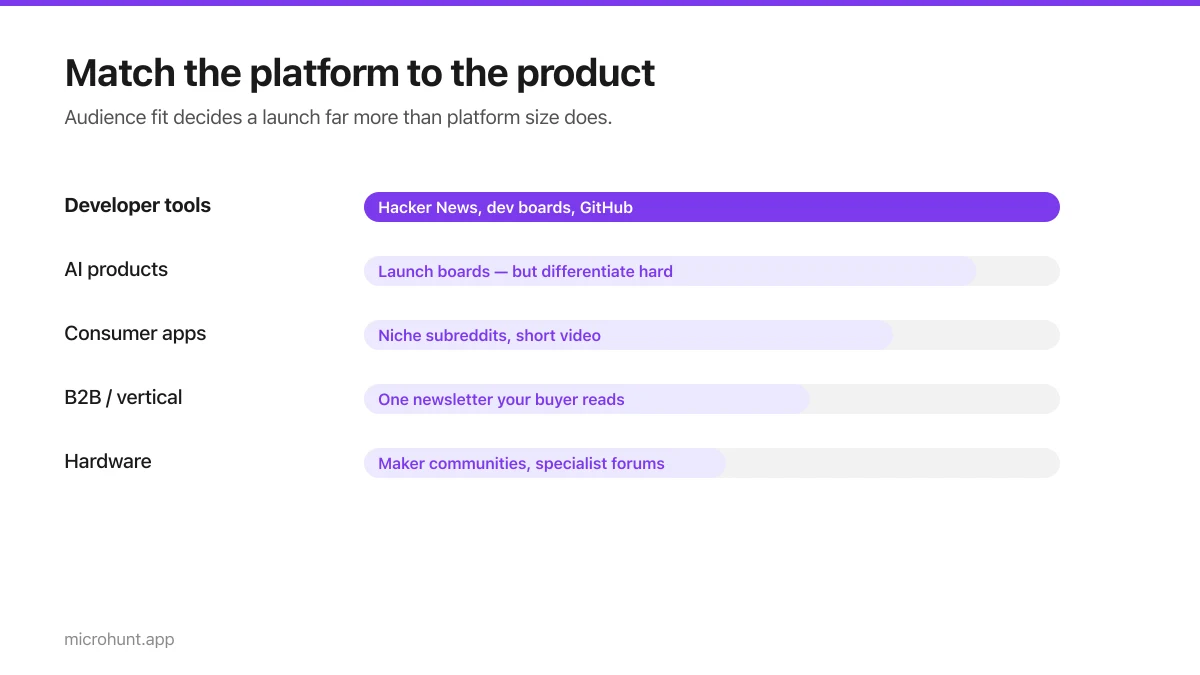
Best Product Hunt Alternatives for Launching in 2026
Where else to launch when Product Hunt is not the right fit — what each platform is actually good at, who shows up, and what it costs.
8 min read
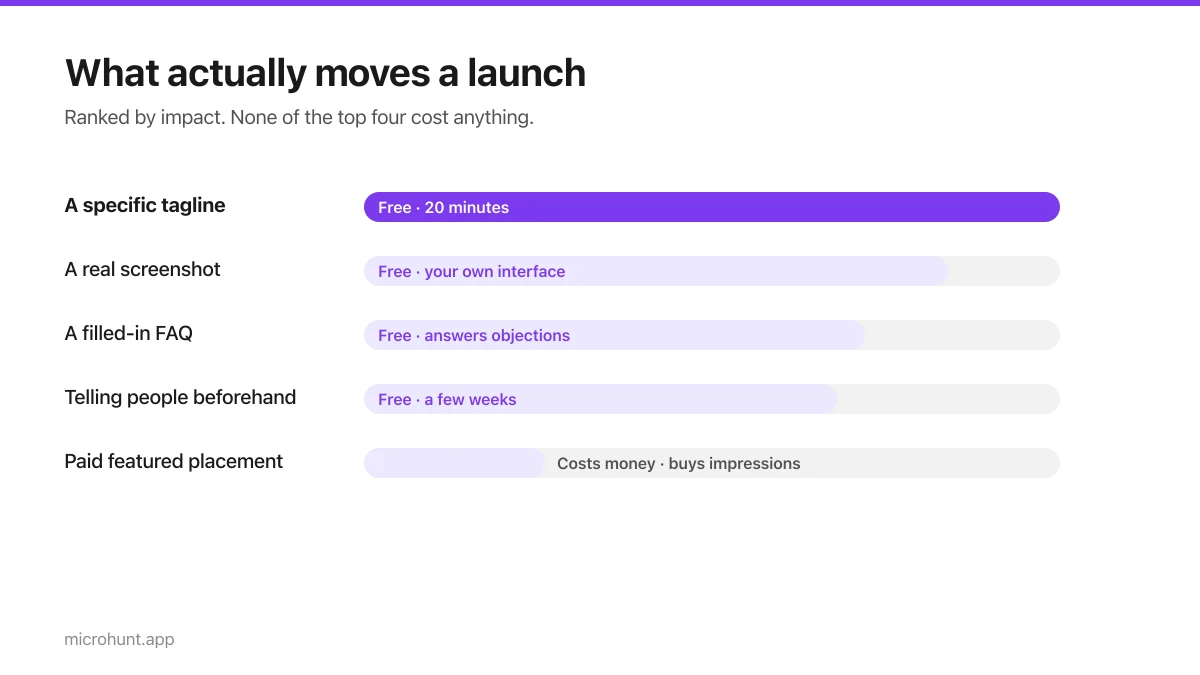
Free Launch Platforms for Indie Makers (No Budget Needed)
You do not need to pay to launch. Here are the places that are genuinely free, what each expects from you, and where paying is actually worth it.
7 min read
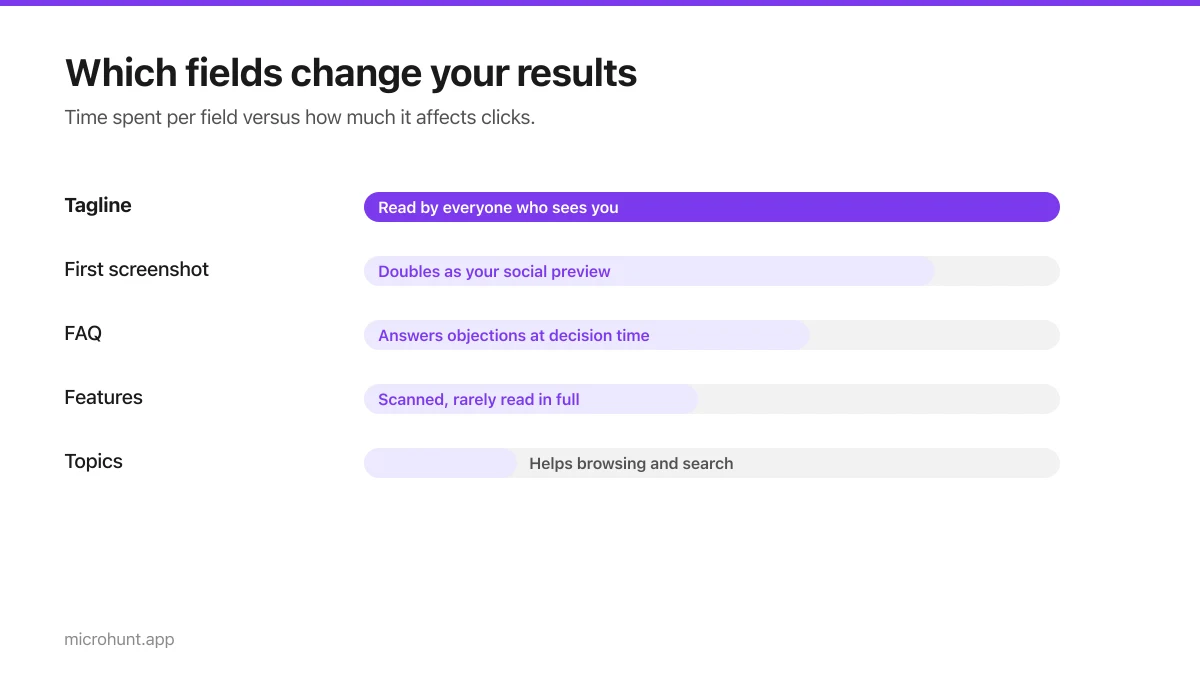
How to Submit a Product on Vuru (Step by Step)
A walk through the submission form, what each field does to your page, and the fields most people leave empty that they shouldn't.
7 min read
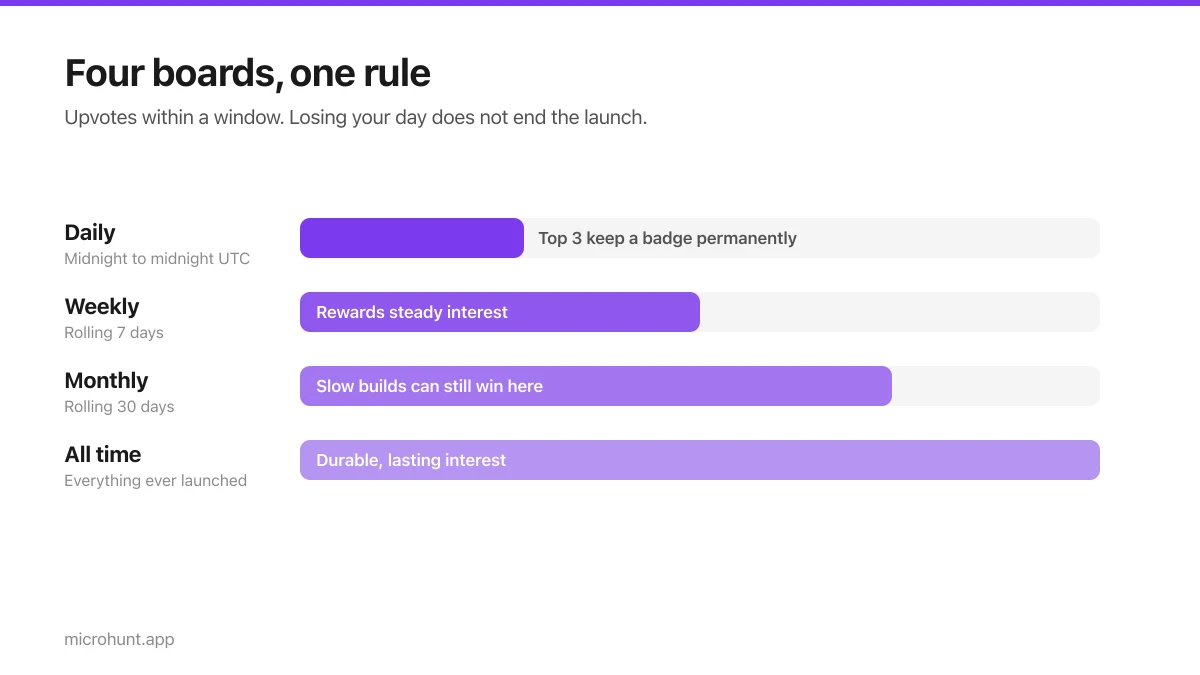
How Vuru Ranking Works (And How to Win a Badge)
Launch windows, upvotes, podium badges and what we do about vote manipulation — the whole ranking system explained plainly.
7 min read
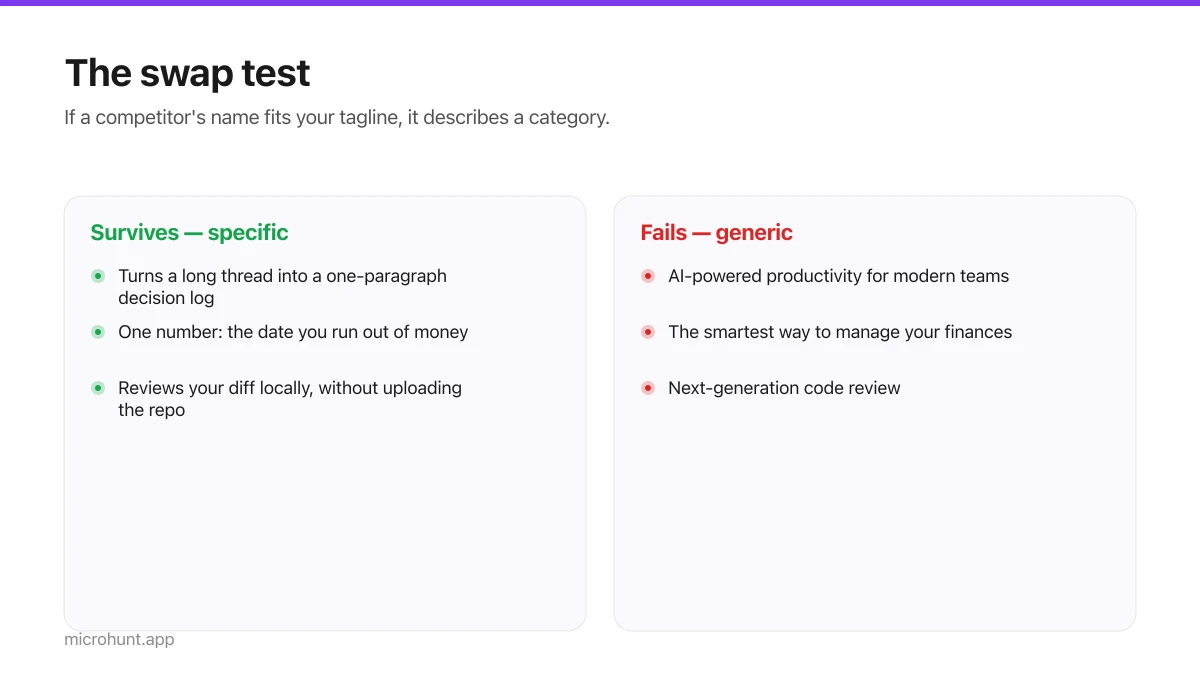
How to Write a Product Tagline That Actually Gets Clicked
The one line most people will ever read about your product, and a simple test for whether yours is doing any work.
7 min read
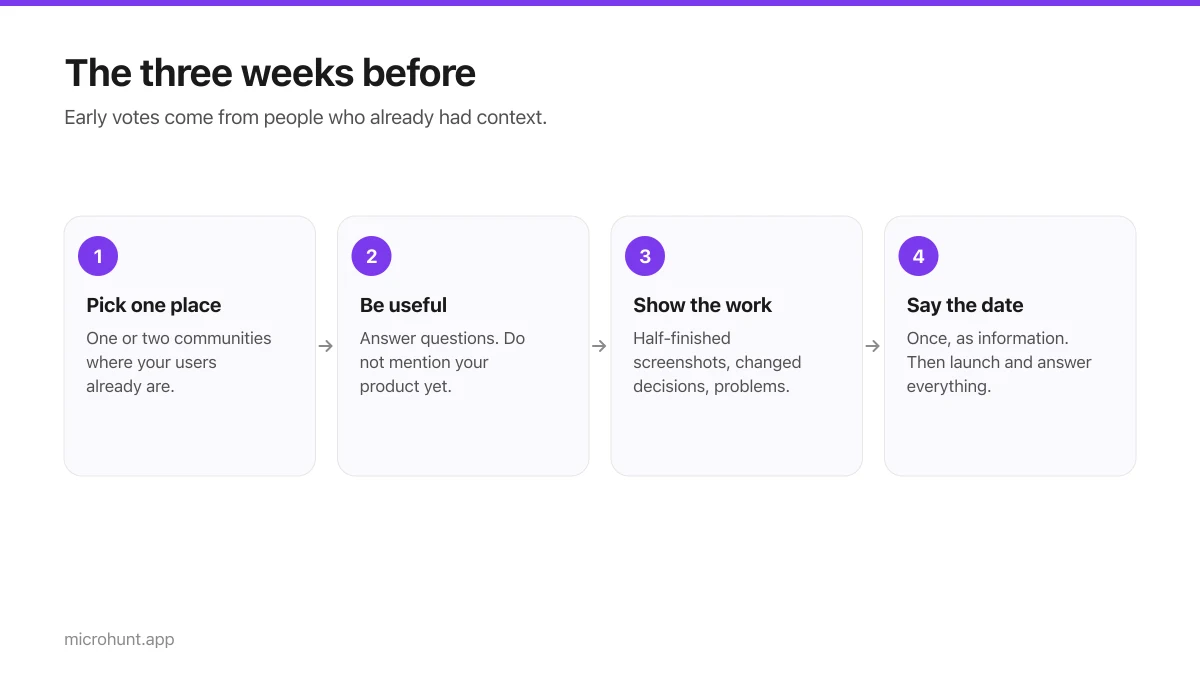
How to Get Your First Upvotes Without Begging
What actually generates early votes, why vote-for-vote groups do not work, and the approach that keeps paying off after launch day.
7 min read
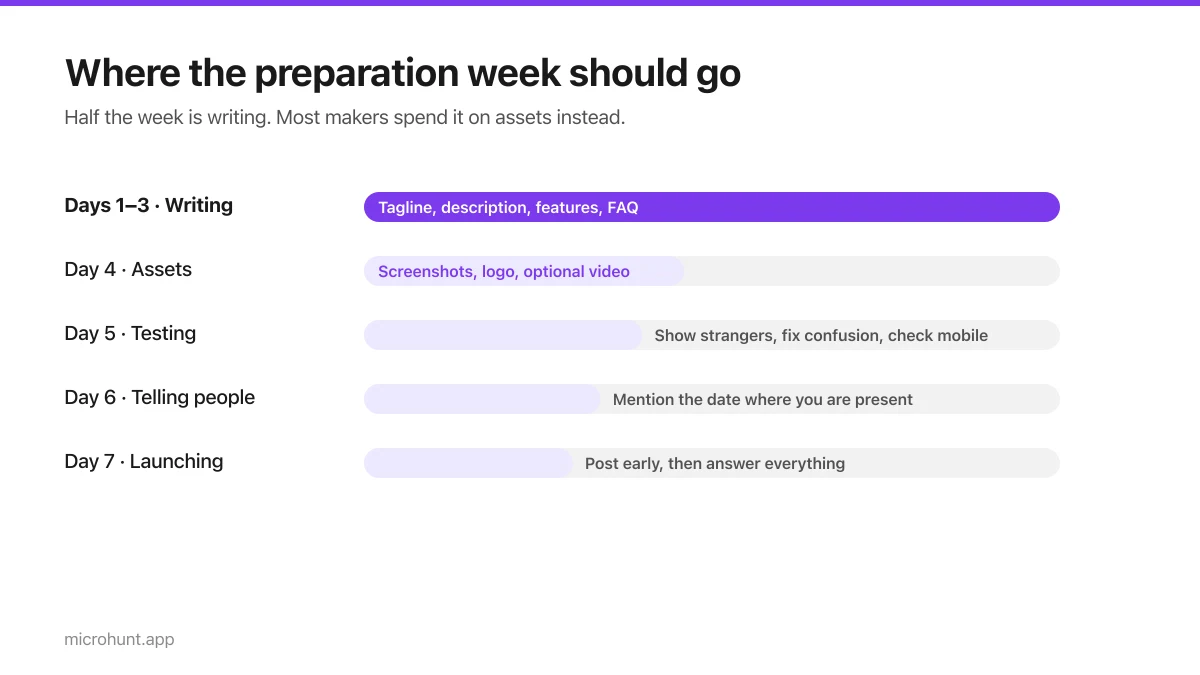
The Seven-Day Launch Checklist
A day-by-day plan for the week before you launch, weighted towards the things that actually change the outcome.
8 min read
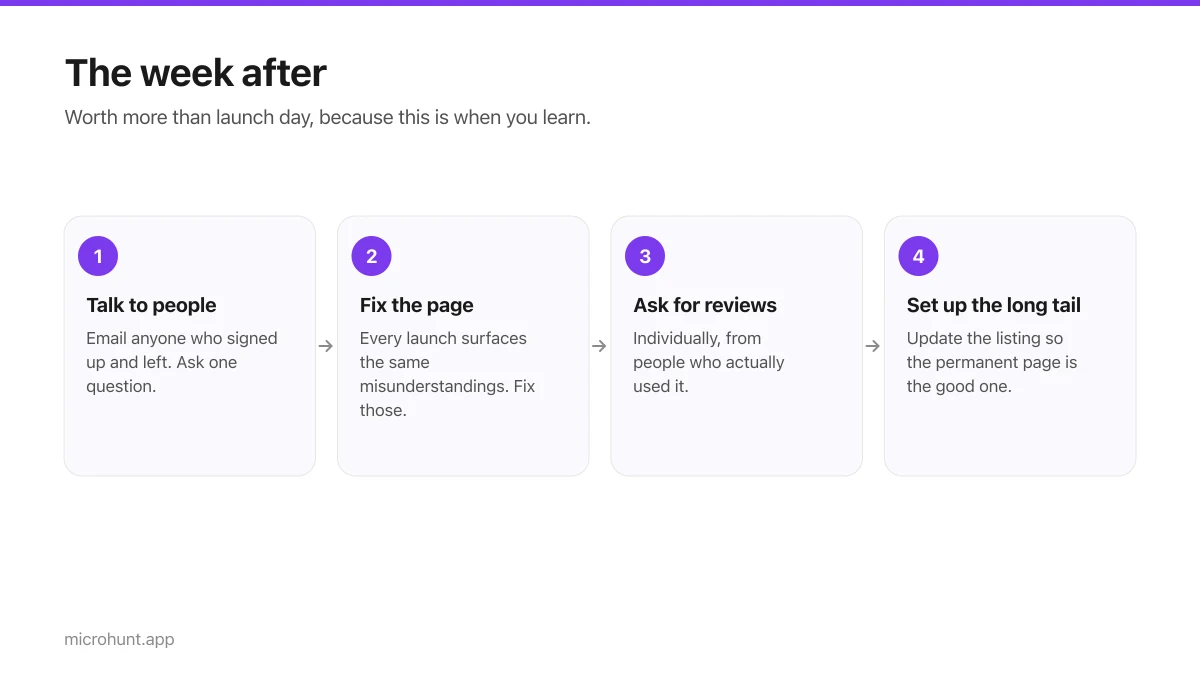
What to Do the Week After Launch Day
The traffic spike is over. Here is how to turn a day of attention into something that lasts longer than the graph.
7 min read