Prototyping
Wireframes, mockups and interactive prototypes.
Nothing launched in this category yet.
Be the firstAbout Prototyping
Prototyping tools exist to answer a question before you spend the money to build the answer, and the best way to choose one is to be precise about which question you are asking. A prototype that tests whether people understand a flow needs almost no fidelity. One that tests whether an interaction feels right needs a great deal, particularly in timing and physics. One that tests whether an idea is worth pursuing at all is frequently a static page and a signup form.
The low-fidelity end is underrated by people who enjoy building things. Clickable wireframes and paper-equivalent flows find the majority of comprehension problems, they are quick enough to throw away, and their roughness is a feature — testers critique the structure rather than the colour of the button. If you are testing whether a user can find something, this is the right tool and higher fidelity actively hurts.
The high-fidelity end is where the interesting launches are. Tools that handle real motion — spring physics, gesture-driven transitions, interruptible animations — let you evaluate feel, which is genuinely hard to assess from a specification and impossible from a static comp. This is where a prototype earns its cost, because "the transition is fifty milliseconds too slow" is a thing you can only know by feeling it.
Then there is the code-adjacent group: tools that produce a prototype from components you already have, or that let a designer assemble real components rather than pictures of them. These have the highest ceiling and the highest setup cost, and they pay off for teams shipping continuously rather than for one-off explorations.
Whatever the fidelity, the thing that determines whether prototyping is worth doing is what you do with it. A prototype shown to five people who use the product is worth more than a beautiful one shown to the team, and both are worth more than one that is admired and then not tested at all.
Data and sharing are the practical differentiators when comparing tools: whether you can prototype against realistic content rather than lorem ipsum, and whether a stakeholder can open the result on a phone without installing anything. Both are more consequential than the feature lists suggest.
From the blog
Reading on launching, ranking and prototyping.
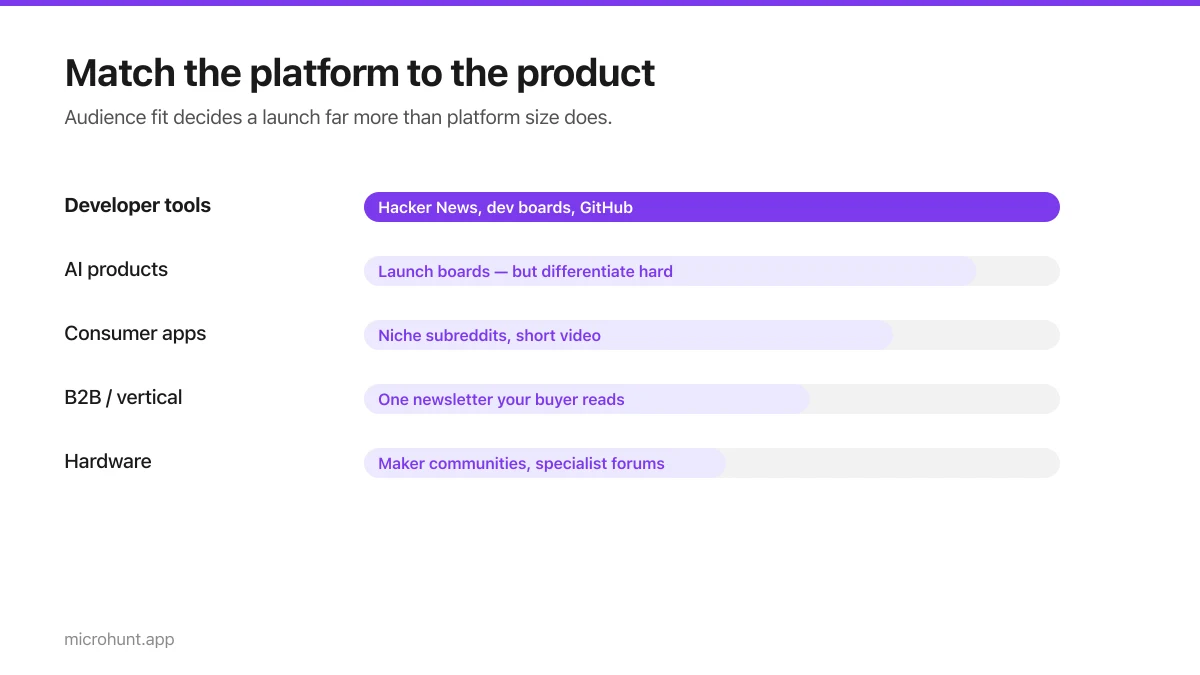
Best Product Hunt Alternatives for Launching in 2026
Where else to launch when Product Hunt is not the right fit — what each platform is actually good at, who shows up, and what it costs.
8 min read
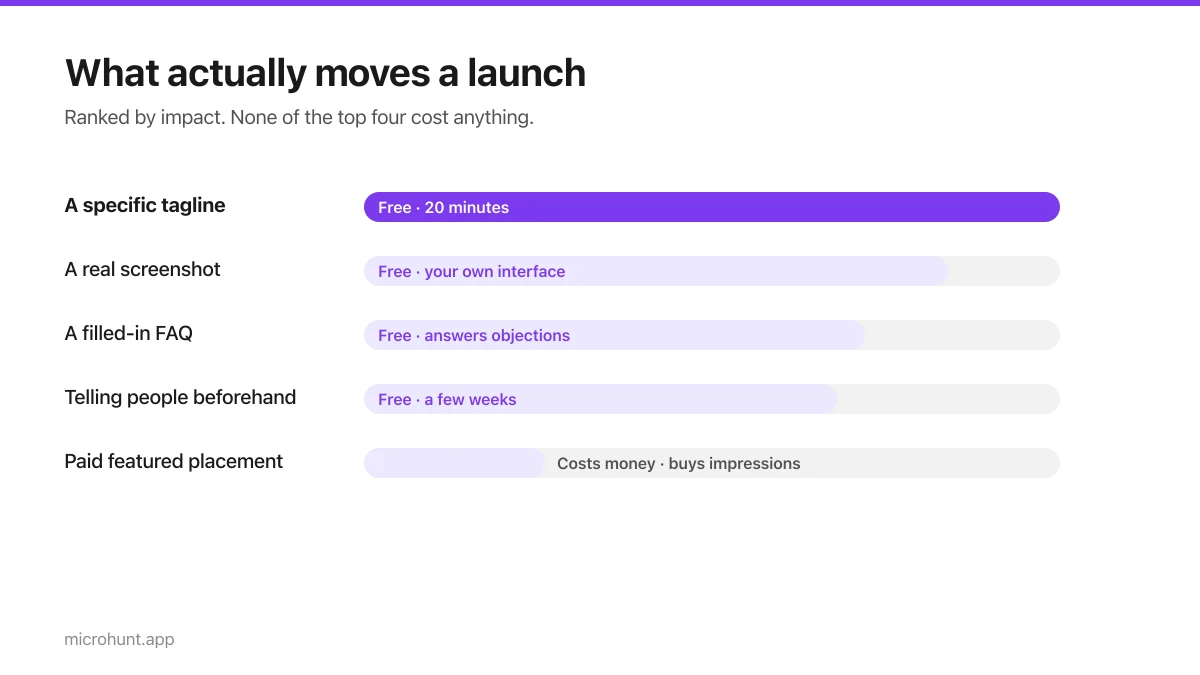
Free Launch Platforms for Indie Makers (No Budget Needed)
You do not need to pay to launch. Here are the places that are genuinely free, what each expects from you, and where paying is actually worth it.
7 min read
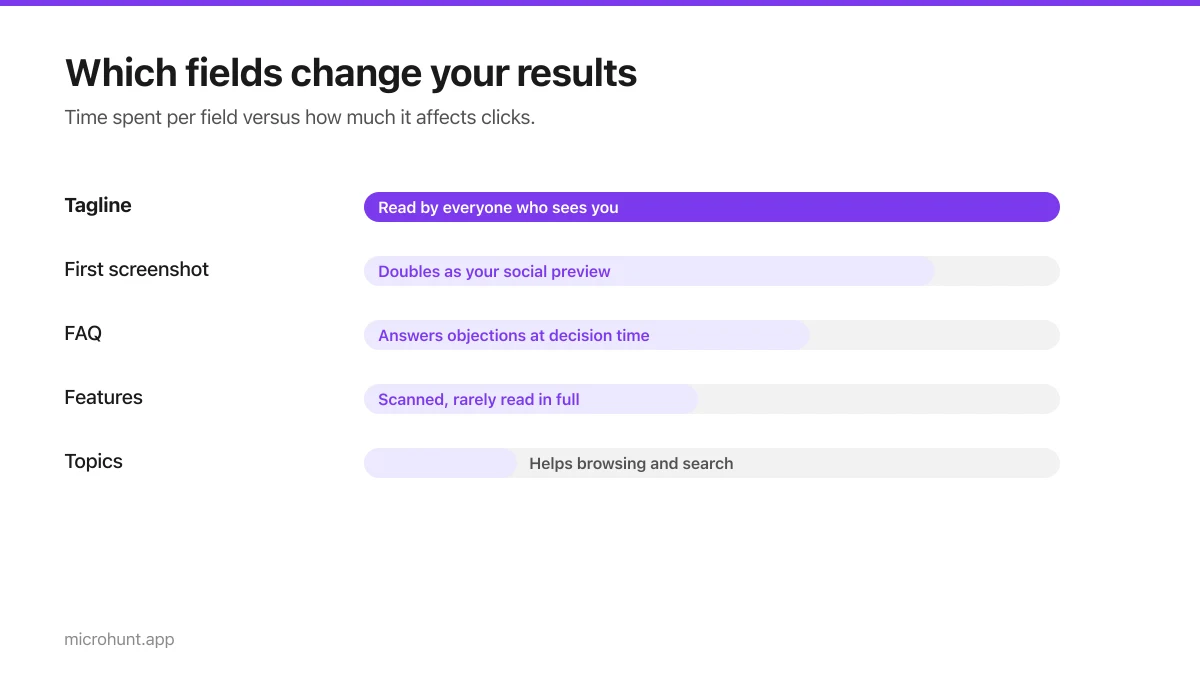
How to Submit a Product on Vuru (Step by Step)
A walk through the submission form, what each field does to your page, and the fields most people leave empty that they shouldn't.
7 min read
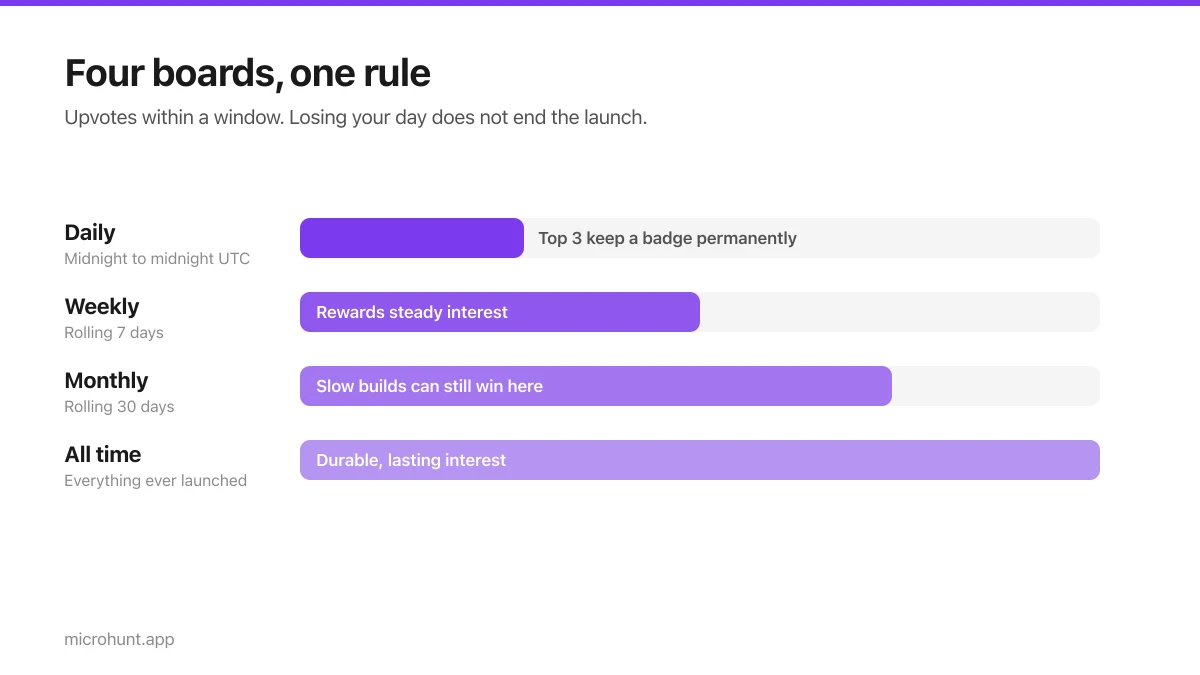
How Vuru Ranking Works (And How to Win a Badge)
Launch windows, upvotes, podium badges and what we do about vote manipulation — the whole ranking system explained plainly.
7 min read
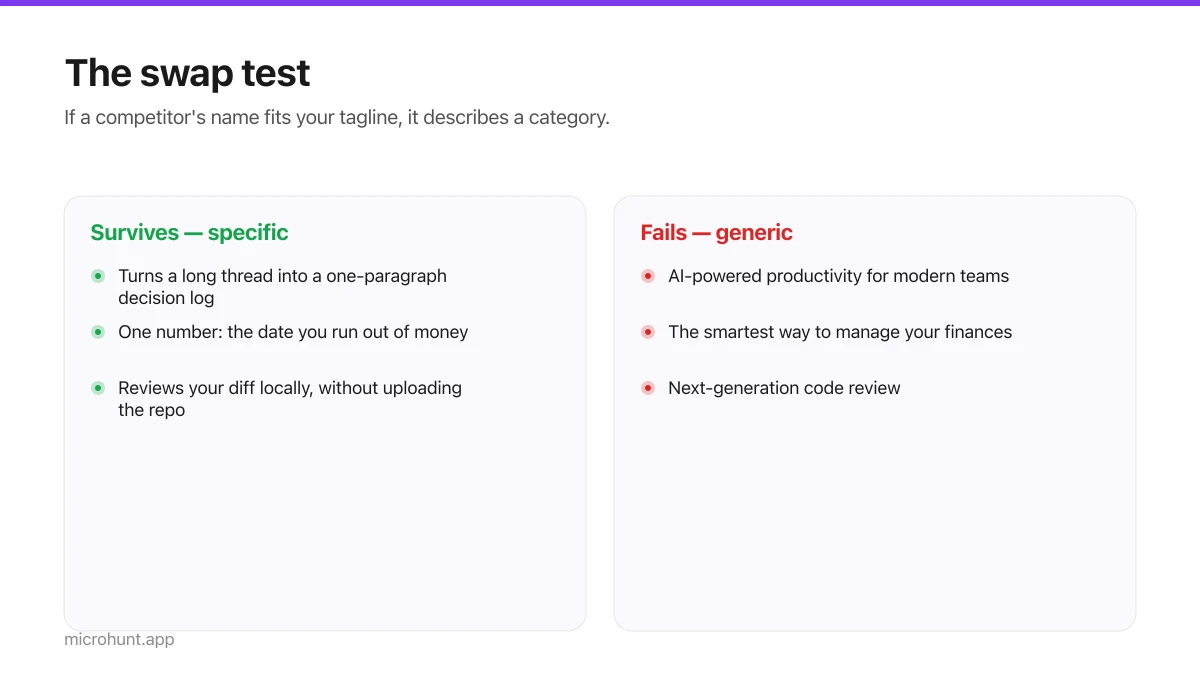
How to Write a Product Tagline That Actually Gets Clicked
The one line most people will ever read about your product, and a simple test for whether yours is doing any work.
7 min read
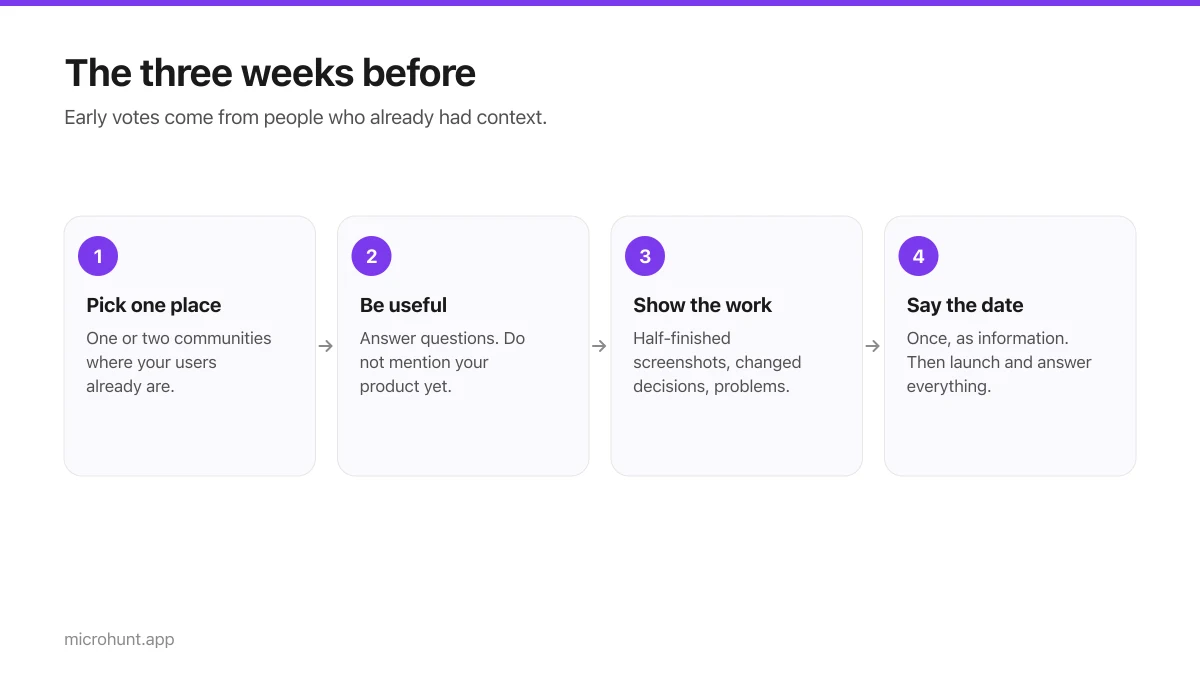
How to Get Your First Upvotes Without Begging
What actually generates early votes, why vote-for-vote groups do not work, and the approach that keeps paying off after launch day.
7 min read
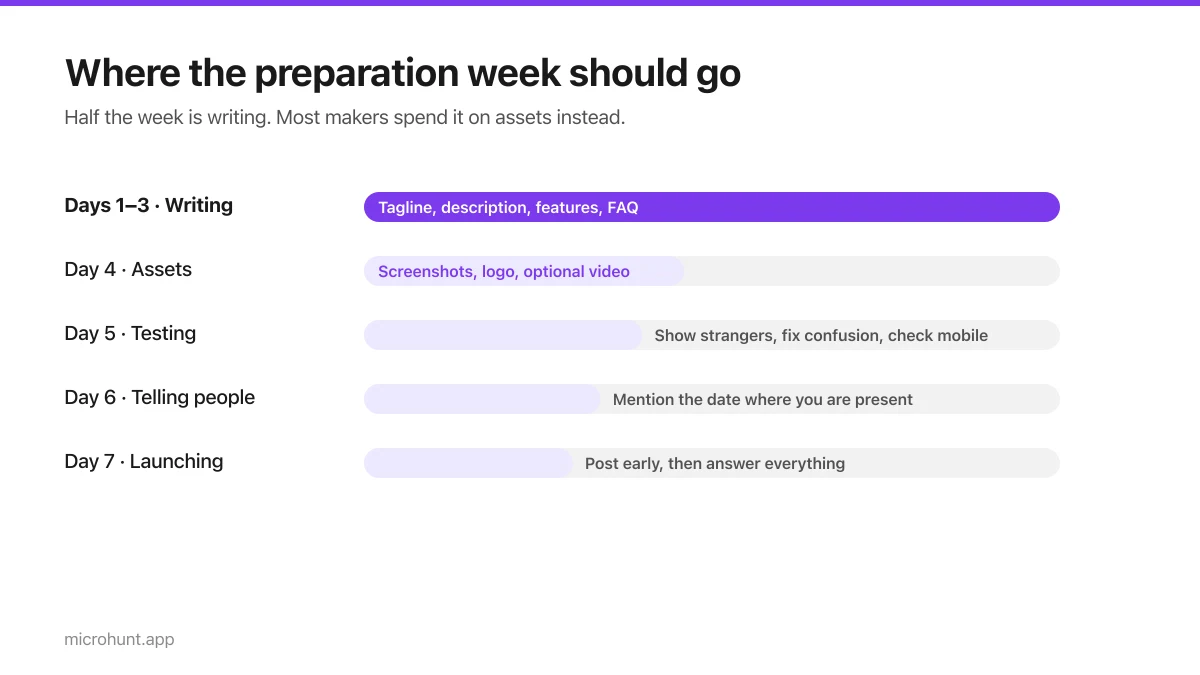
The Seven-Day Launch Checklist
A day-by-day plan for the week before you launch, weighted towards the things that actually change the outcome.
8 min read
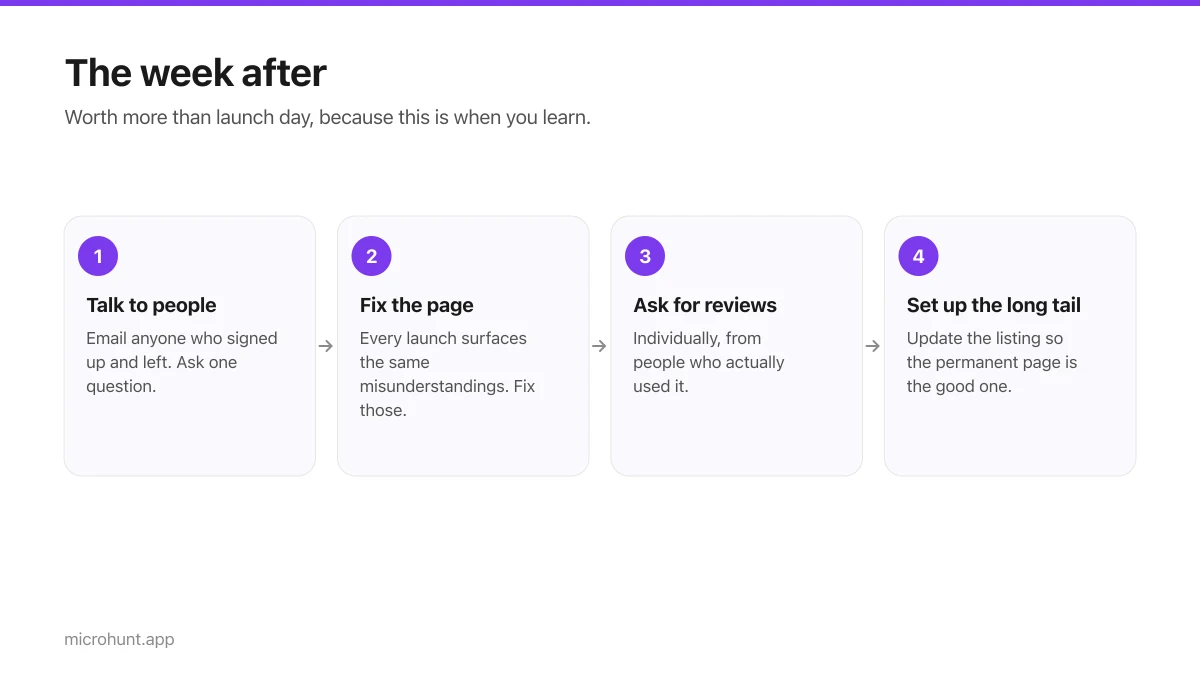
What to Do the Week After Launch Day
The traffic spike is over. Here is how to turn a day of attention into something that lasts longer than the graph.
7 min read