Trip Planning
Itineraries, bookings and documents.
Nothing launched in this category yet.
Be the firstAbout Trip Planning
Trip planning tools cover itinerary building, collaborative planning, booking aggregation and the increasingly capable assistants that will assemble a route from a description. It is a category where the good tools are quietly excellent and the marketing tends to promise a level of automation that does not survive contact with a real trip.
Itinerary tools earn their place through a specific and underrated function: putting confirmations, times and addresses in one place that works offline. The single most useful thing any of these can do is show you your accommodation address and booking reference when you land in a country with no data connection. Tools that require connectivity to display information you already gave them are failing at the basic job.
Collaborative planning is where the genuinely hard problem is, because planning with other people is a negotiation rather than an optimisation. The tools that work let everyone add candidates, express preferences and see the shape of the trip forming, without pretending there is a correct answer. Anything that resolves disagreements by algorithm is solving the wrong problem.
On the automated planners, calibrate expectations. They are good at producing a plausible skeleton — a reasonable set of well-known places in a sensible order — and that is genuinely useful as a starting point when you know nothing about a destination. They are poor at the things that make a trip good: what is actually worth the time, what is closed on Tuesdays, how long the journey between two points really takes, and what a place is like at the time of year you are going. Verify anything with an opening time or a booking requirement.
Overplanning is the most common failure and no tool prevents it. An itinerary with five scheduled items a day reads as efficient and experiences as exhausting, and the parts of trips people remember are usually the unscheduled ones. Plan the fixed points and leave the space between them empty.
Practical checks worth doing outside any tool: passport validity requirements, visa or authorisation rules for your nationality, and whether your travel insurance covers what you intend to do. These change and no planner tracks them for your specific situation.
See [maps and navigation](/categories/maps) for getting around once you arrive.
From the blog
Reading on launching, ranking and trip planning.
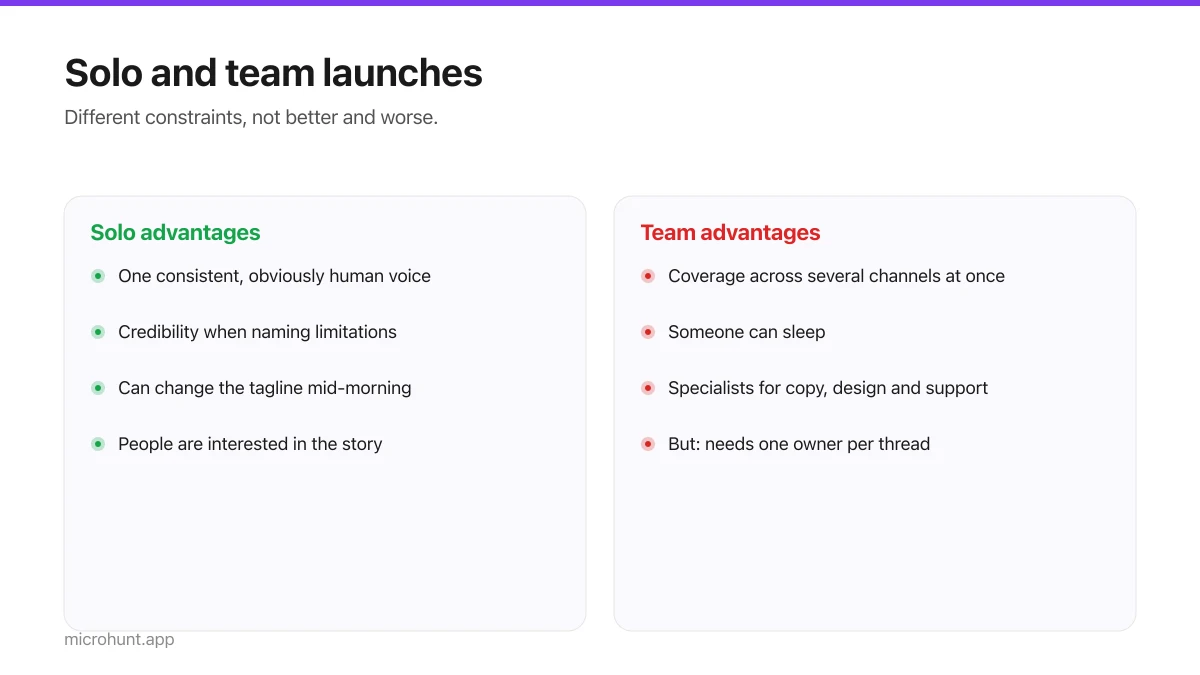
Launching Solo vs Launching With a Team
Solo makers have advantages that teams cannot buy, and constraints that need planning around. What actually differs on the day.
6 min read
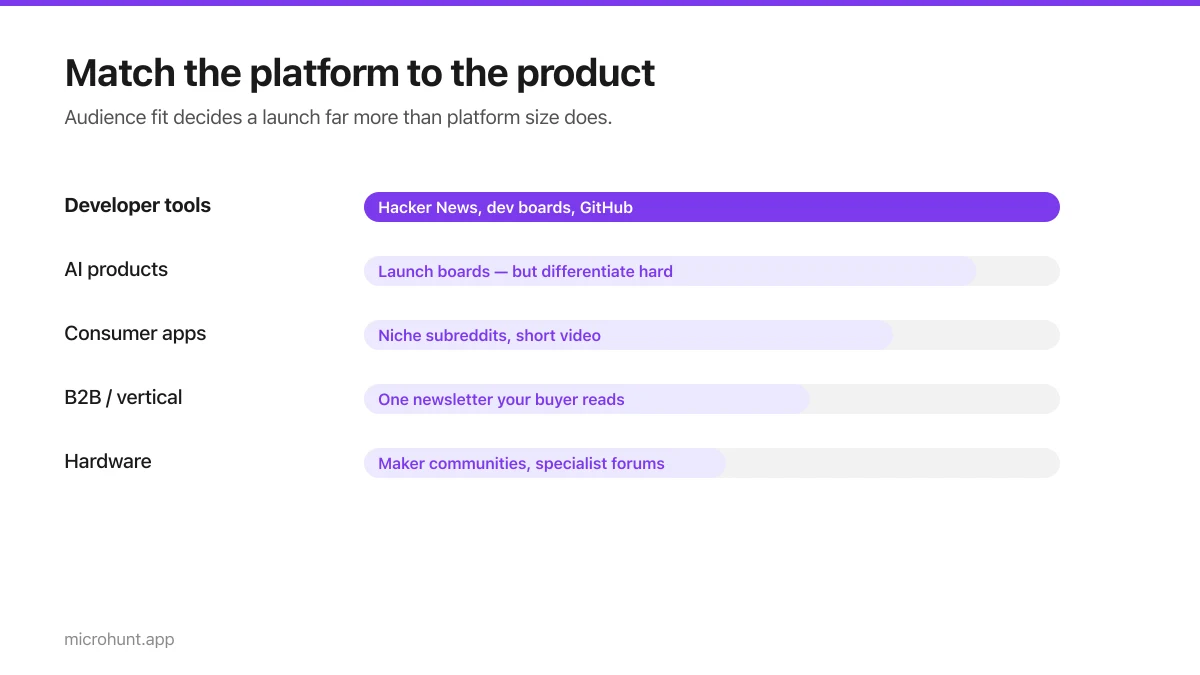
Best Product Hunt Alternatives for Launching in 2026
Where else to launch when Product Hunt is not the right fit — what each platform is actually good at, who shows up, and what it costs.
8 min read
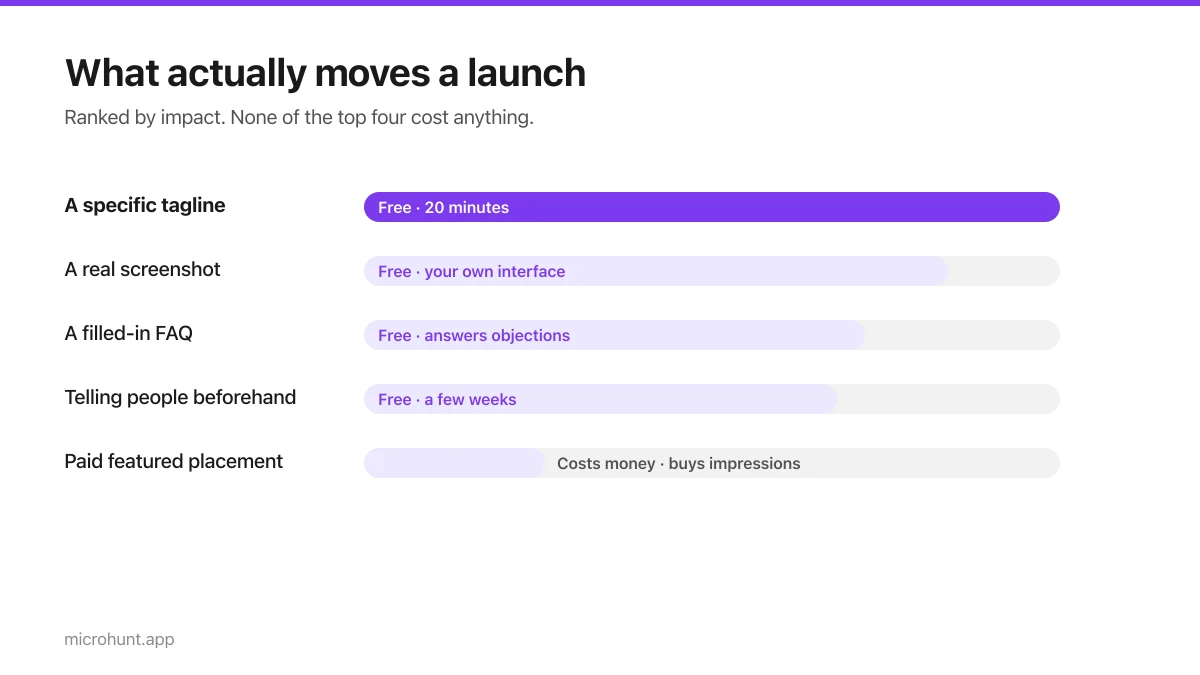
Free Launch Platforms for Indie Makers (No Budget Needed)
You do not need to pay to launch. Here are the places that are genuinely free, what each expects from you, and where paying is actually worth it.
7 min read
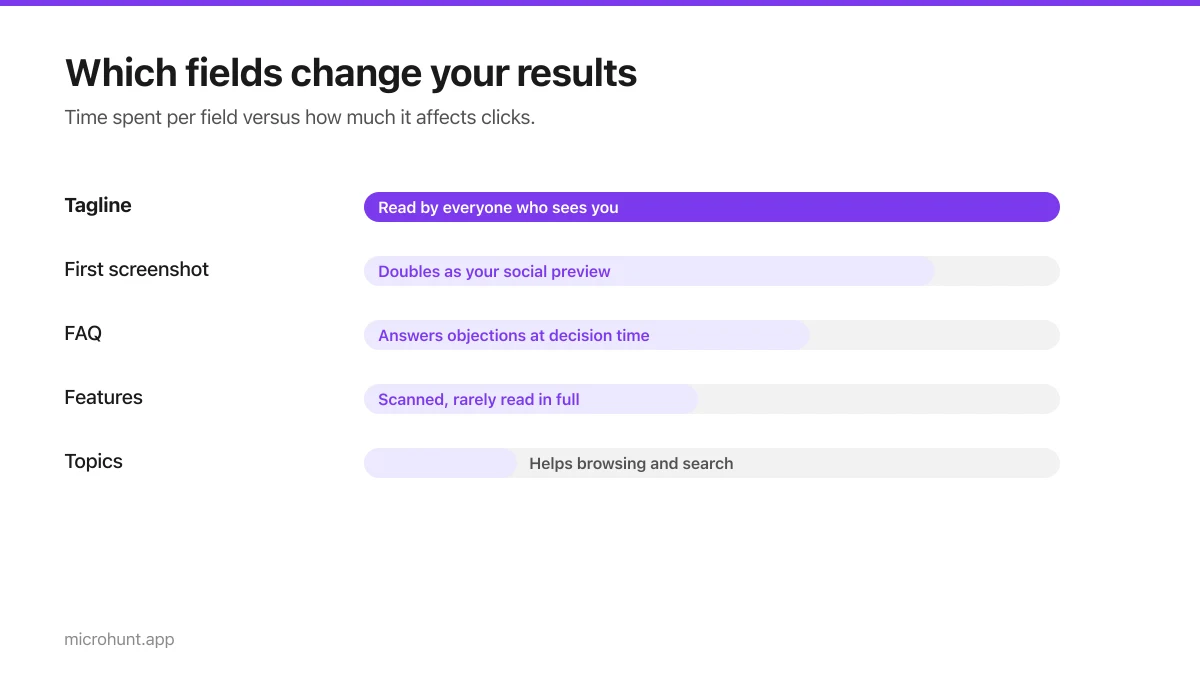
How to Submit a Product on Vuru (Step by Step)
A walk through the submission form, what each field does to your page, and the fields most people leave empty that they shouldn't.
7 min read
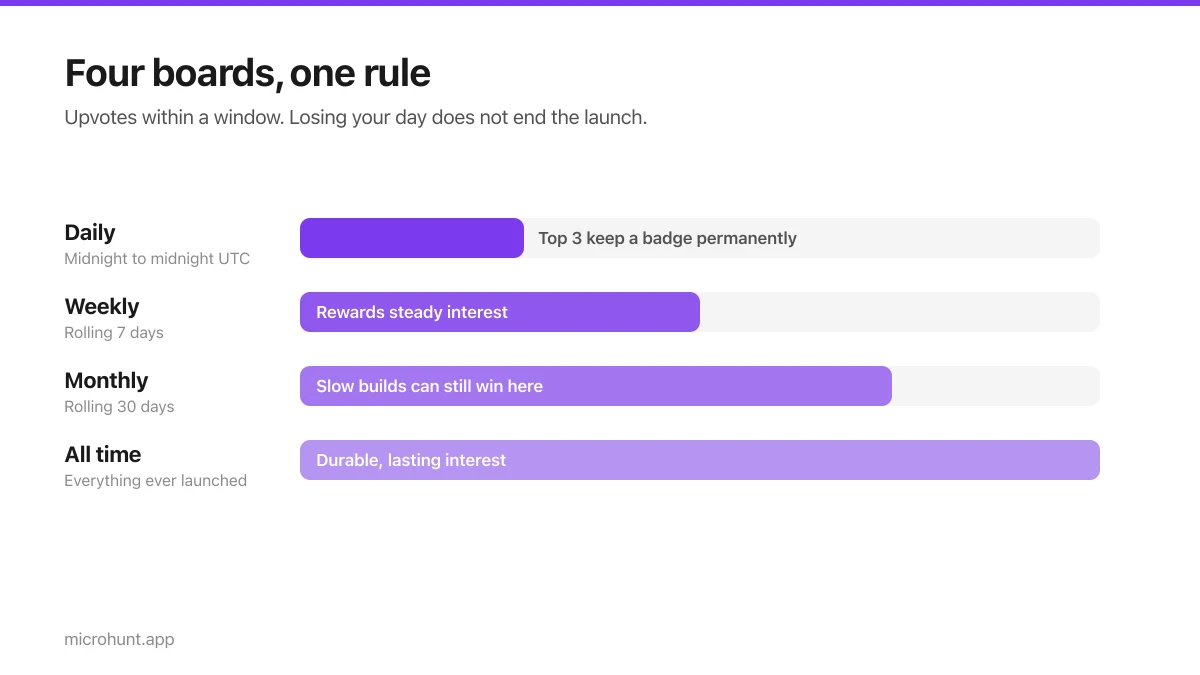
How Vuru Ranking Works (And How to Win a Badge)
Launch windows, upvotes, podium badges and what we do about vote manipulation — the whole ranking system explained plainly.
7 min read
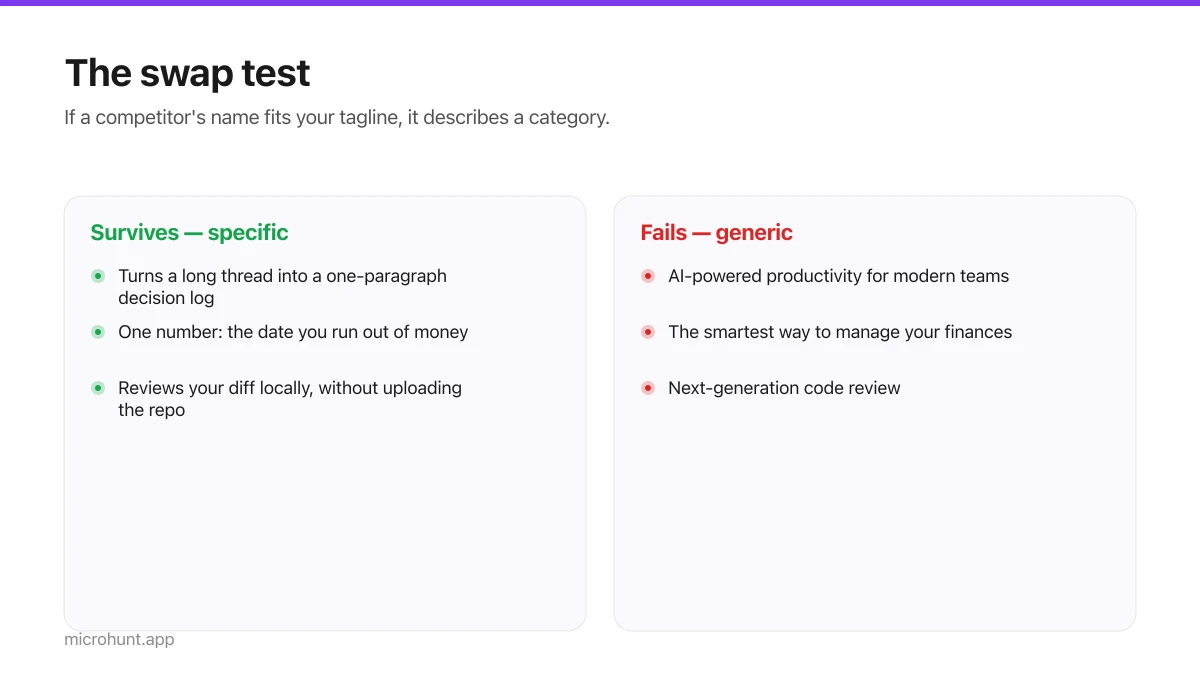
How to Write a Product Tagline That Actually Gets Clicked
The one line most people will ever read about your product, and a simple test for whether yours is doing any work.
7 min read
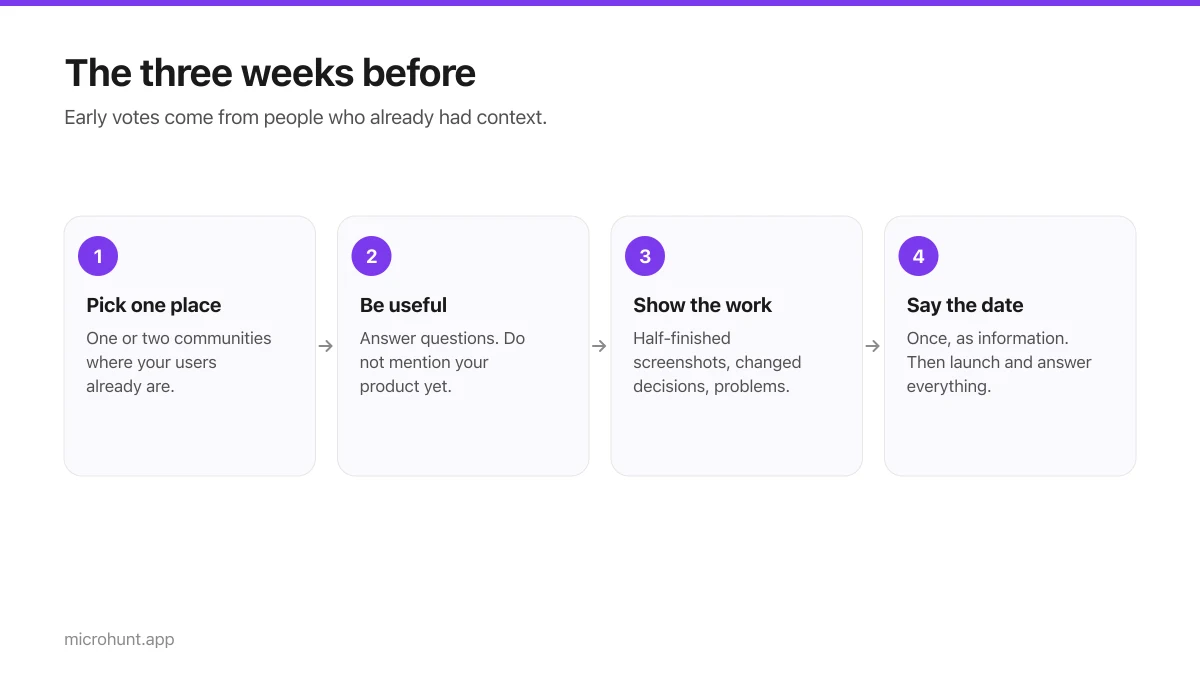
How to Get Your First Upvotes Without Begging
What actually generates early votes, why vote-for-vote groups do not work, and the approach that keeps paying off after launch day.
7 min read
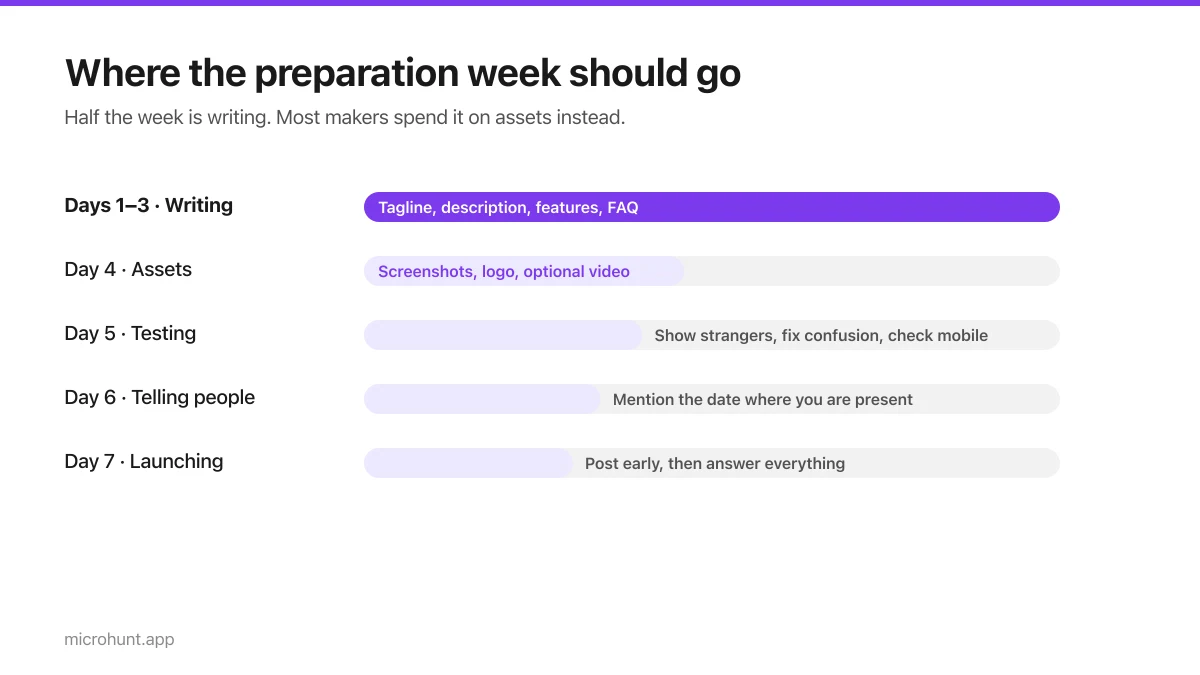
The Seven-Day Launch Checklist
A day-by-day plan for the week before you launch, weighted towards the things that actually change the outcome.
8 min read