Typography
Type pairing, kerning, variable fonts and font tooling.
Nothing launched in this category yet.
Be the firstAbout Typography
Type tools are a small category with an unusually high hit rate, because the problems are old, well understood, and still not solved by the software most people use daily. The launches here cover typeface discovery and pairing, variable font tooling, web font loading and subsetting, specimen and testing pages, and the small utilities that answer a specific question like whether two fonts share a metric or how a face behaves at twelve pixels.
Pairing tools are the most common and the least reliable, because pairing is a judgement rather than a computation. The useful ones do not tell you which two fonts go together; they let you see many candidates against your actual text at your actual sizes, quickly. That distinction is the whole difference between a tool you use once and one you keep.
For anything shipping type on the web, performance tooling matters more than aesthetics tooling. Subsetting a face to the characters you actually use routinely cuts font payload by eighty percent or more, and correct loading strategy is the difference between text appearing immediately in a fallback and a blank space where your headline should be. Tools that handle subsetting, preloading and metric-matched fallbacks together are solving the real problem.
Licensing is the trap in this subcategory and deserves genuine care. Desktop, web, app and ebook licences are separate, page-view caps are common in web licences, and the terms for bundling a font into a product are usually stricter than people assume. Free is not one thing either: some faces are free for personal use only, and open-source licensing has its own conditions about renaming modified versions. If a font is going into something commercial, read the licence rather than the download button.
Variable fonts are worth understanding because they change the trade. One file can replace nine weights, which is a large payload win, and they enable optical sizing and grade adjustments that were previously impossible on the web. The tooling around them is still maturing, which is exactly why the launches in this space are interesting.
If you are looking for the visual end of the design category rather than the typographic one, see [colour](/categories/colour) and [illustration and icons](/categories/illustration).
From the blog
Reading on launching, ranking and typography.
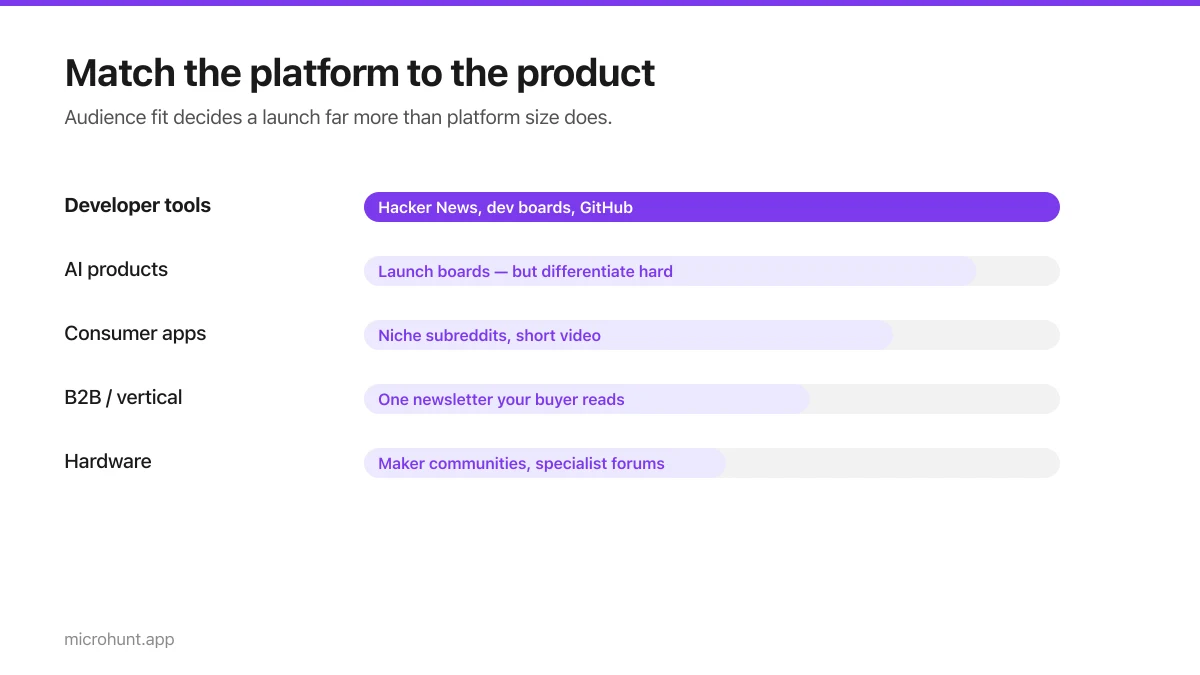
Best Product Hunt Alternatives for Launching in 2026
Where else to launch when Product Hunt is not the right fit — what each platform is actually good at, who shows up, and what it costs.
8 min read
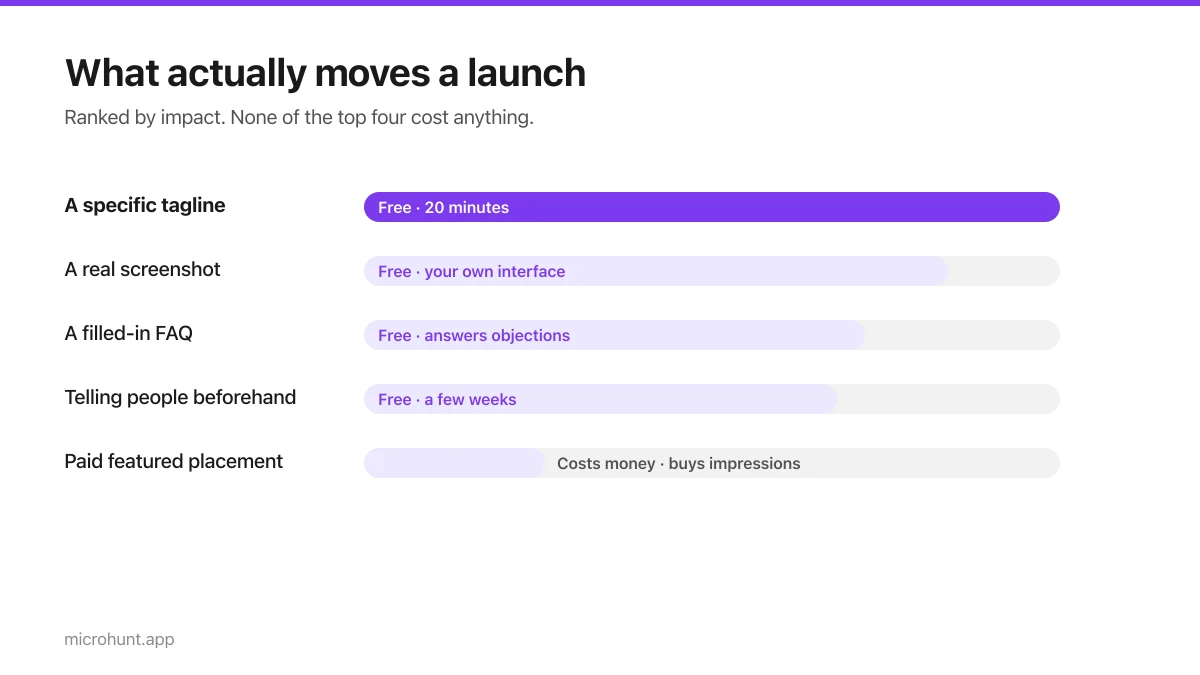
Free Launch Platforms for Indie Makers (No Budget Needed)
You do not need to pay to launch. Here are the places that are genuinely free, what each expects from you, and where paying is actually worth it.
7 min read
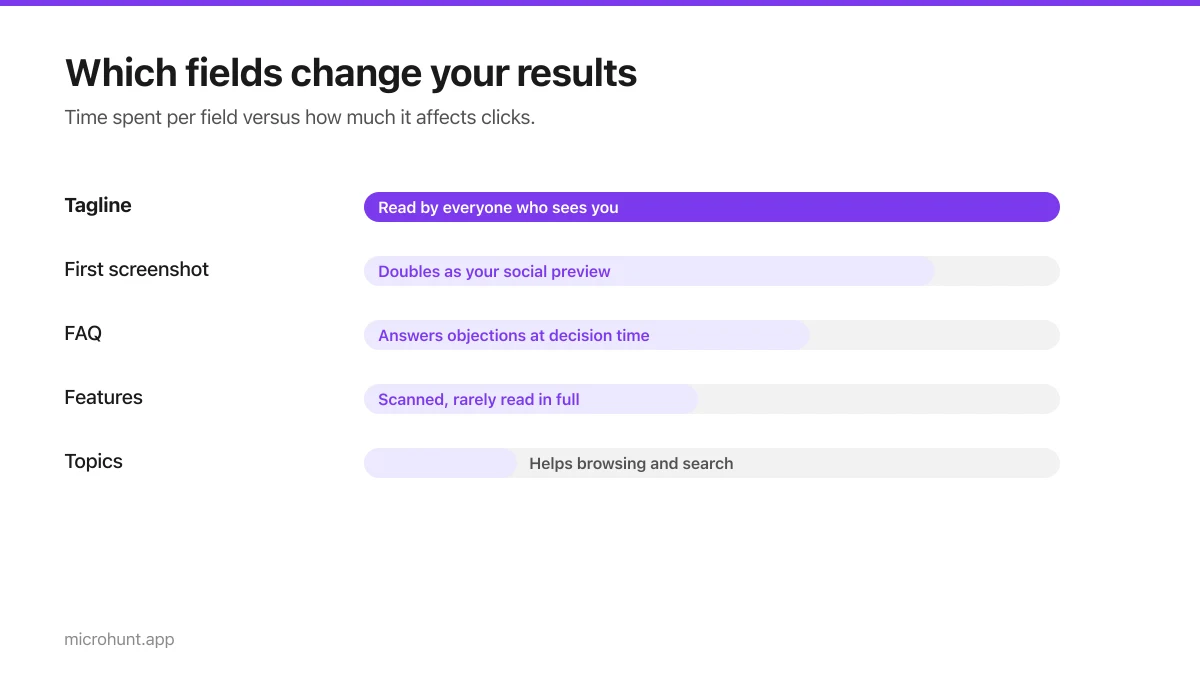
How to Submit a Product on Vuru (Step by Step)
A walk through the submission form, what each field does to your page, and the fields most people leave empty that they shouldn't.
7 min read
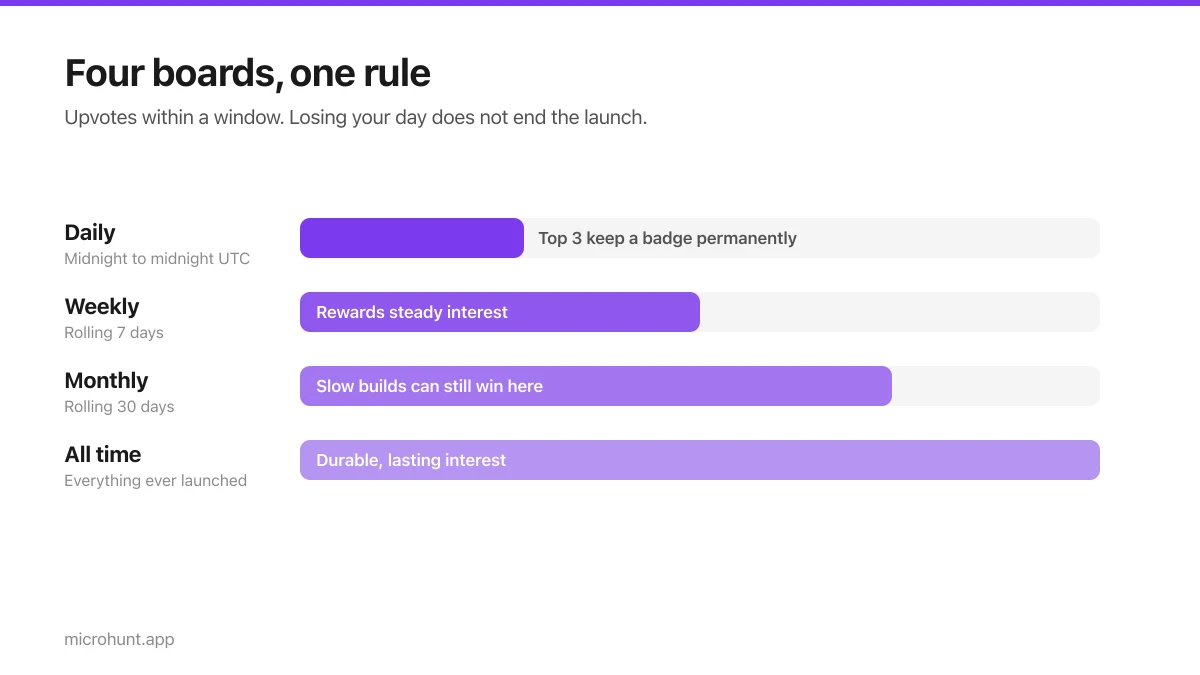
How Vuru Ranking Works (And How to Win a Badge)
Launch windows, upvotes, podium badges and what we do about vote manipulation — the whole ranking system explained plainly.
7 min read
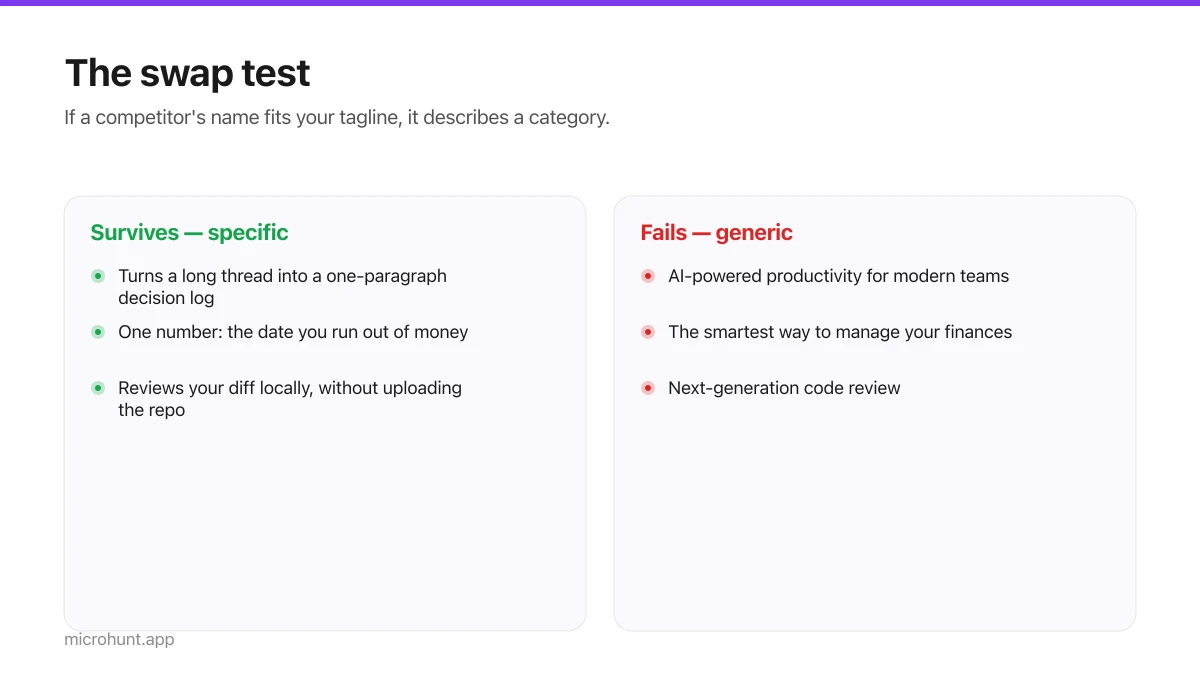
How to Write a Product Tagline That Actually Gets Clicked
The one line most people will ever read about your product, and a simple test for whether yours is doing any work.
7 min read
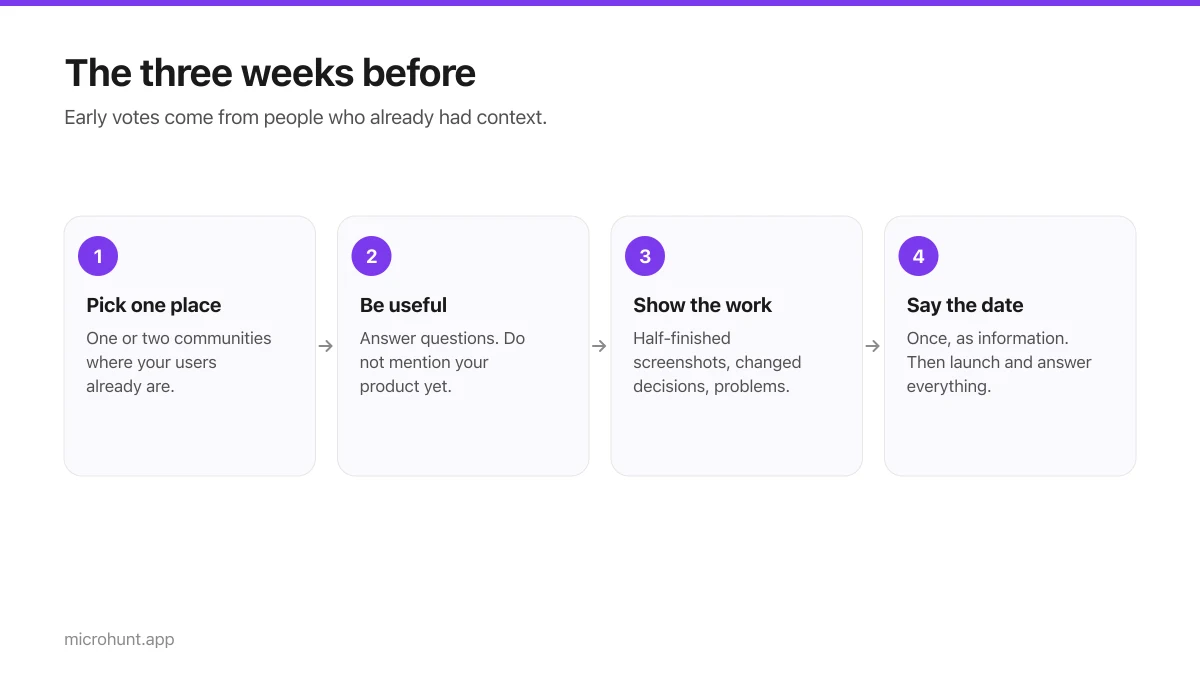
How to Get Your First Upvotes Without Begging
What actually generates early votes, why vote-for-vote groups do not work, and the approach that keeps paying off after launch day.
7 min read
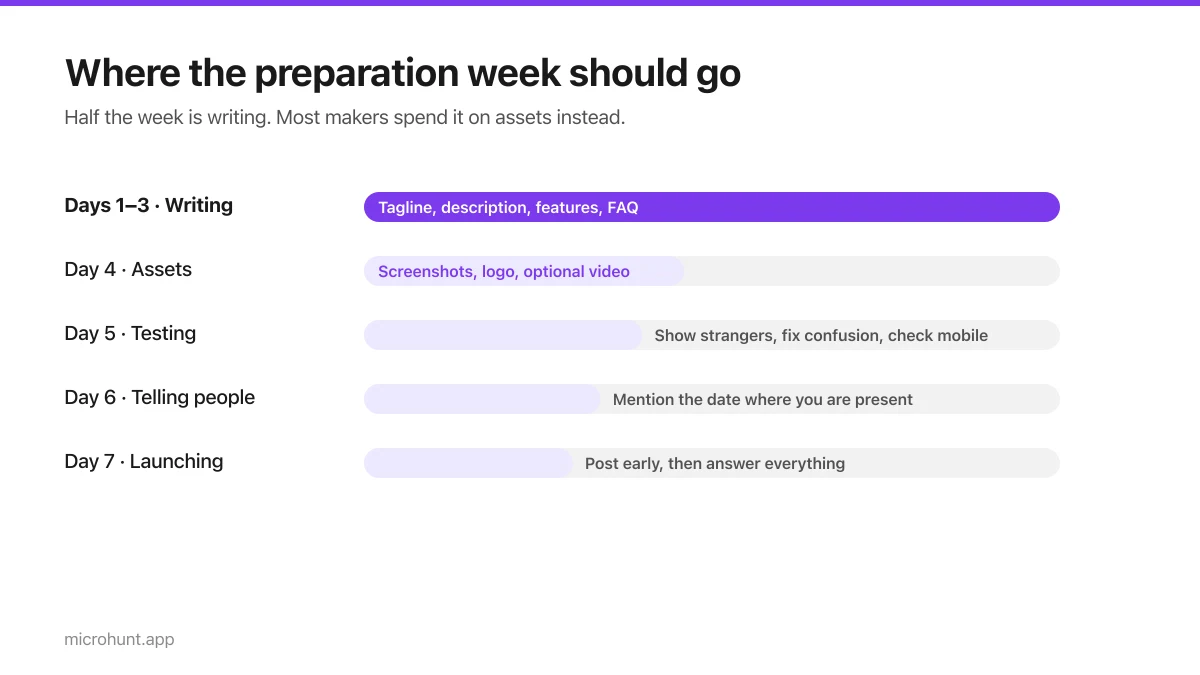
The Seven-Day Launch Checklist
A day-by-day plan for the week before you launch, weighted towards the things that actually change the outcome.
8 min read
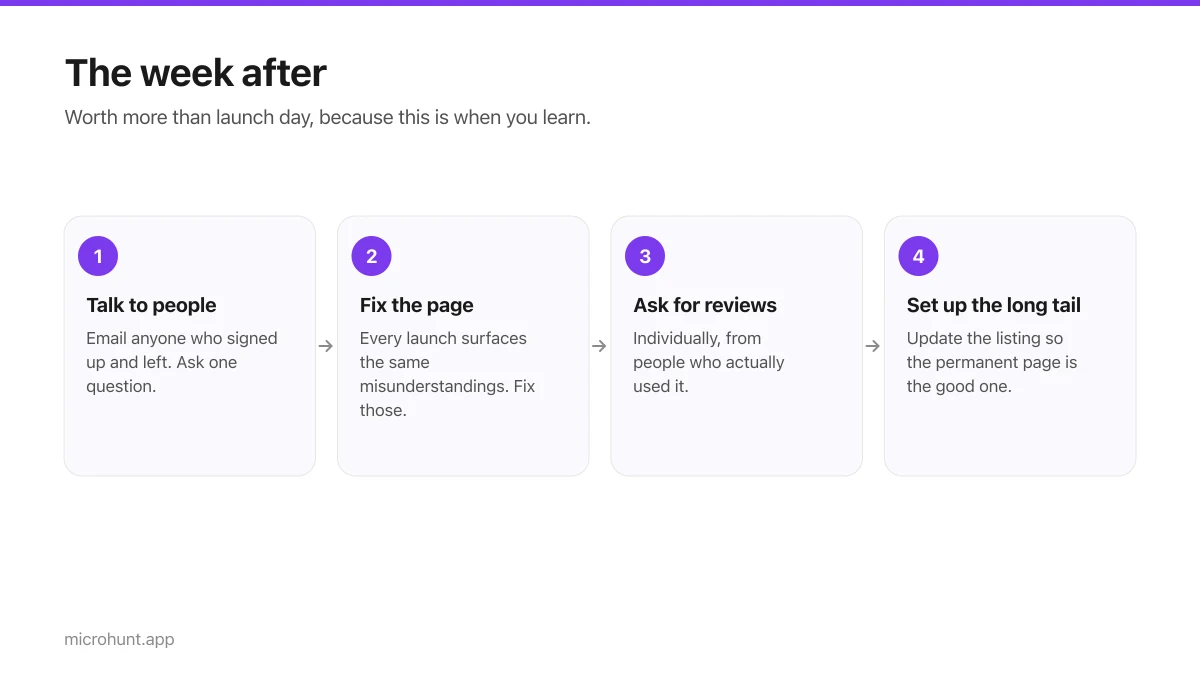
What to Do the Week After Launch Day
The traffic spike is over. Here is how to turn a day of attention into something that lasts longer than the graph.
7 min read