Workflow Automation
Connecting tools and automating repetitive steps.
Nothing launched in this category yet.
Be the firstAbout Workflow Automation
Automation platforms connect the systems you already use so that something happening in one causes something in another. The value is real and the category has a specific pathology worth naming early: automations are easy to create, hard to observe, and nearly impossible to remember. A business running on forty undocumented automations built by people who have since left is a genuine operational risk.
The practical advice is to be deliberate about what you automate. Good candidates are high-frequency, low-judgement and tolerant of a short delay: copying a record between systems, notifying a channel, creating a task from a form, tagging and routing. Bad candidates are anything requiring judgement, anything where a wrong action is expensive, and anything that fires rarely enough that nobody would notice it breaking. That last one is the most insidious, because a quarterly automation that has been silently failing since spring is discovered at the worst time.
Error handling is the feature that separates serious platforms from toys. What happens when the destination is down, the record is malformed, or the rate limit is hit? Silent failure is common and unacceptable. Look for retries with backoff, a visible failure queue, and alerting to a person rather than a log nobody reads.
Pricing is almost always per task or per run, which creates a specific trap: a trigger firing on every row change in a busy table can generate enormous volume from an automation that felt small. Filter as early in the chain as possible — ideally at the trigger — rather than running a step and discarding the result, because you usually pay for the run either way.
The newer agent-driven tools in this space, where you describe the outcome rather than build the chain, are promising and should be held to a higher standard of observability, not a lower one. If you cannot see what it decided to do and why, you cannot debug it when it does the wrong thing.
Document what you build, even briefly. A comment in the automation itself saying what it is for and who owns it costs thirty seconds and saves the next person an afternoon.
From the blog
Reading on launching, ranking and workflow automation.
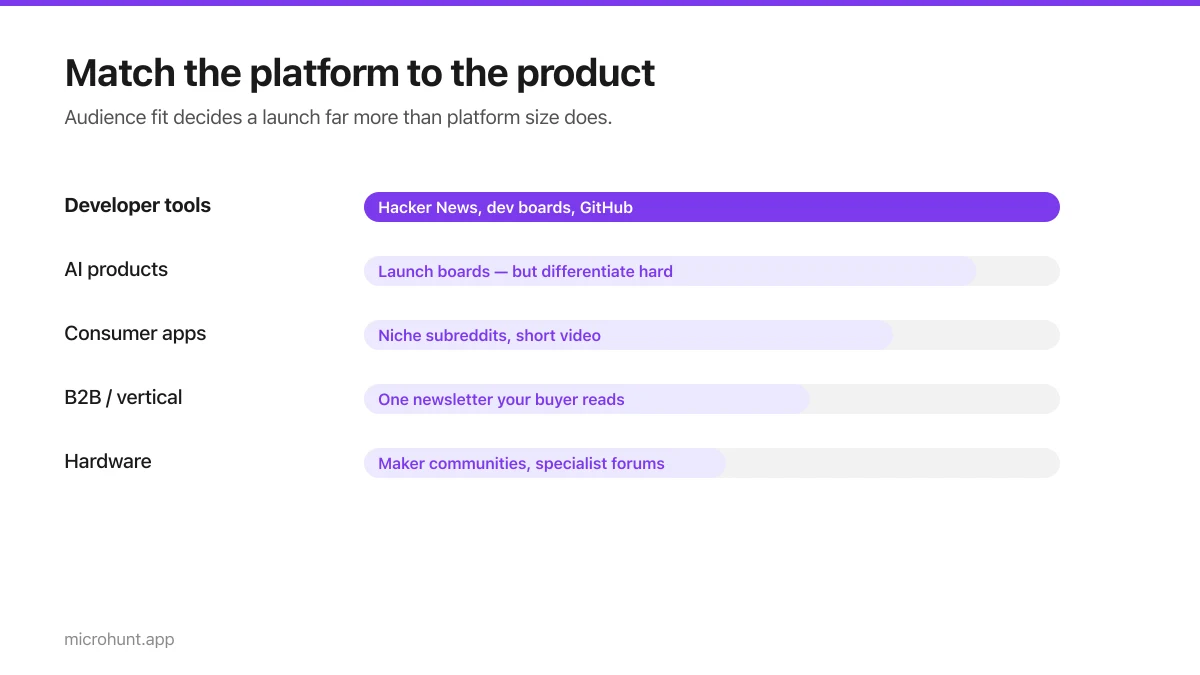
Best Product Hunt Alternatives for Launching in 2026
Where else to launch when Product Hunt is not the right fit — what each platform is actually good at, who shows up, and what it costs.
8 min read
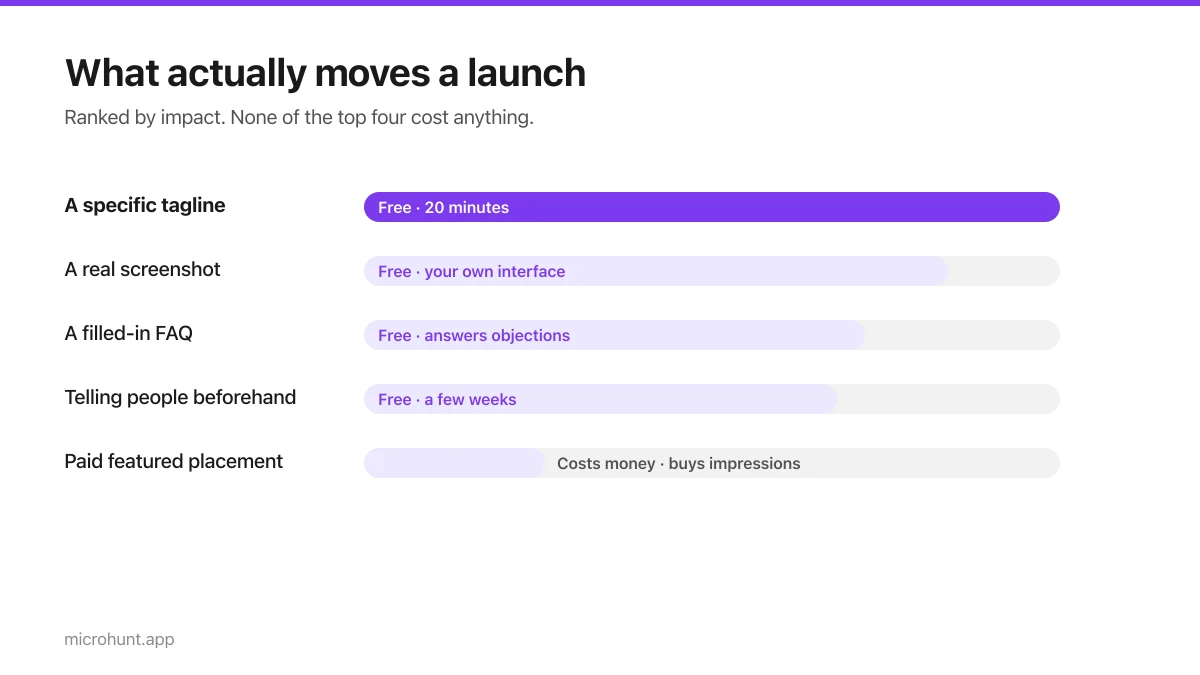
Free Launch Platforms for Indie Makers (No Budget Needed)
You do not need to pay to launch. Here are the places that are genuinely free, what each expects from you, and where paying is actually worth it.
7 min read
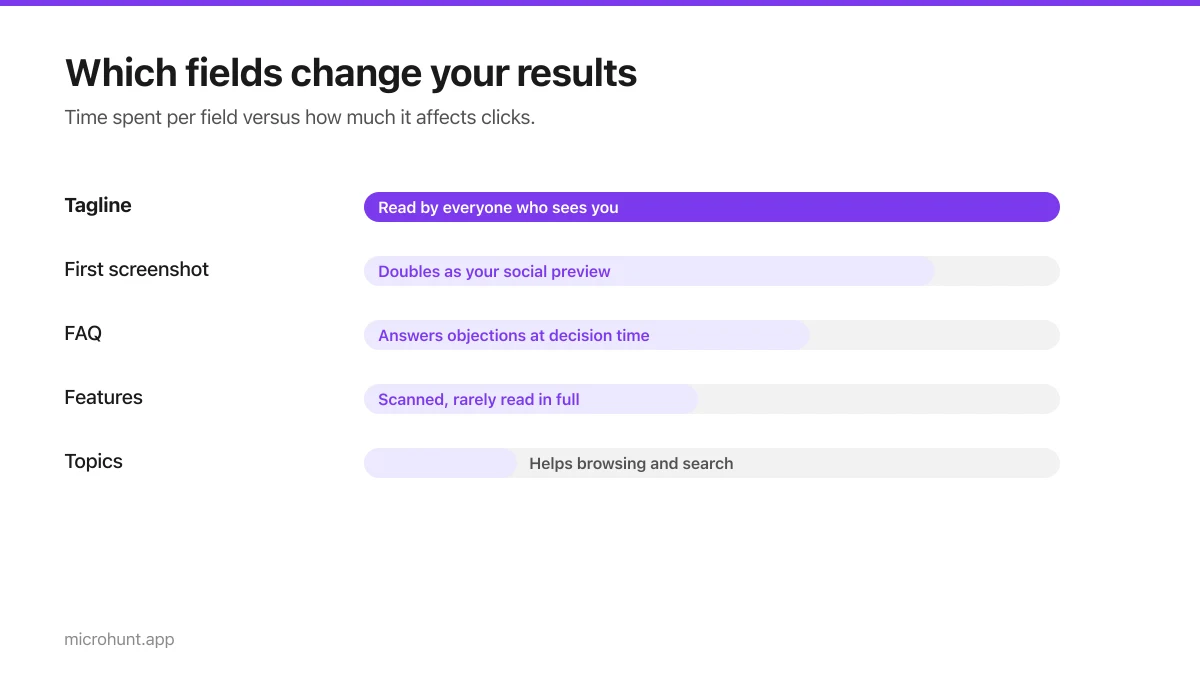
How to Submit a Product on Vuru (Step by Step)
A walk through the submission form, what each field does to your page, and the fields most people leave empty that they shouldn't.
7 min read
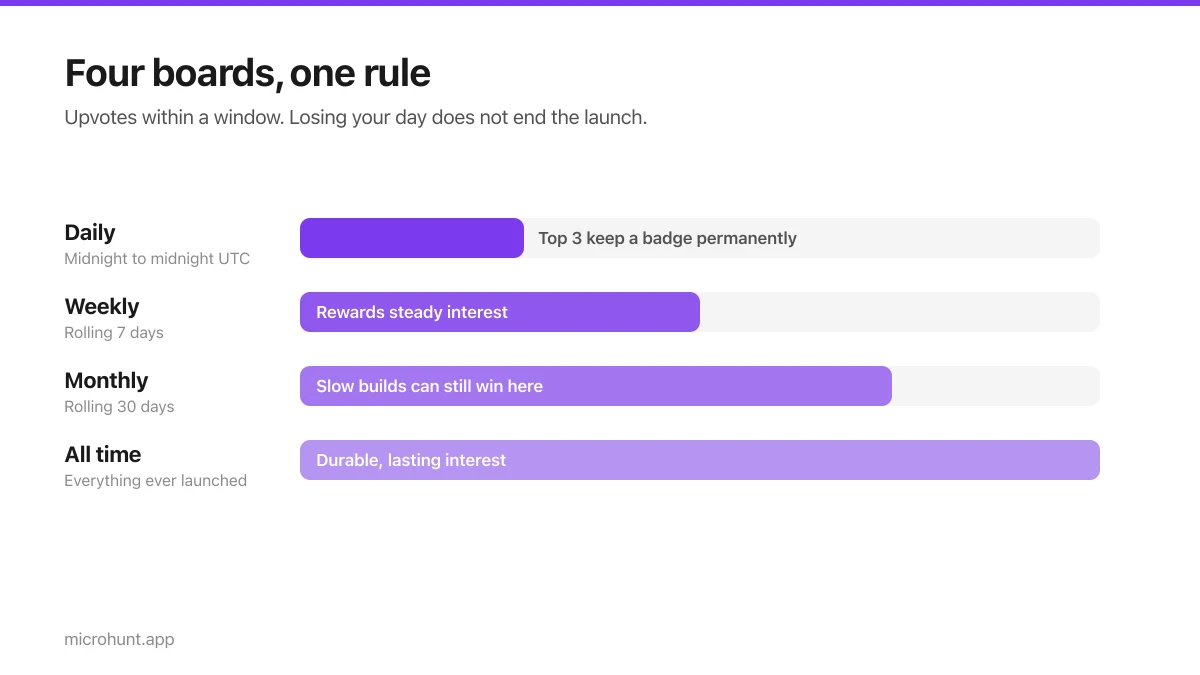
How Vuru Ranking Works (And How to Win a Badge)
Launch windows, upvotes, podium badges and what we do about vote manipulation — the whole ranking system explained plainly.
7 min read
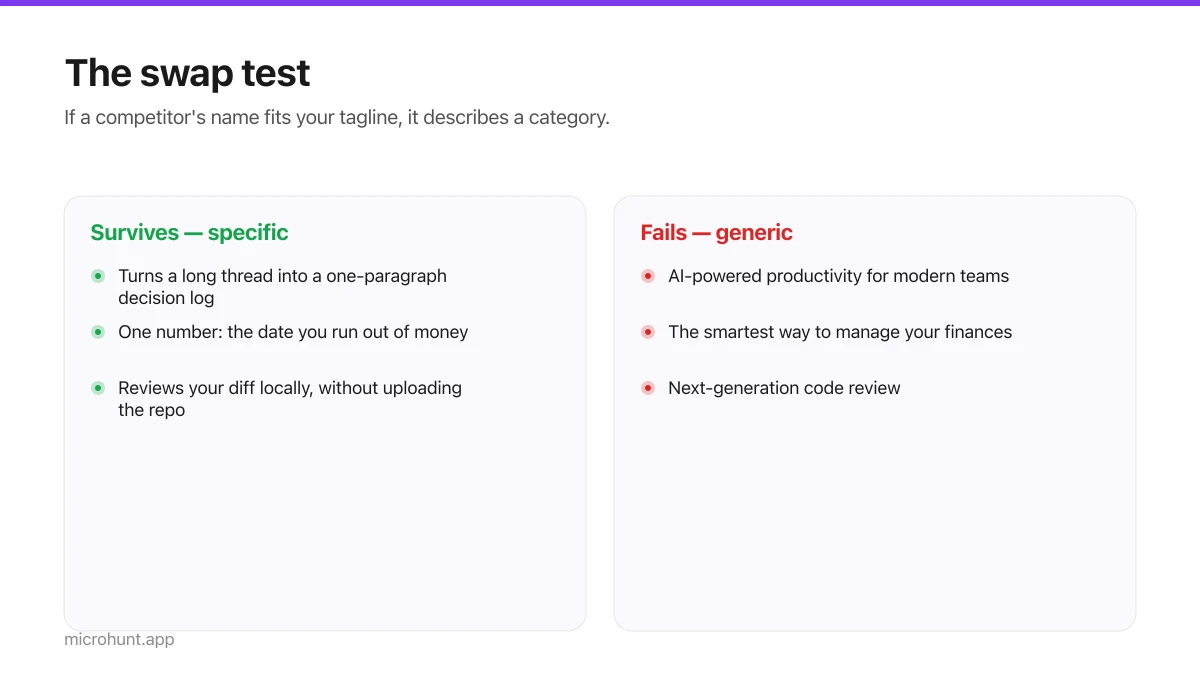
How to Write a Product Tagline That Actually Gets Clicked
The one line most people will ever read about your product, and a simple test for whether yours is doing any work.
7 min read
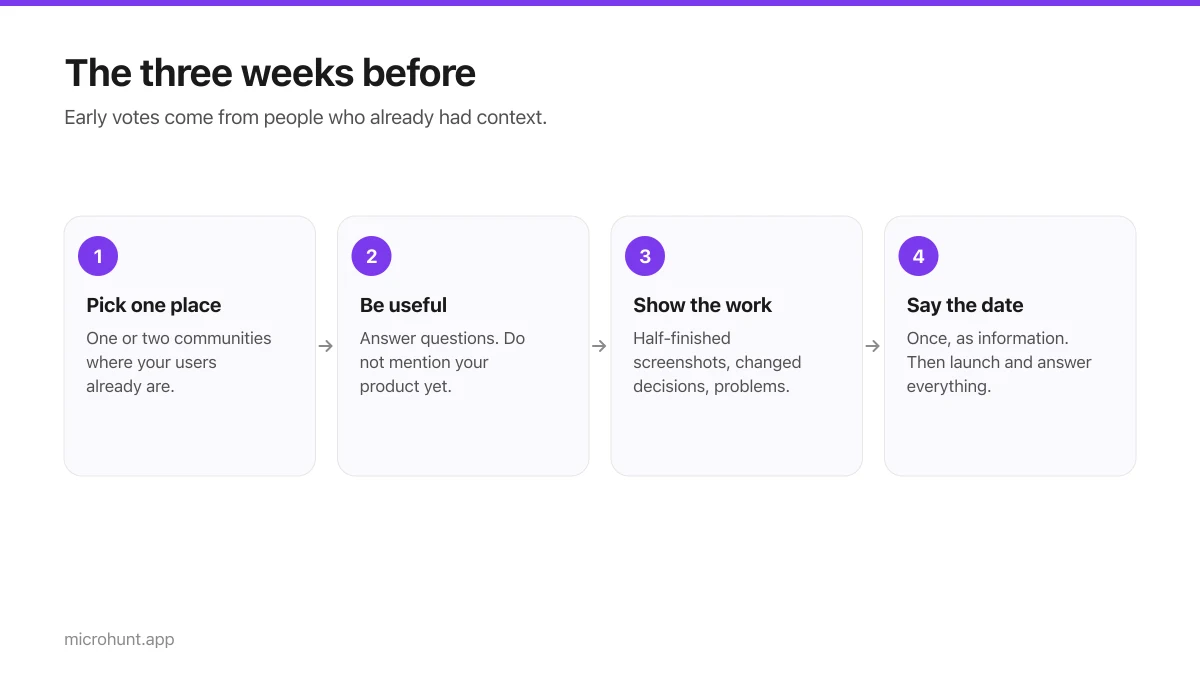
How to Get Your First Upvotes Without Begging
What actually generates early votes, why vote-for-vote groups do not work, and the approach that keeps paying off after launch day.
7 min read
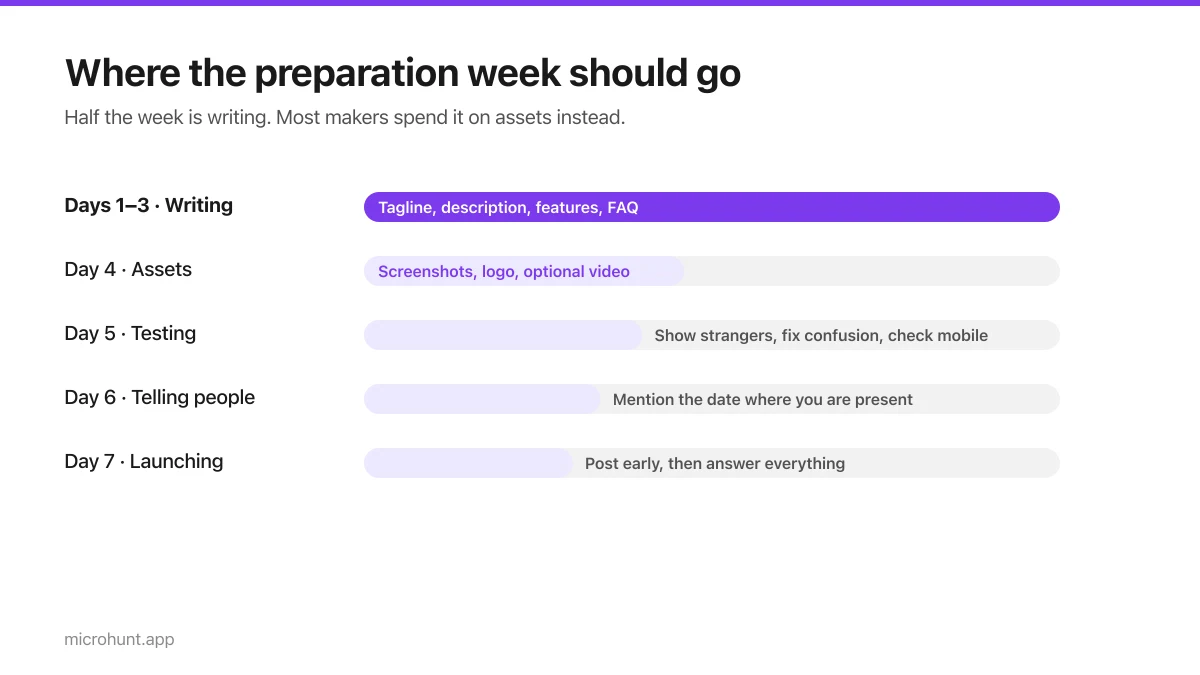
The Seven-Day Launch Checklist
A day-by-day plan for the week before you launch, weighted towards the things that actually change the outcome.
8 min read
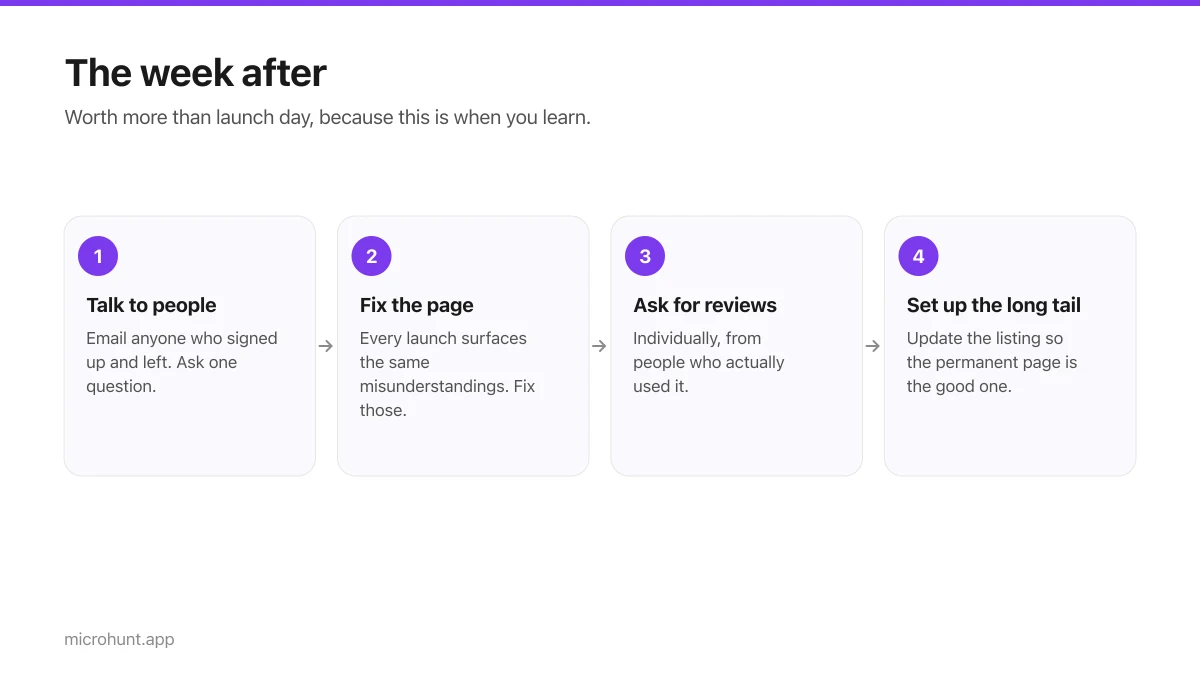
What to Do the Week After Launch Day
The traffic spike is over. Here is how to turn a day of attention into something that lasts longer than the graph.
7 min read