Career Tools
CVs, portfolios and job search on the candidate side.
Nothing launched in this category yet.
Be the firstAbout Career Tools
Career tooling covers resumes and portfolios, application tracking for candidates, salary research, networking and the coaching layer around all of it. The category has grown quickly with the arrival of generative tools, and it is worth separating what genuinely helps from what produces volume.
Resume tools are the largest group. The practical advice has not changed much: one page for most people, achievements with concrete outcomes rather than lists of responsibilities, tailored to the specific role rather than generic, and a plain structure that both a human skim and an automated parser can read. Tools that check parseability are useful, because a resume that a system mangles is one nobody reads. The elaborate multi-column designs that look striking are frequently the ones that parse worst.
On generative assistance, a caution earned by the current state of the market. These tools can produce a competent resume and a plausible cover letter in seconds, and the result is competent, plausible and indistinguishable from everyone else's. They are genuinely useful for structure, for translating what you did into clearer language, and for the tedium of tailoring. They are counterproductive when they invent achievements, and that risk is real because the model does not know what you did. Anything on a resume must survive being asked about in an interview.
Application tracking for candidates is underrated. A record of what you applied for, when, through whom, and what stage it reached converts a demoralising scatter into something you can reason about — including noticing that a particular kind of application never progresses, which is information.
Salary research tools are worth using and worth calibrating. Self-reported datasets skew, ranges vary enormously by location and company stage, and a single number is less useful than a range with a sample size attached. Where pay transparency laws apply, actual posted ranges are the better data source.
Portfolios matter enormously in some fields and not at all in others. Where they matter, showing the work and the reasoning behind it beats showing polished outcomes alone.
The unglamorous truth is that referrals outperform applications by a wide margin at almost every company, which makes maintaining loose professional relationships the highest-return career activity and the one no tool substitutes for.
From the blog
Reading on launching, ranking and career tools.
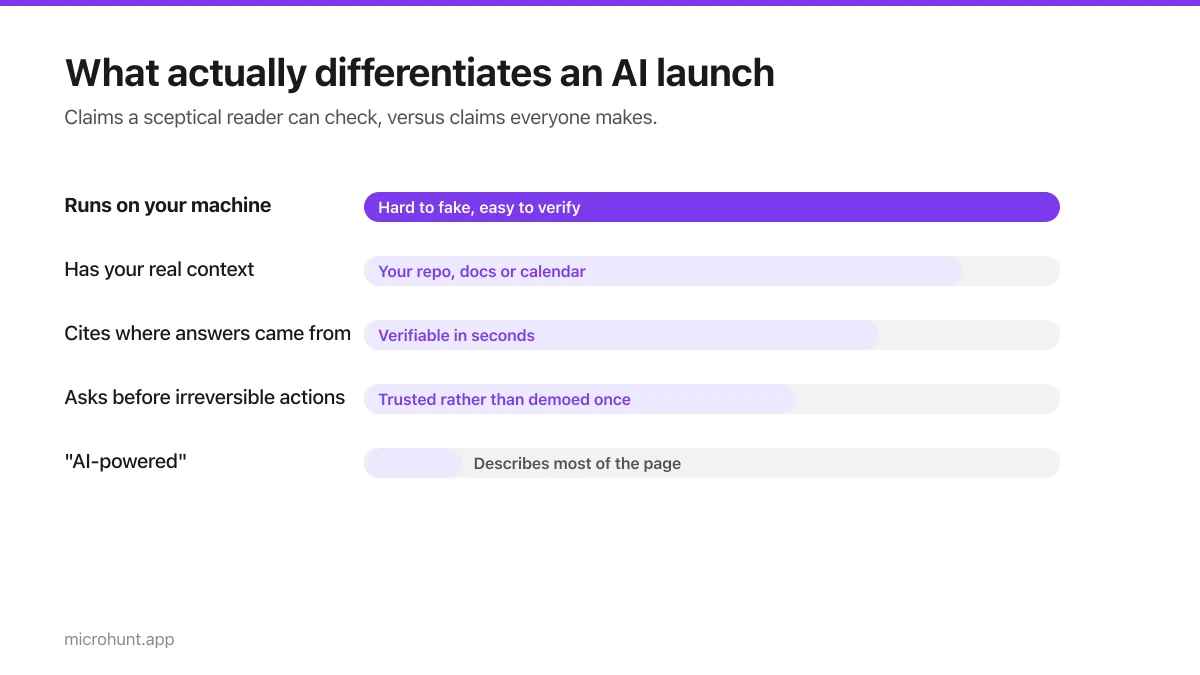
Where to Launch an AI Product (When Everyone Else Is Too)
AI is the most crowded category on every launch board. What actually differentiates a launch when half the page is also AI-powered.
8 min read
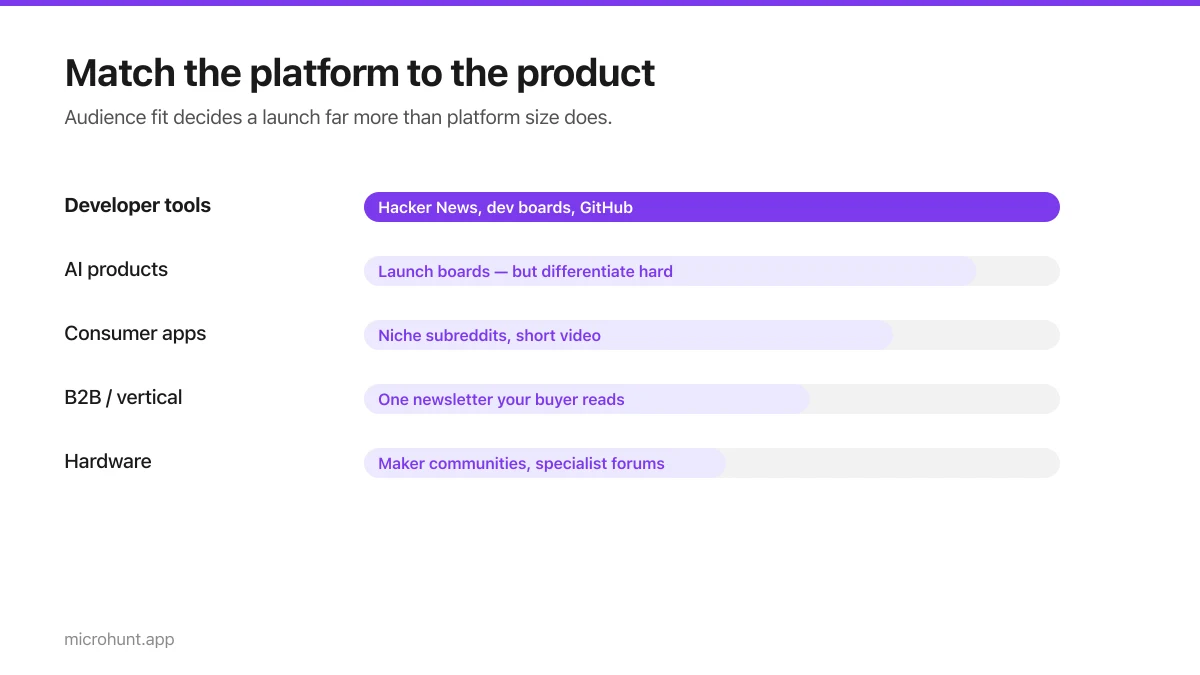
Best Product Hunt Alternatives for Launching in 2026
Where else to launch when Product Hunt is not the right fit — what each platform is actually good at, who shows up, and what it costs.
8 min read
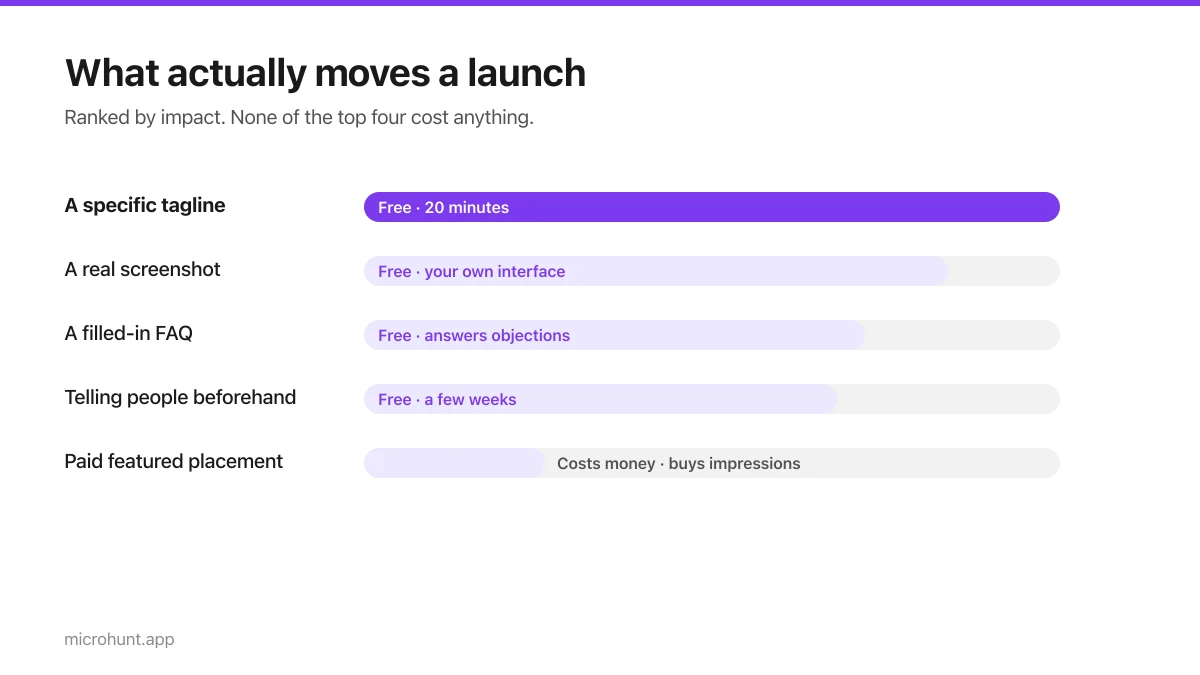
Free Launch Platforms for Indie Makers (No Budget Needed)
You do not need to pay to launch. Here are the places that are genuinely free, what each expects from you, and where paying is actually worth it.
7 min read
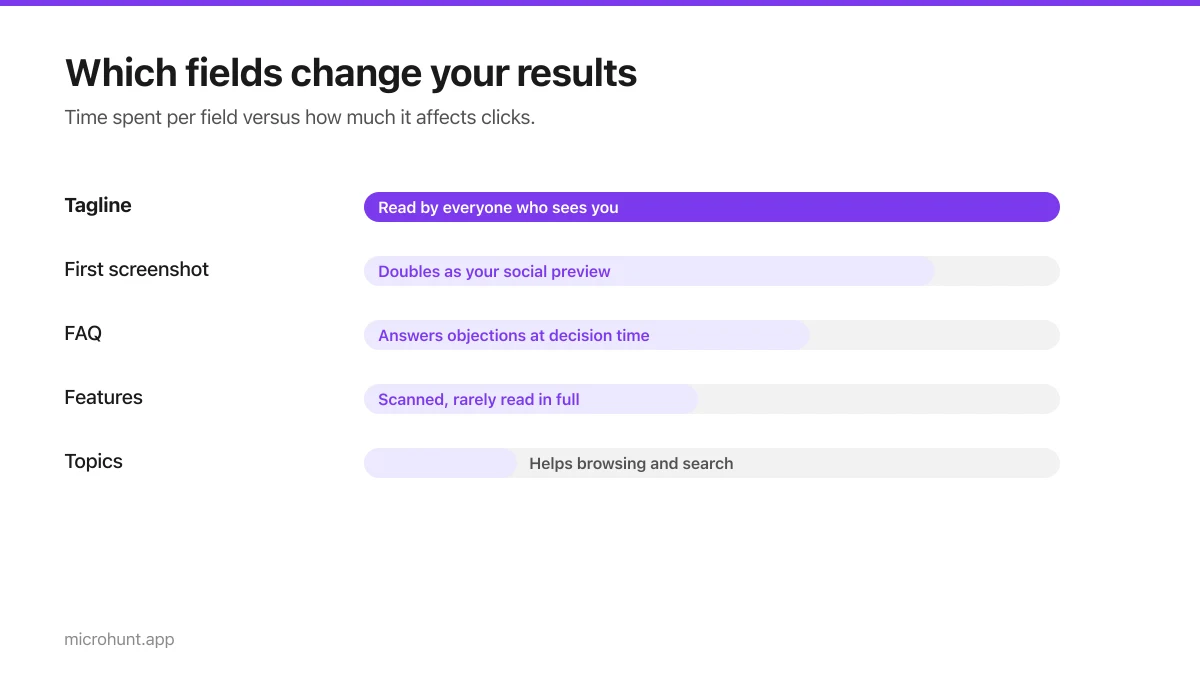
How to Submit a Product on Vuru (Step by Step)
A walk through the submission form, what each field does to your page, and the fields most people leave empty that they shouldn't.
7 min read
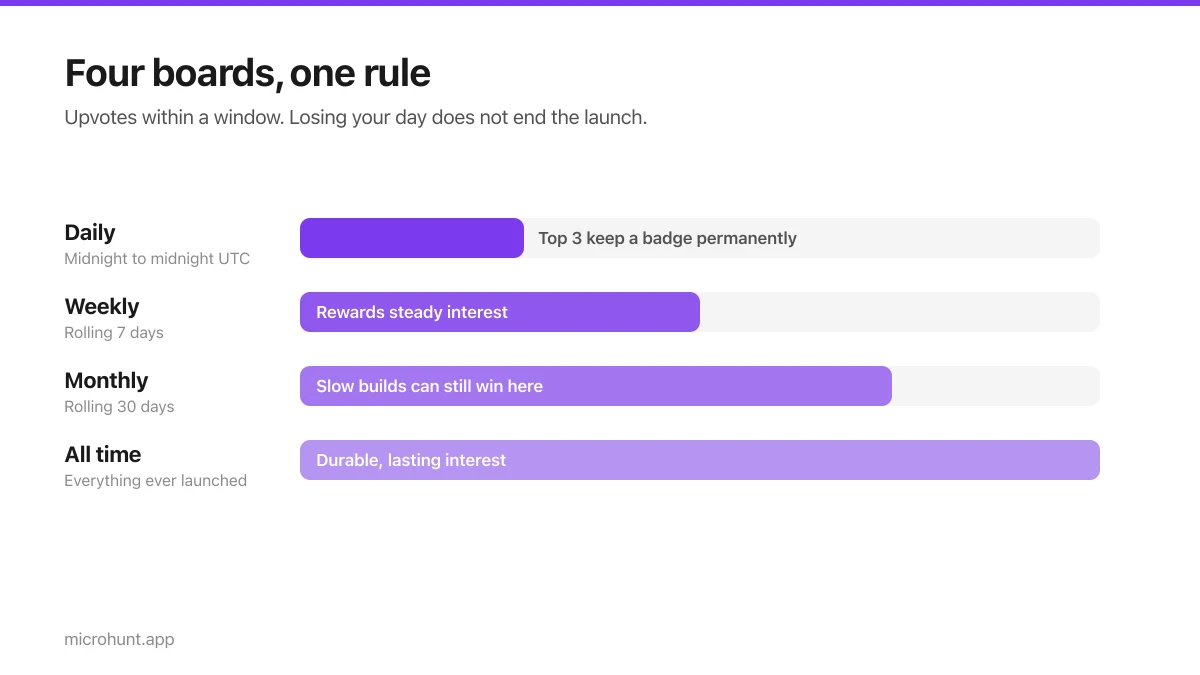
How Vuru Ranking Works (And How to Win a Badge)
Launch windows, upvotes, podium badges and what we do about vote manipulation — the whole ranking system explained plainly.
7 min read
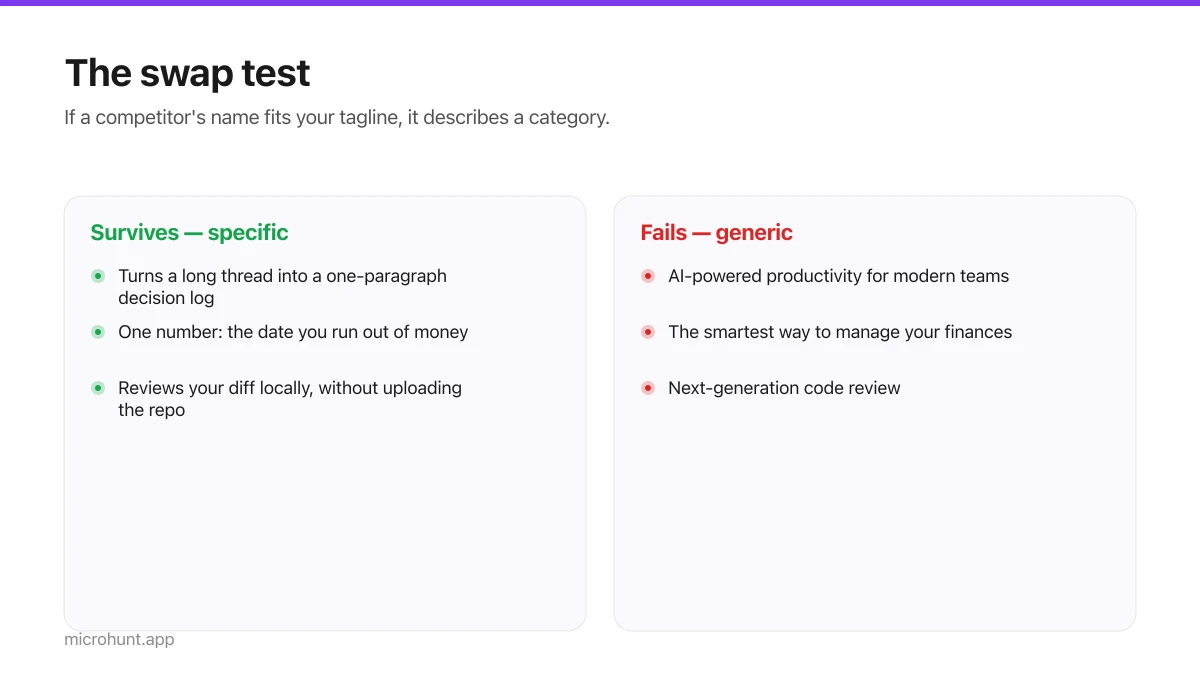
How to Write a Product Tagline That Actually Gets Clicked
The one line most people will ever read about your product, and a simple test for whether yours is doing any work.
7 min read
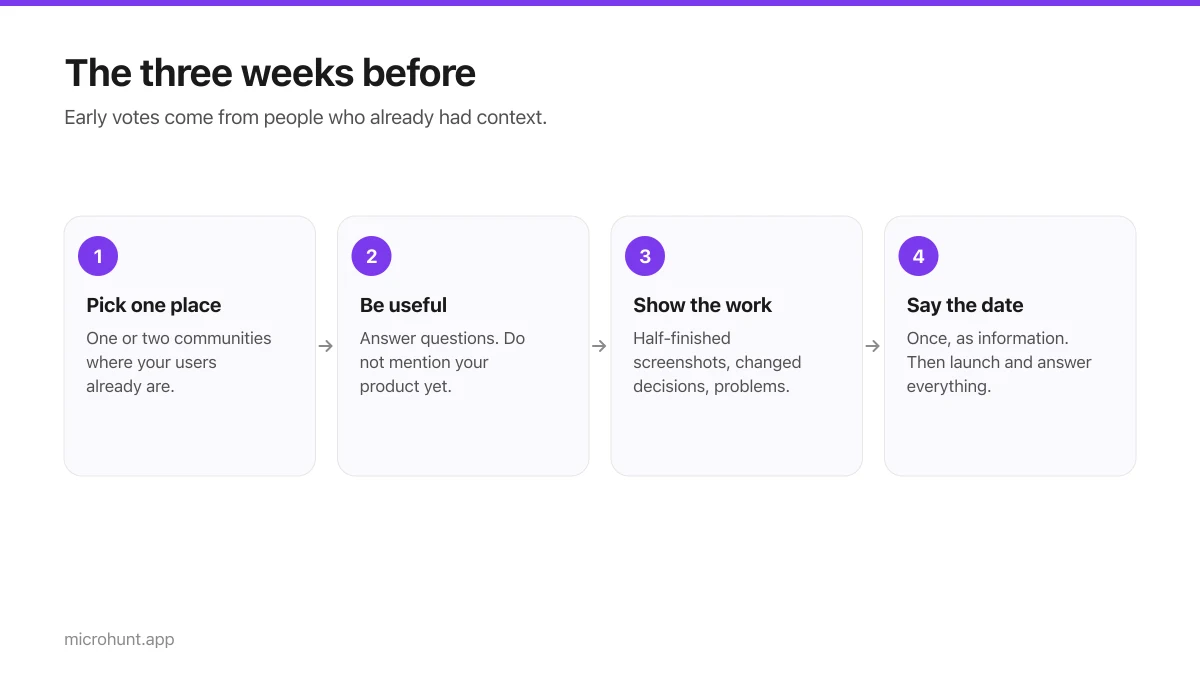
How to Get Your First Upvotes Without Begging
What actually generates early votes, why vote-for-vote groups do not work, and the approach that keeps paying off after launch day.
7 min read
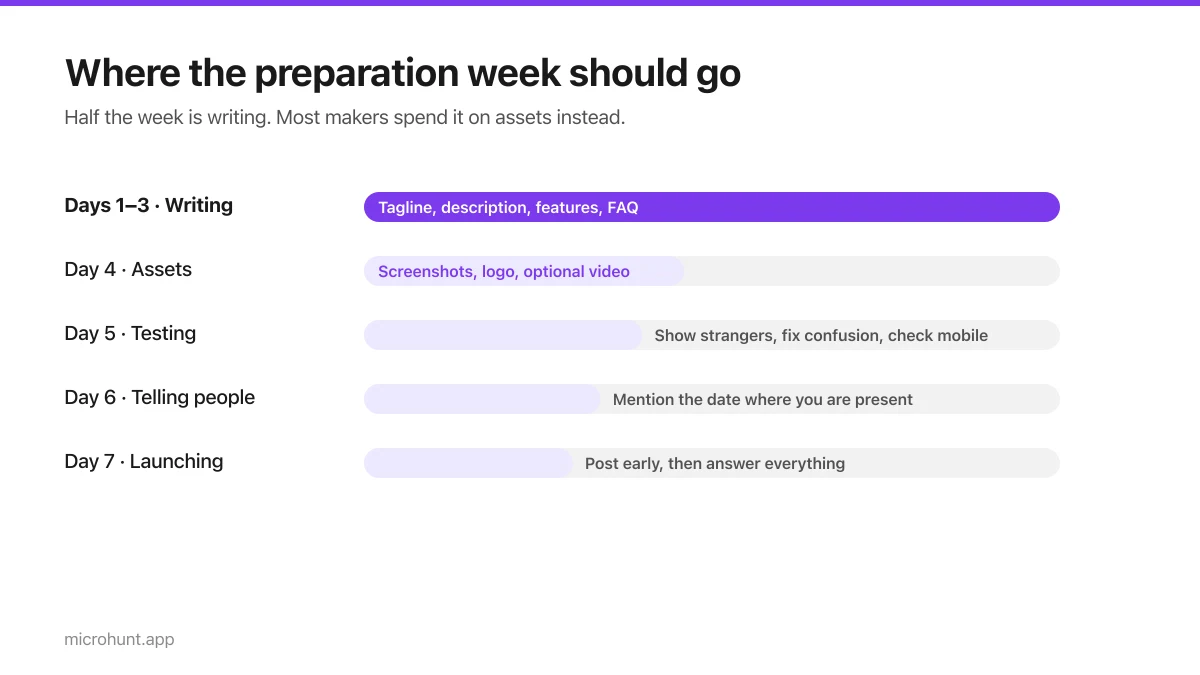
The Seven-Day Launch Checklist
A day-by-day plan for the week before you launch, weighted towards the things that actually change the outcome.
8 min read