Jobs & Hiring
Job boards, applicant tracking, interviewing and career tools.
Nothing launched in this category yet.
Be the firstAbout Jobs & Hiring
Hiring software sits between two groups with genuinely opposed incentives, which is why so much of it is unpleasant to use on at least one side. Employers want to filter efficiently. Candidates want to be seen as people rather than filtered. Tools that acknowledge both tend to be the ones that work.
The category covers job boards and aggregators, applicant tracking systems, sourcing and outbound recruiting, interview scheduling and structured interviewing, take-home assessment platforms, reference checking, offer and onboarding tools, and the candidate-side software for CVs, portfolios and job search.
The most consequential recent shift is that both sides now use models. Candidates generate applications at scale; employers screen them at scale. The result is an arms race that makes the volume larger and the signal weaker for everyone. The tools worth attention are the ones improving signal rather than throughput — structured interviews that ask every candidate the same questions, work samples that resemble the actual job, and scoring that happens before the interviewers talk to each other.
Automated screening deserves scrutiny. Systems that rank or reject candidates carry real legal exposure around discrimination in most jurisdictions, and the regulatory direction is towards more disclosure, not less. If you are buying such a tool, ask what it was trained on, what it measures, whether it has been audited for adverse impact, and what a candidate is told. If the vendor is vague on any of those, that is your answer.
For small teams, the practical advice is that process beats software. A written scorecard, the same questions for every candidate, and a decision made from notes rather than from memory will improve hiring more than any platform. Tooling helps once the process exists; it will not create one.
On the candidate side, the useful tools are the ones that reduce repetitive work without producing generic output — tracking applications, tailoring a CV to a specific role, preparing for a particular interview format. Tools that generate a hundred applications a day are optimising the wrong variable, and increasingly employers can tell.
Job boards remain the most crowded corner, and the ones that survive are usually narrow: one industry, one region, one kind of work. General boards compete with the largest players on their own terms and lose.
For makers launching here, be specific about which side you serve, because a tool that claims to serve both usually serves neither well. And if your product touches candidate data, say plainly how long you keep it and how someone gets it deleted — that question is asked more often in this category than any other.
From the blog
Reading on launching, ranking and jobs & hiring.
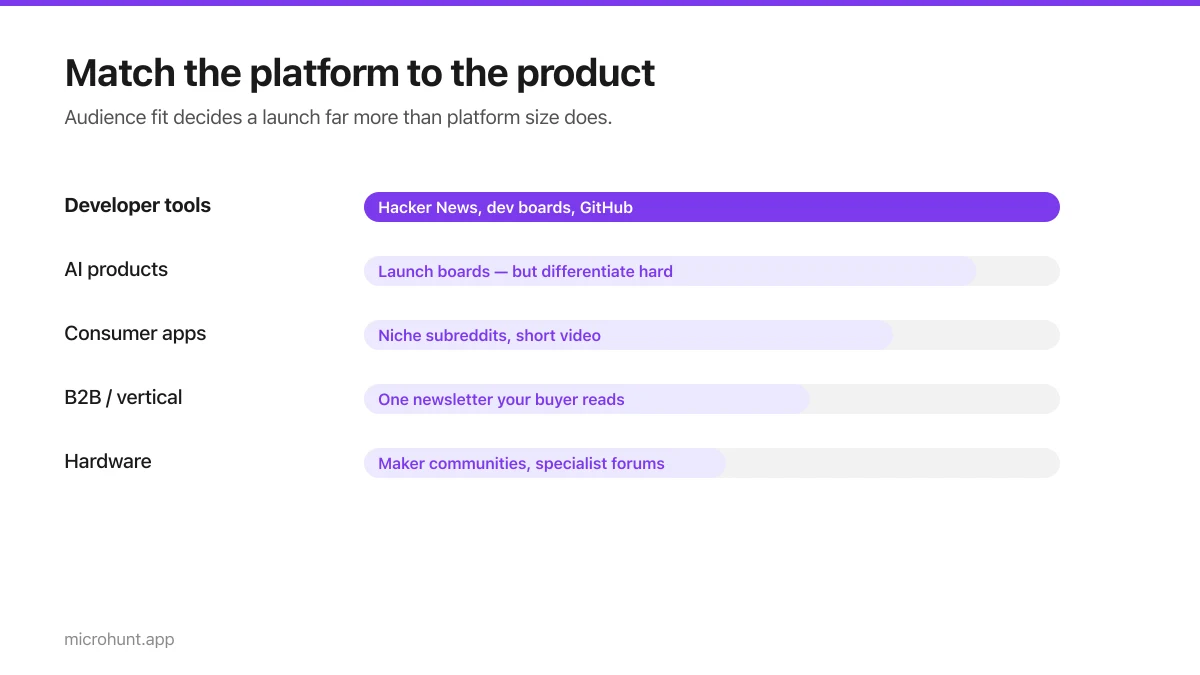
Best Product Hunt Alternatives for Launching in 2026
Where else to launch when Product Hunt is not the right fit — what each platform is actually good at, who shows up, and what it costs.
8 min read
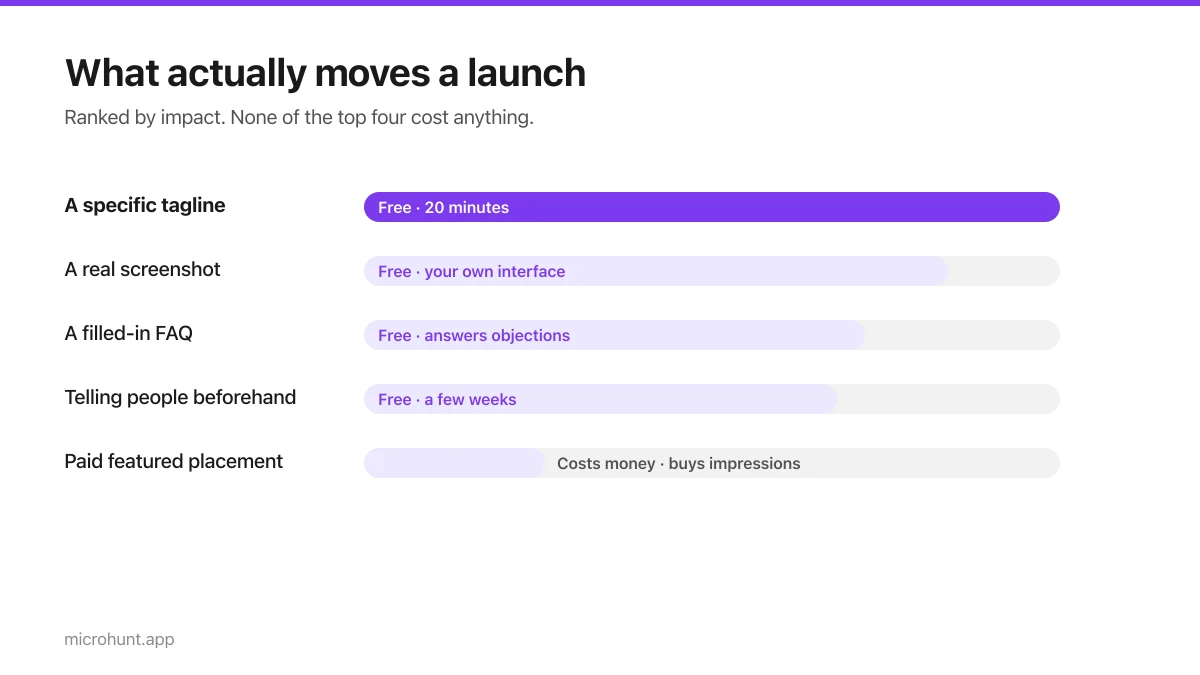
Free Launch Platforms for Indie Makers (No Budget Needed)
You do not need to pay to launch. Here are the places that are genuinely free, what each expects from you, and where paying is actually worth it.
7 min read
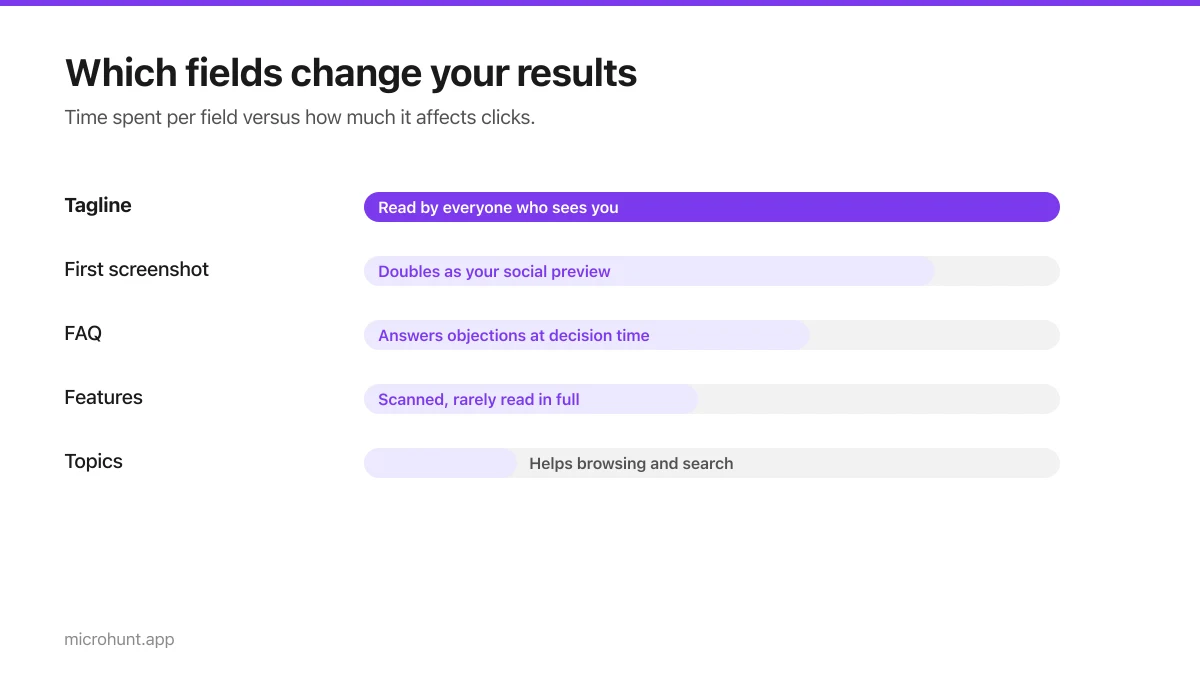
How to Submit a Product on Vuru (Step by Step)
A walk through the submission form, what each field does to your page, and the fields most people leave empty that they shouldn't.
7 min read
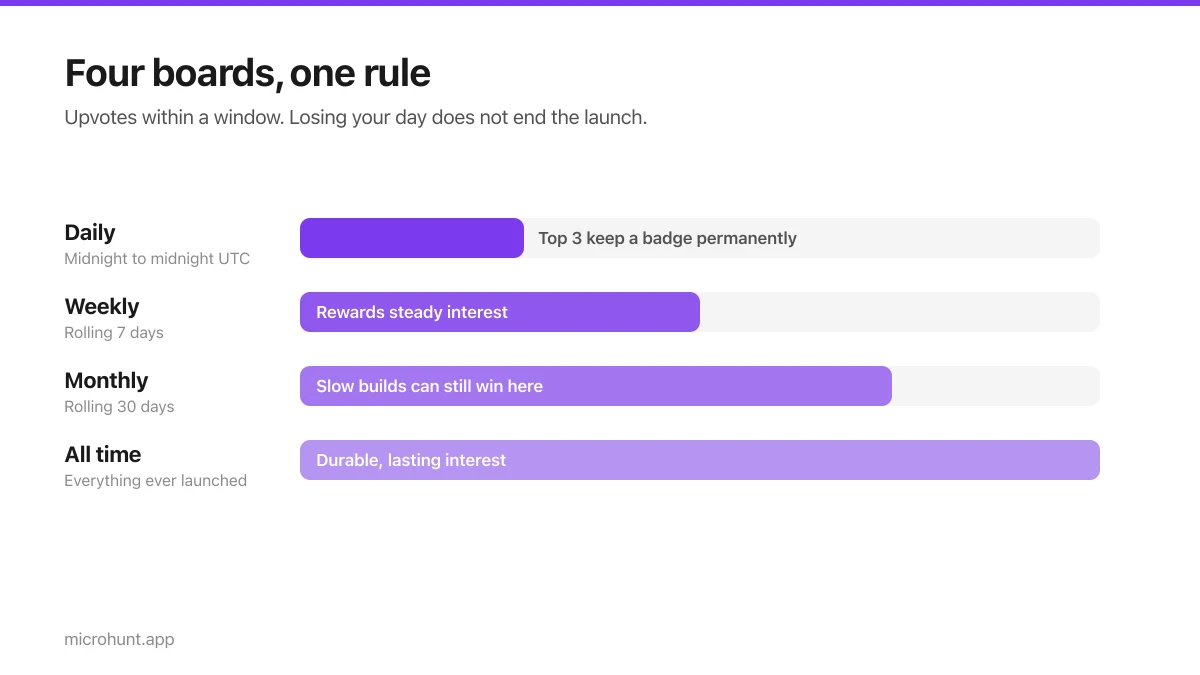
How Vuru Ranking Works (And How to Win a Badge)
Launch windows, upvotes, podium badges and what we do about vote manipulation — the whole ranking system explained plainly.
7 min read
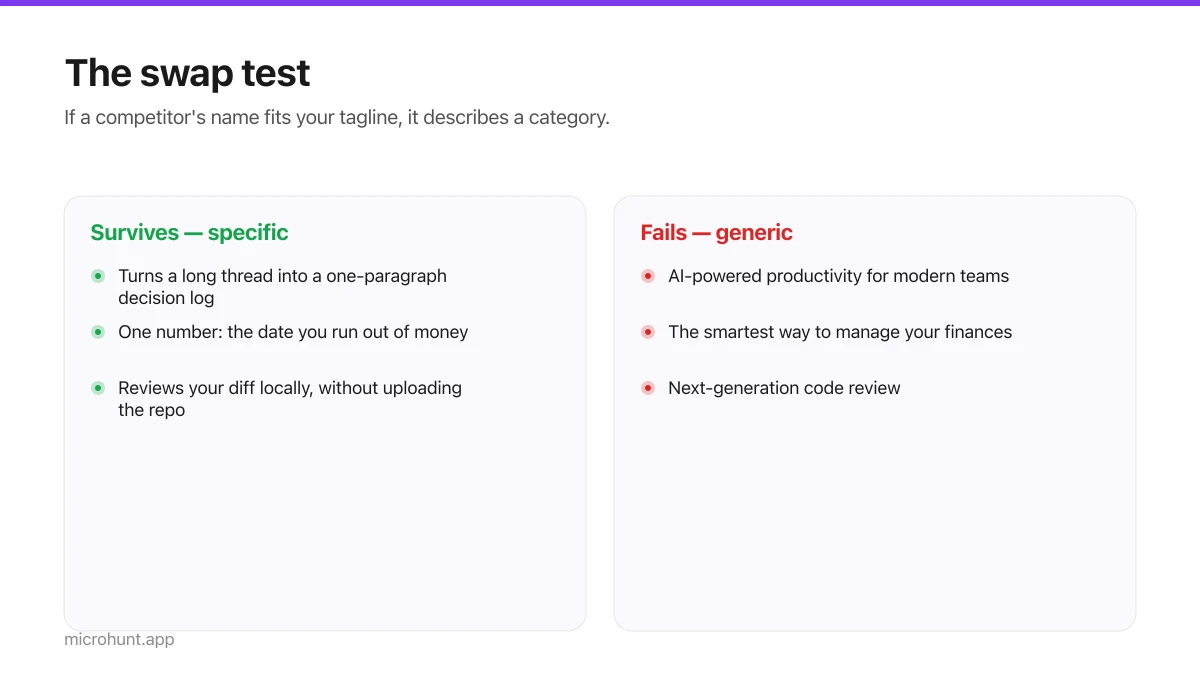
How to Write a Product Tagline That Actually Gets Clicked
The one line most people will ever read about your product, and a simple test for whether yours is doing any work.
7 min read
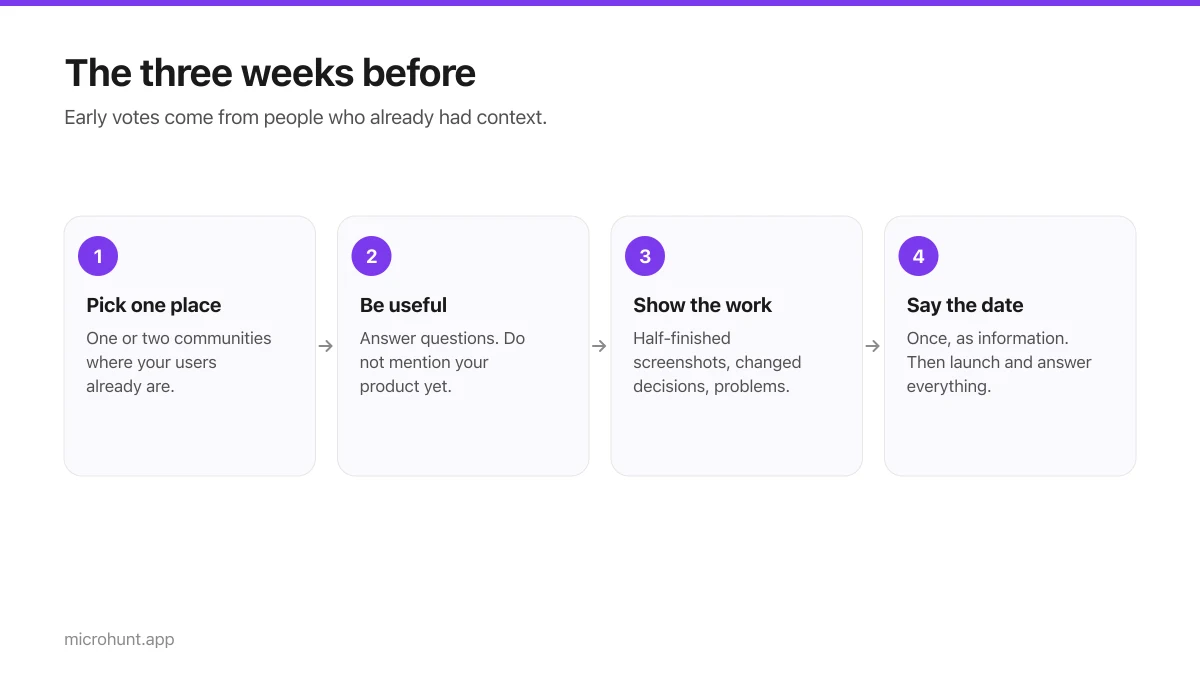
How to Get Your First Upvotes Without Begging
What actually generates early votes, why vote-for-vote groups do not work, and the approach that keeps paying off after launch day.
7 min read
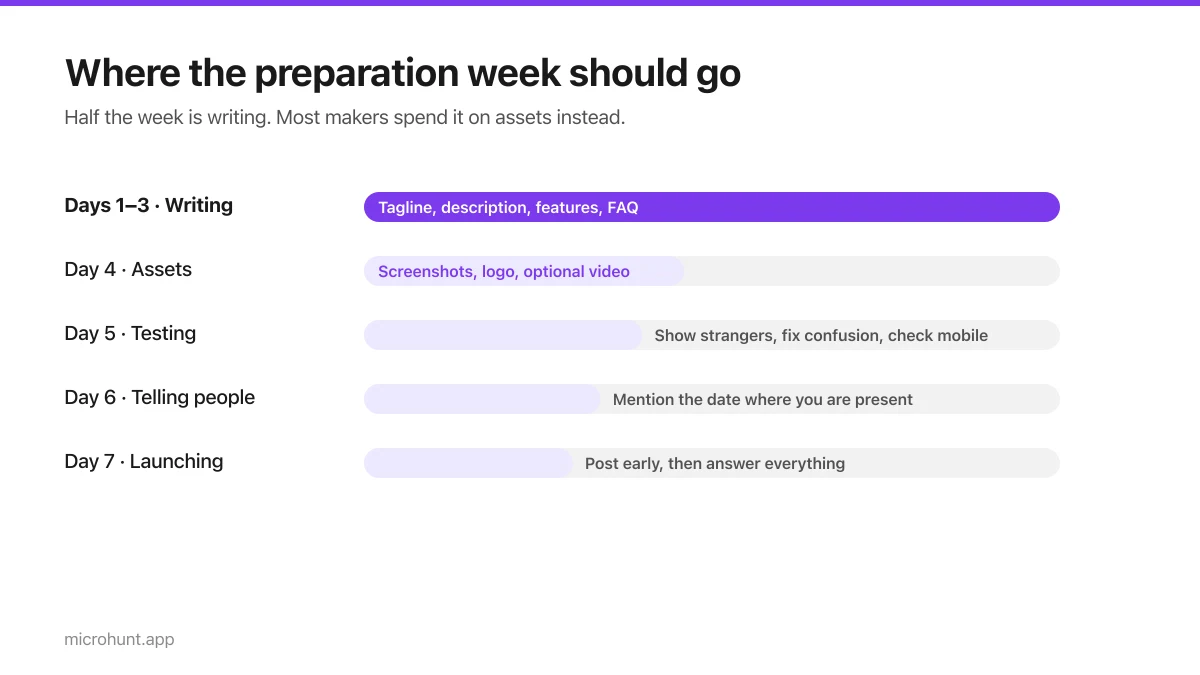
The Seven-Day Launch Checklist
A day-by-day plan for the week before you launch, weighted towards the things that actually change the outcome.
8 min read
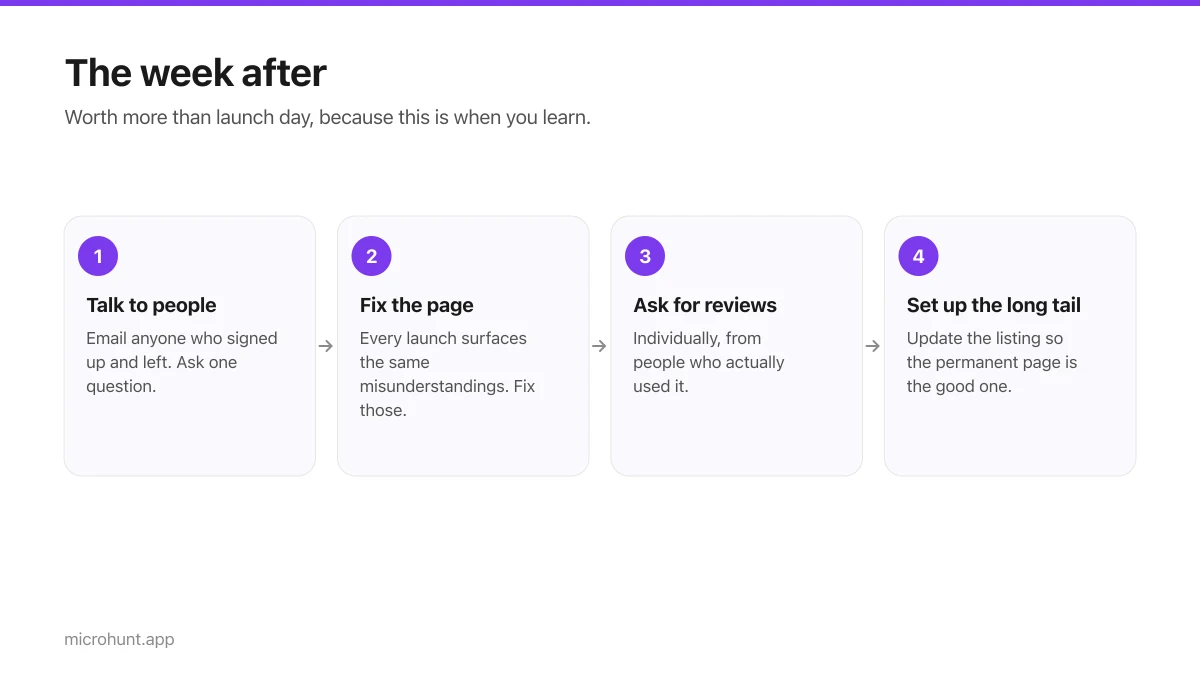
What to Do the Week After Launch Day
The traffic spike is over. Here is how to turn a day of attention into something that lasts longer than the graph.
7 min read