Checkout & Payments
Carts, payment methods and conversion.
Nothing launched in this category yet.
Be the firstAbout Checkout & Payments
Checkout is where the money actually changes hands and where the largest measurable losses in ecommerce occur. Abandonment rates across the industry sit around two-thirds, and the reasons are consistent, well studied and mostly fixable — which makes this the highest-return area of a store to work on.
The dominant cause is unexpected cost. Shipping, taxes and fees revealed at the final step account for more abandonment than any other single factor. The fix is not necessarily cheaper shipping; it is showing the total earlier, so the decision is made on the product page rather than reversed at the end. A shipping estimator or a clear threshold stated up front converts better than a lower cost revealed late.
Forced account creation is the next largest, and it is entirely self-inflicted. Guest checkout should be the default path, with an optional account offered after the order is placed, at which point the customer has a reason to want one.
Length and complexity account for much of the rest. Every field costs completions. Address autocomplete, sensible defaults, no separate confirm-email field, and not asking for a company name from consumers all help. A single page or a clearly indicated short sequence beats an ambiguous multi-step flow.
Payment method availability is more important internationally than domestically. The card-first assumption is wrong in many markets where bank transfer, local wallets or instalment options dominate, and offering the wrong methods reads as a store that does not serve you. Wallet payments that skip address entry entirely are the highest-converting option available and should be enabled wherever supported.
Trust signals matter at this specific moment more than anywhere else on the site: visible return policy, a real contact route, and no unexplained charges. Security badges do less than people think; a clearly stated returns policy does more.
Mobile deserves its own testing pass rather than being assumed to work. Most abandonment happens on phones, and the usual causes are inputs that trigger the wrong keyboard, fields obscured by the keyboard, and buttons that require precision. Test on a real device.
Recovery emails for abandoned carts work and should be honest rather than manipulative — countdown timers on fictitious deadlines damage trust.
From the blog
Reading on launching, ranking and checkout & payments.

Best Product Hunt Alternatives for Launching in 2026
Where else to launch when Product Hunt is not the right fit — what each platform is actually good at, who shows up, and what it costs.
8 min read
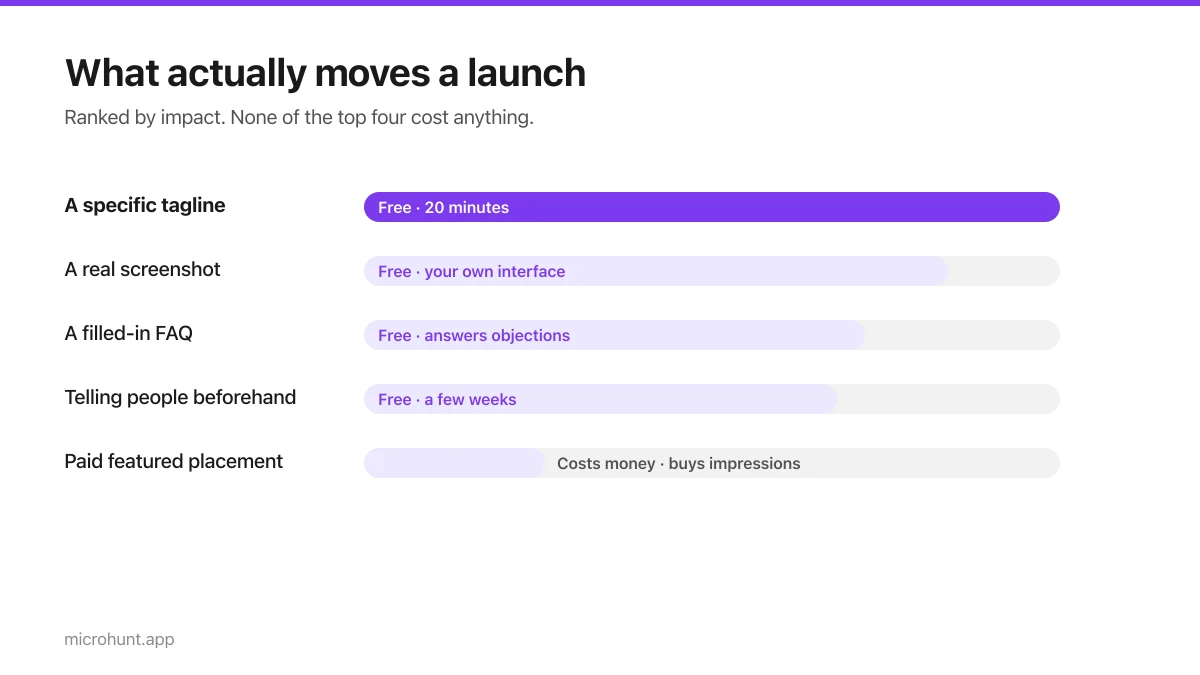
Free Launch Platforms for Indie Makers (No Budget Needed)
You do not need to pay to launch. Here are the places that are genuinely free, what each expects from you, and where paying is actually worth it.
7 min read
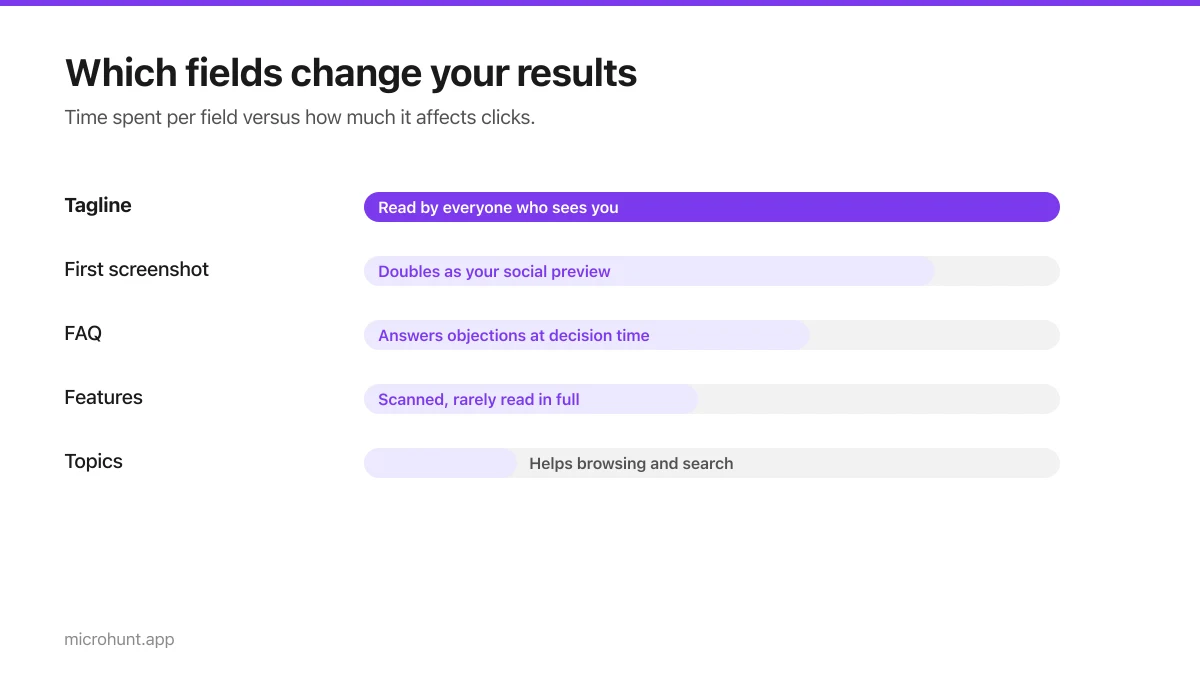
How to Submit a Product on Vuru (Step by Step)
A walk through the submission form, what each field does to your page, and the fields most people leave empty that they shouldn't.
7 min read
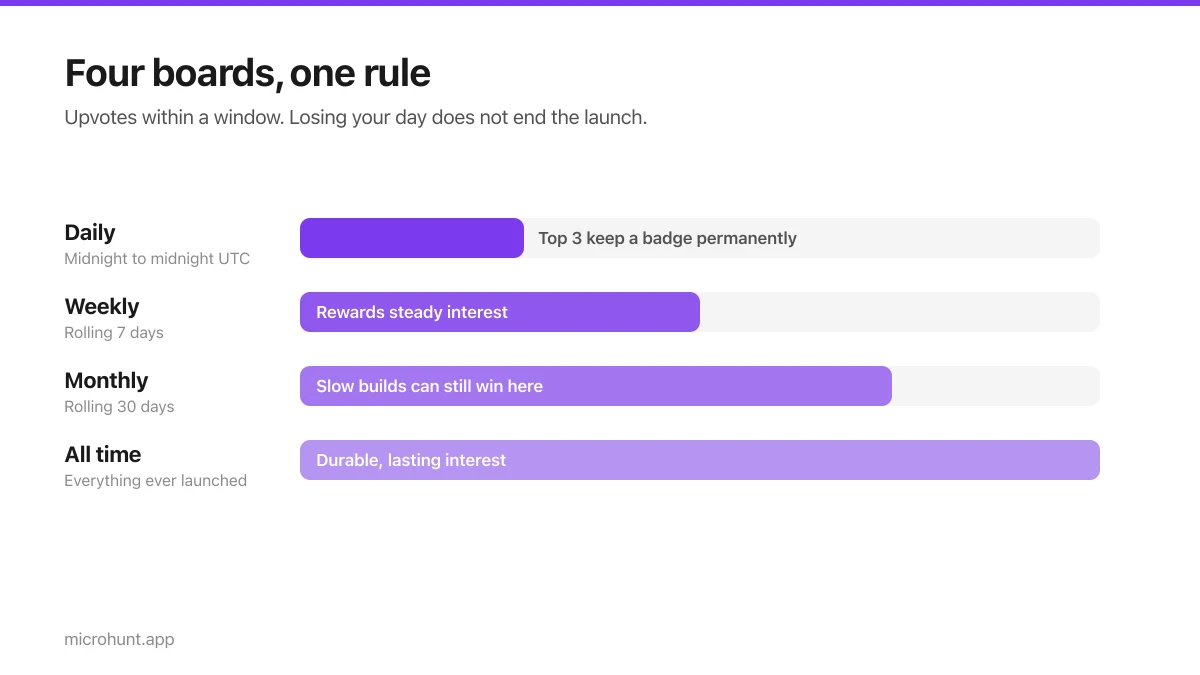
How Vuru Ranking Works (And How to Win a Badge)
Launch windows, upvotes, podium badges and what we do about vote manipulation — the whole ranking system explained plainly.
7 min read
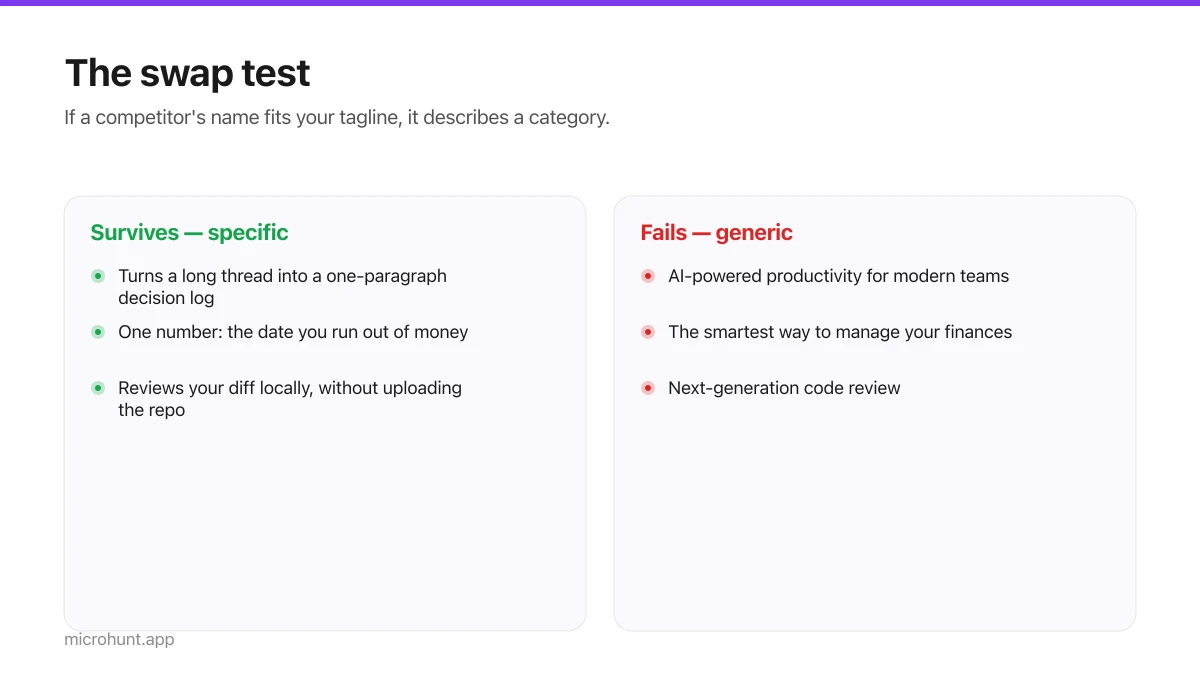
How to Write a Product Tagline That Actually Gets Clicked
The one line most people will ever read about your product, and a simple test for whether yours is doing any work.
7 min read
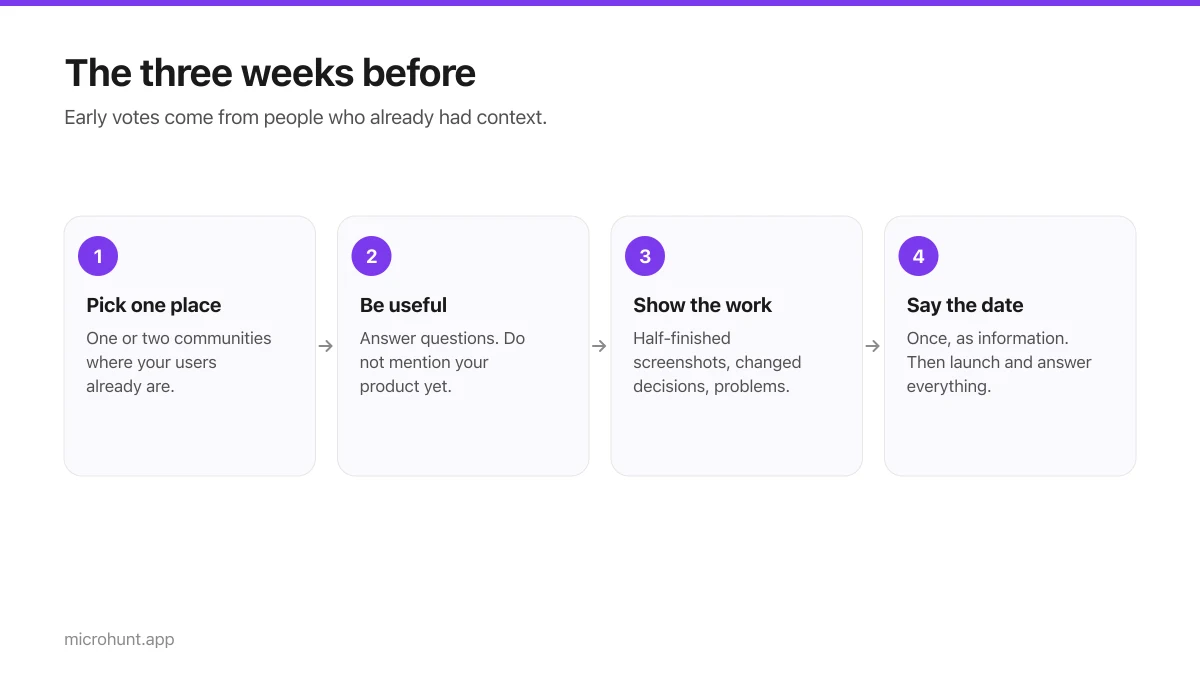
How to Get Your First Upvotes Without Begging
What actually generates early votes, why vote-for-vote groups do not work, and the approach that keeps paying off after launch day.
7 min read
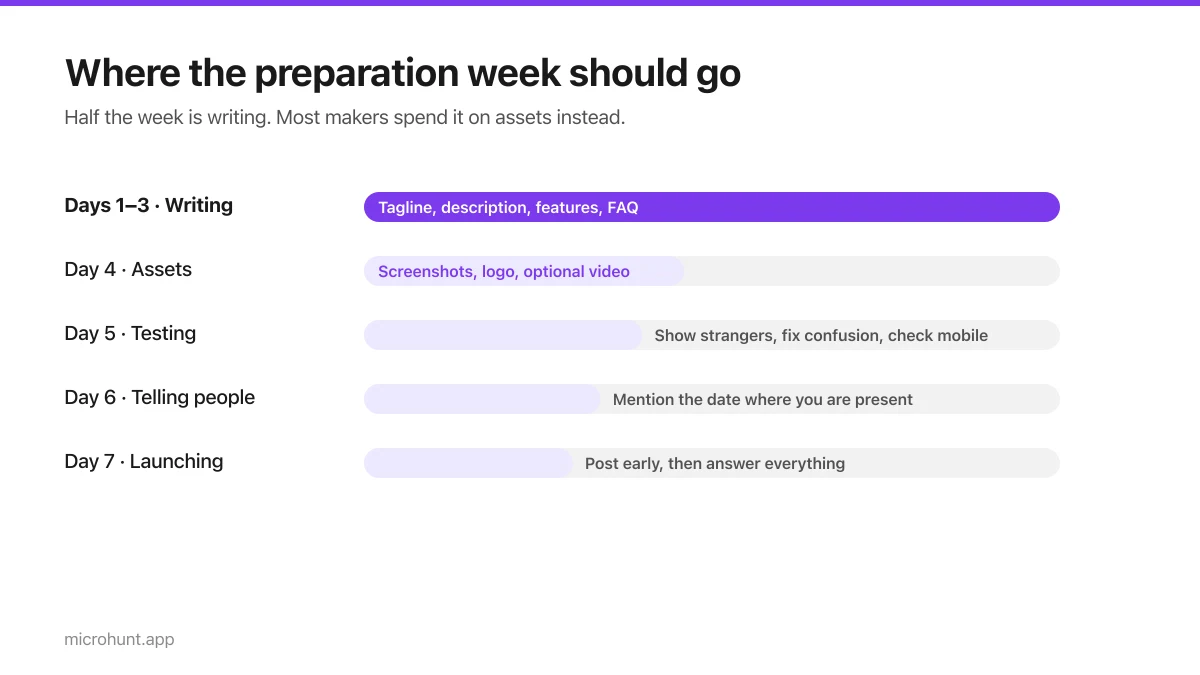
The Seven-Day Launch Checklist
A day-by-day plan for the week before you launch, weighted towards the things that actually change the outcome.
8 min read
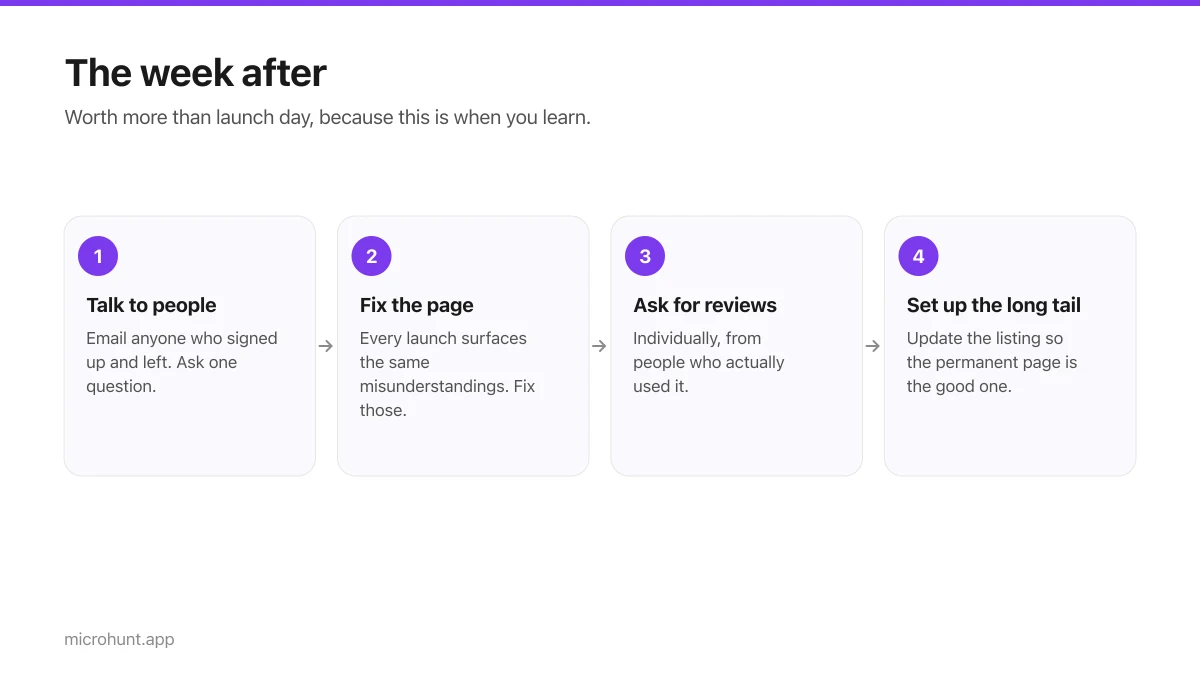
What to Do the Week After Launch Day
The traffic spike is over. Here is how to turn a day of attention into something that lasts longer than the graph.
7 min read