E-commerce & Retail
Storefronts, checkout, inventory, shipping and selling online.
Nothing launched in this category yet.
Be the firstAbout E-commerce & Retail
Selling something online involves a longer chain than most people expect: a storefront, a payment processor, tax calculation, inventory, fulfilment, shipping rates, returns, customer service, and analytics tying it together. The tools here address links in that chain, and the useful question about any of them is which links it replaces and which it merely connects to.
The category covers store platforms and headless commerce, checkout and payments, subscription billing, inventory and order management, shipping and label printing, returns, product photography and listing tools, review collection, and the marketing layer that sits on top of all of it.
Checkout is where the money is won or lost, and it is unusually well studied. The consistent findings are unglamorous: fewer fields, guest checkout available, the total cost visible before the final step, and payment methods people in that market actually use. A store that hides shipping cost until the last page will lose a meaningful share of buyers there, every time, regardless of how good the product is.
Tax is the part that catches small sellers out. Selling across borders means different registration thresholds, different rates, and different rules about who is liable — the seller, the marketplace, or the buyer. Tools that handle this properly are worth their cost the moment you cross a threshold, and the moment you cross one is usually before you noticed.
Inventory is the other quiet complexity. Selling the same stock across a website, a marketplace and a physical location requires a single source of truth, and the alternative — overselling and cancelling orders — damages exactly the reputation a small shop depends on. If you sell in more than one place, inventory sync is not an optimisation, it is the thing holding the operation together.
Platform choice comes down to a familiar trade-off. Hosted platforms get you selling quickly and take a cut. Self-hosted gives control and costs engineering time. Headless setups give design freedom and require someone to maintain a front end. There is no universally right answer, but there is a wrong reason to choose: picking headless because it sounds modern, when the actual constraint is that nobody on the team wants to maintain a storefront.
For makers launching here, this audience is commercially literate and will do the arithmetic. Show your fees plainly, including payment processing and any per-transaction cut. Say which markets you support for tax and shipping. And if your tool integrates with a platform, be specific about what the integration actually syncs — "works with your store" is not an answer anyone can act on.
From the blog
Reading on launching, ranking and e-commerce & retail.
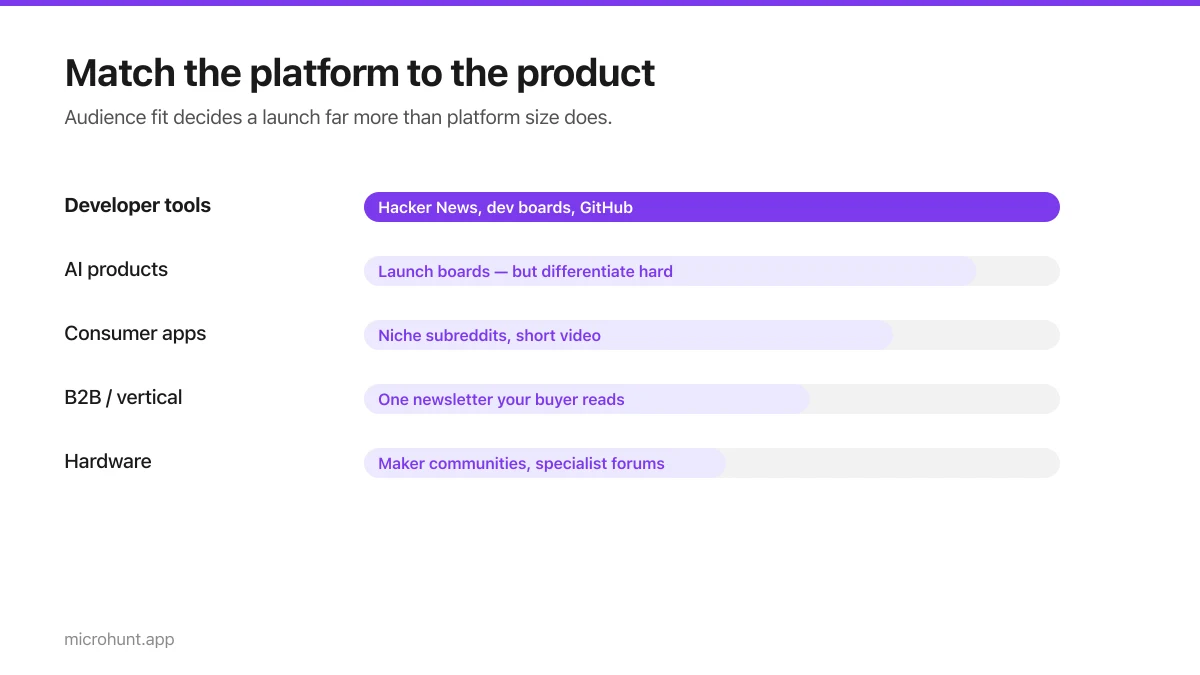
Best Product Hunt Alternatives for Launching in 2026
Where else to launch when Product Hunt is not the right fit — what each platform is actually good at, who shows up, and what it costs.
8 min read
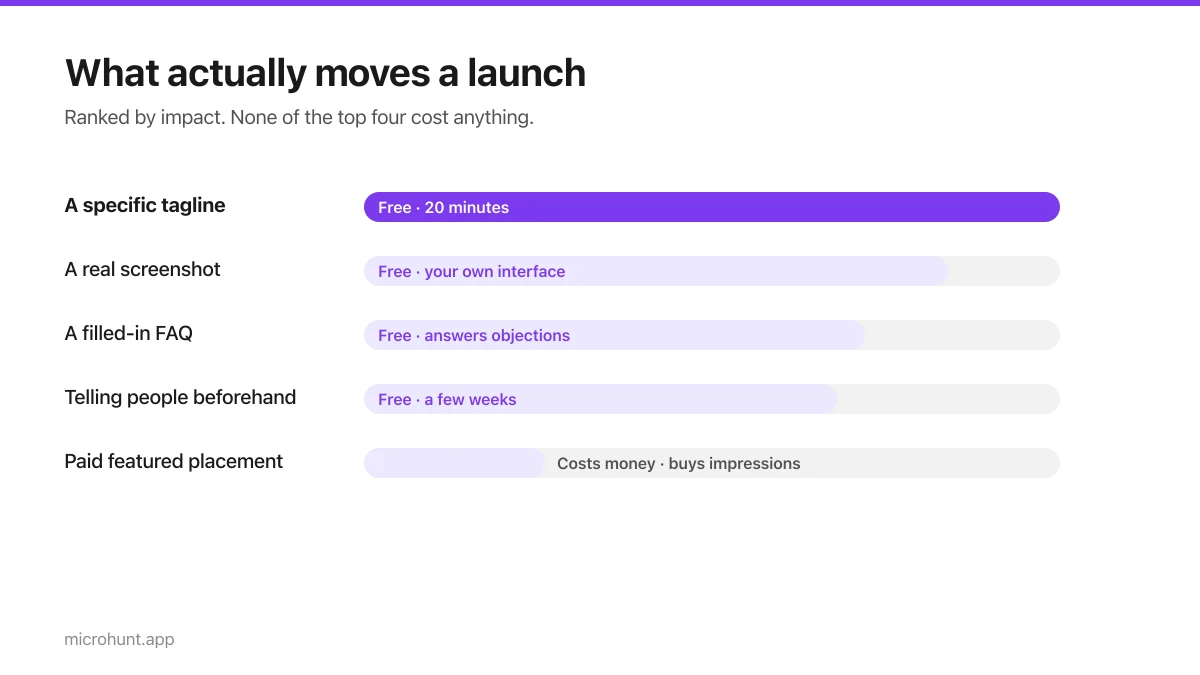
Free Launch Platforms for Indie Makers (No Budget Needed)
You do not need to pay to launch. Here are the places that are genuinely free, what each expects from you, and where paying is actually worth it.
7 min read
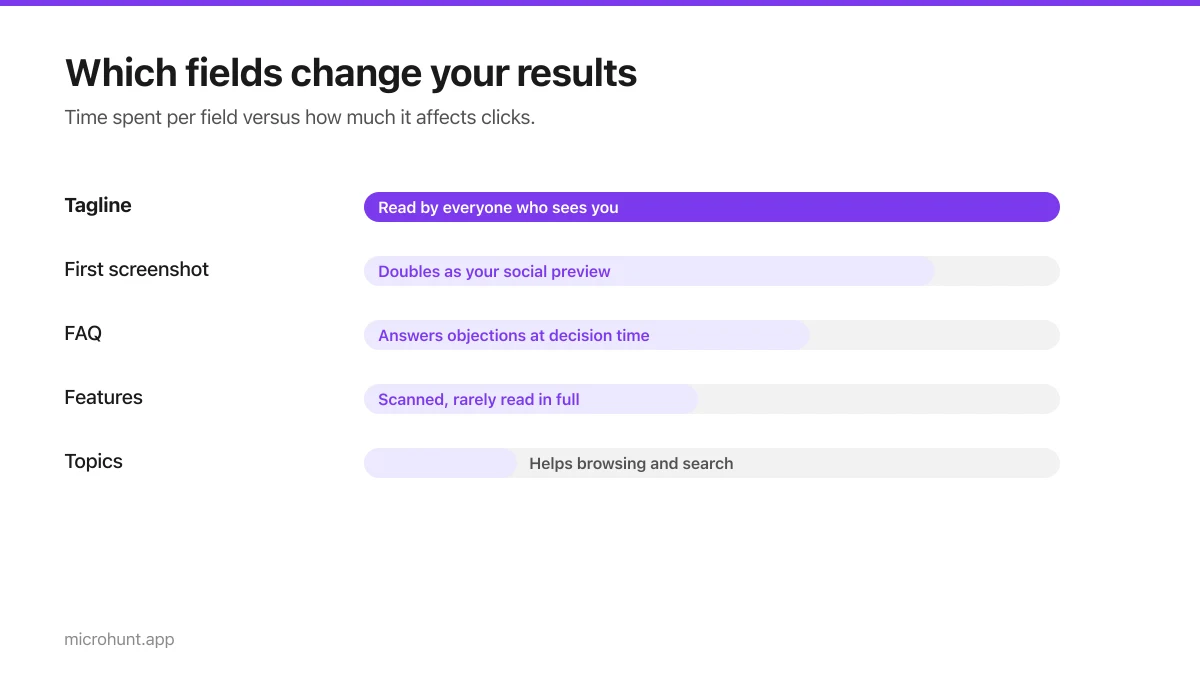
How to Submit a Product on Vuru (Step by Step)
A walk through the submission form, what each field does to your page, and the fields most people leave empty that they shouldn't.
7 min read
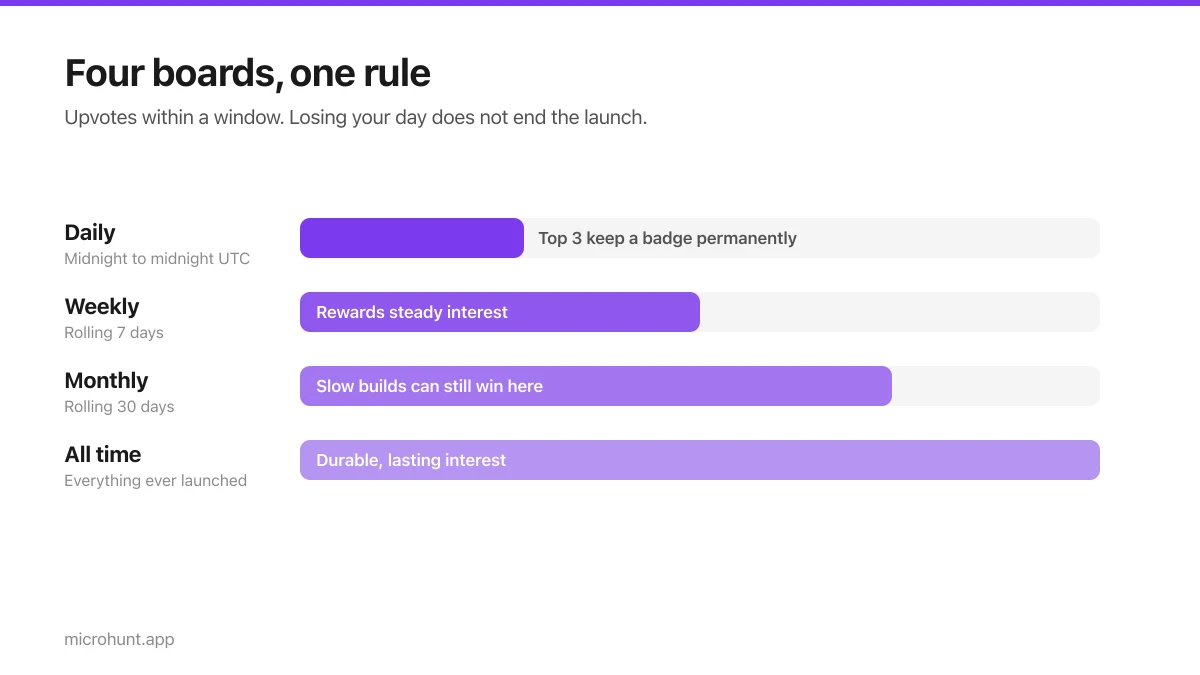
How Vuru Ranking Works (And How to Win a Badge)
Launch windows, upvotes, podium badges and what we do about vote manipulation — the whole ranking system explained plainly.
7 min read
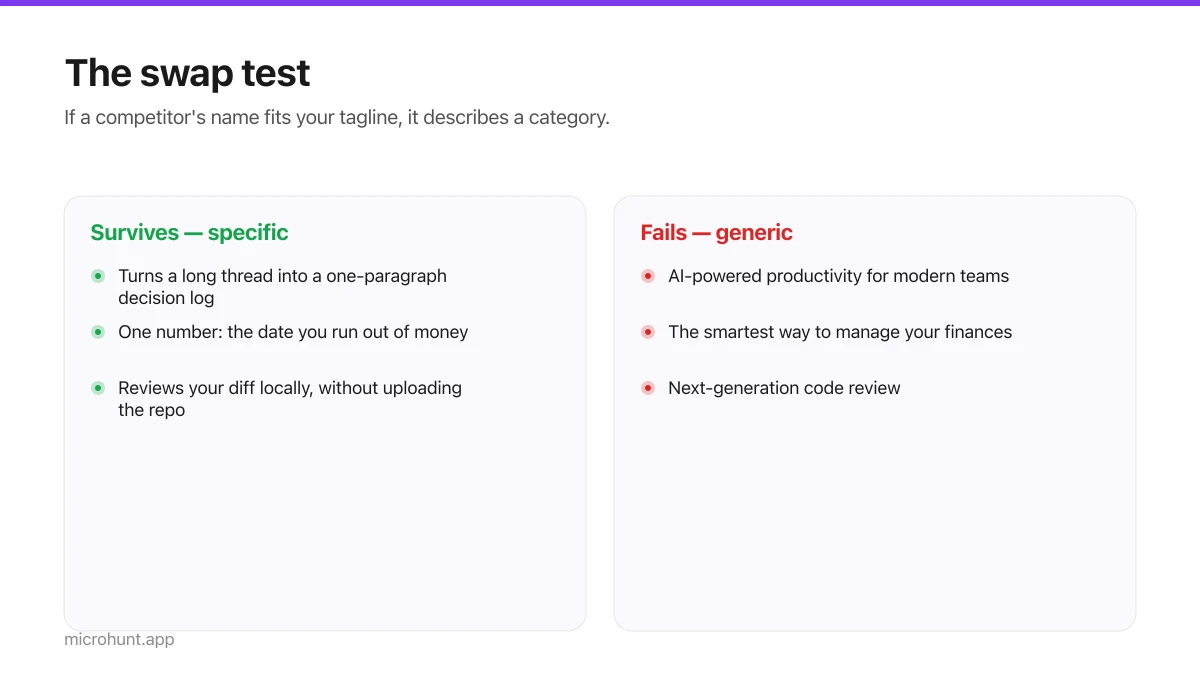
How to Write a Product Tagline That Actually Gets Clicked
The one line most people will ever read about your product, and a simple test for whether yours is doing any work.
7 min read
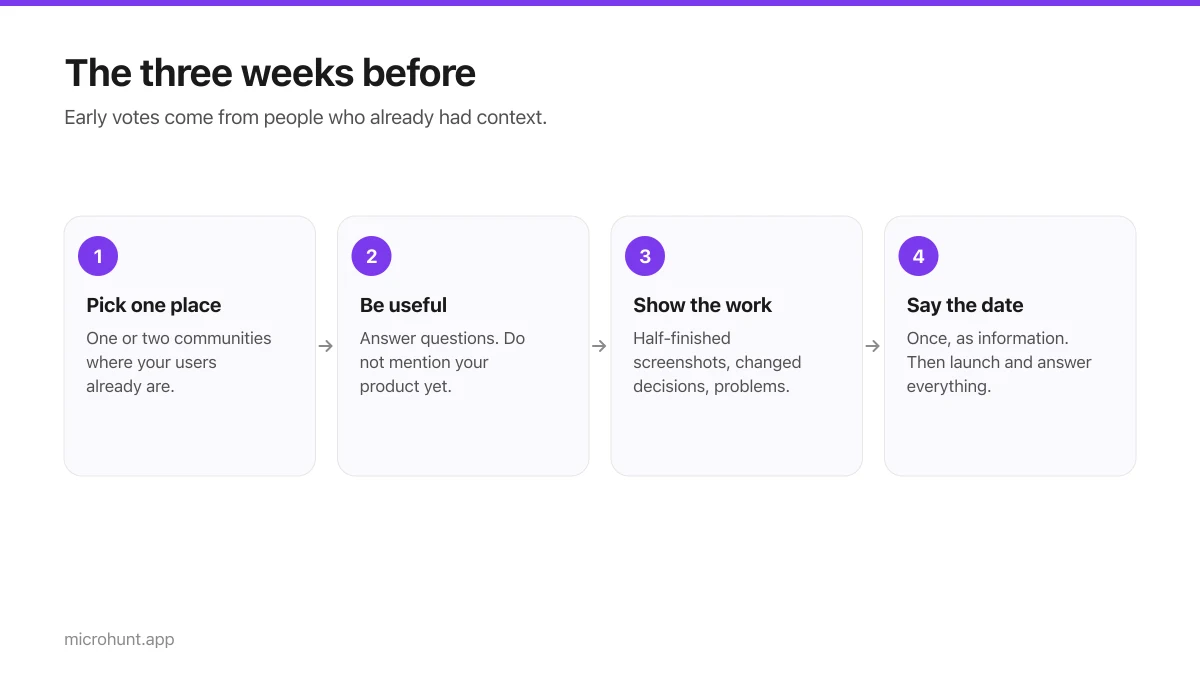
How to Get Your First Upvotes Without Begging
What actually generates early votes, why vote-for-vote groups do not work, and the approach that keeps paying off after launch day.
7 min read
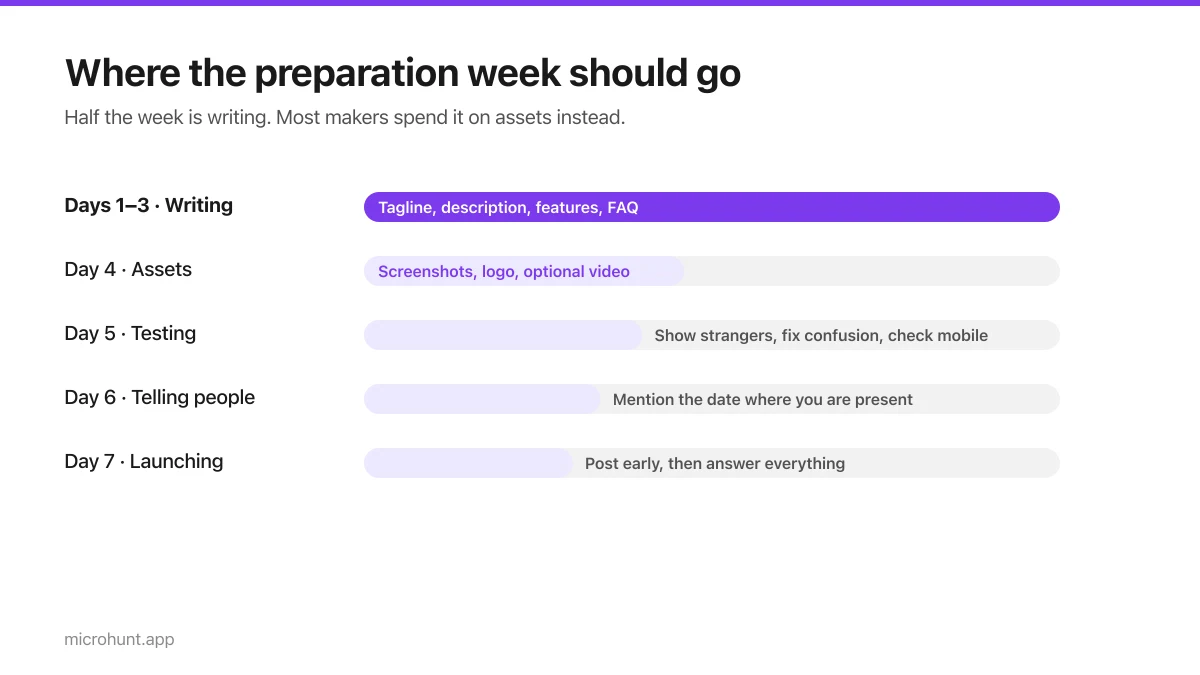
The Seven-Day Launch Checklist
A day-by-day plan for the week before you launch, weighted towards the things that actually change the outcome.
8 min read
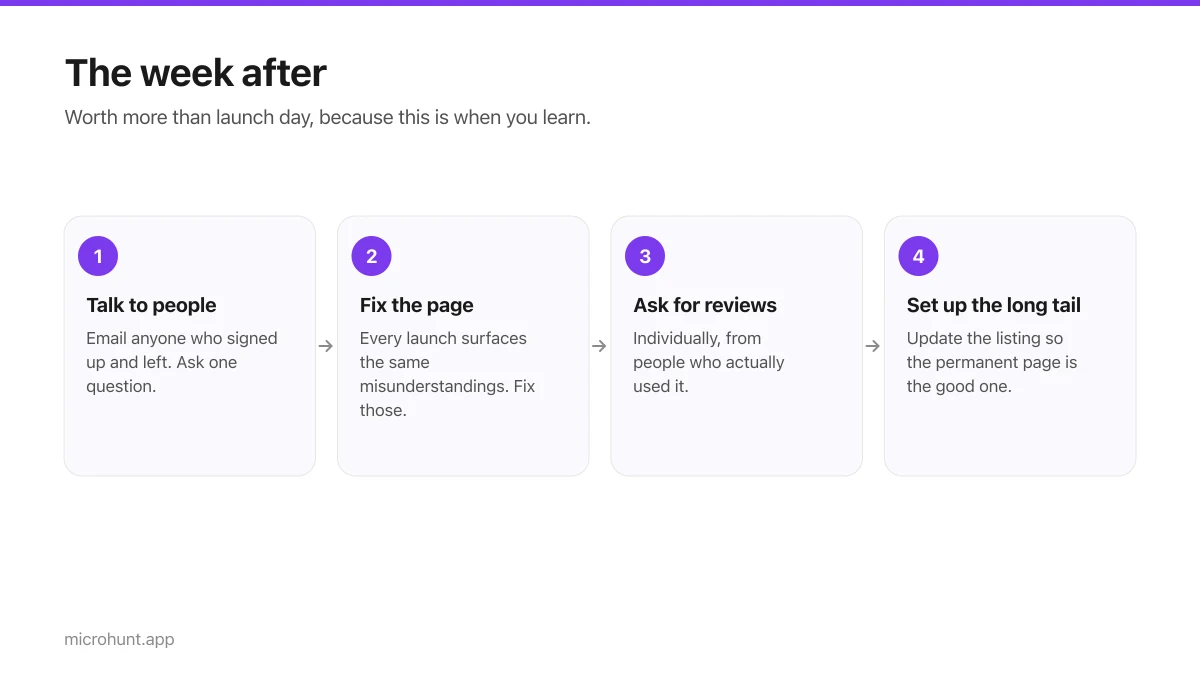
What to Do the Week After Launch Day
The traffic spike is over. Here is how to turn a day of attention into something that lasts longer than the graph.
7 min read