Inventory & Orders
Stock sync, fulfilment and order management.
Nothing launched in this category yet.
Be the firstAbout Inventory & Orders
Inventory and order management is the operational backbone of a physical-goods business, and it is where growth creates problems that were invisible at low volume. A spreadsheet works until you sell in two places, hold stock in two locations, or ship enough that a mistake happens weekly.
The core problem is a single accurate stock number. Selling the same item on your own store and a marketplace without synchronised inventory produces overselling, and overselling produces cancellations, which damage both customer trust and marketplace standing. Any tool in this subcategory that keeps one authoritative count across every channel is solving the central problem; everything else is secondary.
Beyond that, the features that matter are unglamorous. Purchase orders and incoming stock so you know what is arriving. Low-stock thresholds set per product rather than globally, because lead times differ. Bundles and kits handled properly, so selling a set decrements its components. Returns processed back into sellable stock or written off deliberately rather than vanishing.
Forecasting is where tools differentiate and where scepticism is warranted. Reorder suggestions based on recent velocity are useful for steady sellers and unreliable for seasonal or promotion-driven products, which is most of them. Treat the suggestion as a prompt to think rather than an instruction, particularly around any period where last year's numbers were distorted.
Multi-location handling becomes relevant sooner than expected, including the case of stock held by a fulfilment partner. Knowing not just how much you have but where it is determines shipping cost and delivery time, and getting it wrong is expensive at every order.
Cycle counting — checking a subset of stock regularly rather than everything annually — is the practice that keeps records honest. Records drift for mundane reasons: damage, theft, miscounts, unrecorded samples. A system that supports regular partial counts stays accurate; one that assumes the number is correct accumulates error until a full count reveals it.
Barcode support is the single highest-return operational upgrade for anyone picking more than a few orders a day, because typing is where errors enter.
Integration with your storefront and shipping tools is what makes any of this work without manual re-entry. See [shipping and returns](/categories/shipping).
From the blog
Reading on launching, ranking and inventory & orders.
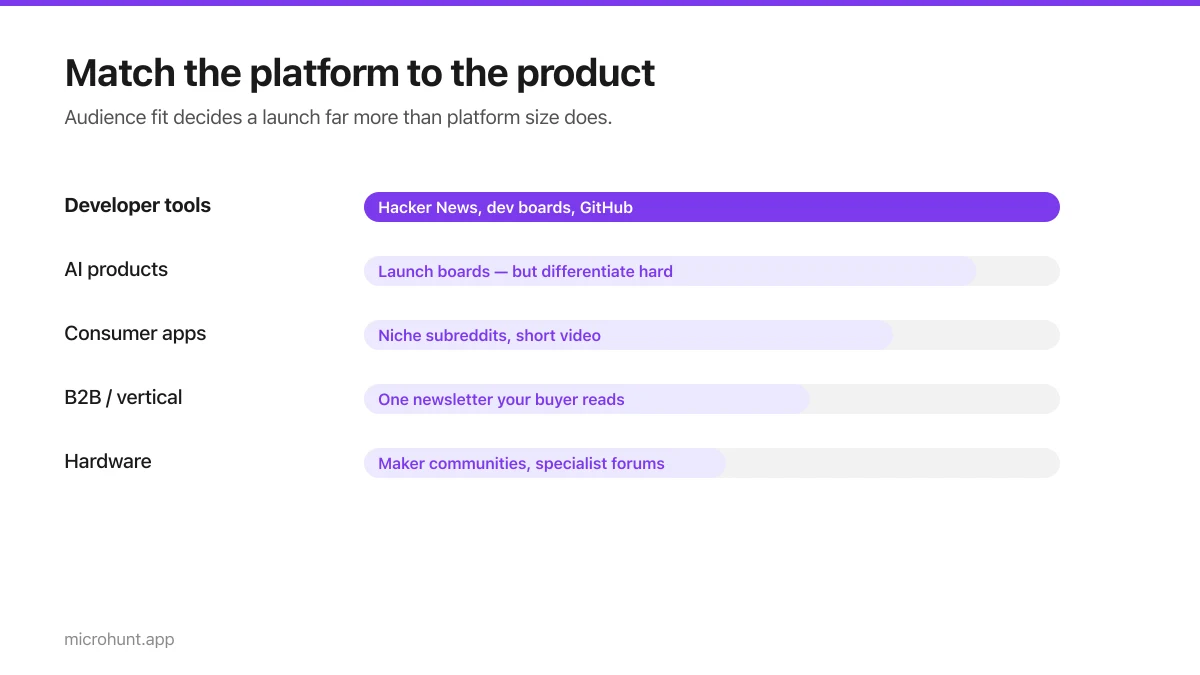
Best Product Hunt Alternatives for Launching in 2026
Where else to launch when Product Hunt is not the right fit — what each platform is actually good at, who shows up, and what it costs.
8 min read
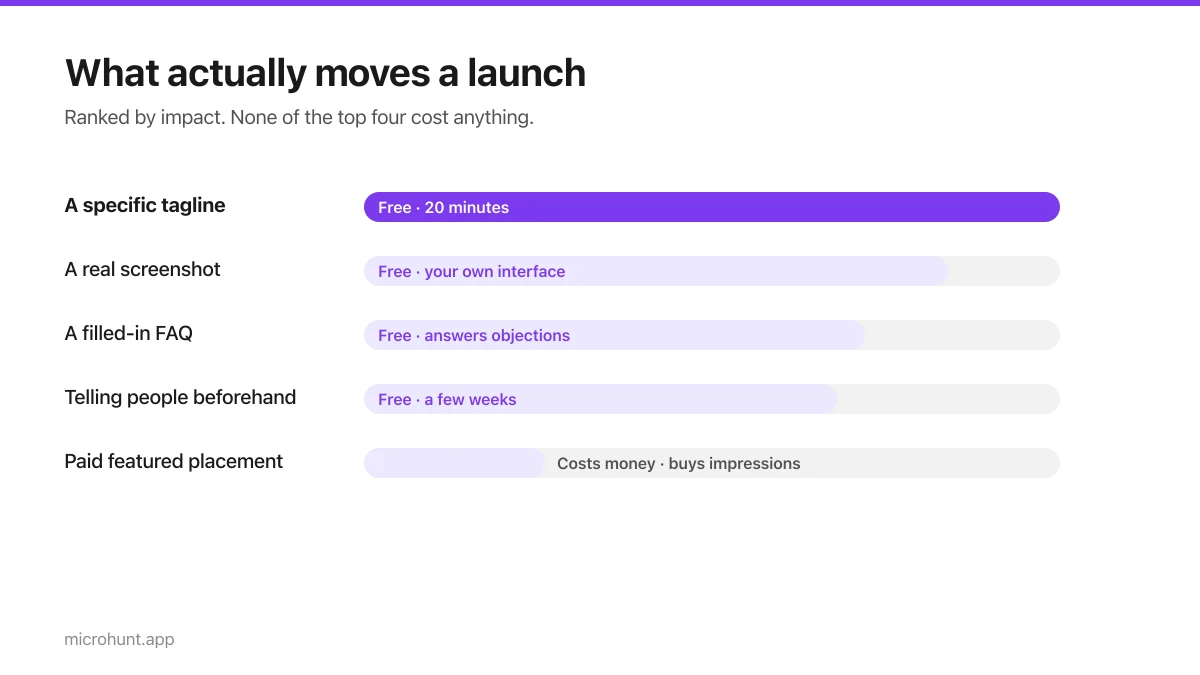
Free Launch Platforms for Indie Makers (No Budget Needed)
You do not need to pay to launch. Here are the places that are genuinely free, what each expects from you, and where paying is actually worth it.
7 min read
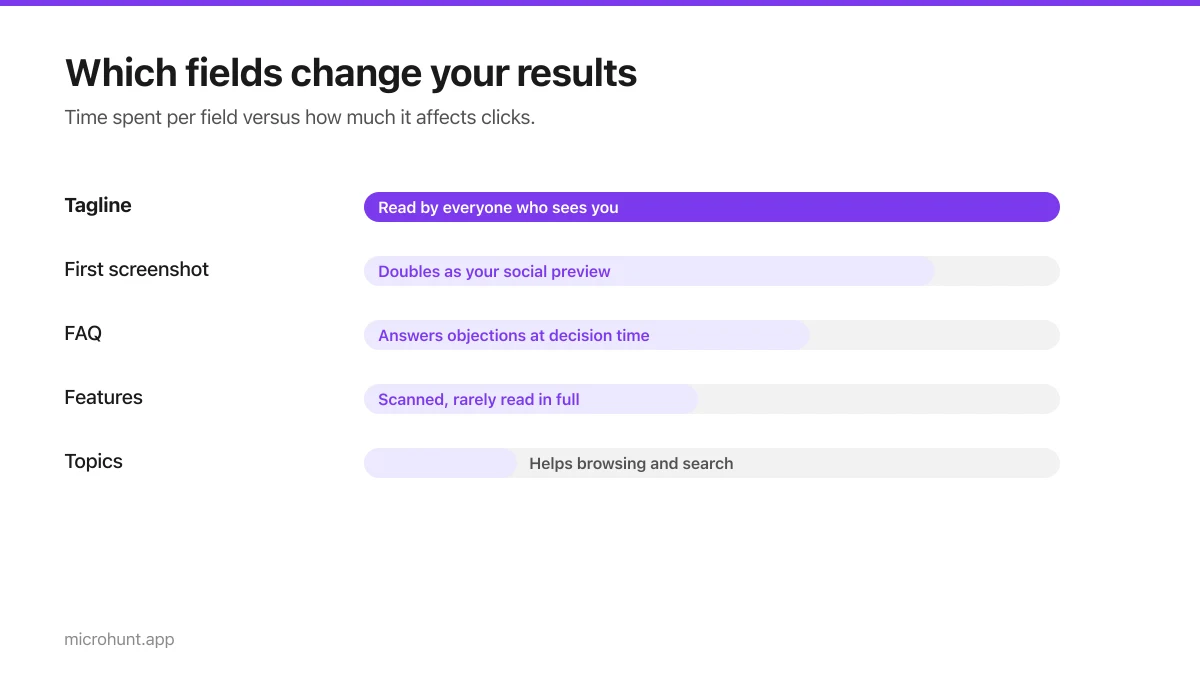
How to Submit a Product on Vuru (Step by Step)
A walk through the submission form, what each field does to your page, and the fields most people leave empty that they shouldn't.
7 min read
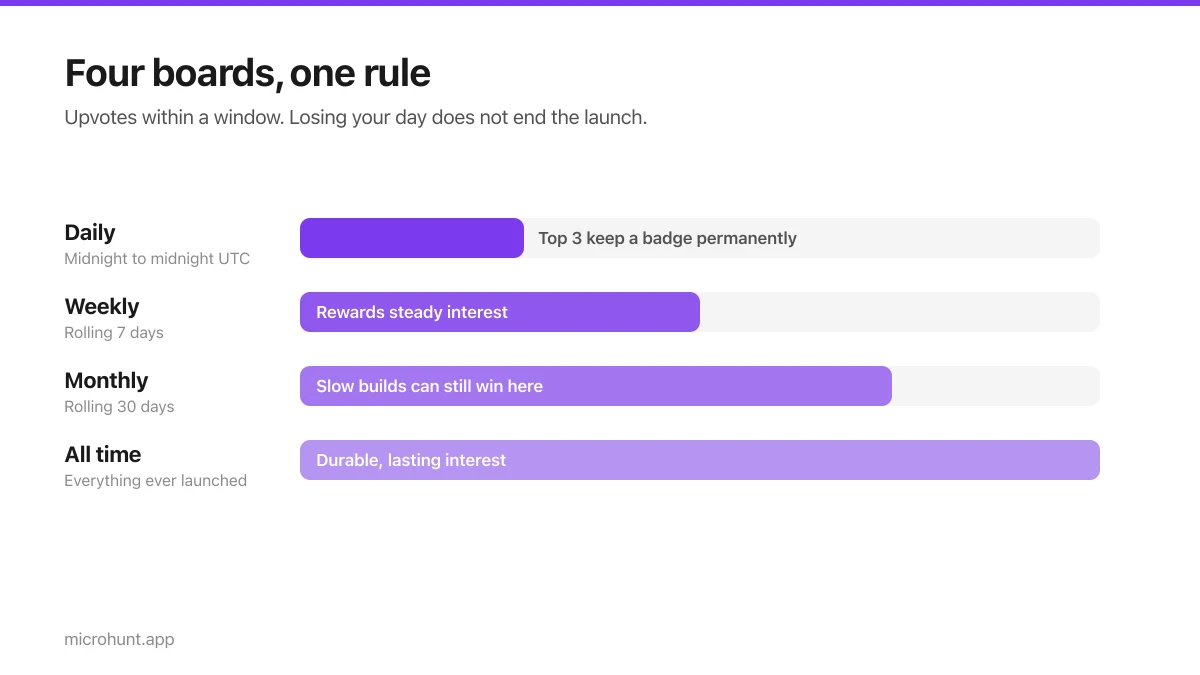
How Vuru Ranking Works (And How to Win a Badge)
Launch windows, upvotes, podium badges and what we do about vote manipulation — the whole ranking system explained plainly.
7 min read
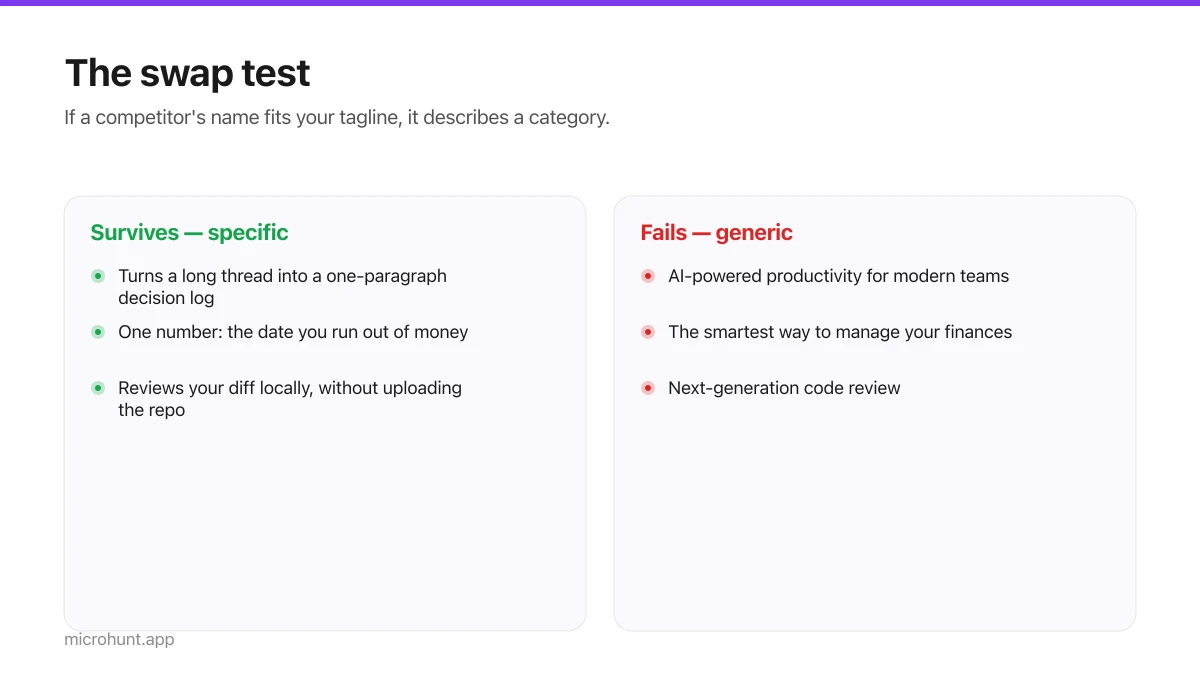
How to Write a Product Tagline That Actually Gets Clicked
The one line most people will ever read about your product, and a simple test for whether yours is doing any work.
7 min read
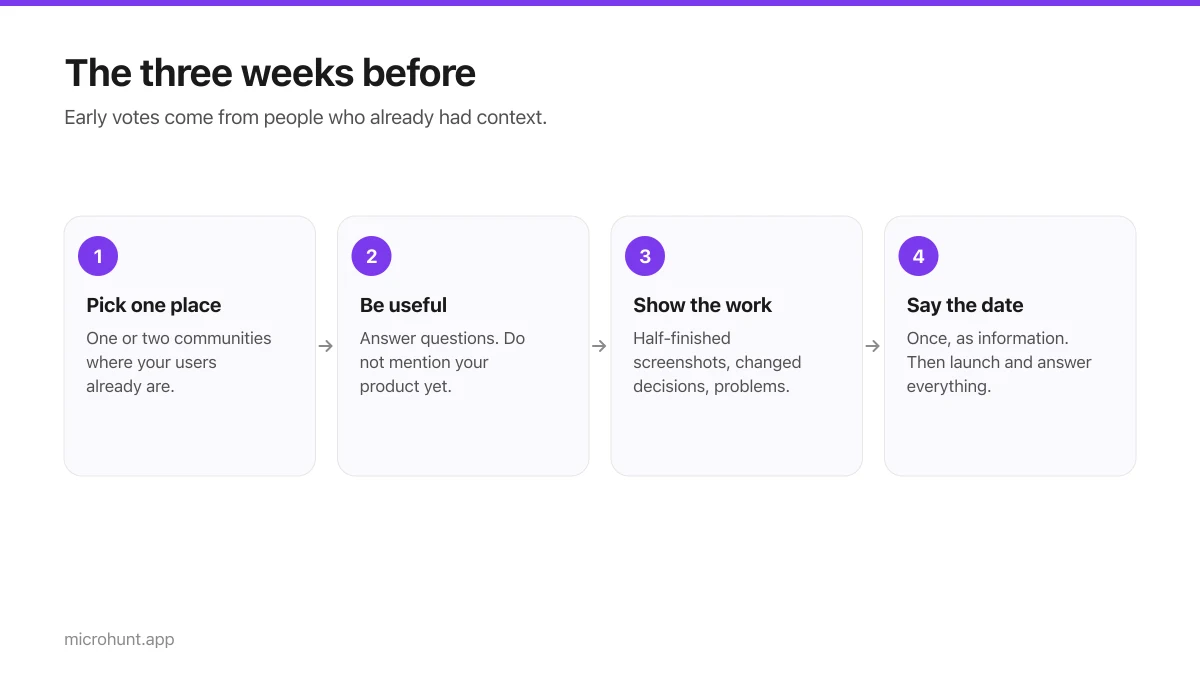
How to Get Your First Upvotes Without Begging
What actually generates early votes, why vote-for-vote groups do not work, and the approach that keeps paying off after launch day.
7 min read
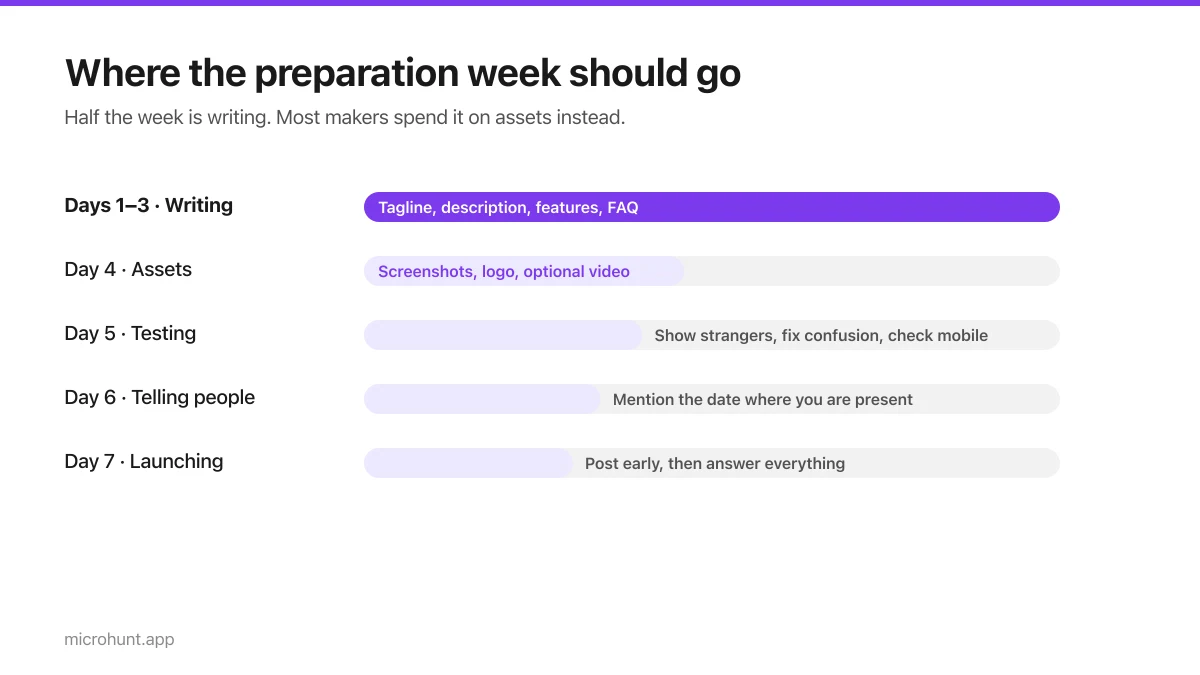
The Seven-Day Launch Checklist
A day-by-day plan for the week before you launch, weighted towards the things that actually change the outcome.
8 min read
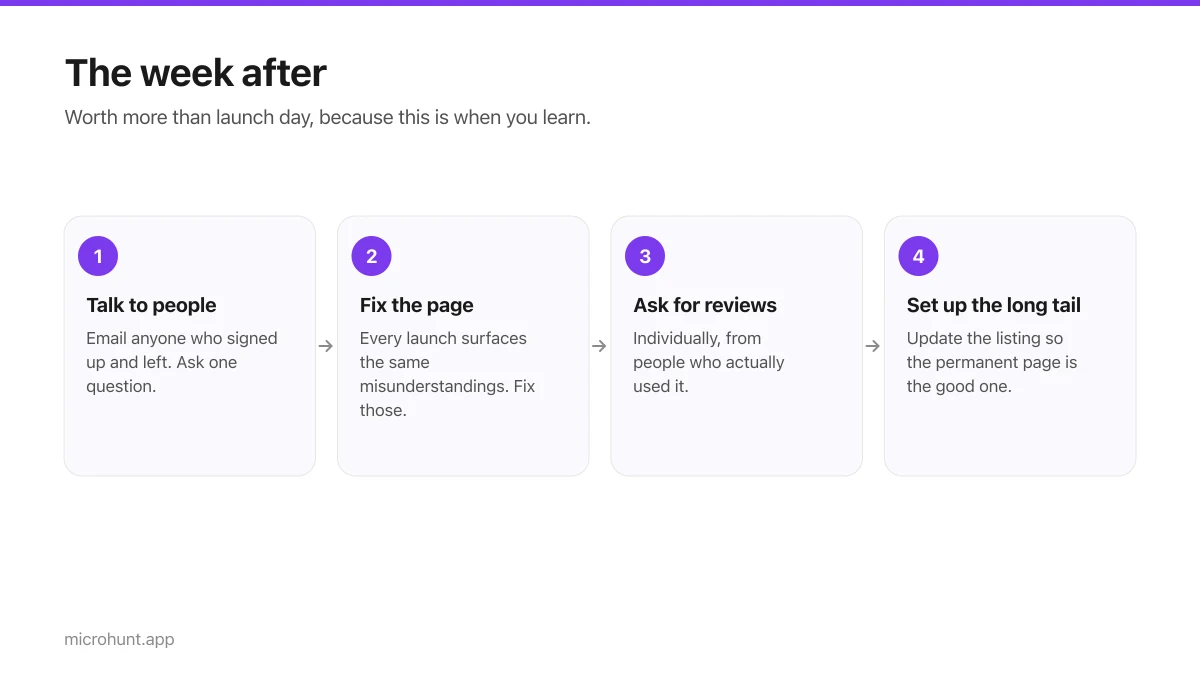
What to Do the Week After Launch Day
The traffic spike is over. Here is how to turn a day of attention into something that lasts longer than the graph.
7 min read