Fitness & Training
Strength, endurance and training programmes.
Nothing launched in this category yet.
Be the firstAbout Fitness & Training
Fitness applications cover workout programming, logging, form guidance, activity tracking and the coaching layer that tries to keep you doing it. The category is enormous and the useful filter is narrow: does this help you do the thing consistently, or does it produce data about the thing?
Logging tools are the foundation and the most reliably valuable. Progressive overload — doing slightly more over time — is the mechanism behind most strength progress, and it requires knowing what you did last time. That is genuinely hard to remember and trivial to record, which is why a simple log outperforms an elaborate app for most people. The features that matter are speed of entry between sets and a clear view of last session's numbers.
Programming tools supply the plan. The honest position is that any reasonable programme followed consistently beats an optimal one abandoned in three weeks, and most people churn through programmes rather than finishing one. Tools that adapt to missed sessions and to how the last one went are more likely to be survivable than rigid templates, because life interrupts and a plan with no recovery path gets abandoned entirely.
Activity and wearable tracking is accurate for some things and not others. Step counts and heart rate during steady activity are reasonable; calorie expenditure estimates are not, and can be off by a wide margin. Treating an estimated burn figure as a budget to eat back is the single most common way these tools mislead people. Use the trends, distrust the absolute numbers.
Recovery metrics — sleep-derived readiness scores and similar — are worth a specific caution. They are directionally interesting and frequently overinterpreted, and there is a well-documented pattern of people feeling worse because a score told them they should. If a metric is making you anxious, it is costing more than it provides.
Form-checking tools using video are improving and are best treated as a prompt to look at something rather than an assessment. They cannot see load, fatigue or your history of injury.
Nothing here is medical advice. If you have a condition, an injury or are returning from one, the software is not the right source of guidance — a qualified professional is. See [nutrition](/categories/nutrition) and [sleep](/categories/sleep) for adjacent tooling.
From the blog
Reading on launching, ranking and fitness & training.
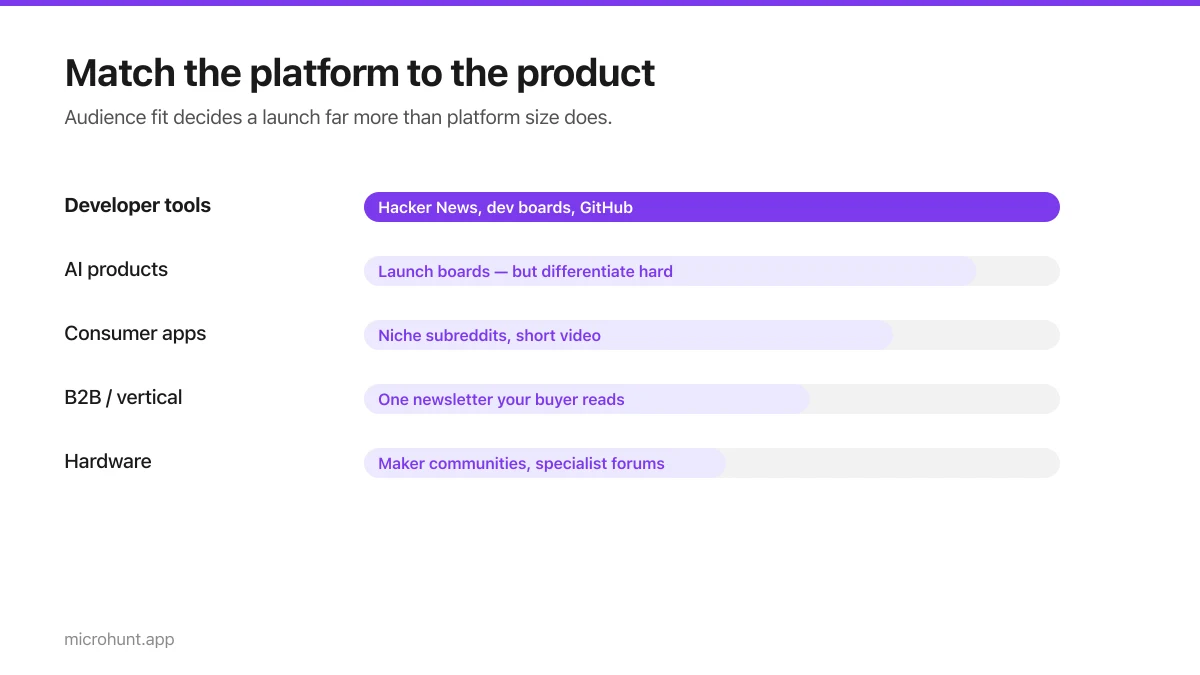
Best Product Hunt Alternatives for Launching in 2026
Where else to launch when Product Hunt is not the right fit — what each platform is actually good at, who shows up, and what it costs.
8 min read
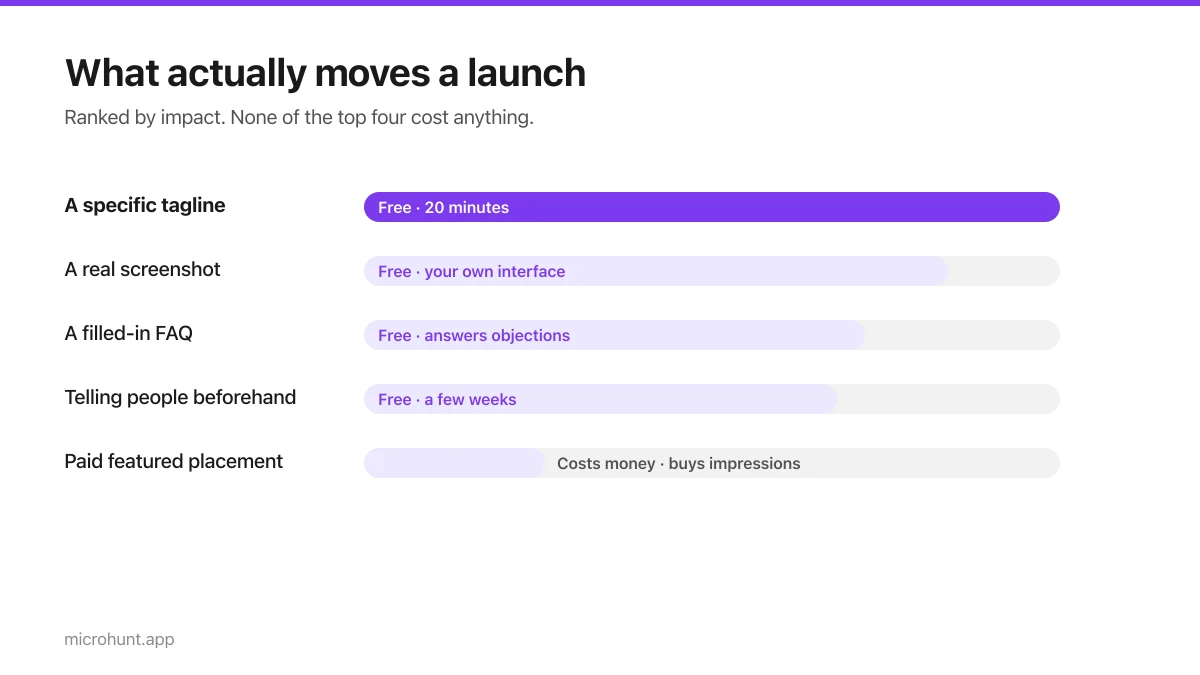
Free Launch Platforms for Indie Makers (No Budget Needed)
You do not need to pay to launch. Here are the places that are genuinely free, what each expects from you, and where paying is actually worth it.
7 min read
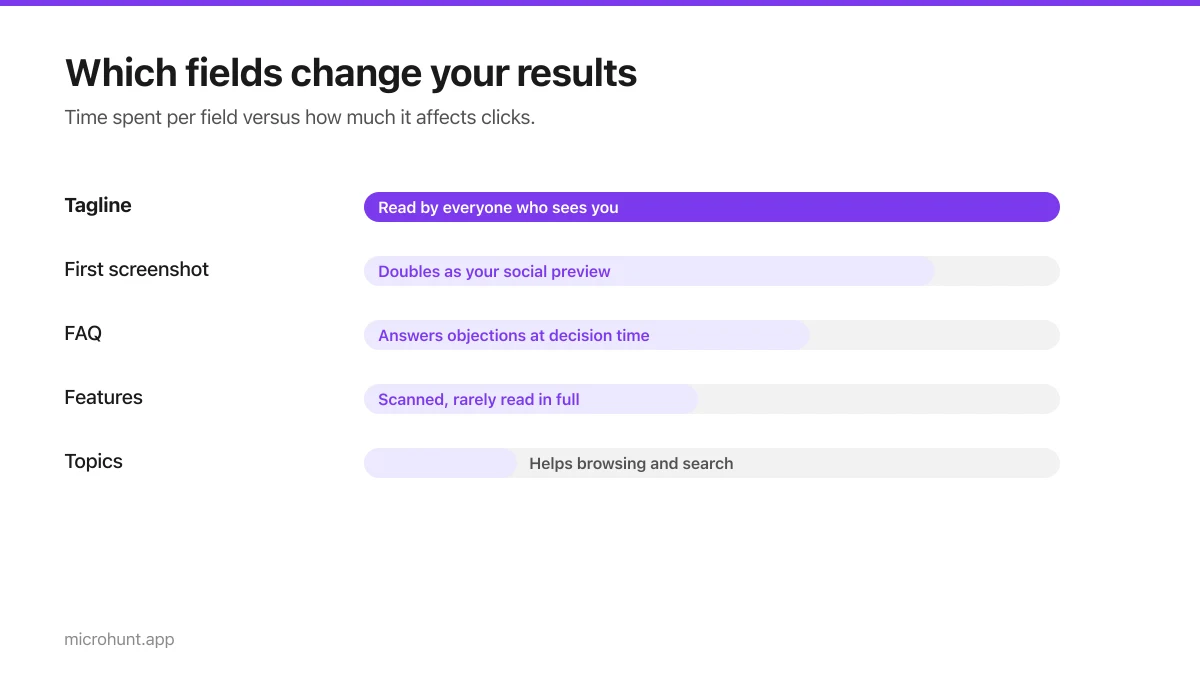
How to Submit a Product on Vuru (Step by Step)
A walk through the submission form, what each field does to your page, and the fields most people leave empty that they shouldn't.
7 min read
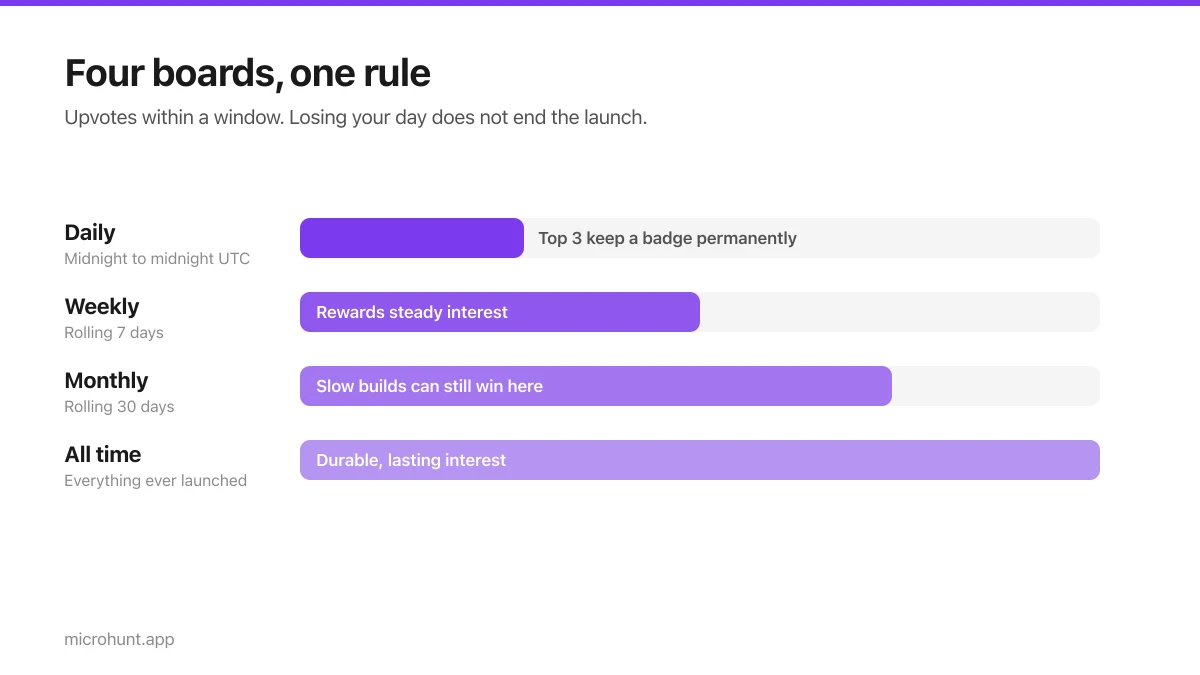
How Vuru Ranking Works (And How to Win a Badge)
Launch windows, upvotes, podium badges and what we do about vote manipulation — the whole ranking system explained plainly.
7 min read
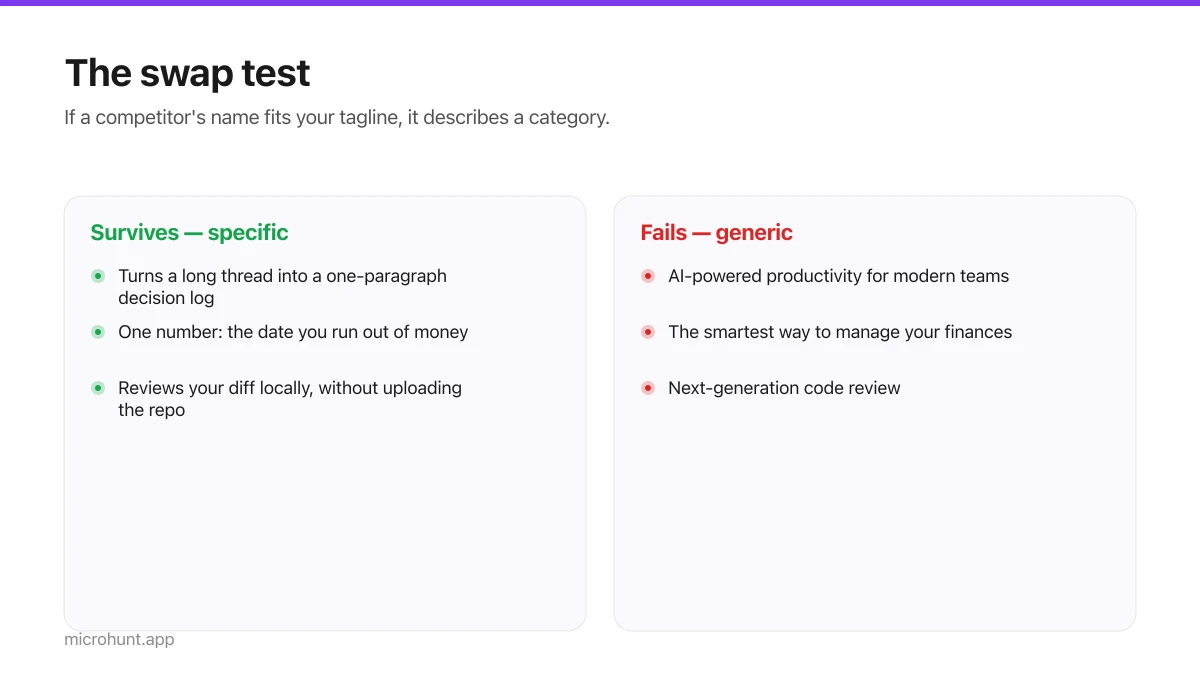
How to Write a Product Tagline That Actually Gets Clicked
The one line most people will ever read about your product, and a simple test for whether yours is doing any work.
7 min read
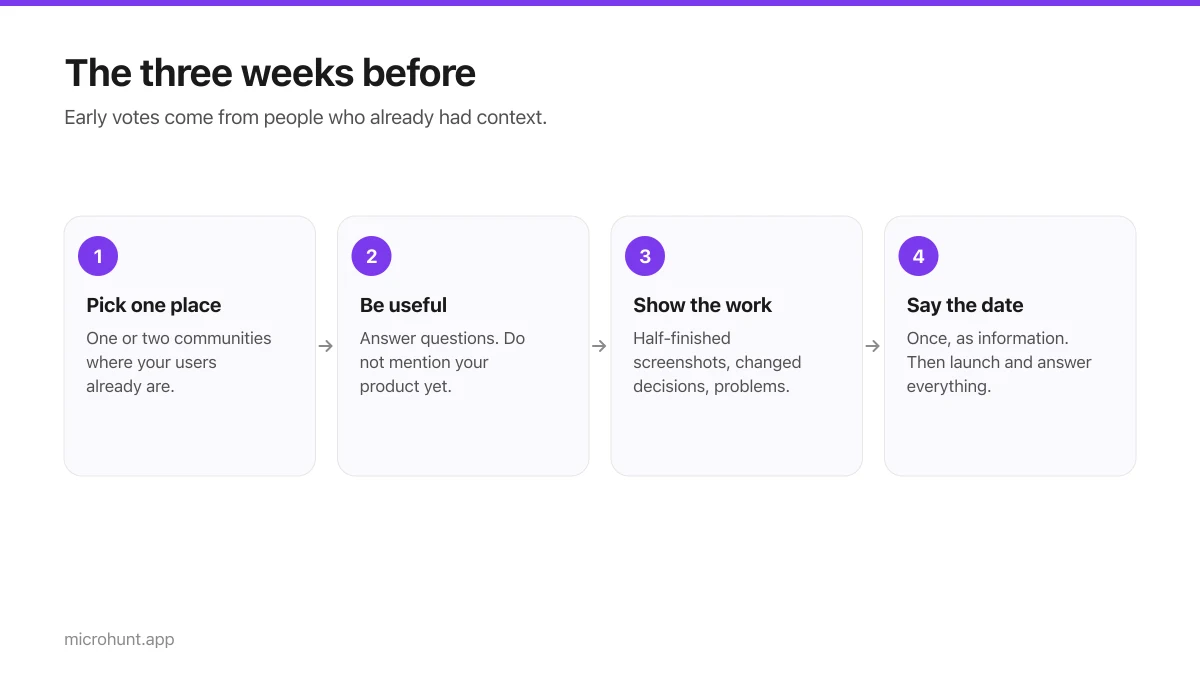
How to Get Your First Upvotes Without Begging
What actually generates early votes, why vote-for-vote groups do not work, and the approach that keeps paying off after launch day.
7 min read
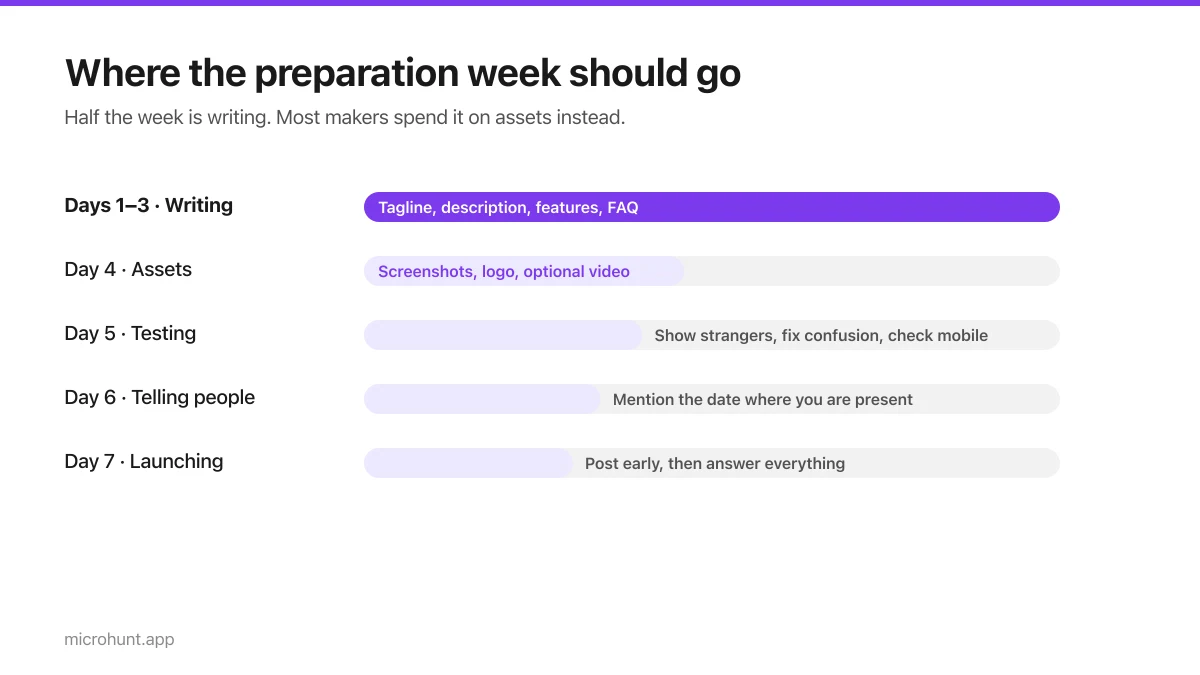
The Seven-Day Launch Checklist
A day-by-day plan for the week before you launch, weighted towards the things that actually change the outcome.
8 min read
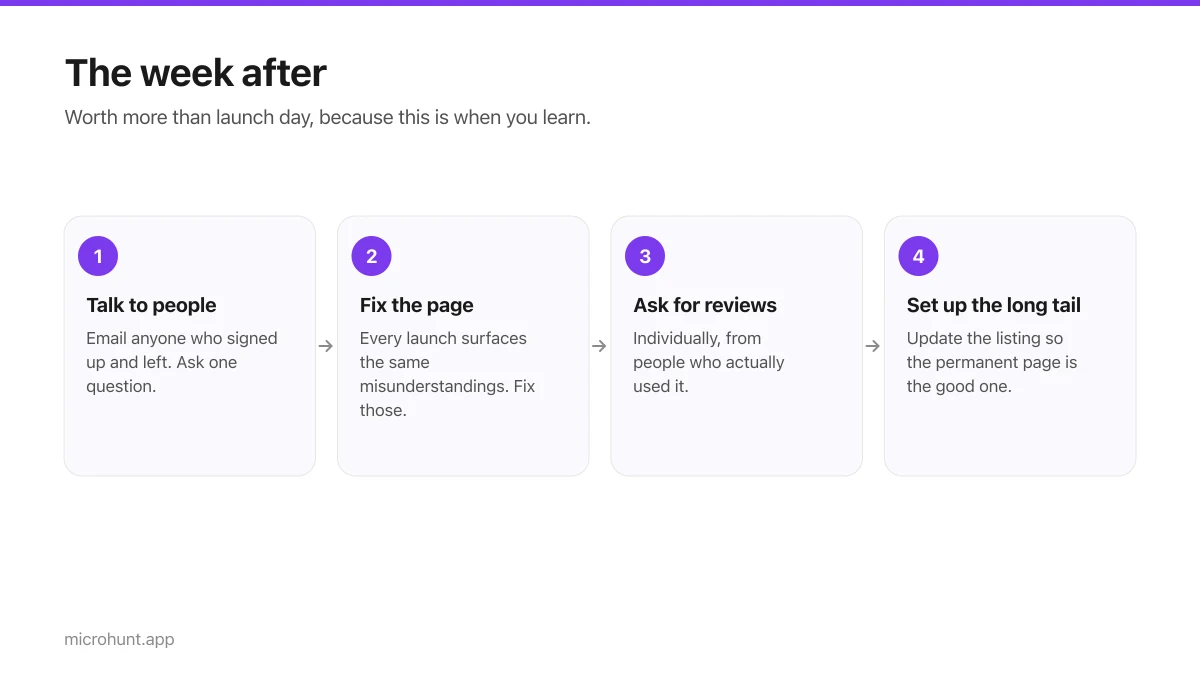
What to Do the Week After Launch Day
The traffic spike is over. Here is how to turn a day of attention into something that lasts longer than the graph.
7 min read