Flashcards & Recall
Spaced repetition and active recall systems.
Nothing launched in this category yet.
Be the firstAbout Flashcards & Recall
Spaced repetition is one of the very few learning techniques with strong, repeatedly replicated evidence behind it, and the tools in this subcategory are implementations of it. The core finding is durable: retrieving information from memory strengthens it far more than reviewing it, and spacing those retrievals at increasing intervals produces retention that lasts years rather than weeks.
Because the underlying algorithm is well understood, the differences between tools are mostly practical rather than theoretical. The scheduling algorithms have converged, and newer ones that model memory per card rather than applying fixed multipliers do produce measurably better efficiency, but the difference is small compared to whether you review daily.
What actually determines success is card quality, and it is where nearly everyone goes wrong. The rules that work are consistent: one fact per card, questions with a single unambiguous answer, and cards you wrote yourself in your own words. Shared decks from other people are the most tempting shortcut and the most reliable path to abandonment, because a card that means nothing to you is a card you cannot answer and will not enjoy failing. The act of making the card is a meaningful part of the learning.
The second common error is making cards for things you do not understand yet. Spaced repetition is for retaining what you have understood, not for acquiring understanding. Memorising a formula you cannot derive produces a fact you can recite and cannot use.
The daily review load is the practical constraint, and it compounds: every card added is a small permanent commitment. A thousand mature cards is roughly ten to twenty minutes a day indefinitely. Adding cards enthusiastically for a month produces a review burden that ends the habit. Add fewer cards than you want to.
For language learning specifically, this is the single most effective tool available for vocabulary, and it should be paired with actual use of the language rather than replacing it. See [language learning](/categories/languages).
Tools that let you make a card in two seconds from wherever you encountered the fact — a browser extension, a share sheet, an editor plugin — get used. Ones requiring a separate application do not.
From the blog
Reading on launching, ranking and flashcards & recall.
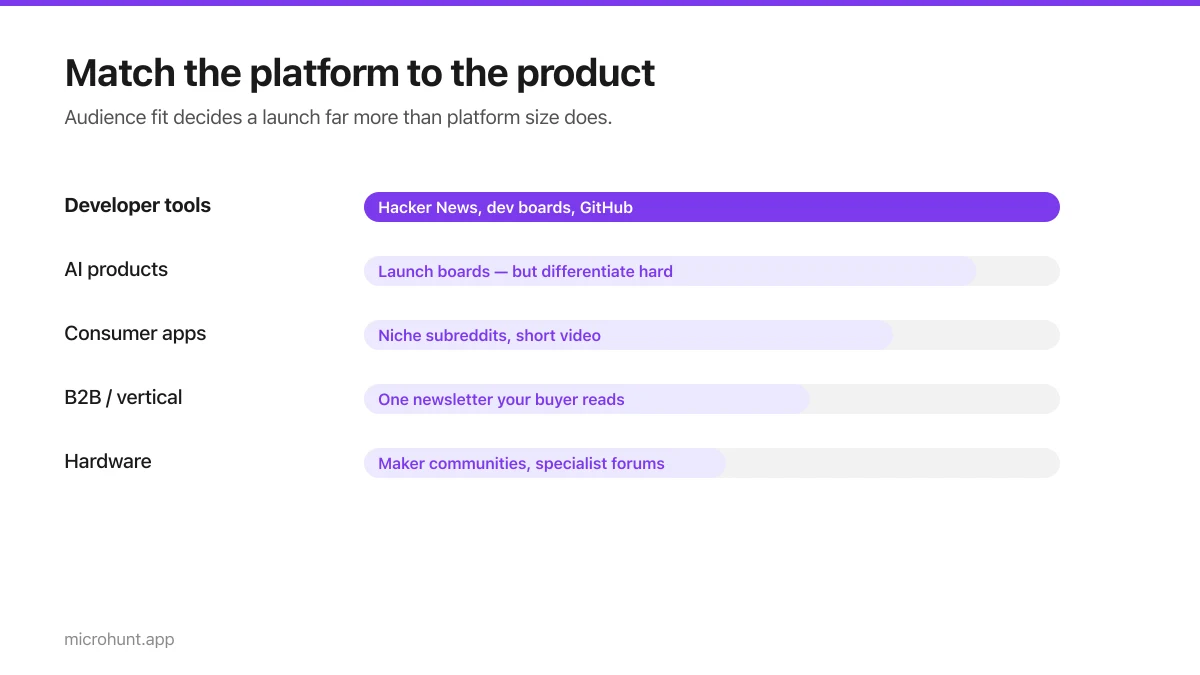
Best Product Hunt Alternatives for Launching in 2026
Where else to launch when Product Hunt is not the right fit — what each platform is actually good at, who shows up, and what it costs.
8 min read
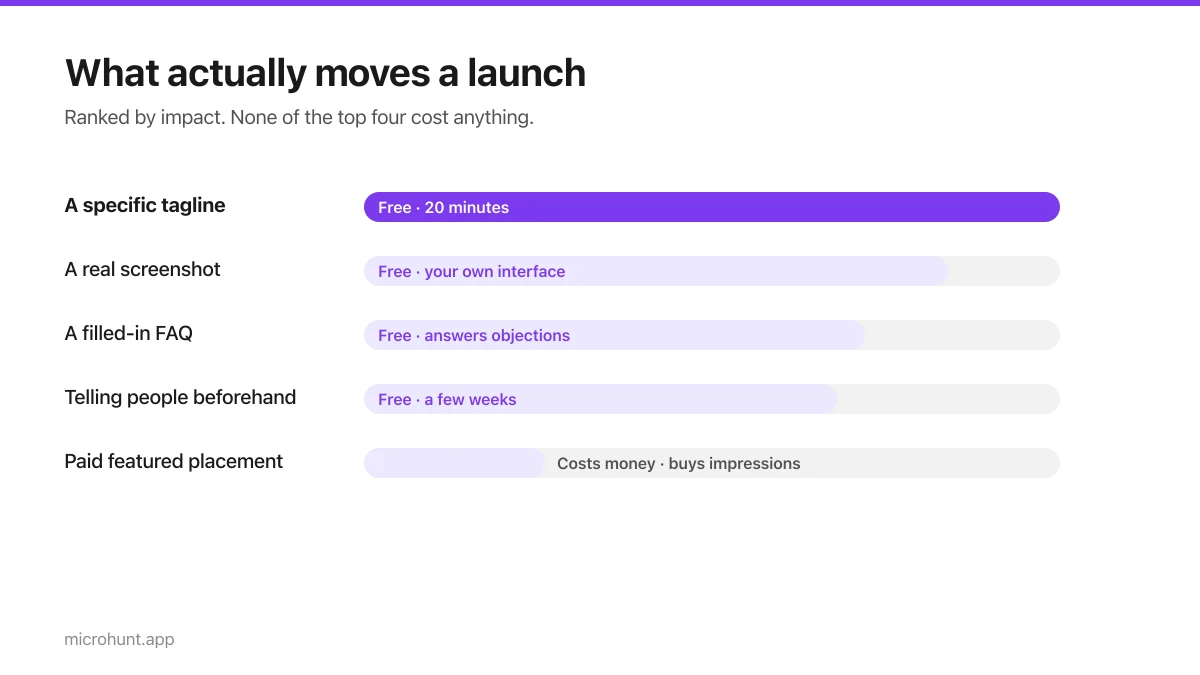
Free Launch Platforms for Indie Makers (No Budget Needed)
You do not need to pay to launch. Here are the places that are genuinely free, what each expects from you, and where paying is actually worth it.
7 min read
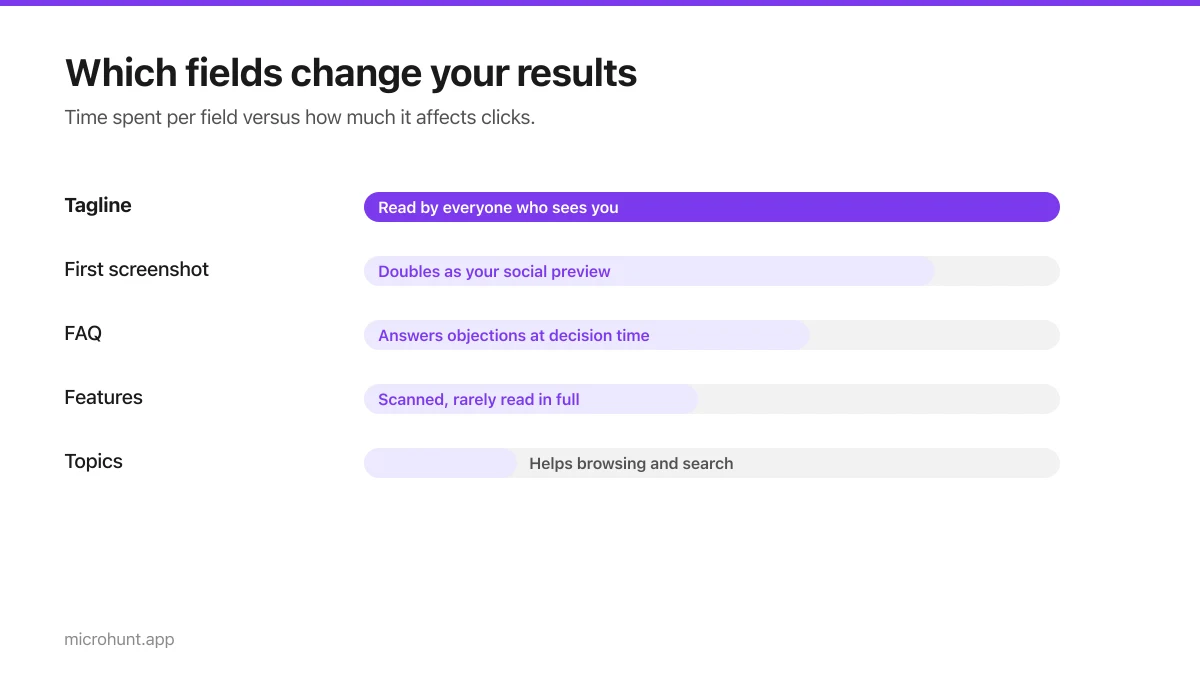
How to Submit a Product on Vuru (Step by Step)
A walk through the submission form, what each field does to your page, and the fields most people leave empty that they shouldn't.
7 min read
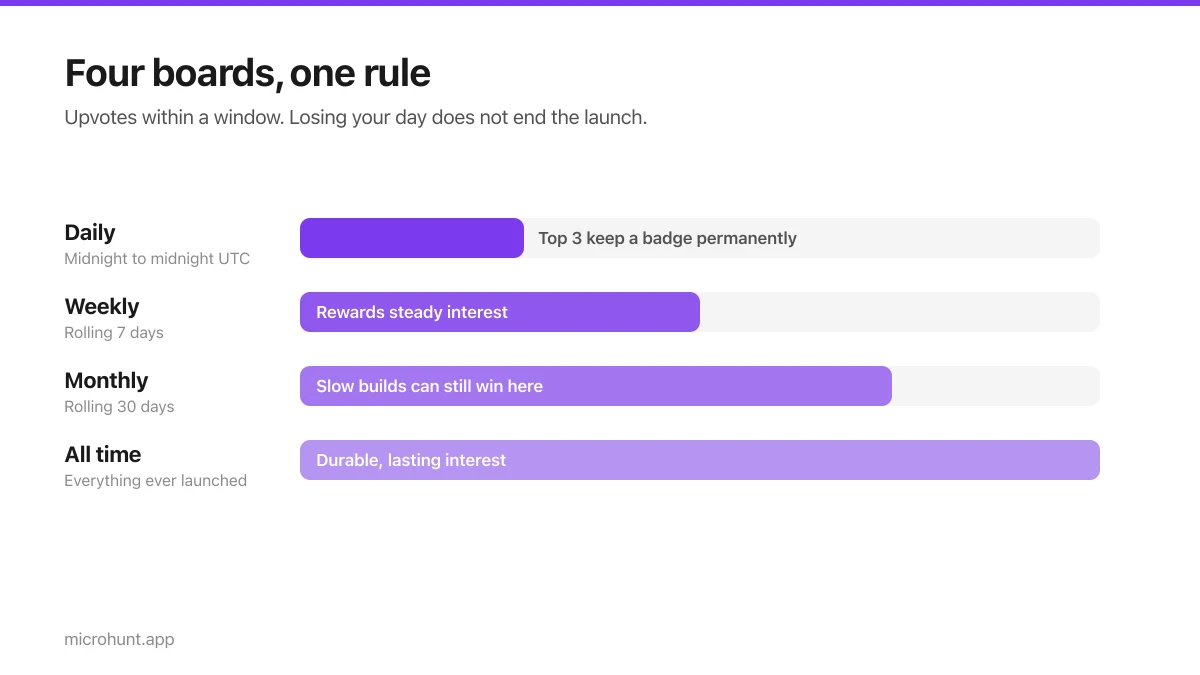
How Vuru Ranking Works (And How to Win a Badge)
Launch windows, upvotes, podium badges and what we do about vote manipulation — the whole ranking system explained plainly.
7 min read
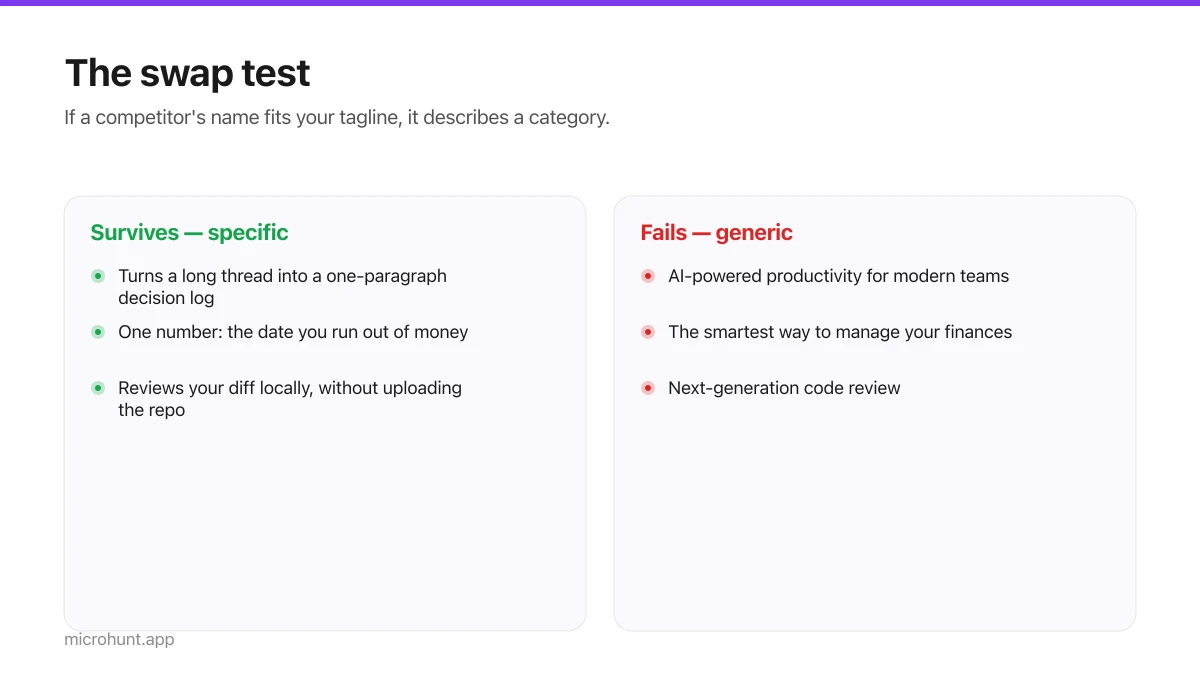
How to Write a Product Tagline That Actually Gets Clicked
The one line most people will ever read about your product, and a simple test for whether yours is doing any work.
7 min read
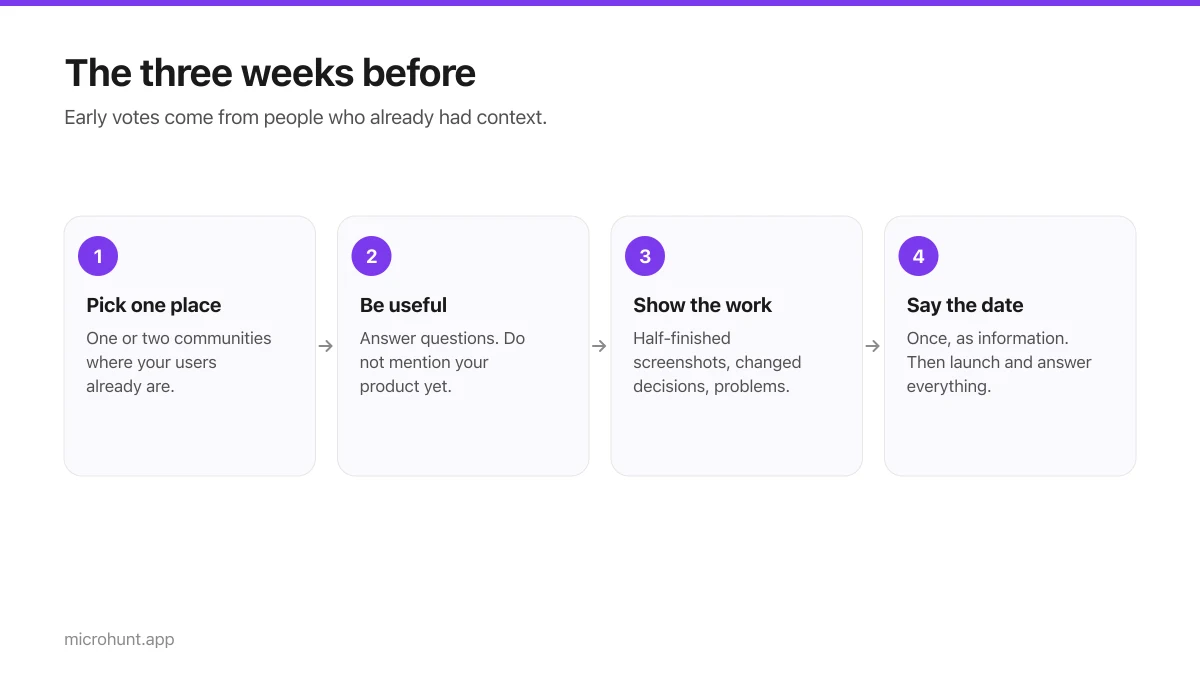
How to Get Your First Upvotes Without Begging
What actually generates early votes, why vote-for-vote groups do not work, and the approach that keeps paying off after launch day.
7 min read
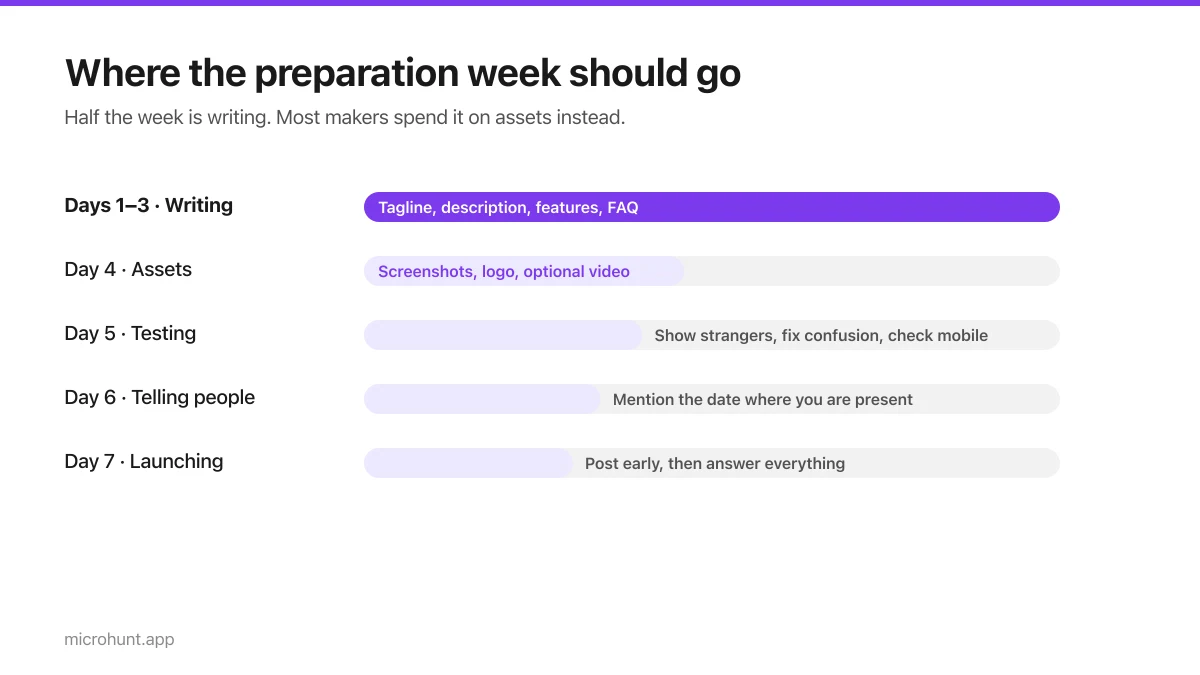
The Seven-Day Launch Checklist
A day-by-day plan for the week before you launch, weighted towards the things that actually change the outcome.
8 min read
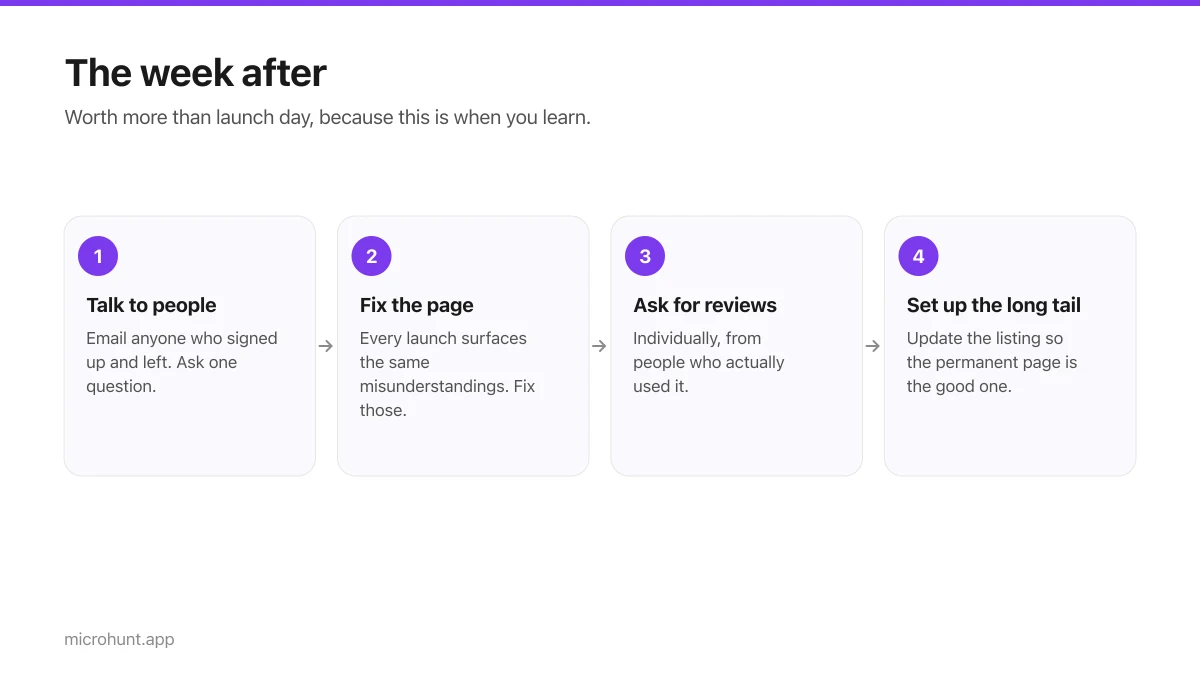
What to Do the Week After Launch Day
The traffic spike is over. Here is how to turn a day of attention into something that lasts longer than the graph.
7 min read