Education & Learning
Courses, study tools, languages and teaching software.
Nothing launched in this category yet.
Be the firstAbout Education & Learning
Learning tools have a measurement problem that shapes the whole category. It is easy to build something that feels productive and hard to build something that produces durable knowledge, and the two are very difficult to tell apart from a landing page.
The tools that hold up tend to be built around a few well-evidenced ideas: spaced repetition, active recall, and the value of struggling with a problem before seeing the answer. Tools built around passive consumption — video libraries, curated reading lists, highlight collections — feel productive and generally are not, which is why so many of them end up as an expensive subscription nobody opens.
What is collected here spans flashcards and spaced repetition systems, language learning, courses and cohort-based programmes, note-taking for study, exam preparation, tools for teachers and institutions, and the growing set of AI tutors that will answer a question at midnight without judgement.
AI tutoring is the most interesting recent development and the one that needs the most scrutiny. A patient explainer available at any hour is genuinely valuable, particularly for people without access to teaching. The risk is that a confident wrong explanation is worse than no explanation, and that a tool which simply answers removes the productive struggle that produces learning. The better products here make the learner do the work and use the model to check, prompt and explain rather than to complete.
For anyone evaluating something in this space, the useful questions are what the tool does when you get something wrong, whether it makes you retrieve rather than recognise, and whether it schedules review or leaves that to your memory. Those three properties separate tools that work from tools that feel like they work.
Institutional software is a different animal, judged on integration, accessibility and administrative burden rather than on learning science. If you are building for schools, accessibility is not a feature — it is a legal requirement in most jurisdictions and the first thing a procurement process checks.
For makers, the audience here is unusually alert to overclaiming because the field is full of it. If you have evidence, show it and cite the method. If you do not, say what you built and why you think it helps, and let people judge. Claiming learning outcomes you have not measured is the fastest way to lose the people who know the literature.
From the blog
Reading on launching, ranking and education & learning.
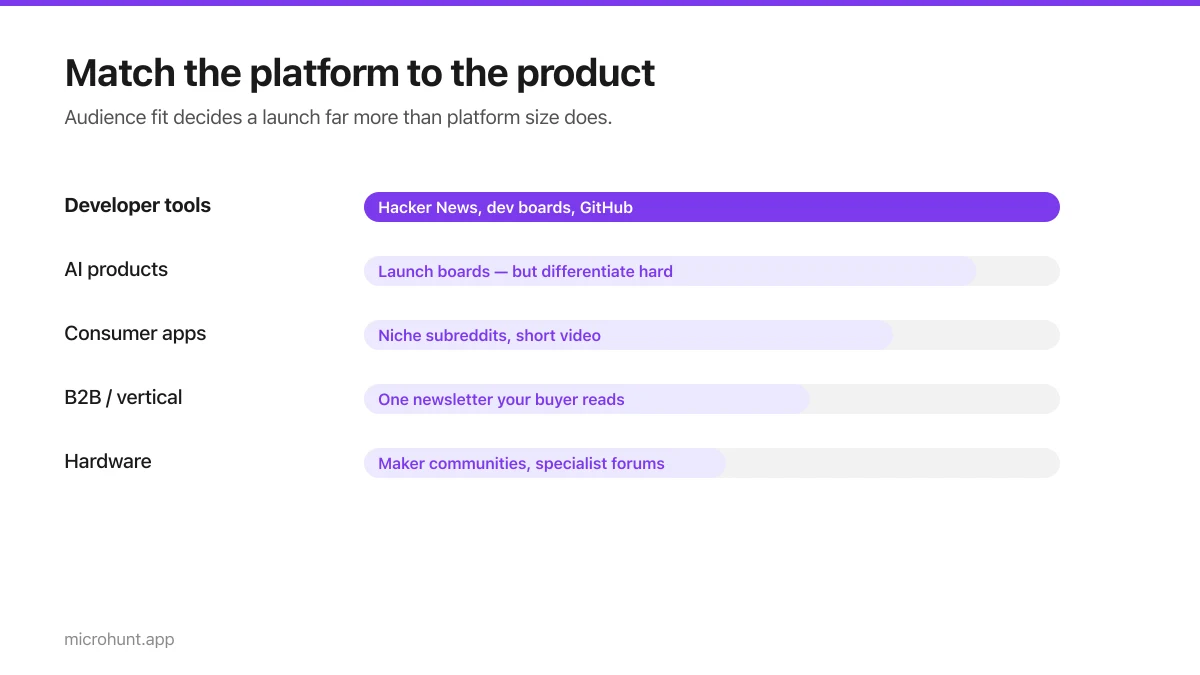
Best Product Hunt Alternatives for Launching in 2026
Where else to launch when Product Hunt is not the right fit — what each platform is actually good at, who shows up, and what it costs.
8 min read
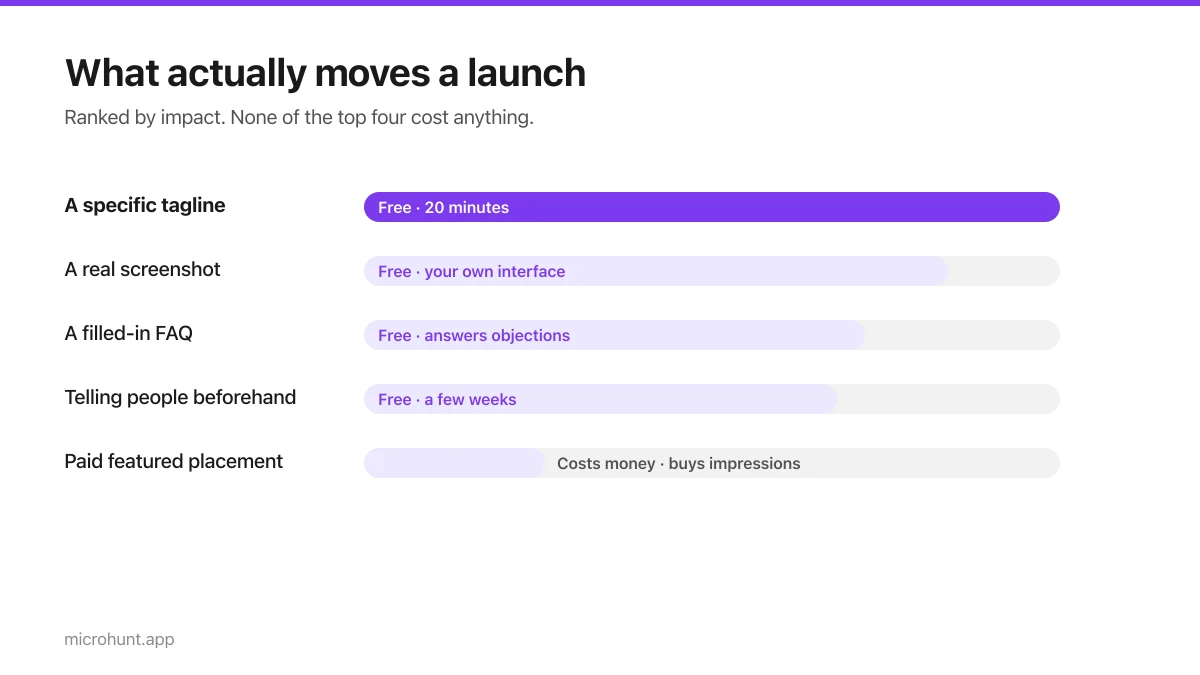
Free Launch Platforms for Indie Makers (No Budget Needed)
You do not need to pay to launch. Here are the places that are genuinely free, what each expects from you, and where paying is actually worth it.
7 min read
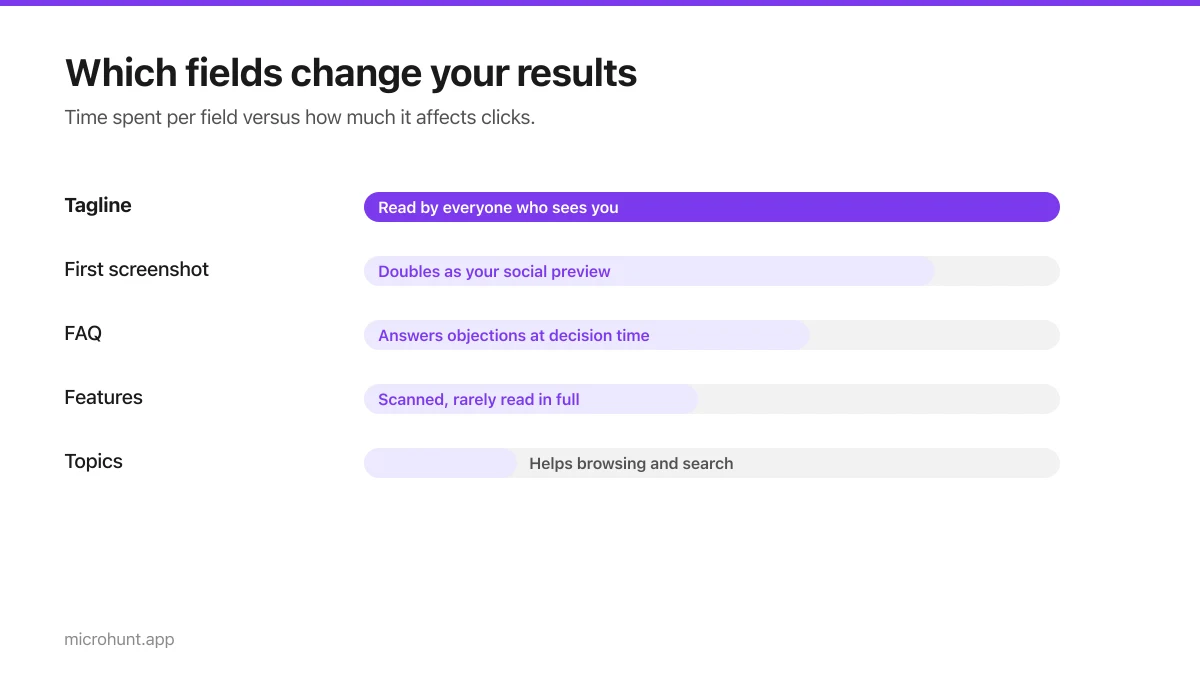
How to Submit a Product on Vuru (Step by Step)
A walk through the submission form, what each field does to your page, and the fields most people leave empty that they shouldn't.
7 min read
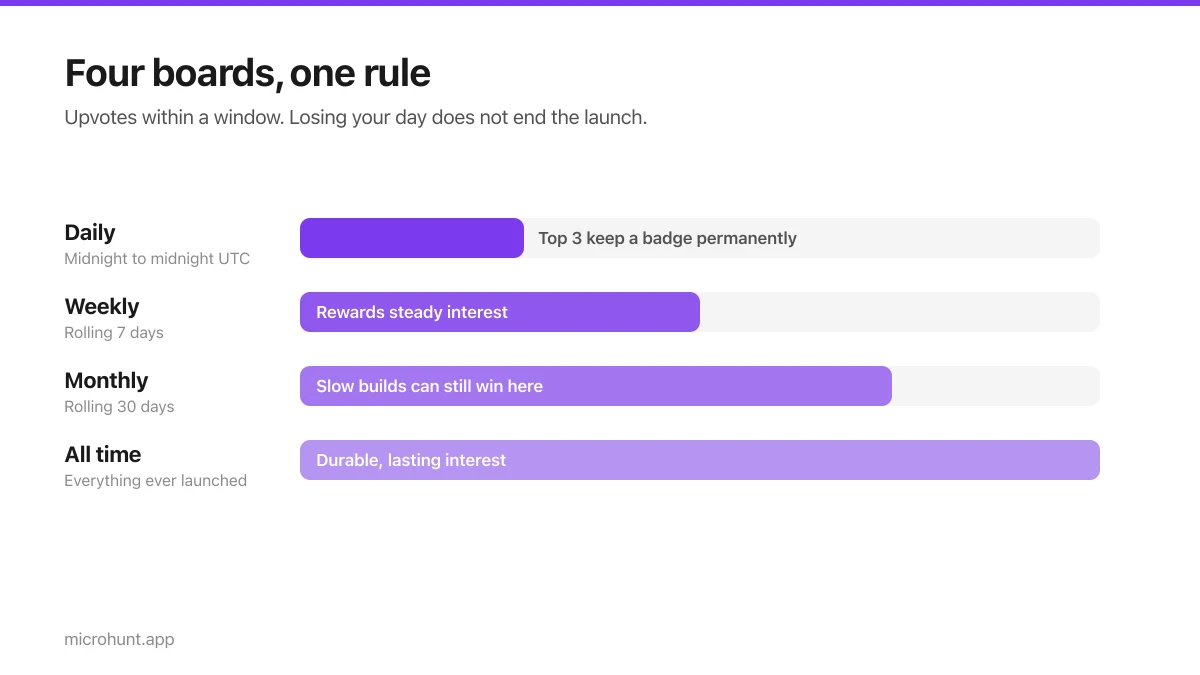
How Vuru Ranking Works (And How to Win a Badge)
Launch windows, upvotes, podium badges and what we do about vote manipulation — the whole ranking system explained plainly.
7 min read
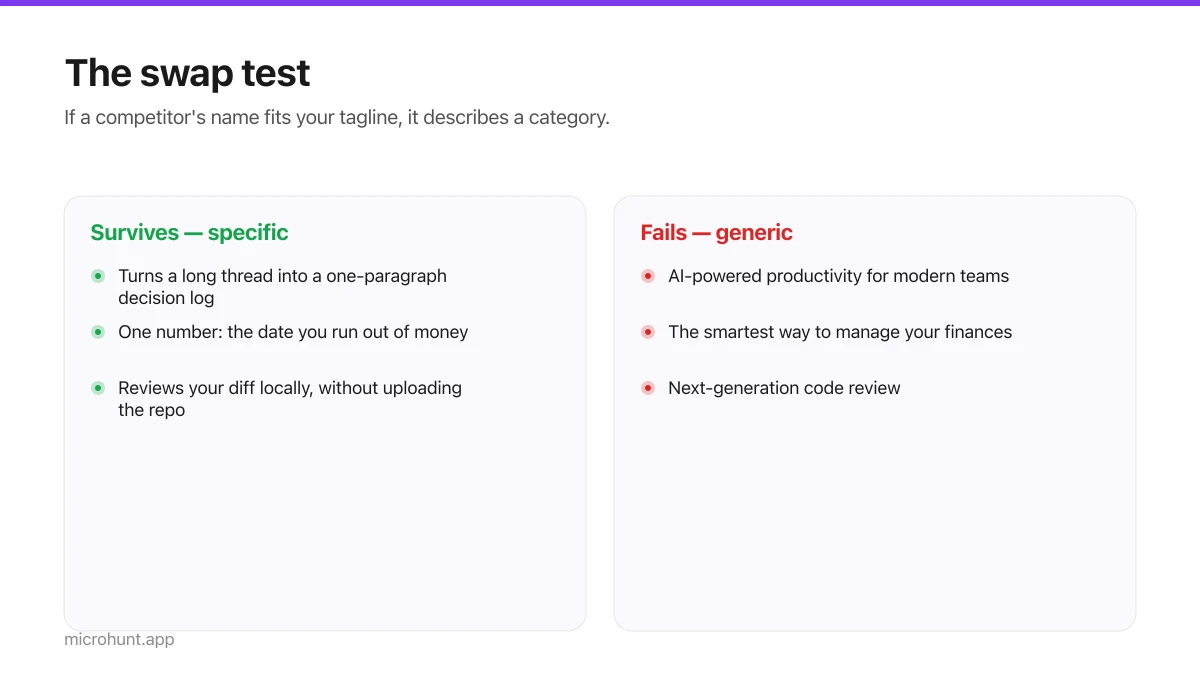
How to Write a Product Tagline That Actually Gets Clicked
The one line most people will ever read about your product, and a simple test for whether yours is doing any work.
7 min read
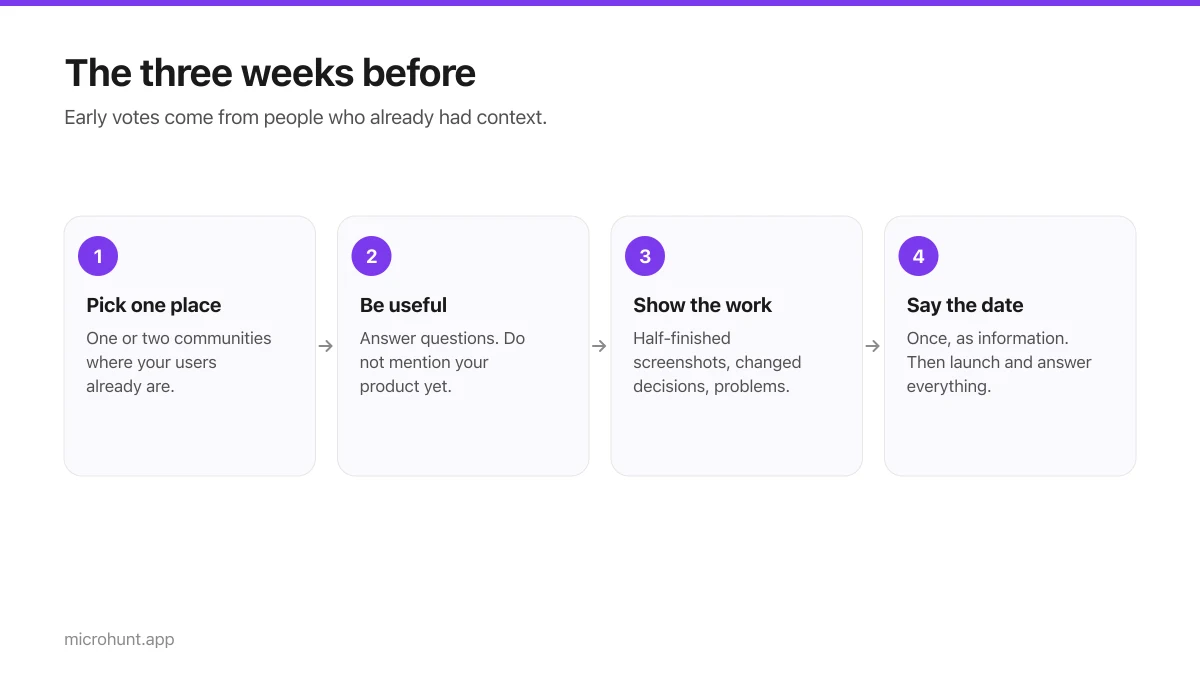
How to Get Your First Upvotes Without Begging
What actually generates early votes, why vote-for-vote groups do not work, and the approach that keeps paying off after launch day.
7 min read
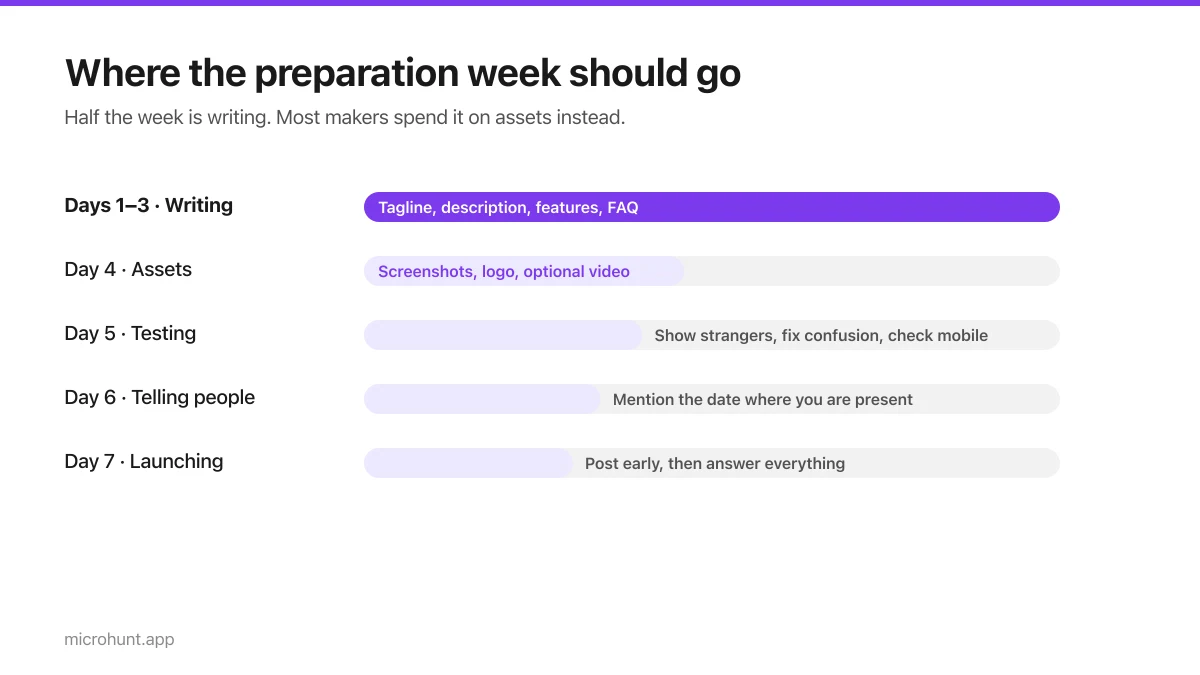
The Seven-Day Launch Checklist
A day-by-day plan for the week before you launch, weighted towards the things that actually change the outcome.
8 min read
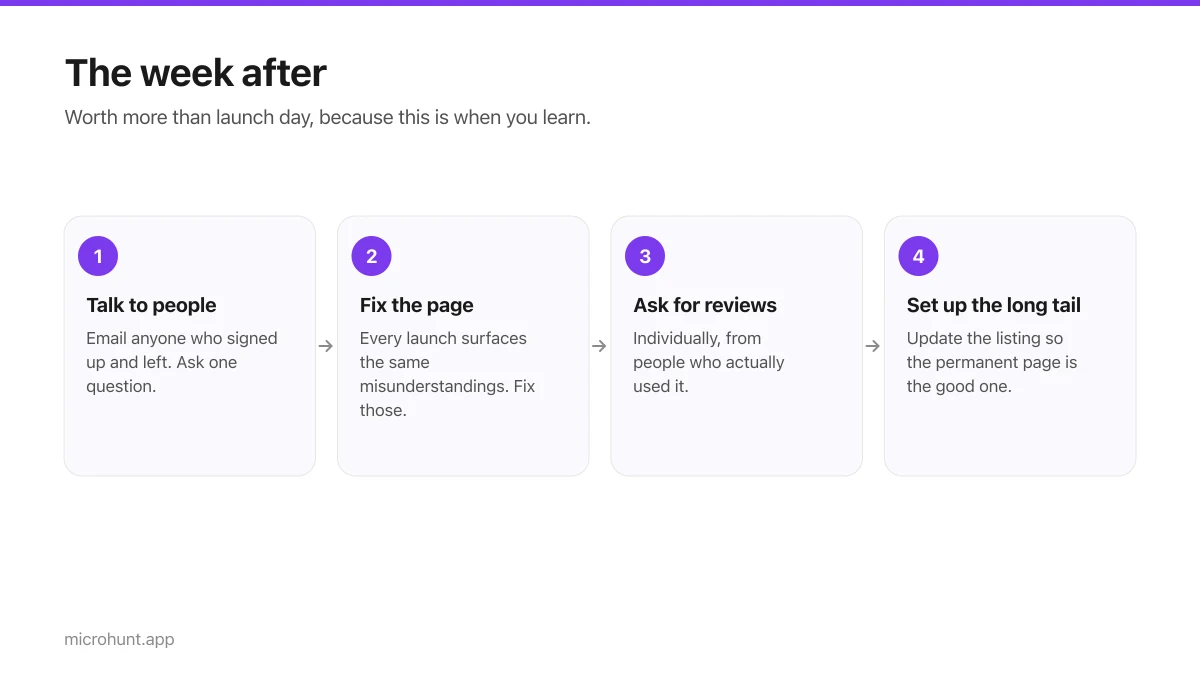
What to Do the Week After Launch Day
The traffic spike is over. Here is how to turn a day of attention into something that lasts longer than the graph.
7 min read