Game Dev Tools
Engines, assets and level design.
Nothing launched in this category yet.
Be the firstAbout Game Dev Tools
Game development tooling covers engines, art and animation pipelines, audio, level design, procedural generation and the growing set of small utilities that solve one specific problem in a production. The category rewards browsing because the small tools frequently save more time than a big one.
On engines, the practical advice is that the choice matters less than people arguing about it suggest, and it matters most in the areas nobody discusses: how good the debugging is, how long an iteration takes, and what happens when you need to ship to a platform you had not planned for. Fast iteration compounds enormously over a project. A change that takes ten seconds to see versus two minutes changes how many things you try, and how many things you try is most of what determines whether a game feels good.
Licensing is worth reading properly rather than assuming, because the terms of several major engines have changed materially in recent years. Understand what happens at revenue thresholds, what obligations attach to the runtime, and whether you can continue on your current terms. This is a real business risk for a multi-year project.
Art pipeline tools are where small teams lose time invisibly. The gap between an artist exporting an asset and it appearing correctly in the game is where hours go, and anything that automates that round trip pays back quickly. The same is true of build automation: a project that builds and deploys to a test device automatically gets tested; one requiring a manual twenty-minute process does not.
Audio is chronically under-tooled in small productions and disproportionately affects how a game feels. Middleware handling adaptive music and sound variation is not a luxury; repeated identical sound effects are one of the fastest ways for a game to feel cheap.
Procedural tools are seductive and worth a caution: procedural generation solves the problem of quantity and creates the problem of meaning. Generated content is usually best as a layer over hand-authored structure rather than a replacement for it.
For anyone shipping tools rather than games, note that this audience buys tools that save production time and is highly resistant to subscriptions on anything they need at the end of a long project.
From the blog
Reading on launching, ranking and game dev tools.
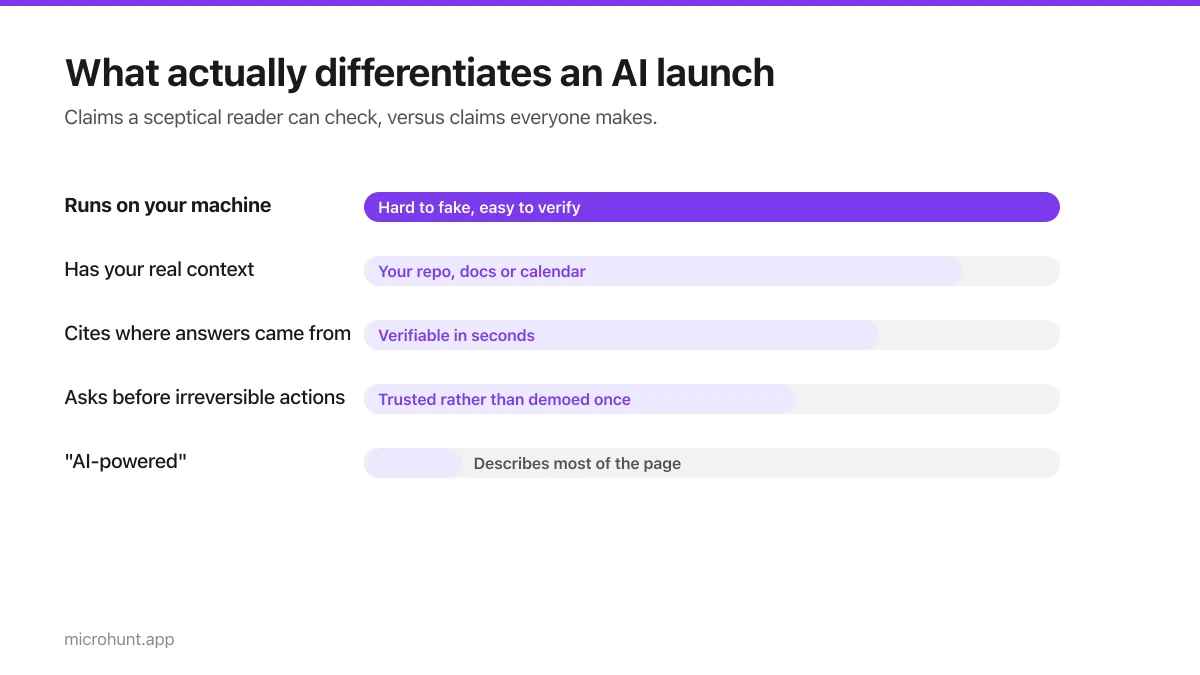
Where to Launch an AI Product (When Everyone Else Is Too)
AI is the most crowded category on every launch board. What actually differentiates a launch when half the page is also AI-powered.
8 min read
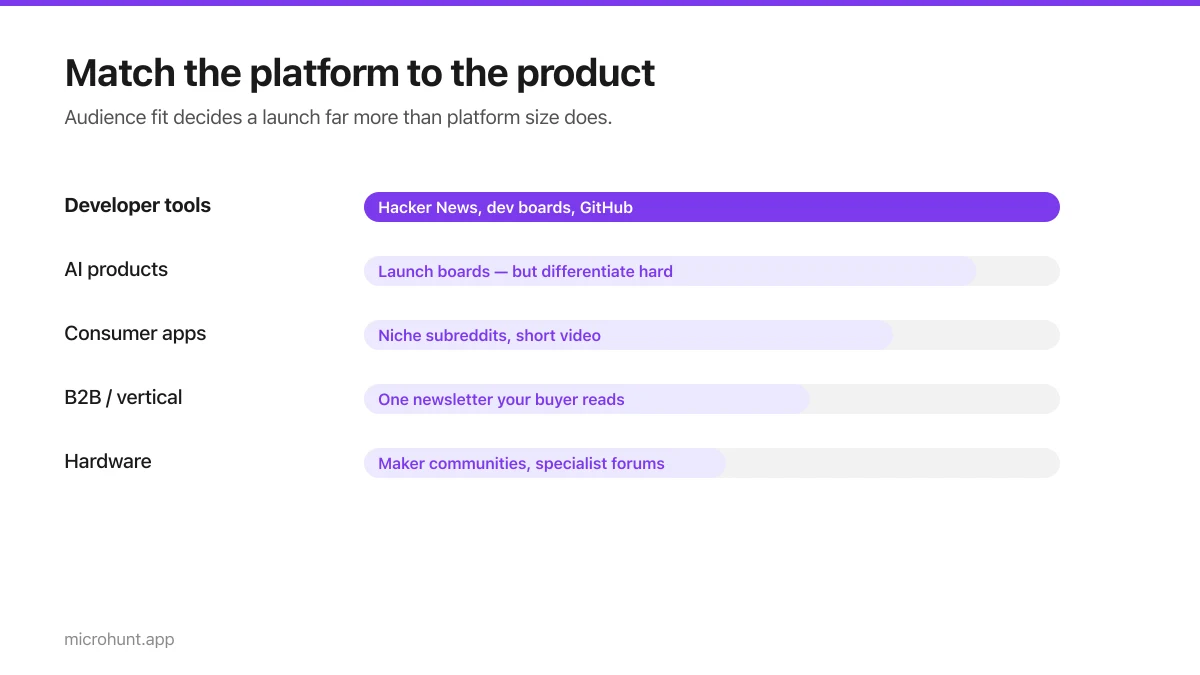
Best Product Hunt Alternatives for Launching in 2026
Where else to launch when Product Hunt is not the right fit — what each platform is actually good at, who shows up, and what it costs.
8 min read
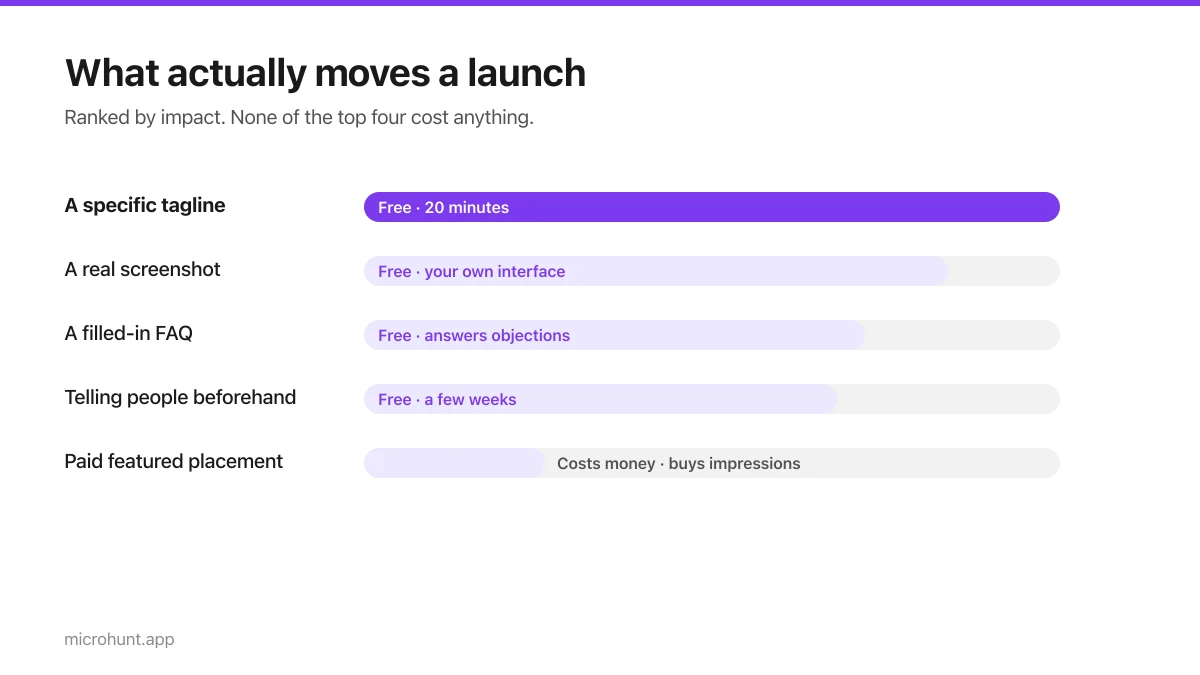
Free Launch Platforms for Indie Makers (No Budget Needed)
You do not need to pay to launch. Here are the places that are genuinely free, what each expects from you, and where paying is actually worth it.
7 min read
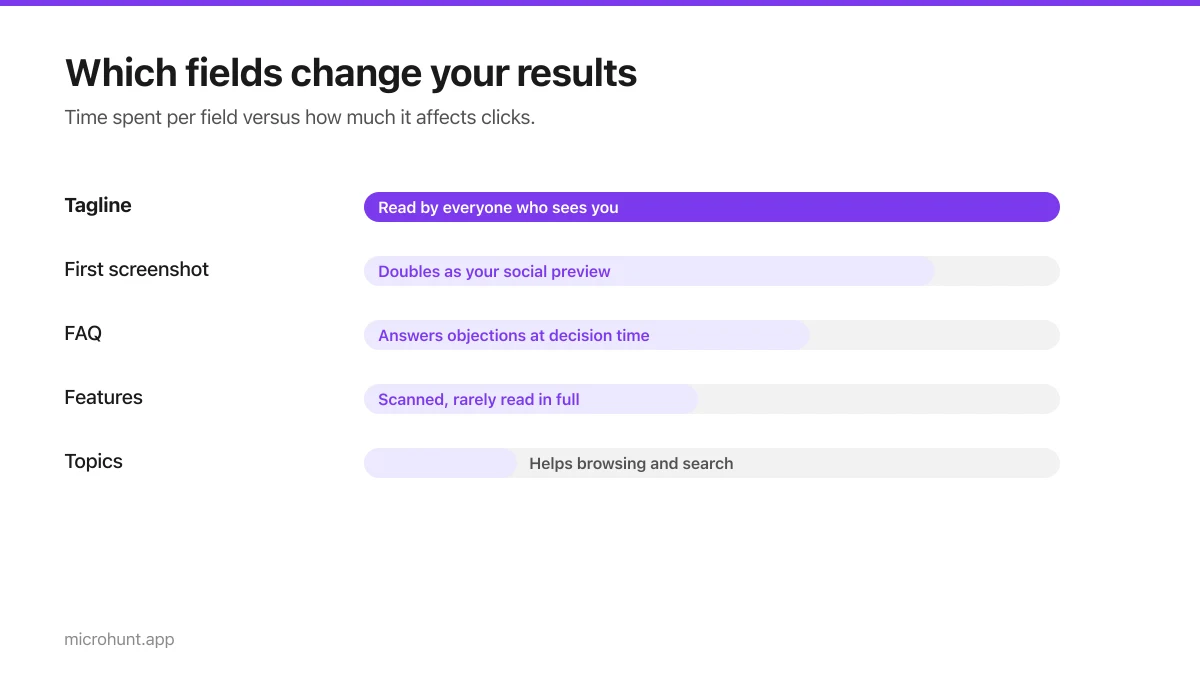
How to Submit a Product on Vuru (Step by Step)
A walk through the submission form, what each field does to your page, and the fields most people leave empty that they shouldn't.
7 min read
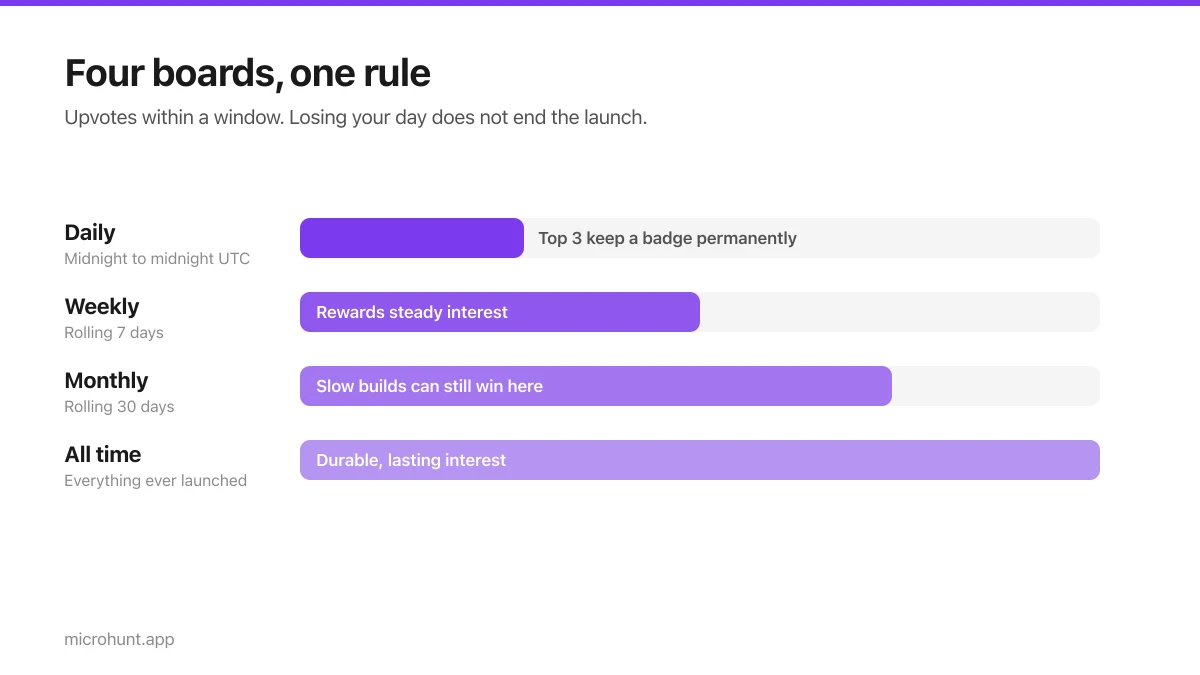
How Vuru Ranking Works (And How to Win a Badge)
Launch windows, upvotes, podium badges and what we do about vote manipulation — the whole ranking system explained plainly.
7 min read
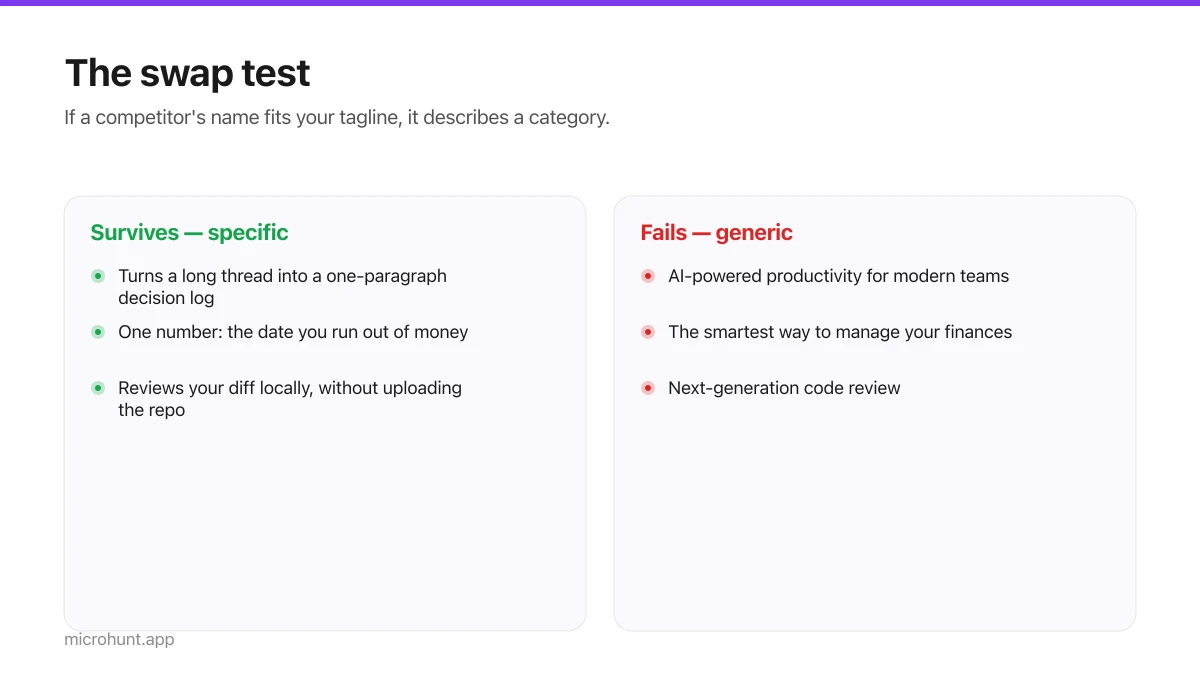
How to Write a Product Tagline That Actually Gets Clicked
The one line most people will ever read about your product, and a simple test for whether yours is doing any work.
7 min read
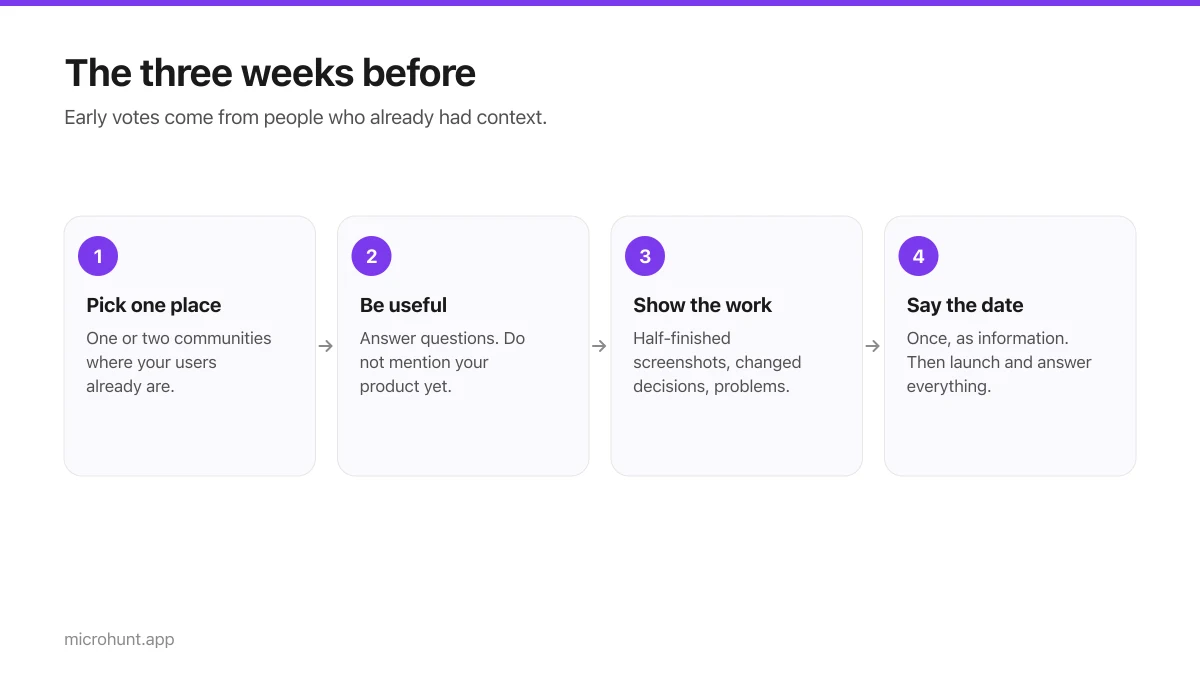
How to Get Your First Upvotes Without Begging
What actually generates early votes, why vote-for-vote groups do not work, and the approach that keeps paying off after launch day.
7 min read
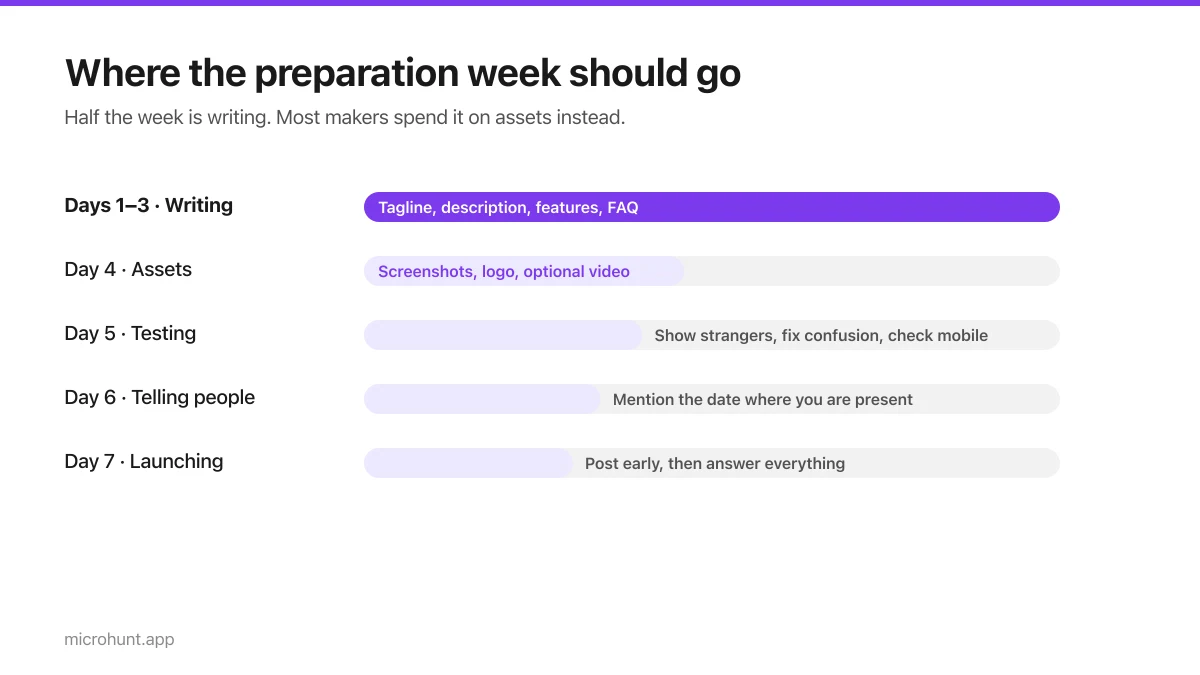
The Seven-Day Launch Checklist
A day-by-day plan for the week before you launch, weighted towards the things that actually change the outcome.
8 min read