Grammar & Style
Checking, editing and readability tools.
Nothing launched in this category yet.
Be the firstAbout Grammar & Style
Grammar and style tools have moved well past catching typos, and the useful way to think about the current generation is as three separate functions bundled together: correctness, clarity and voice. They are worth very different amounts.
Correctness — spelling, agreement, punctuation, the genuinely wrong things — is close to solved and worth having on by default. The remaining errors cluster in proper nouns, technical terms and deliberate constructions, and any tool that lets you maintain a personal dictionary handles this fine.
Clarity suggestions are the most valuable part and the part to engage with critically. Flagging a forty-word sentence, a passive construction that hides who did something, or a paragraph making three points at once is genuinely useful, because these are the things a writer stops seeing in their own work. The right response to each suggestion is a decision rather than acceptance: the tool is identifying a place worth looking, not a place that is wrong. Writers who accept every suggestion end up with prose that is correct and characterless.
Voice and tone features are the weakest and the ones to treat with the most suspicion. A model's idea of "professional" or "confident" is an average of its training data, and applying it systematically produces writing that sounds like everyone else's. If your writing has any distinctiveness, these features will sand it off. For a legal notice this is fine. For anything anyone chooses to read, it is the opposite of what you want.
The privacy question is worth thirty seconds. These tools see everything you type, frequently including material you would not paste into a public website — contracts, medical correspondence, private messages. Check what is retained and whether it trains anything. Tools running locally sidestep this entirely, and for correctness and clarity work a local model is entirely sufficient.
For non-native writers, the value proposition is different and considerably higher: these tools catch the article and preposition errors that are hard to self-correct and that readers notice. That is a real accessibility improvement, and it is the use case where accepting most suggestions is reasonable.
The one thing no tool can assess is whether the piece is worth reading. See [AI writing](/categories/ai-writing) for the generative end of this.
From the blog
Reading on launching, ranking and grammar & style.
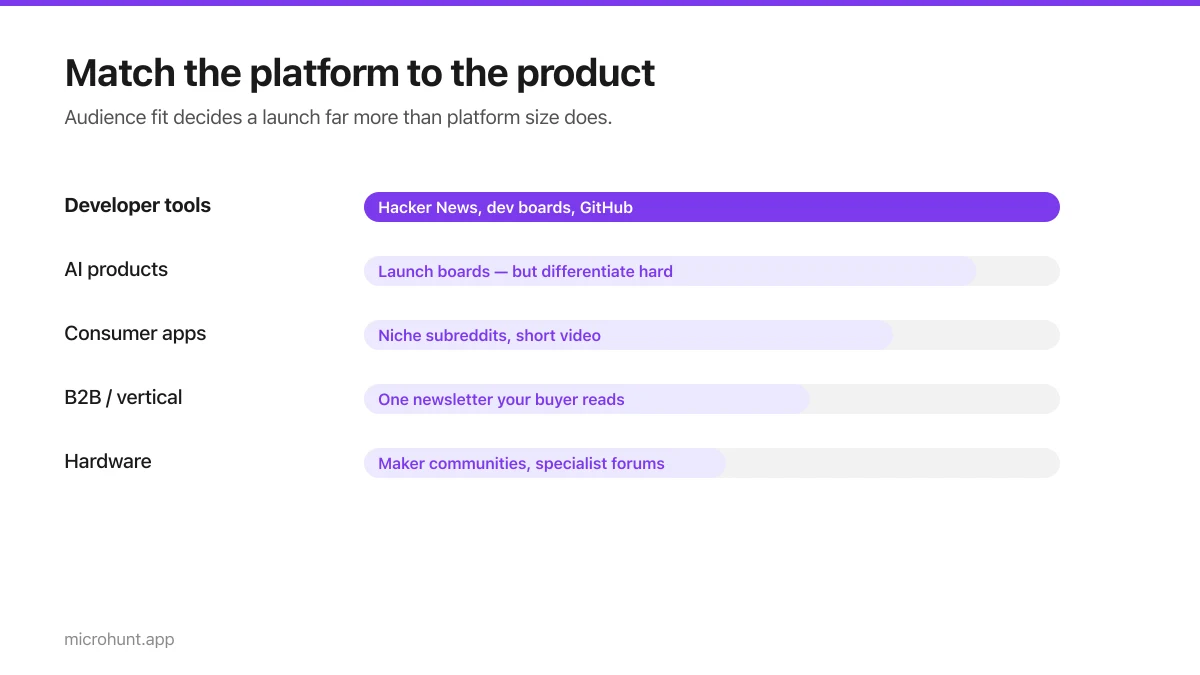
Best Product Hunt Alternatives for Launching in 2026
Where else to launch when Product Hunt is not the right fit — what each platform is actually good at, who shows up, and what it costs.
8 min read
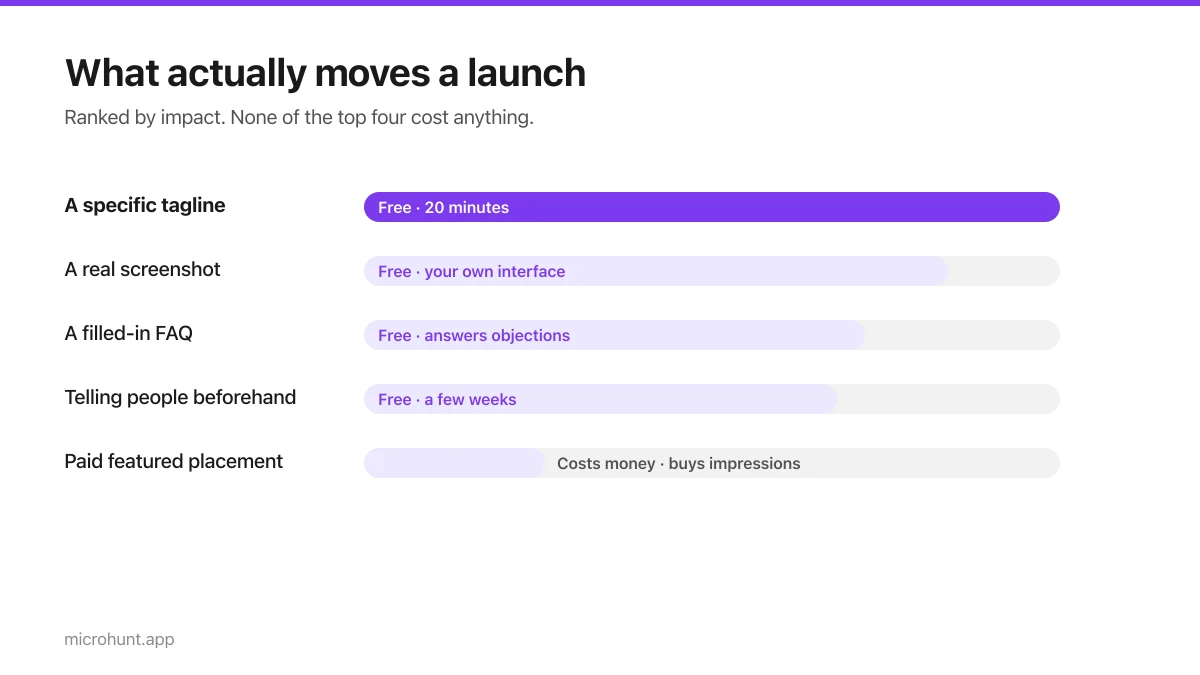
Free Launch Platforms for Indie Makers (No Budget Needed)
You do not need to pay to launch. Here are the places that are genuinely free, what each expects from you, and where paying is actually worth it.
7 min read
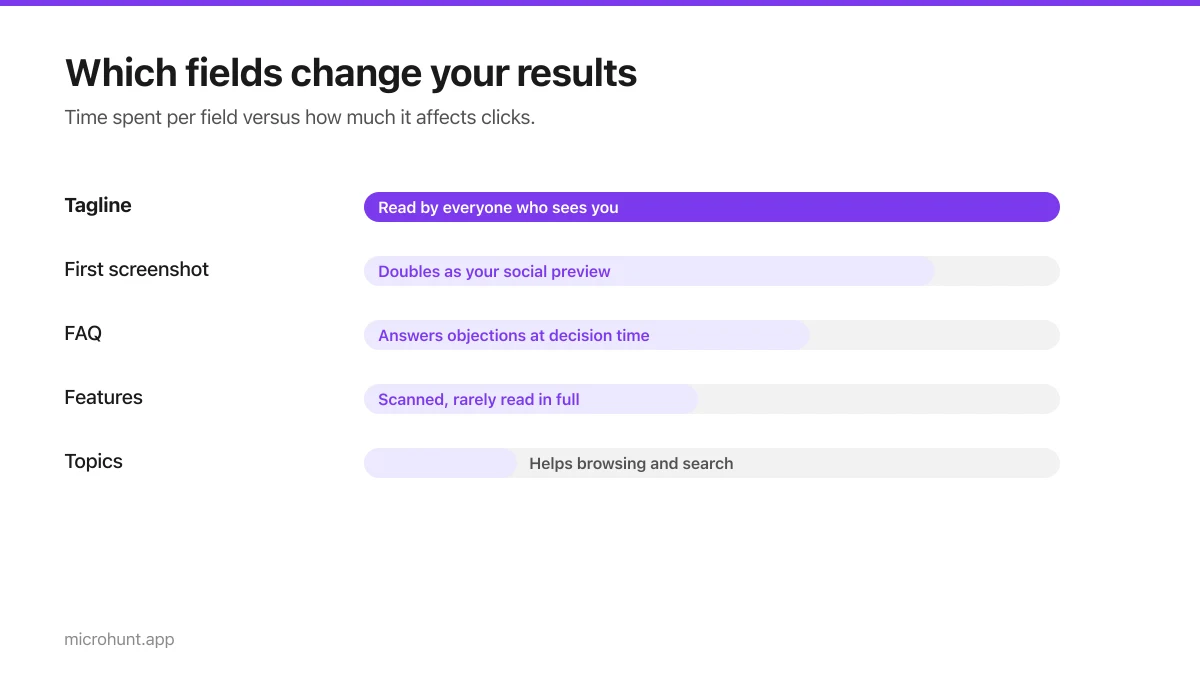
How to Submit a Product on Vuru (Step by Step)
A walk through the submission form, what each field does to your page, and the fields most people leave empty that they shouldn't.
7 min read
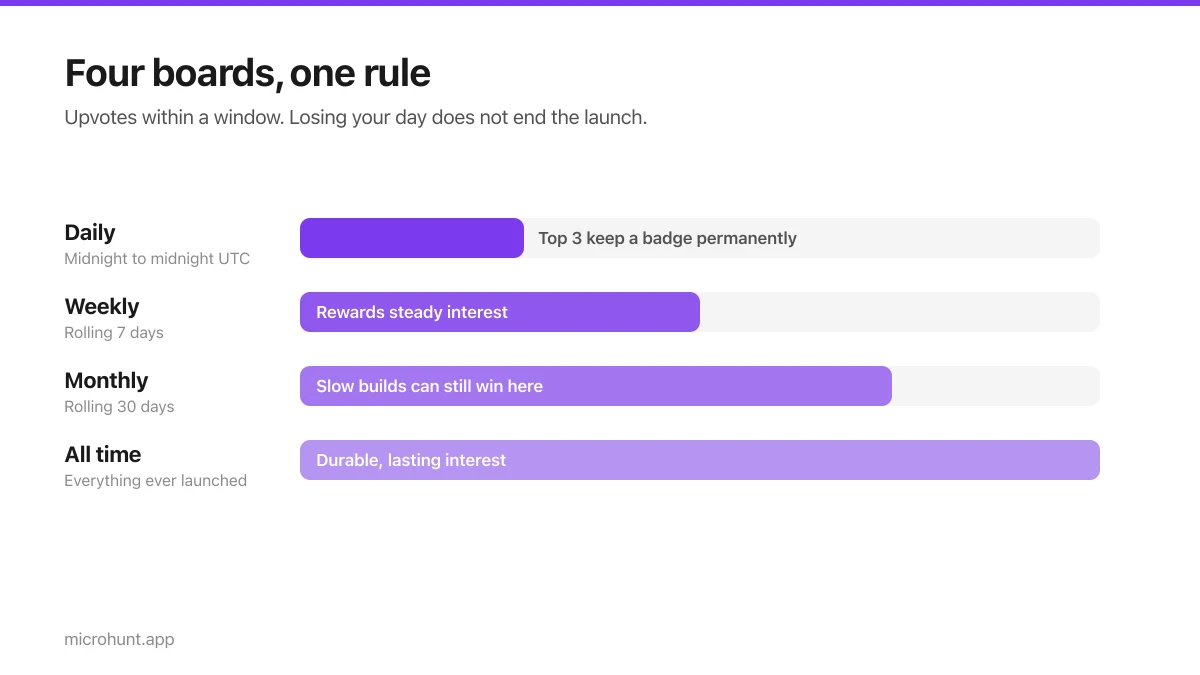
How Vuru Ranking Works (And How to Win a Badge)
Launch windows, upvotes, podium badges and what we do about vote manipulation — the whole ranking system explained plainly.
7 min read
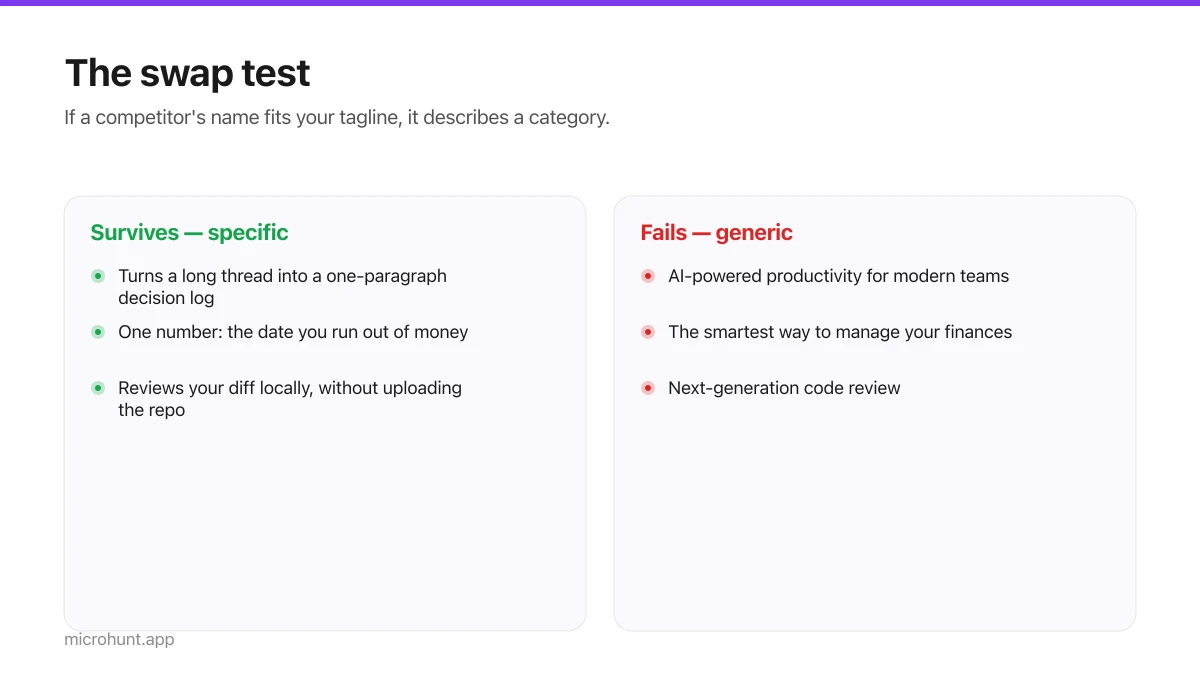
How to Write a Product Tagline That Actually Gets Clicked
The one line most people will ever read about your product, and a simple test for whether yours is doing any work.
7 min read
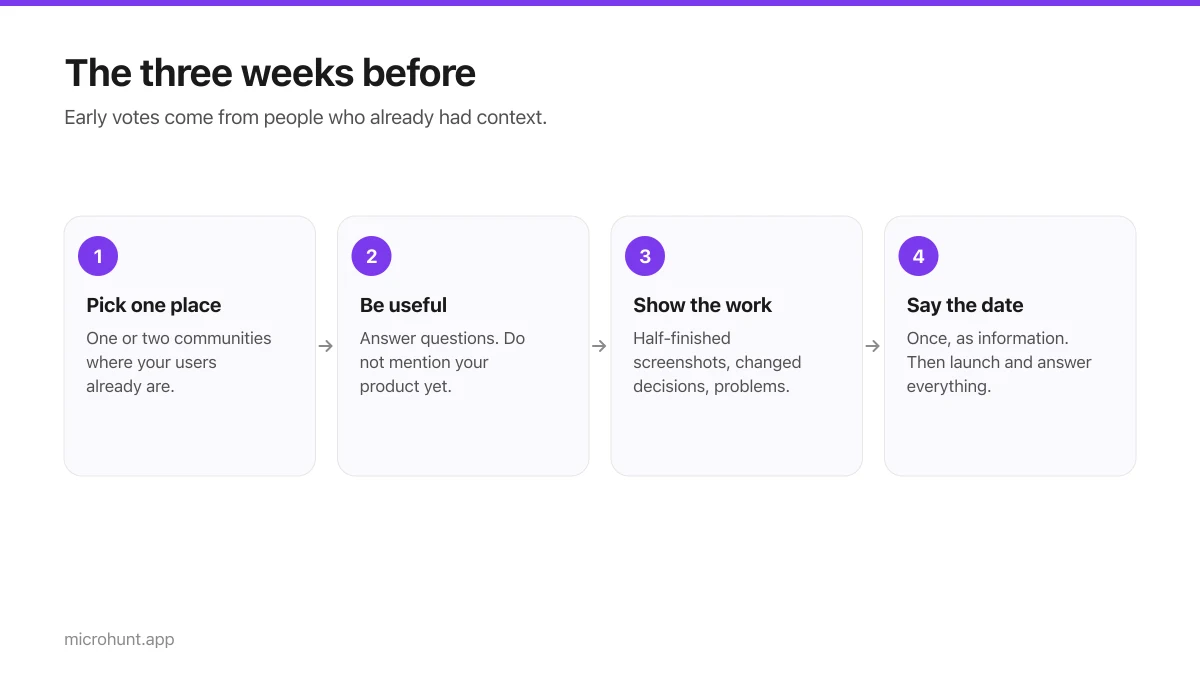
How to Get Your First Upvotes Without Begging
What actually generates early votes, why vote-for-vote groups do not work, and the approach that keeps paying off after launch day.
7 min read
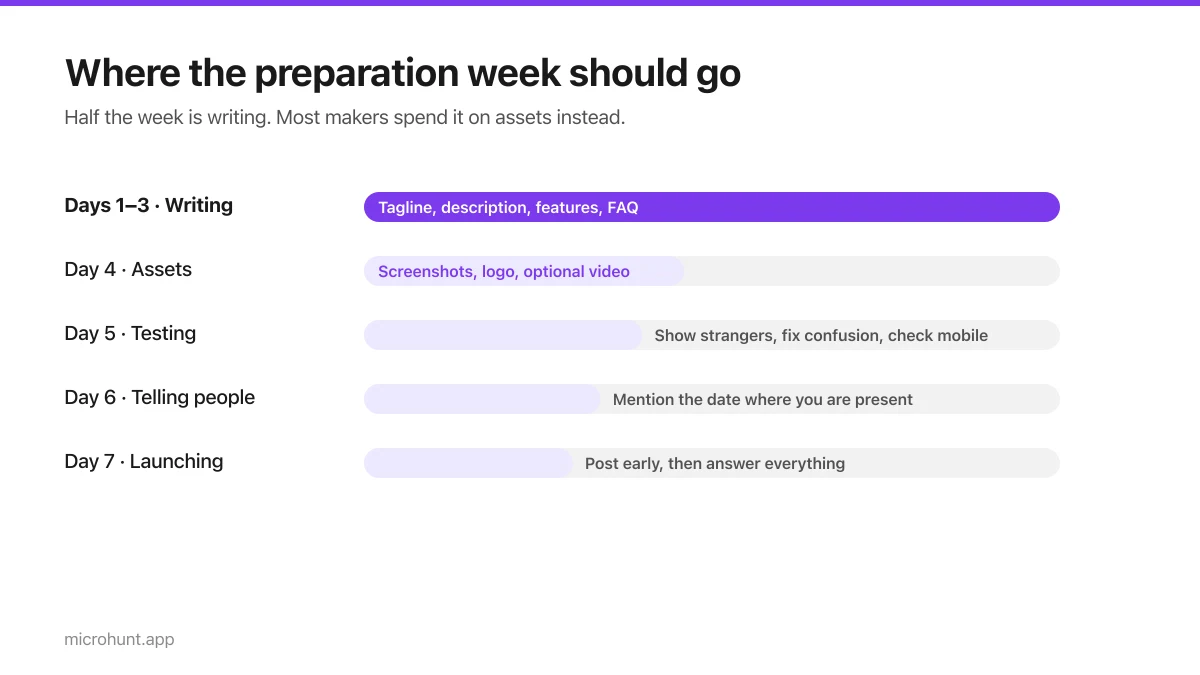
The Seven-Day Launch Checklist
A day-by-day plan for the week before you launch, weighted towards the things that actually change the outcome.
8 min read
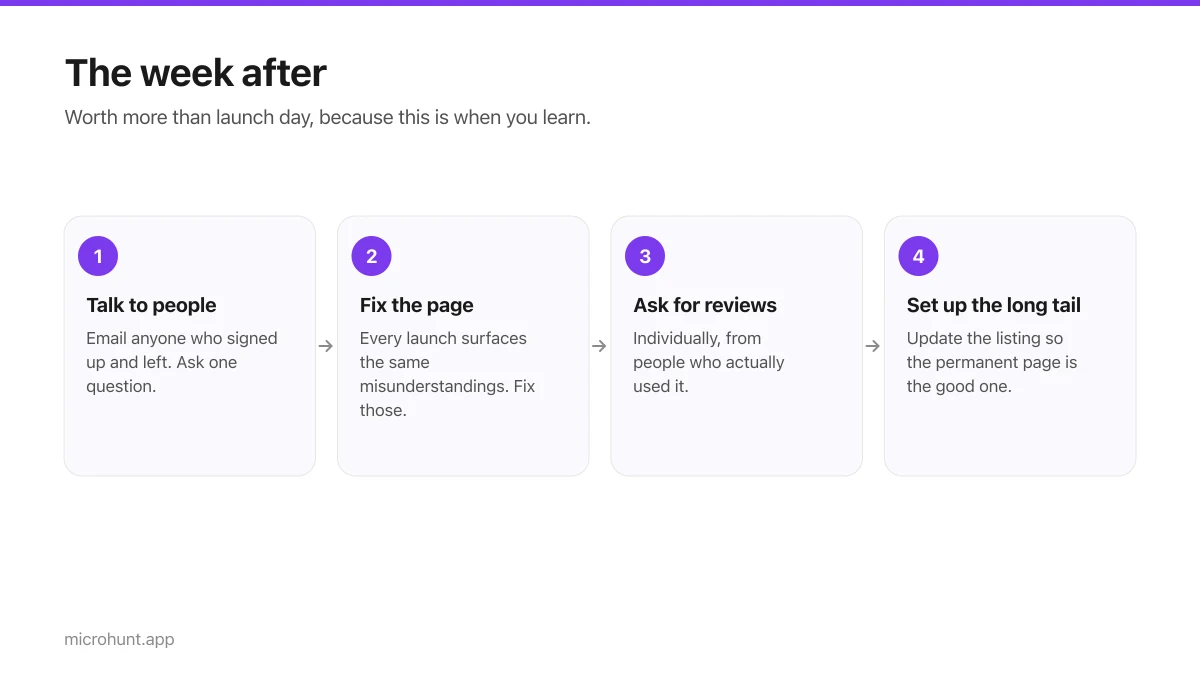
What to Do the Week After Launch Day
The traffic spike is over. Here is how to turn a day of attention into something that lasts longer than the graph.
7 min read