Writing & Content
Drafting, editing, publishing and everything around the written word.
Nothing launched in this category yet.
Be the firstAbout Writing & Content
Writing tools have split into two camps that want very different things from you. One camp wants to write for you. The other wants to make you a faster, clearer writer. Both are represented here, and they suit different work.
Generation tools are useful when volume matters more than voice — product descriptions across a large catalogue, first drafts of routine correspondence, variations to test. They fall down when the writing is the product, because the output has a recognisable flatness that readers increasingly notice and search engines increasingly discount.
Assistance tools are the more durable bet. Editors that flag a sentence you have overcomplicated, tools that catch the passive constructions you fall into, outliners that let you restructure an argument without retyping it. These make the writing yours and better, which is the combination that survives.
The practical categories inside this space are drafting environments, distraction-free editors, grammar and style checkers, outliners and research tools, publishing platforms and newsletter software, and the growing set of tools that manage the work around writing — briefs, calendars, and the tedium of getting a finished piece into three different systems.
If you write for search, the ground has shifted. Assistants that summarise rather than link mean that content which exists only to occupy a keyword gets absorbed and returns nothing. What survives is content with something specific in it: original data, a real opinion, a worked example, a genuinely useful table. Tools that help you produce that are worth more than tools that help you produce volume faster.
For technical writing, the interesting recent work is in tooling that treats documentation as code — versioned alongside the software, tested for broken links and stale examples, and reviewed like any other change. Documentation rot is the default state of most products, and tooling that fights it is undervalued.
Newsletter software deserves its own note. The market splits between platforms that own your audience and platforms that let you export it. That distinction matters more than any feature comparison, because the list is the asset. Check the export before you commit, not after you have ten thousand subscribers.
For makers launching here, this audience reads for a living and will judge your copy as a sample of your product. A writing tool with a clumsy landing page has already made its argument. Show the output, show a before and after with real text, and be specific about what the tool does not do — this category is full of overclaiming and calibrated honesty stands out immediately.
From the blog
Reading on launching, ranking and writing & content.
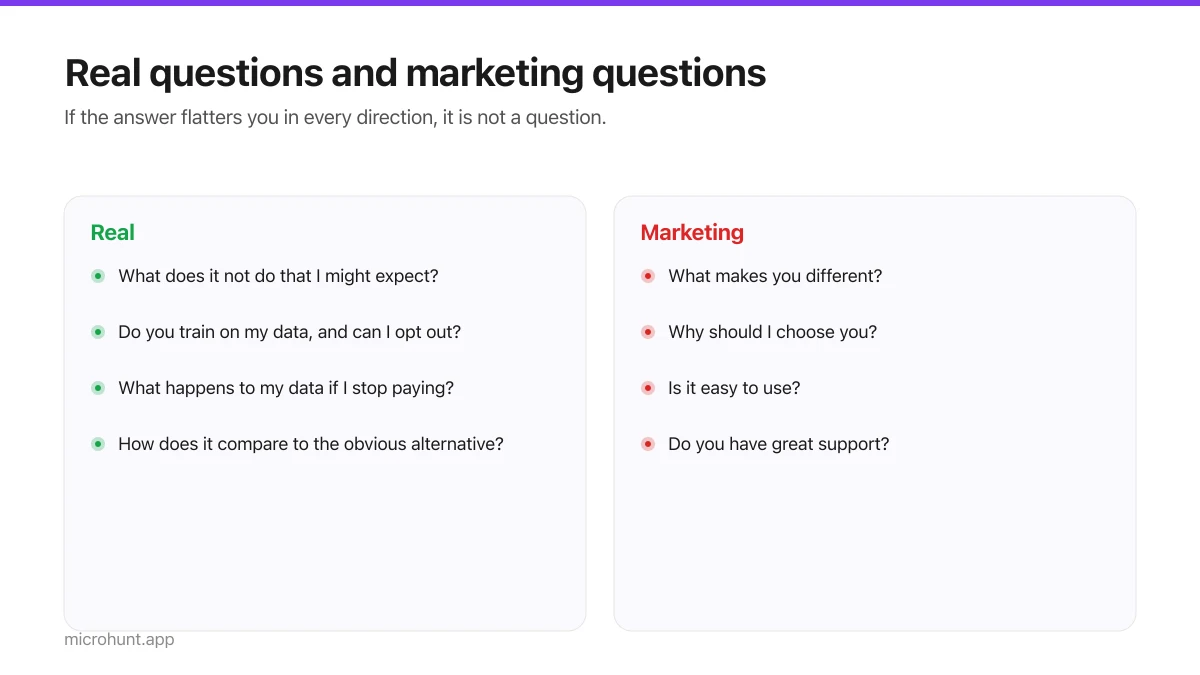
Writing FAQs That Convert (Not Ones That Repeat Your Pitch)
The most skipped section on a product page, and the one that answers the objections making people close the tab.
7 min read
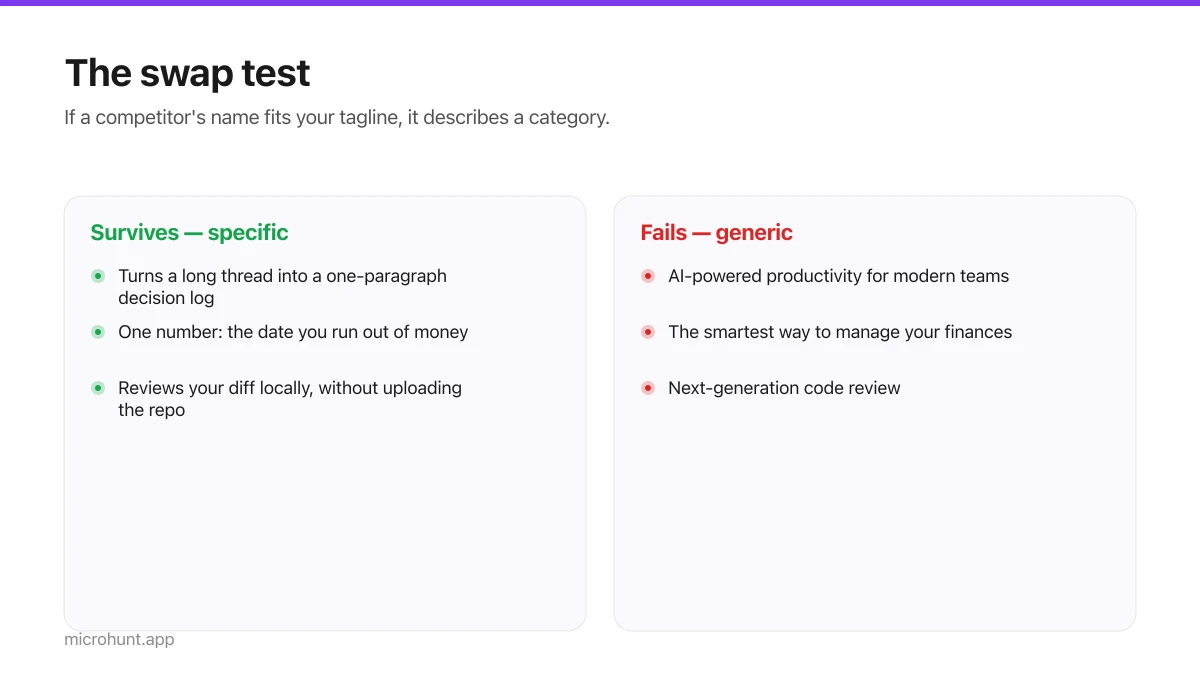
How to Write a Product Tagline That Actually Gets Clicked
The one line most people will ever read about your product, and a simple test for whether yours is doing any work.
7 min read
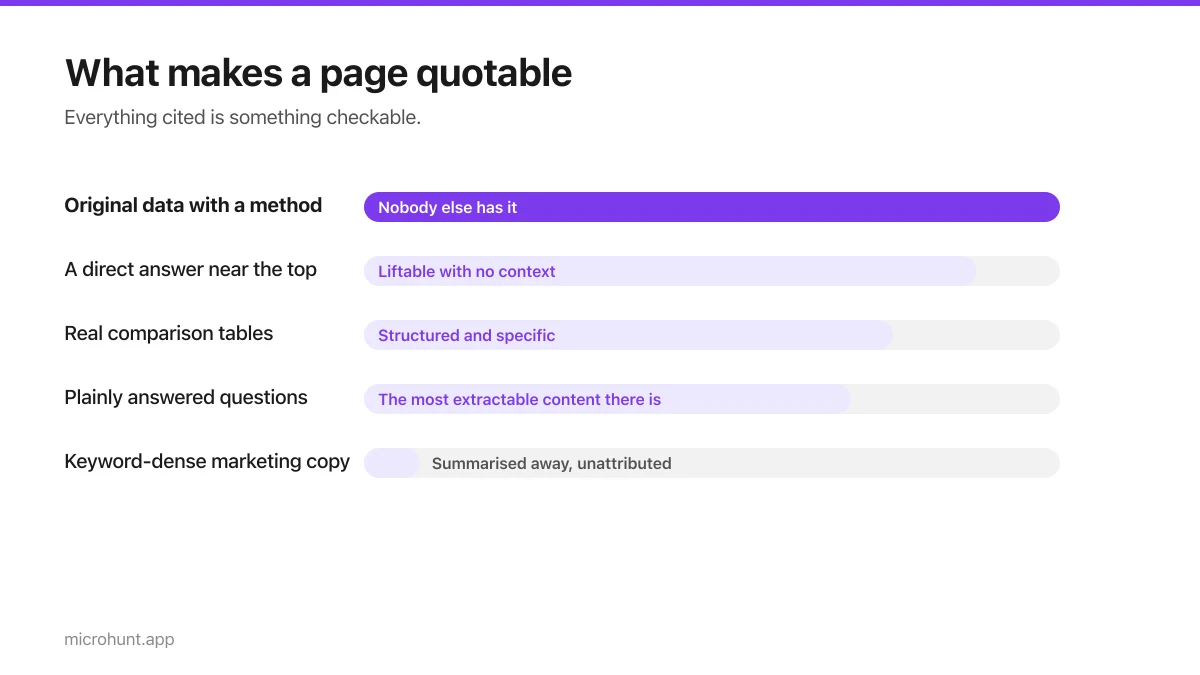
Getting Cited by AI Assistants: What Actually Works
More people are asking an assistant instead of searching. Here is what makes a page quotable rather than summarised away.
8 min read
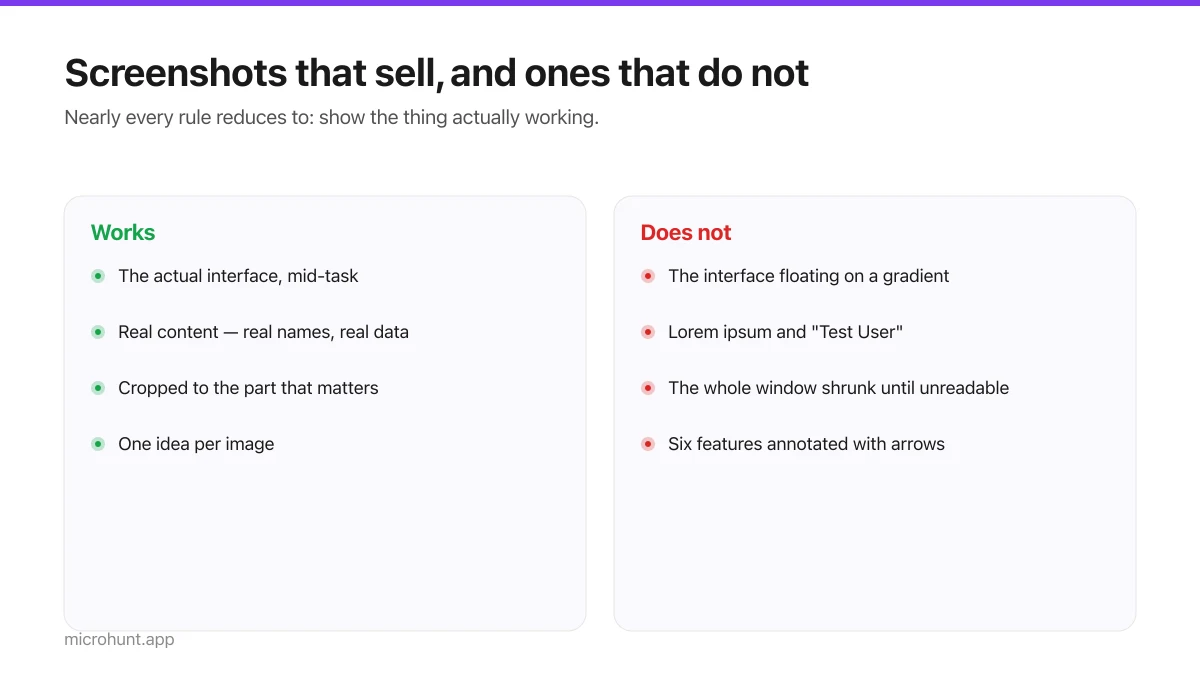
Product Screenshots and Demo Videos That Do the Selling
Your first screenshot is your social preview and often the only thing a visitor looks at. Here is how to make it earn that.
7 min read
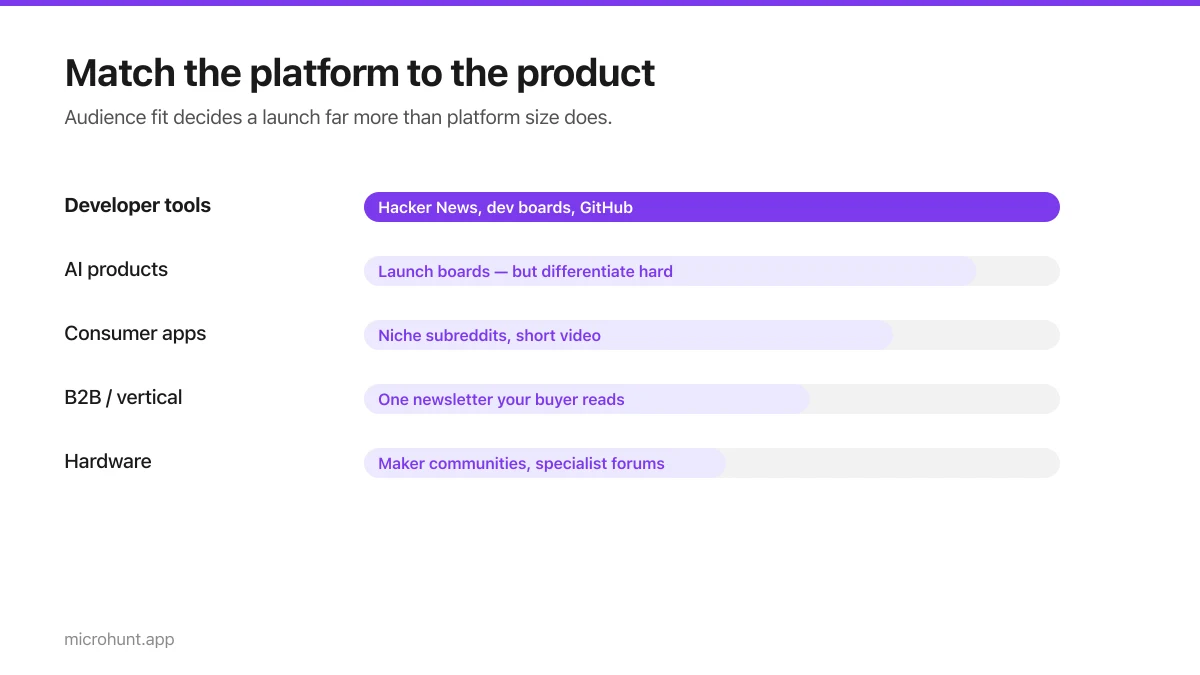
Best Product Hunt Alternatives for Launching in 2026
Where else to launch when Product Hunt is not the right fit — what each platform is actually good at, who shows up, and what it costs.
8 min read
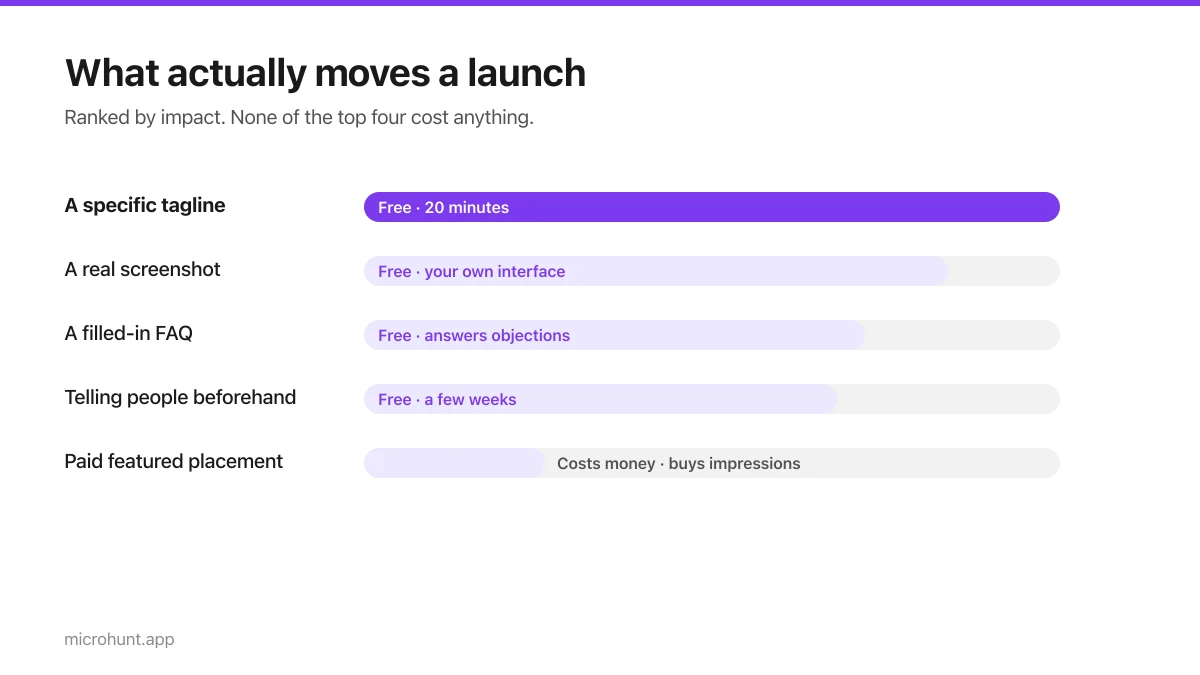
Free Launch Platforms for Indie Makers (No Budget Needed)
You do not need to pay to launch. Here are the places that are genuinely free, what each expects from you, and where paying is actually worth it.
7 min read
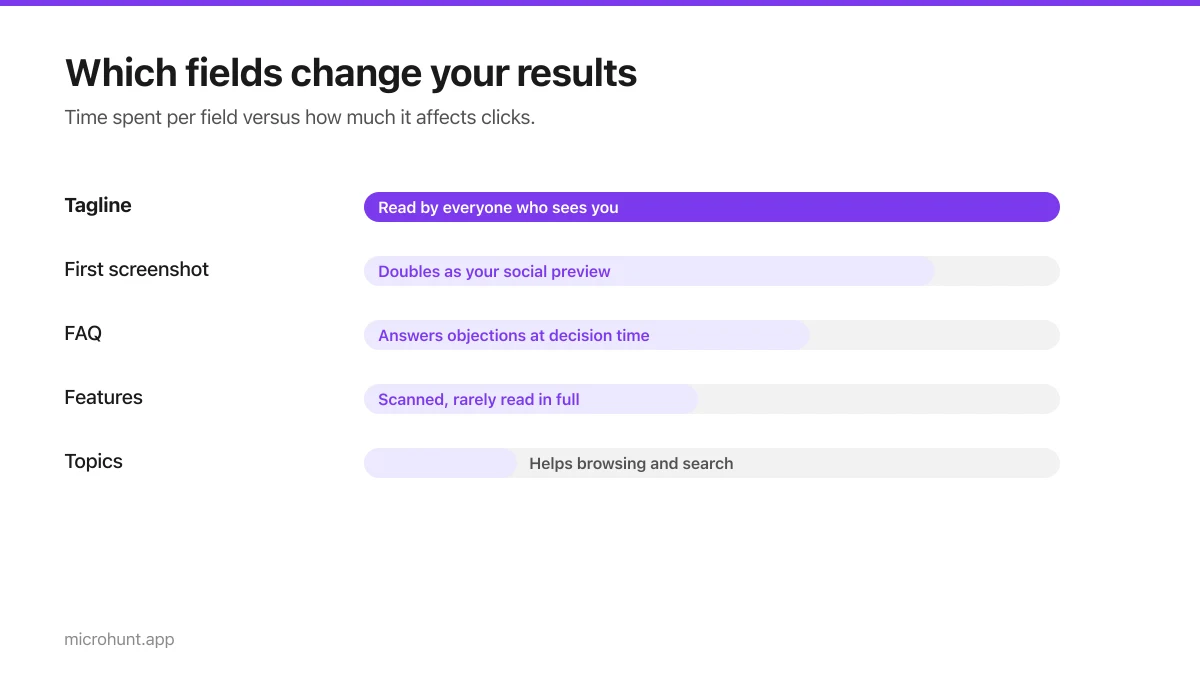
How to Submit a Product on Vuru (Step by Step)
A walk through the submission form, what each field does to your page, and the fields most people leave empty that they shouldn't.
7 min read
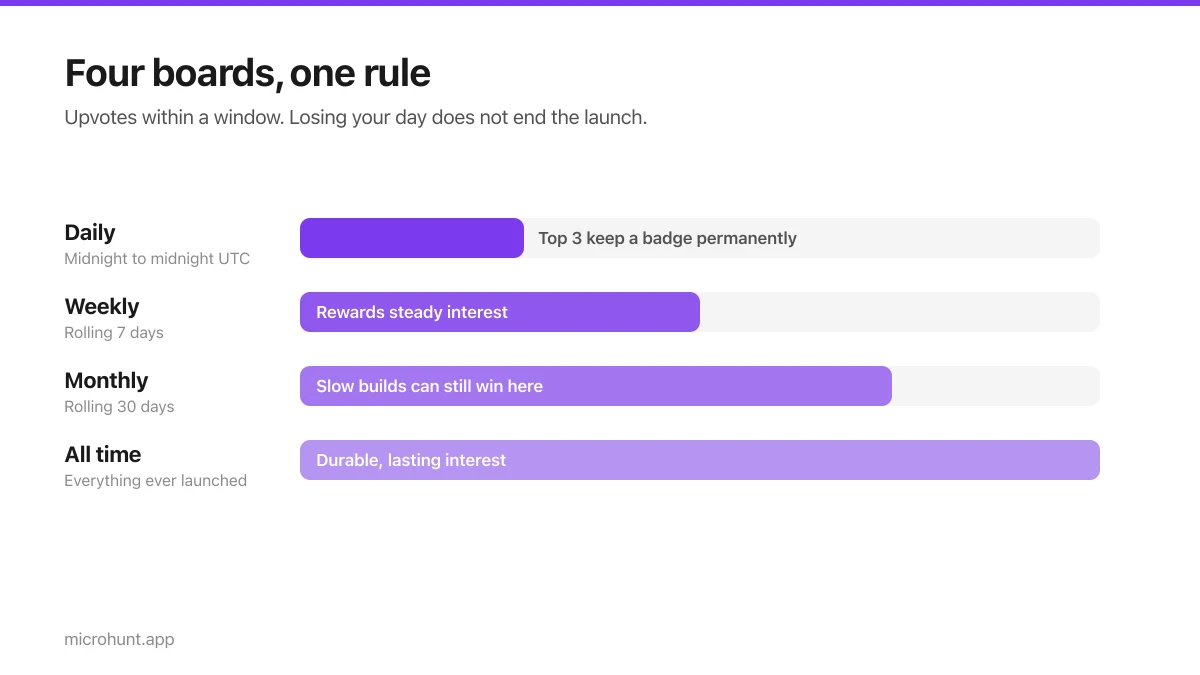
How Vuru Ranking Works (And How to Win a Badge)
Launch windows, upvotes, podium badges and what we do about vote manipulation — the whole ranking system explained plainly.
7 min read