Indie Games
Finished games from small teams.
Nothing launched in this category yet.
Be the firstAbout Indie Games
Independent games are among the most enjoyable launches to browse, because the constraints that make them hard to sell are the same ones that make them interesting. A small team cannot compete on production scale, so they compete on an idea, a mechanic, a mood, or a structural experiment that a large studio would not risk. The result is a category with more genuine novelty per release than almost anything else on this site.
For players, the useful thing to know about buying independent games is that the reviews that help are the ones written by people whose taste you can locate. Aggregate scores collapse very different failure modes into one number: a game that is short, a game that is buggy and a game that is not for you all produce a mediocre average. Reading three detailed opinions is worth more than any score.
Length is worth thinking about differently here too. A four-hour game that is entirely intentional is not worse value than a sixty-hour one padded to justify a price, and the independent scene is where the tightly made short experiences live.
For makers, the honest picture is that discovery is the hard part, not building. Storefronts are saturated, and the games that break through almost always do so on something that is legible in a five-second clip. This is not a design instruction so much as a marketing reality: if you cannot show what makes your game distinct in one silent looping clip, the channels that drive discovery will not work for you.
Demos have become one of the more reliable mechanisms, because they convert interest into a decision without asking for trust. A wishlist accumulated over months before release also matters more than the launch-day push, since it determines the visibility you get on day one.
Community is the other durable asset. Developers who build a small audience during development — showing progress, taking feedback, being present — arrive at launch with people who want it to succeed. That group is small and it is the difference between silence and a start.
See [game dev tools](/categories/game-dev) for the making side, and [how to get your first upvotes](/blog/how-to-get-your-first-upvotes) for launch-day mechanics that apply to games as much as software.
From the blog
Reading on launching, ranking and indie games.
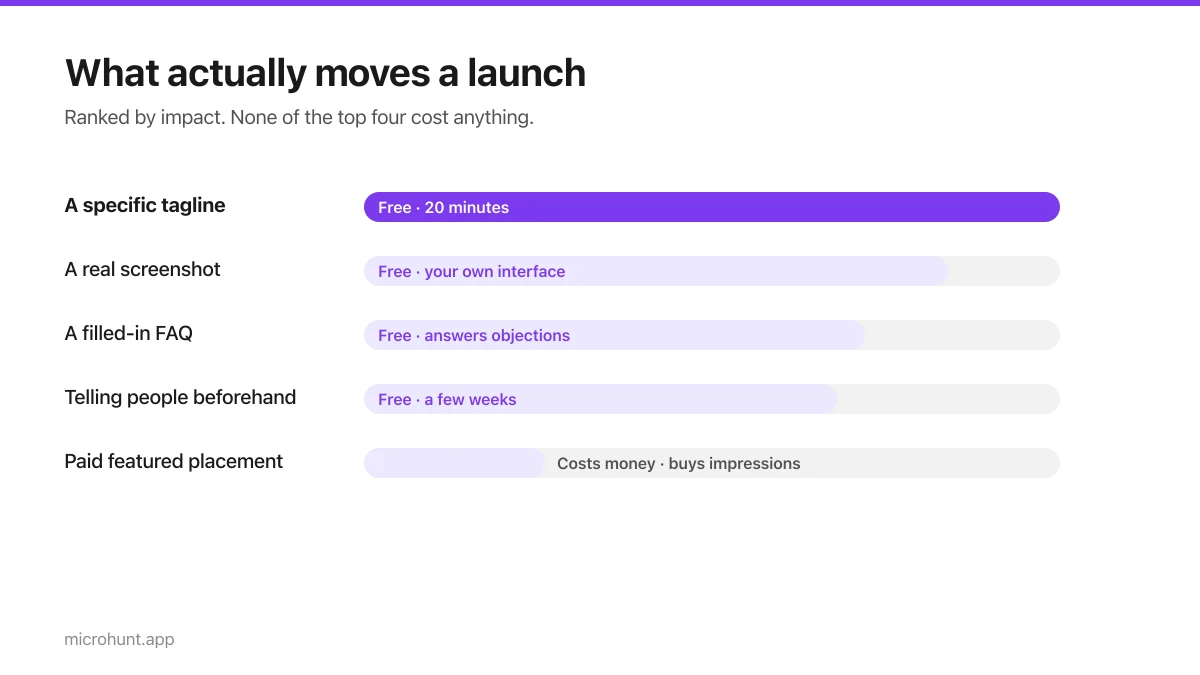
Free Launch Platforms for Indie Makers (No Budget Needed)
You do not need to pay to launch. Here are the places that are genuinely free, what each expects from you, and where paying is actually worth it.
7 min read
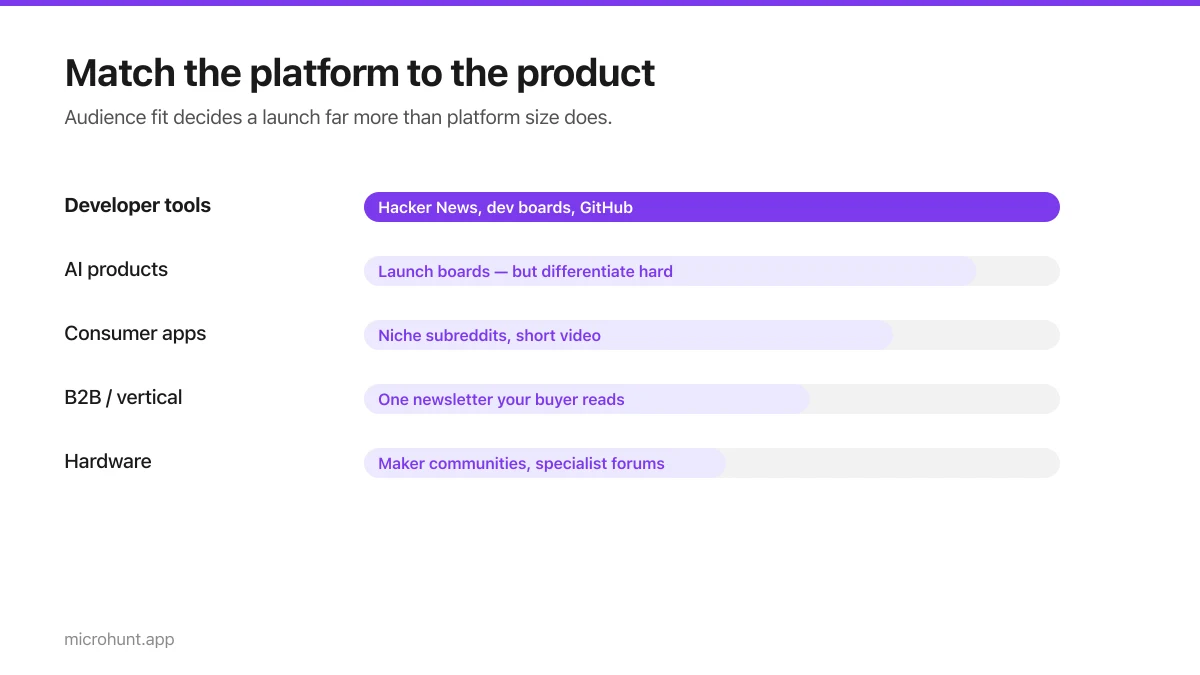
Best Product Hunt Alternatives for Launching in 2026
Where else to launch when Product Hunt is not the right fit — what each platform is actually good at, who shows up, and what it costs.
8 min read
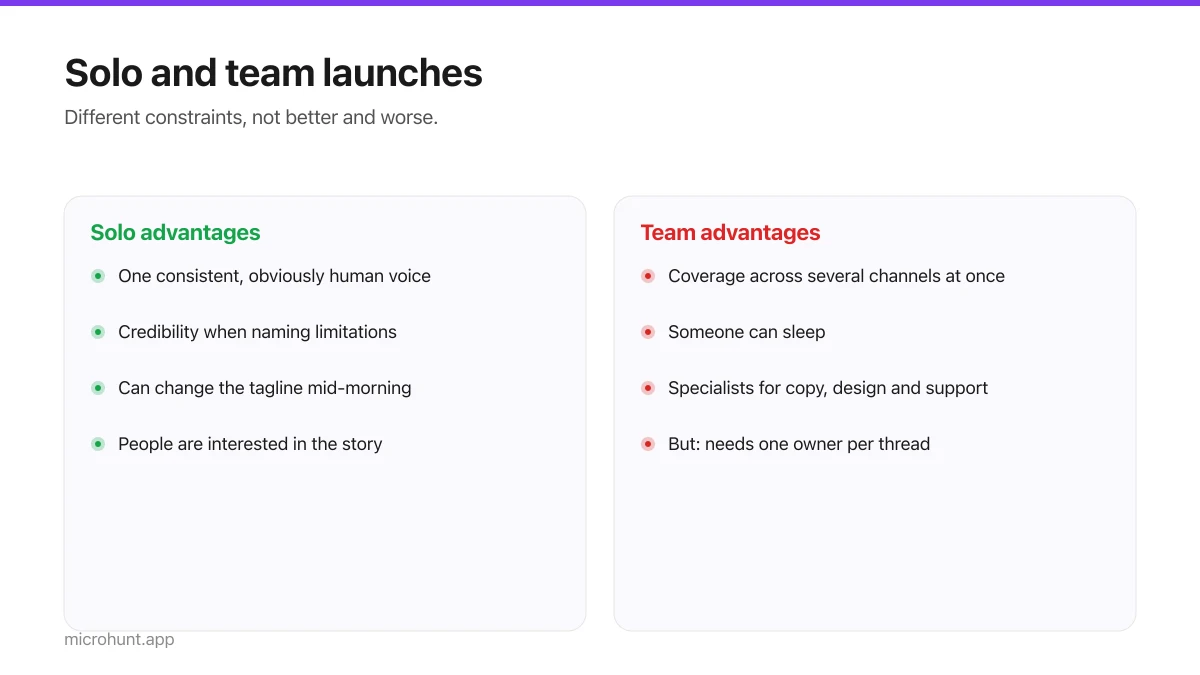
Launching Solo vs Launching With a Team
Solo makers have advantages that teams cannot buy, and constraints that need planning around. What actually differs on the day.
6 min read
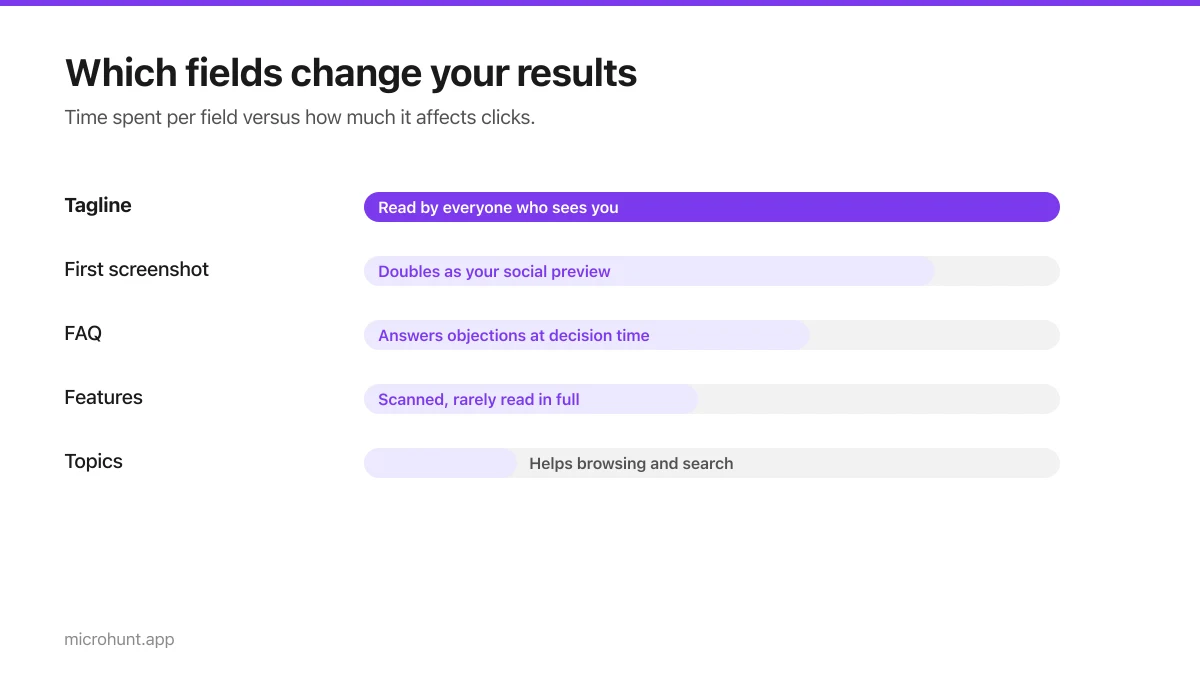
How to Submit a Product on Vuru (Step by Step)
A walk through the submission form, what each field does to your page, and the fields most people leave empty that they shouldn't.
7 min read
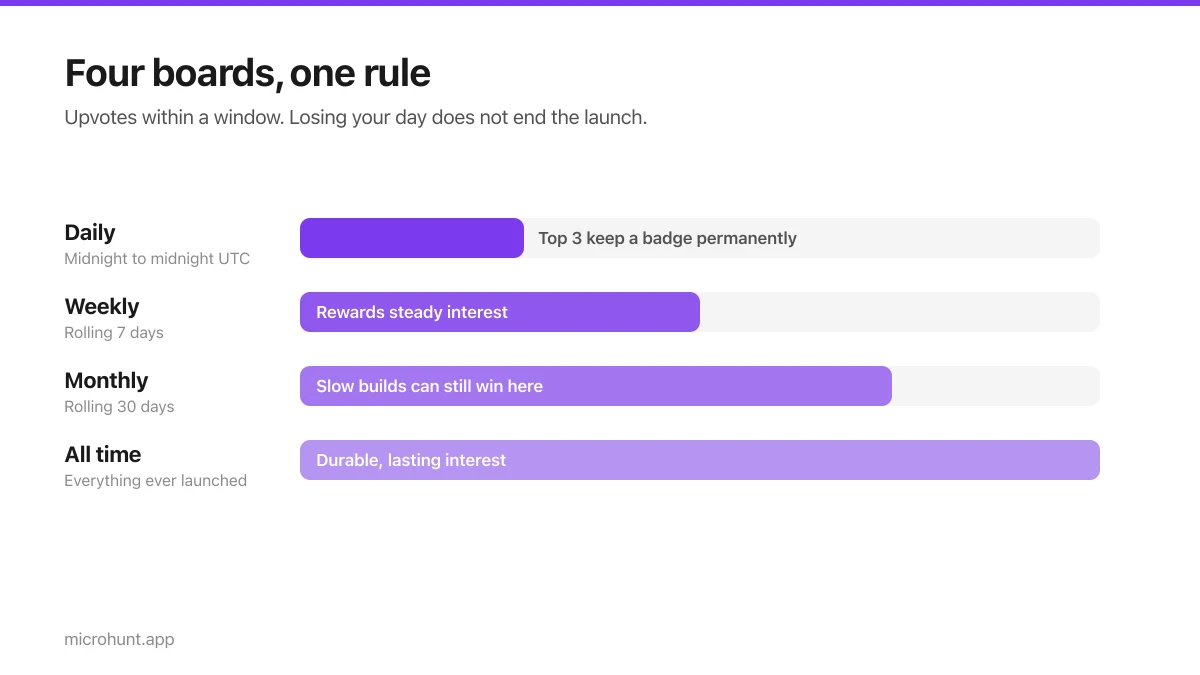
How Vuru Ranking Works (And How to Win a Badge)
Launch windows, upvotes, podium badges and what we do about vote manipulation — the whole ranking system explained plainly.
7 min read
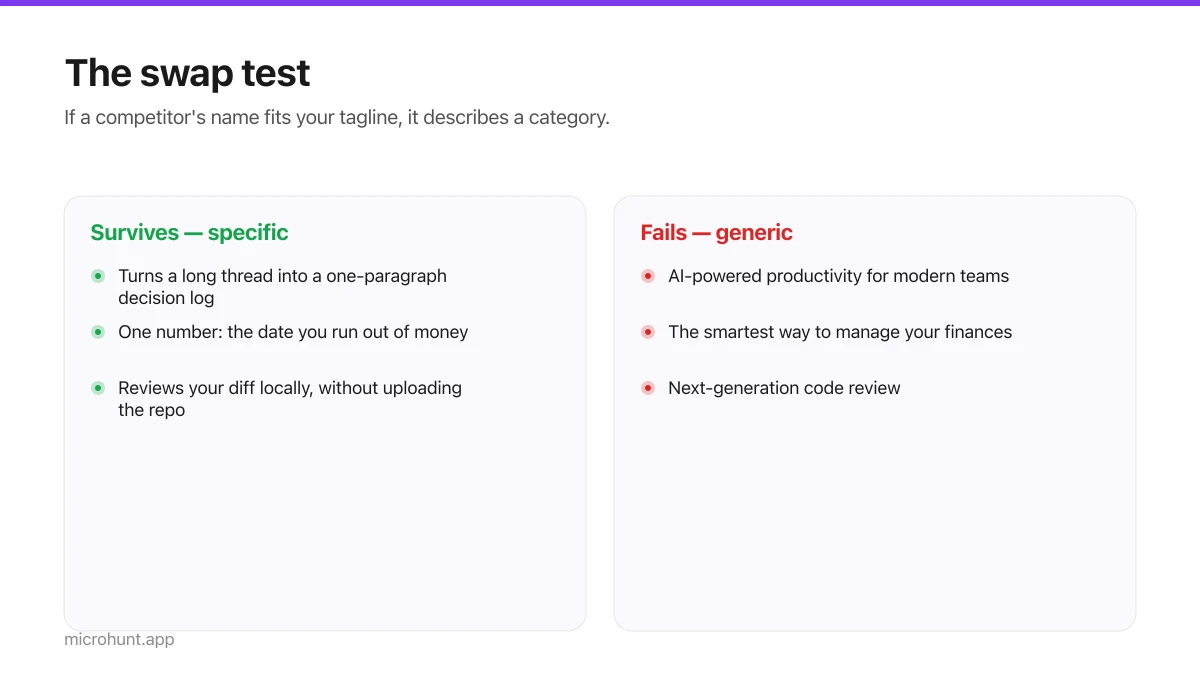
How to Write a Product Tagline That Actually Gets Clicked
The one line most people will ever read about your product, and a simple test for whether yours is doing any work.
7 min read
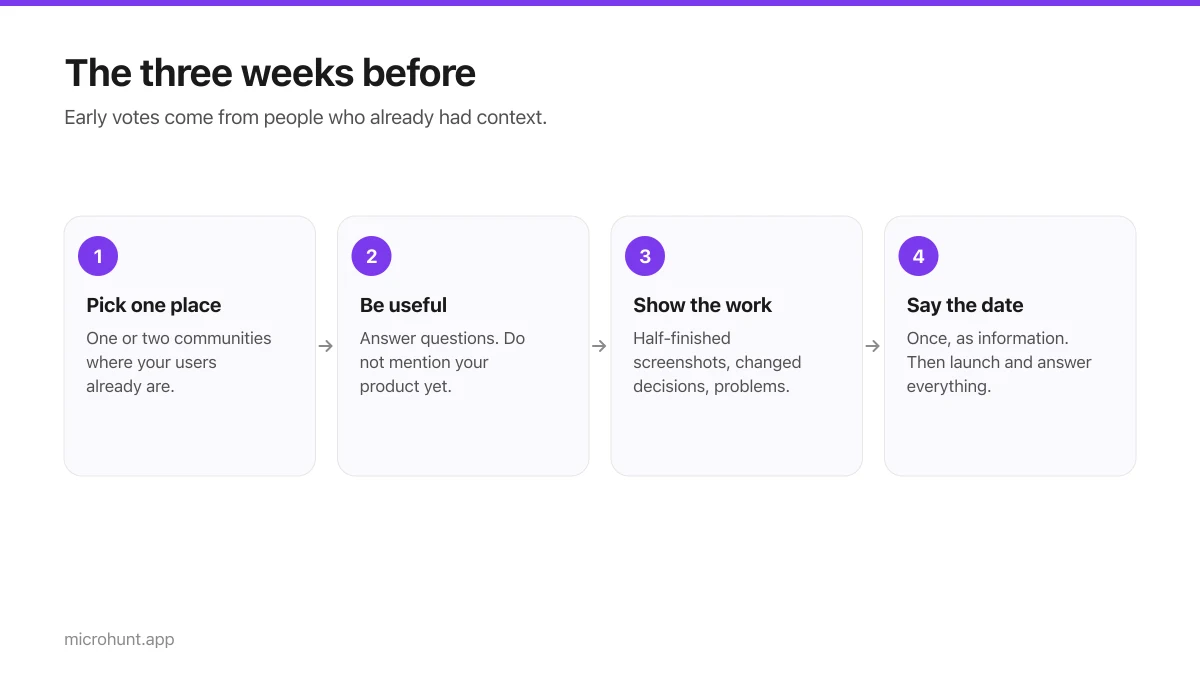
How to Get Your First Upvotes Without Begging
What actually generates early votes, why vote-for-vote groups do not work, and the approach that keeps paying off after launch day.
7 min read
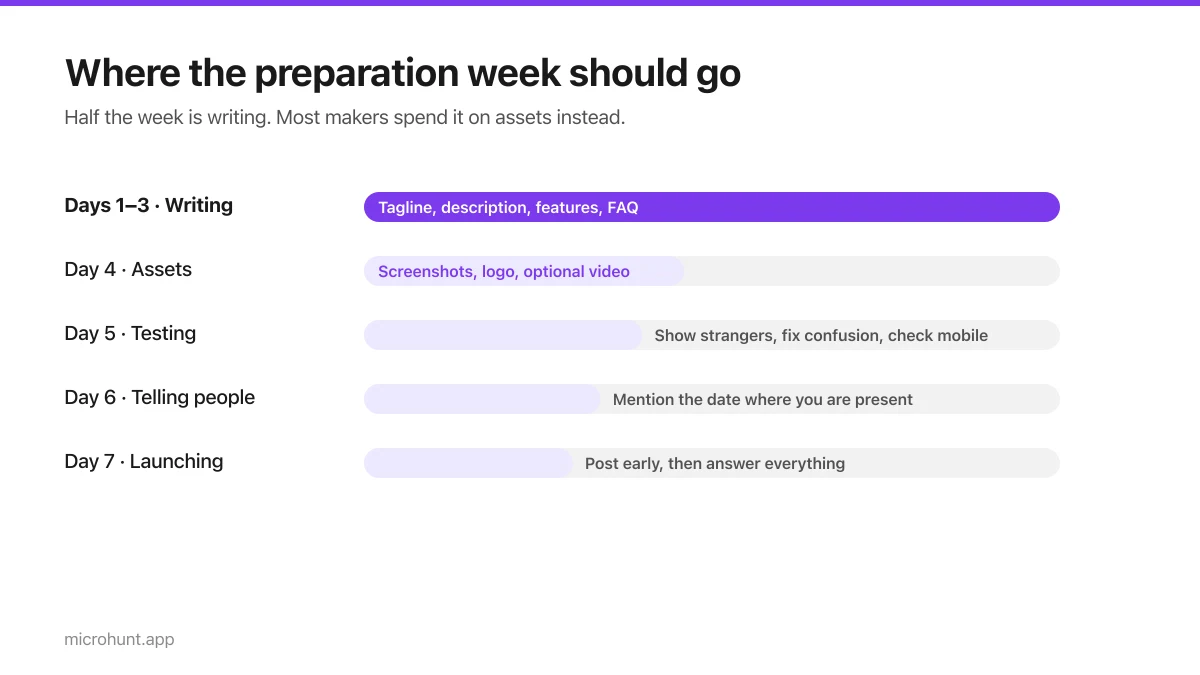
The Seven-Day Launch Checklist
A day-by-day plan for the week before you launch, weighted towards the things that actually change the outcome.
8 min read