Mental Health
Meditation, journalling and wellbeing support.
Nothing launched in this category yet.
Be the firstAbout Mental Health
Mental health tools cover mood and symptom tracking, guided exercises based on established therapeutic approaches, meditation and breathing, journalling, and services connecting people to professionals. It is a category that deserves more care in evaluation than most, because the cost of a poor tool is not wasted money.
Start with the boundary. Software in this subcategory is a support, and for many people a genuinely useful one. It is not treatment, it is not a clinician, and it is not appropriate as the primary response to a serious condition or a crisis. Tools that are clear about this are more trustworthy than ones implying otherwise. If you are in crisis, the right resource is a crisis line or emergency service in your country, not an application.
Within that boundary, some things have reasonable evidence. Structured programmes based on established therapeutic frameworks, delivered digitally, have been studied and show real if modest effects, particularly for mild to moderate anxiety and low mood, and particularly when there is some human contact involved rather than none. Guided programmes with a coach outperform fully self-directed ones fairly consistently.
Mood and symptom tracking is useful for a specific purpose: noticing patterns you cannot see day to day, and having something concrete to bring to a professional. It becomes counterproductive when the tracking itself turns into rumination, and that line is personal. If logging your mood is making you monitor it constantly, stop.
Meditation and breathing tools are low-risk and reasonably well supported for stress and attention. The main practical advice is that consistency beats duration, and that many people do better with a short guided practice than a long unguided one.
Privacy is more consequential here than almost anywhere else on this site. Mental health data is sensitive in the ordinary sense and in the regulatory one, and there have been real cases of applications in this space sharing more than users expected. Check what is collected, whether it is shared with advertisers or analytics providers, and whether processing happens on your device. Tools that work locally are meaningfully safer.
Be sceptical of anything claiming to diagnose. Assessment questionnaires are screening instruments, not diagnoses, and a score is a reason to talk to someone qualified.
From the blog
Reading on launching, ranking and mental health.
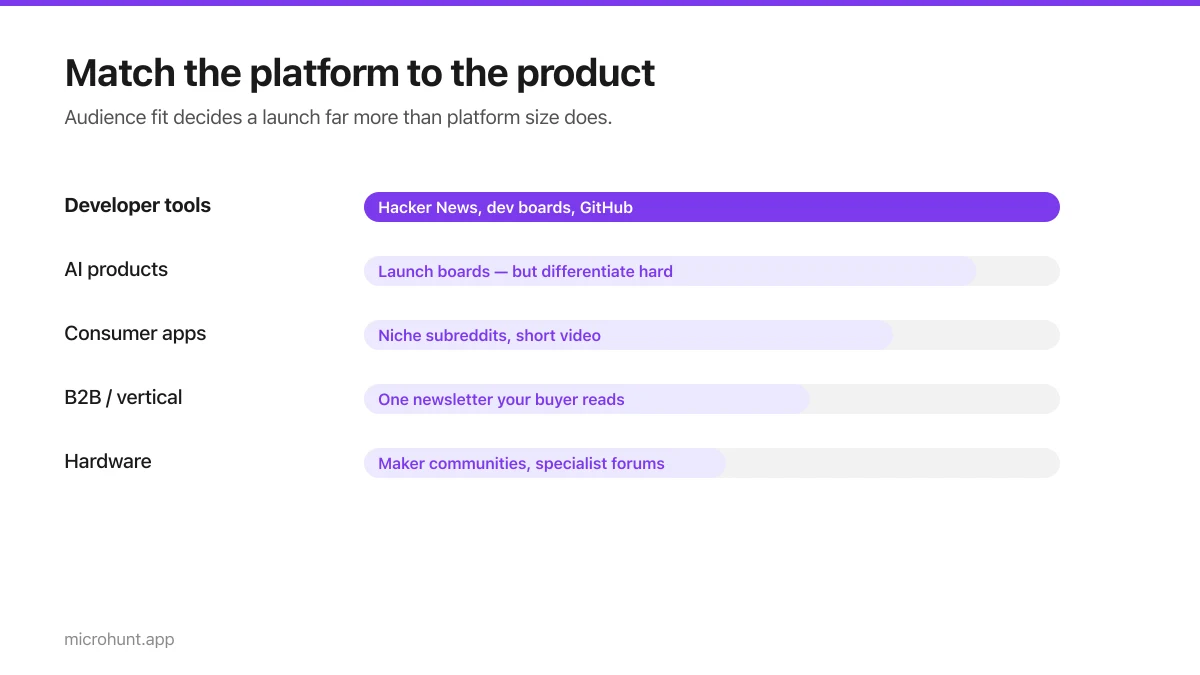
Best Product Hunt Alternatives for Launching in 2026
Where else to launch when Product Hunt is not the right fit — what each platform is actually good at, who shows up, and what it costs.
8 min read
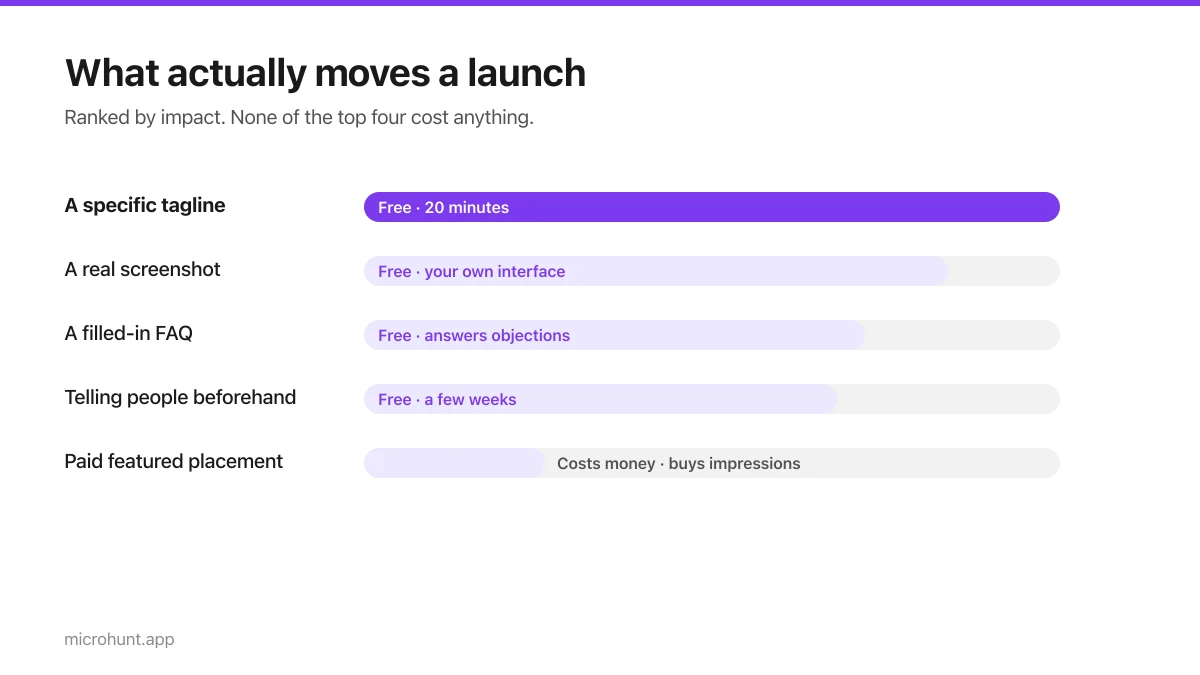
Free Launch Platforms for Indie Makers (No Budget Needed)
You do not need to pay to launch. Here are the places that are genuinely free, what each expects from you, and where paying is actually worth it.
7 min read
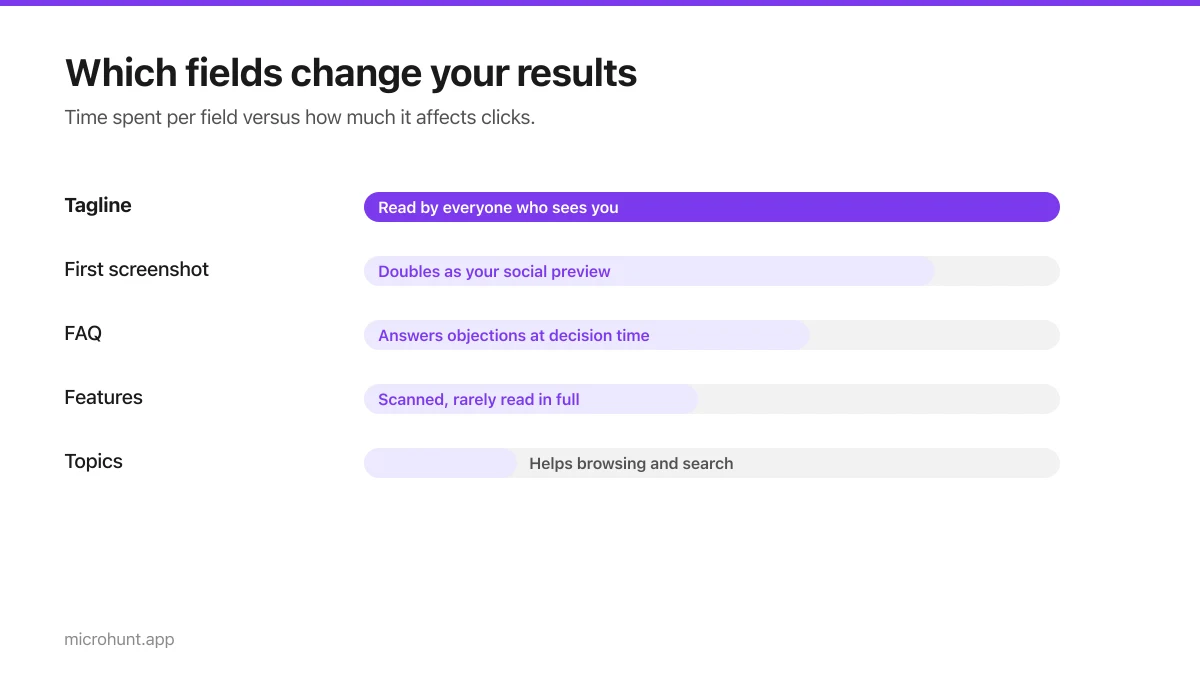
How to Submit a Product on Vuru (Step by Step)
A walk through the submission form, what each field does to your page, and the fields most people leave empty that they shouldn't.
7 min read
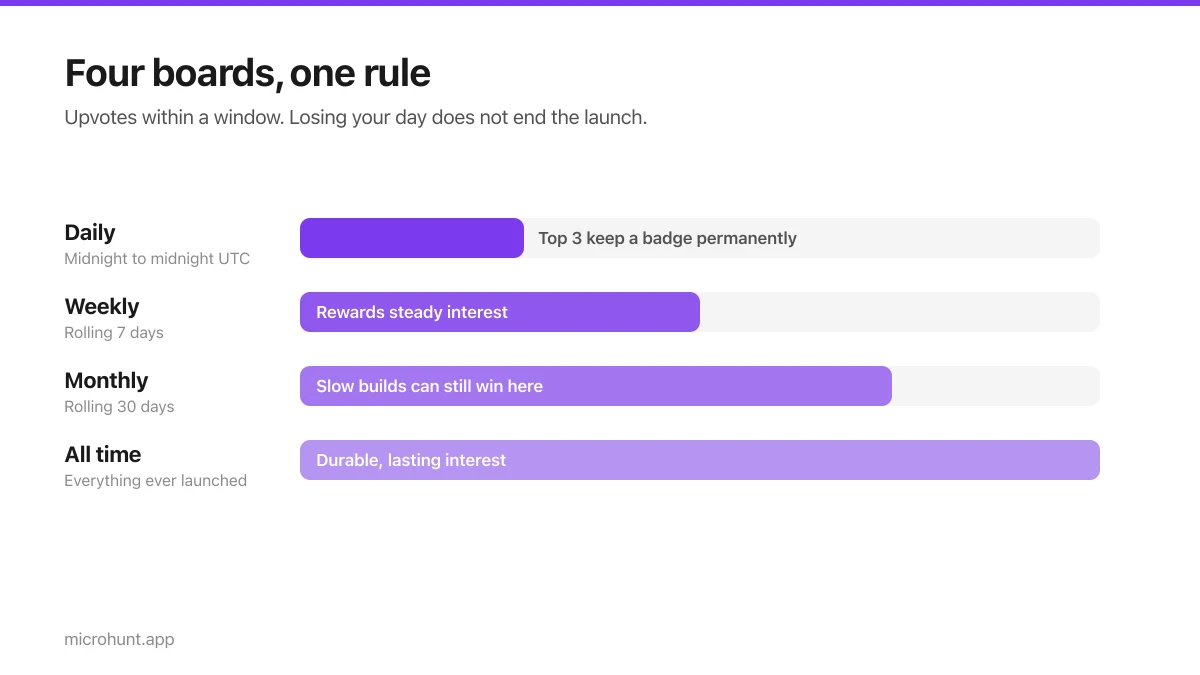
How Vuru Ranking Works (And How to Win a Badge)
Launch windows, upvotes, podium badges and what we do about vote manipulation — the whole ranking system explained plainly.
7 min read
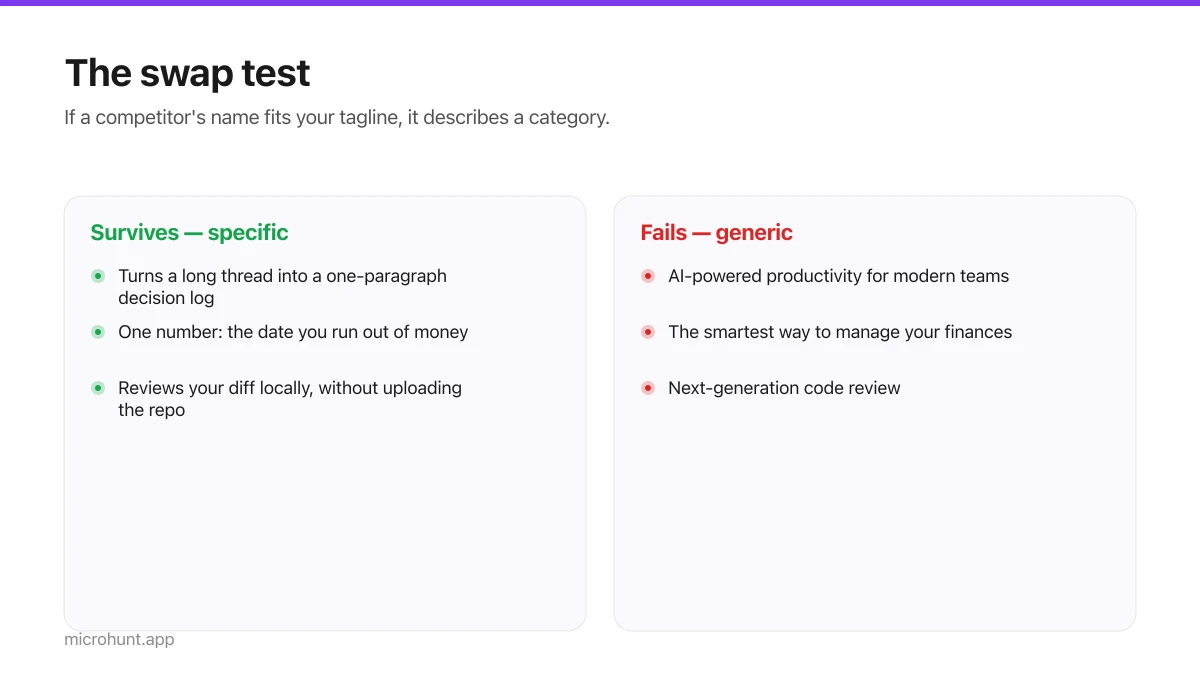
How to Write a Product Tagline That Actually Gets Clicked
The one line most people will ever read about your product, and a simple test for whether yours is doing any work.
7 min read
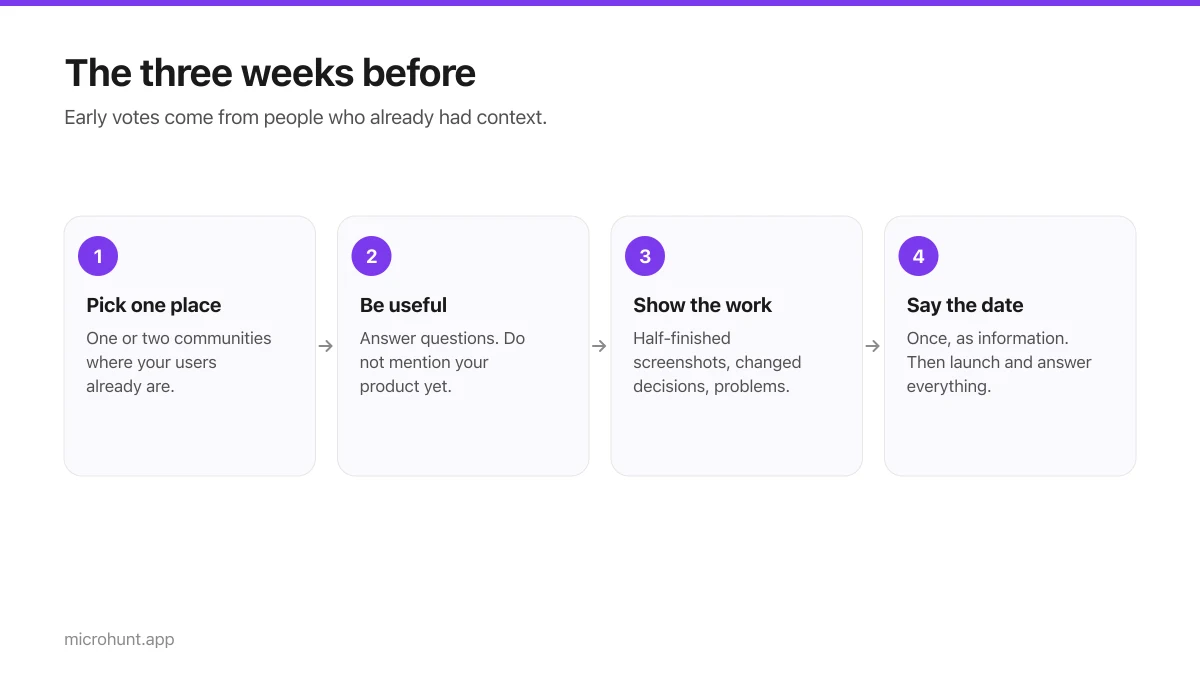
How to Get Your First Upvotes Without Begging
What actually generates early votes, why vote-for-vote groups do not work, and the approach that keeps paying off after launch day.
7 min read
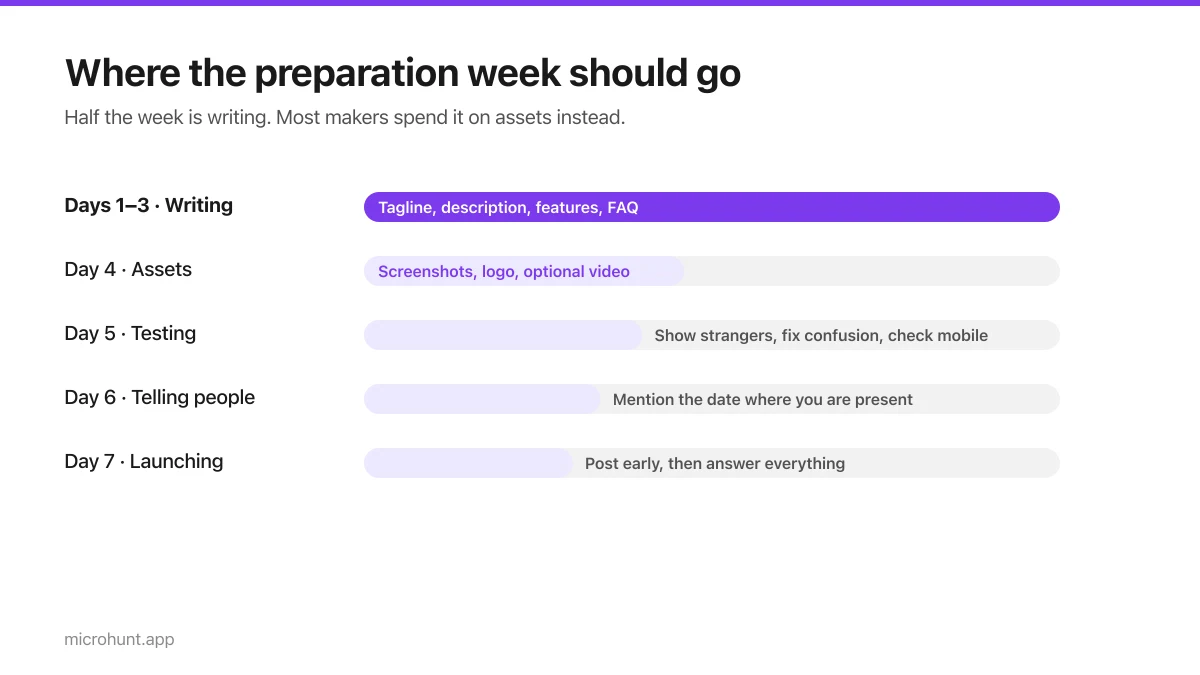
The Seven-Day Launch Checklist
A day-by-day plan for the week before you launch, weighted towards the things that actually change the outcome.
8 min read
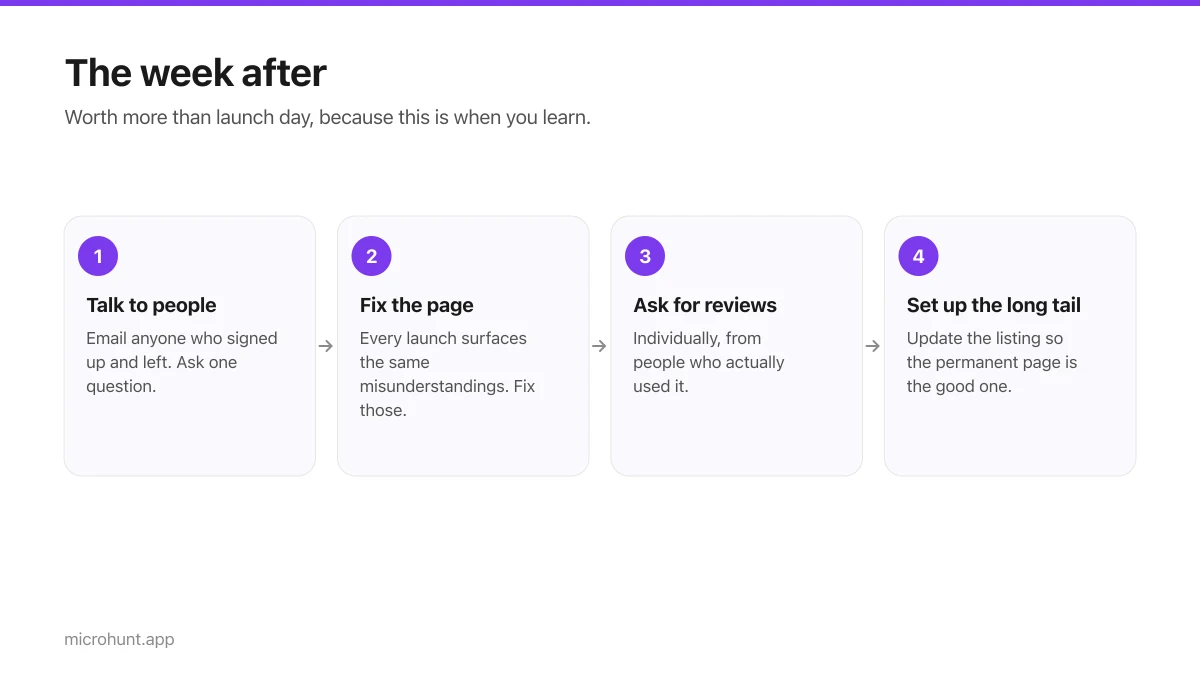
What to Do the Week After Launch Day
The traffic spike is over. Here is how to turn a day of attention into something that lasts longer than the graph.
7 min read