Pipelines & ETL
Ingestion, transformation and scheduling.
Nothing launched in this category yet.
Be the firstAbout Pipelines & ETL
Data pipeline tooling moves data from where it is produced to where it is analysed, and transforms it on the way. The launches here cover ingestion connectors, transformation frameworks, orchestration, and the streaming tools for when batch is not fast enough.
The most consequential architectural decision is where transformation happens. Transforming before loading was the historical default when storage and compute were expensive; loading raw and transforming inside the warehouse is now standard, and it is better for a specific reason: the raw data is preserved, so when you discover a transformation was wrong you can fix it and reprocess rather than having permanently lost the original. Any pipeline design that discards the source is one bad assumption away from an irrecoverable problem.
Connectors are the least interesting and most valuable part. A managed connector to a common source handles pagination, rate limits, schema changes, incremental sync and the specific API's peculiarities — all of which are individually trivial and collectively a maintenance burden. Building your own is reasonable for one source and unwise for twenty.
Schema drift is where pipelines break in production, because upstream systems change without telling you. A source adds a column, changes a type, or starts sending nulls in a field that never had them. Tools that detect drift and either adapt or fail loudly are far better than ones that silently coerce, because coercion produces wrong numbers rather than an error, and wrong numbers are found much later.
Orchestration is about dependencies and recovery. What runs after what, what happens when a step fails halfway, and can you rerun a single day without reprocessing a year. Backfill capability is the feature you will need urgently and unexpectedly, and evaluating it during a calm week is much better than during an incident.
Idempotency deserves explicit attention: a pipeline step that produces different results when run twice will eventually be run twice, and the duplicate rows will surface as a metric that inexplicably doubled.
Streaming is genuinely necessary for a narrow set of use cases — fraud detection, operational alerting, live personalisation — and substantially more complex to operate. If hourly is acceptable, batch is the right answer.
From the blog
Reading on launching, ranking and pipelines & etl.
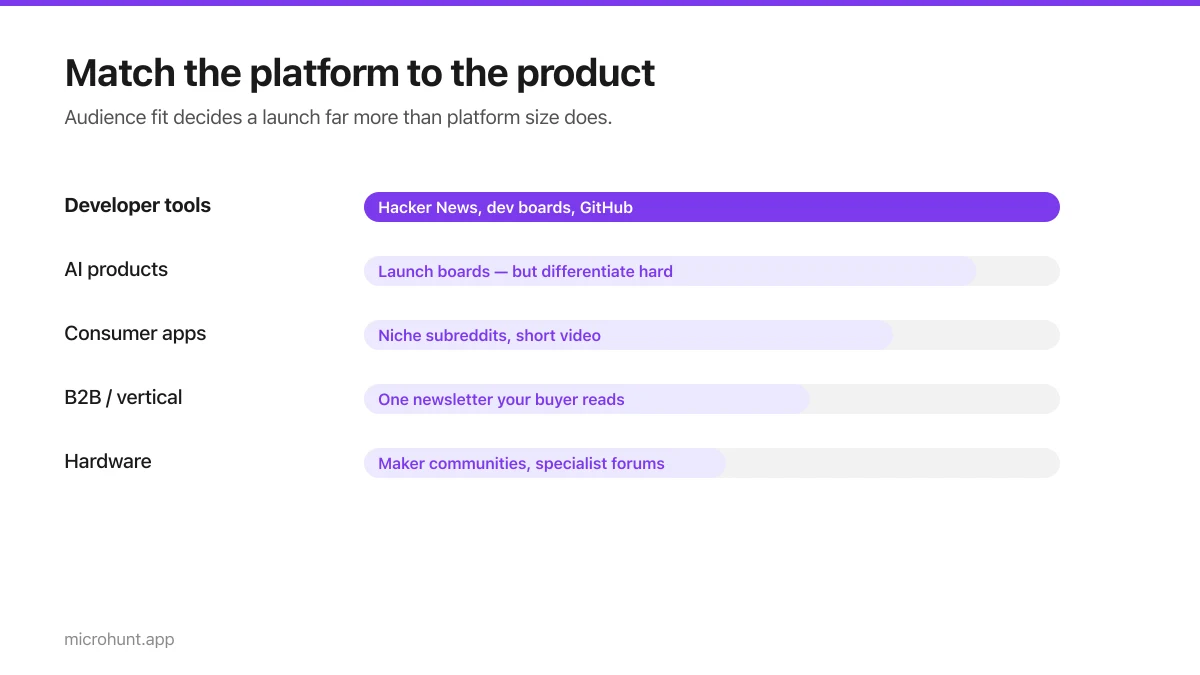
Best Product Hunt Alternatives for Launching in 2026
Where else to launch when Product Hunt is not the right fit — what each platform is actually good at, who shows up, and what it costs.
8 min read
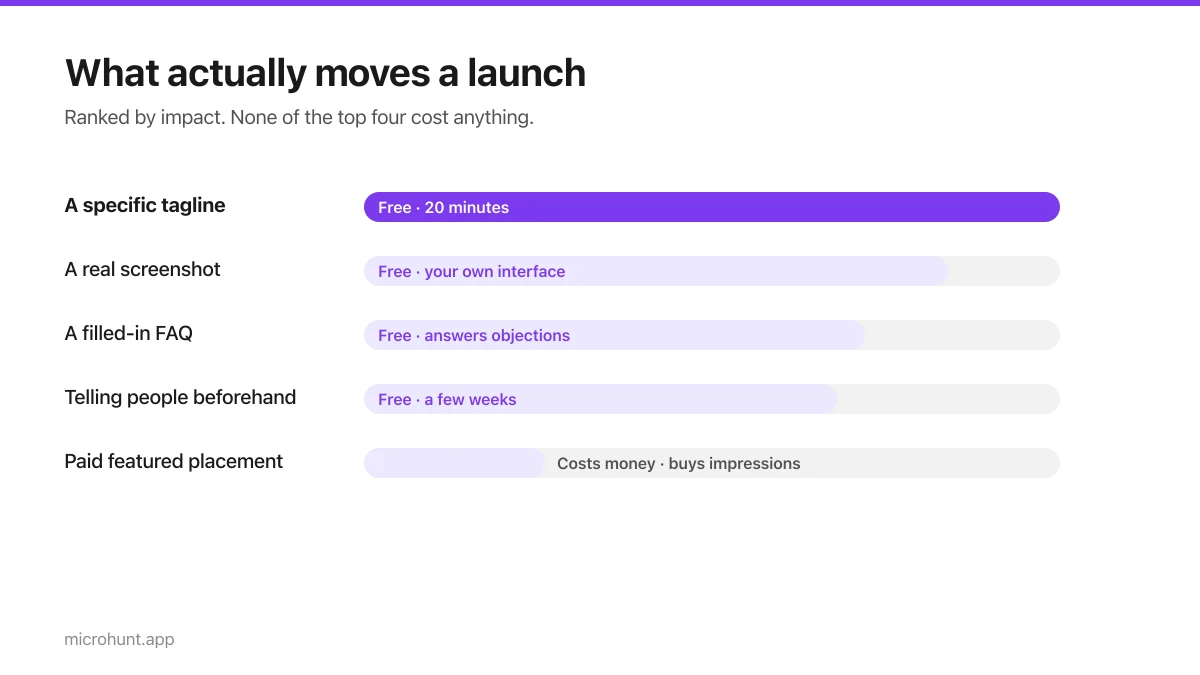
Free Launch Platforms for Indie Makers (No Budget Needed)
You do not need to pay to launch. Here are the places that are genuinely free, what each expects from you, and where paying is actually worth it.
7 min read
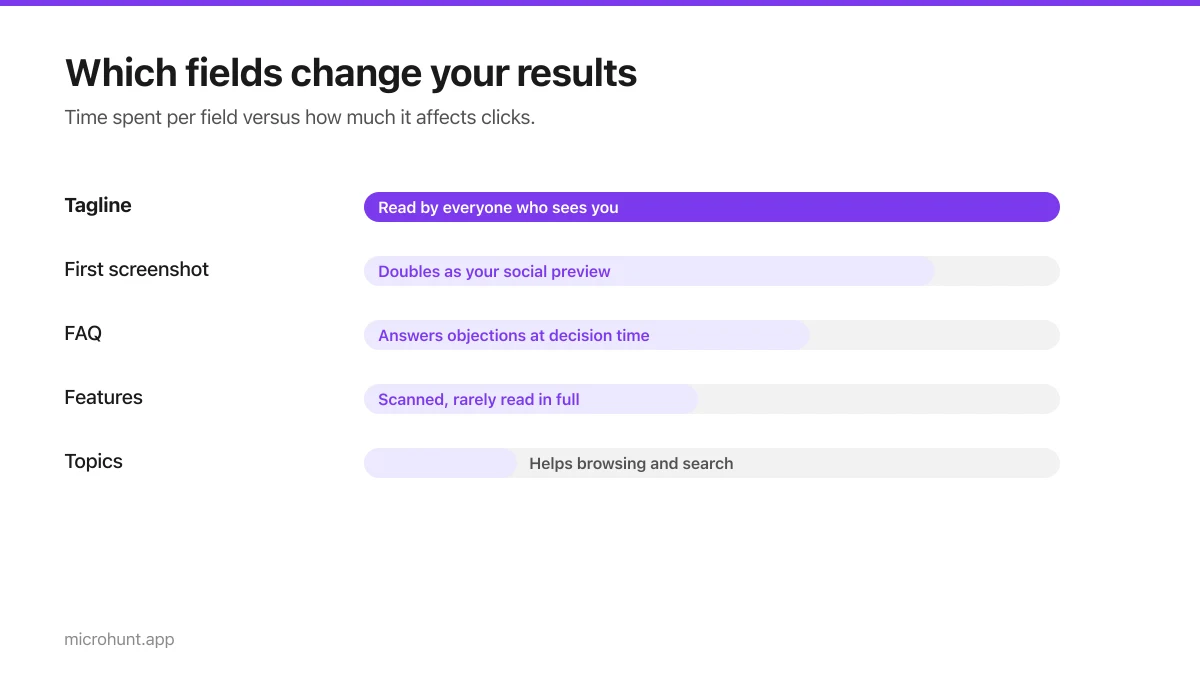
How to Submit a Product on Vuru (Step by Step)
A walk through the submission form, what each field does to your page, and the fields most people leave empty that they shouldn't.
7 min read
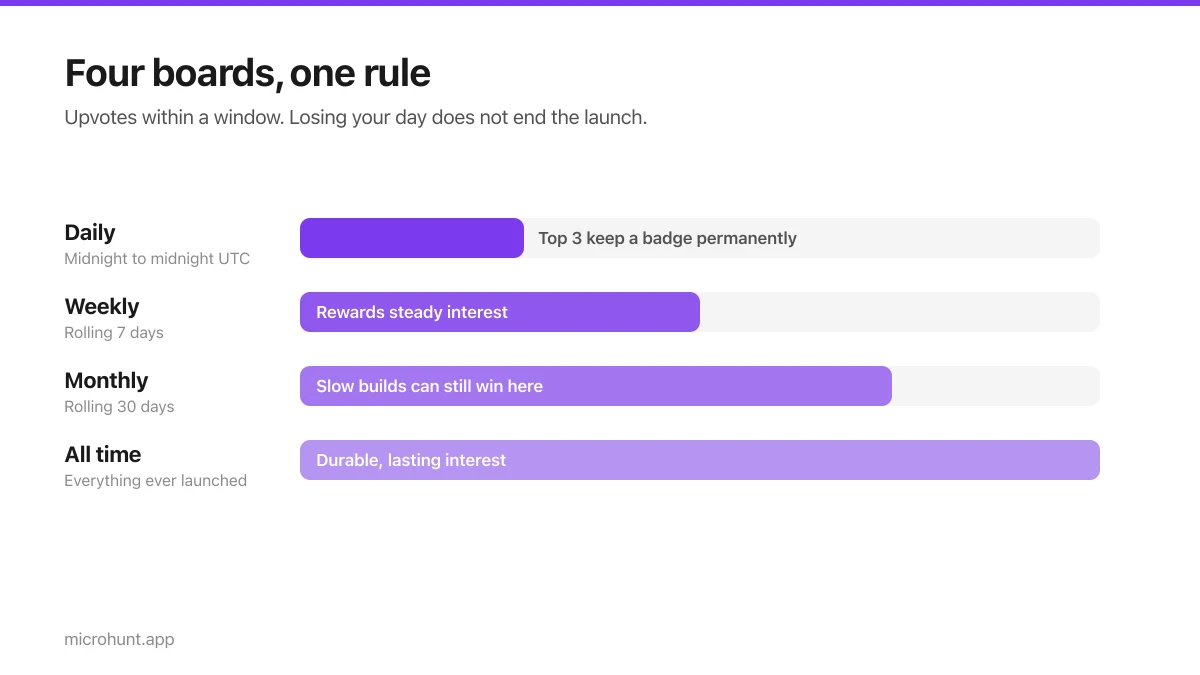
How Vuru Ranking Works (And How to Win a Badge)
Launch windows, upvotes, podium badges and what we do about vote manipulation — the whole ranking system explained plainly.
7 min read
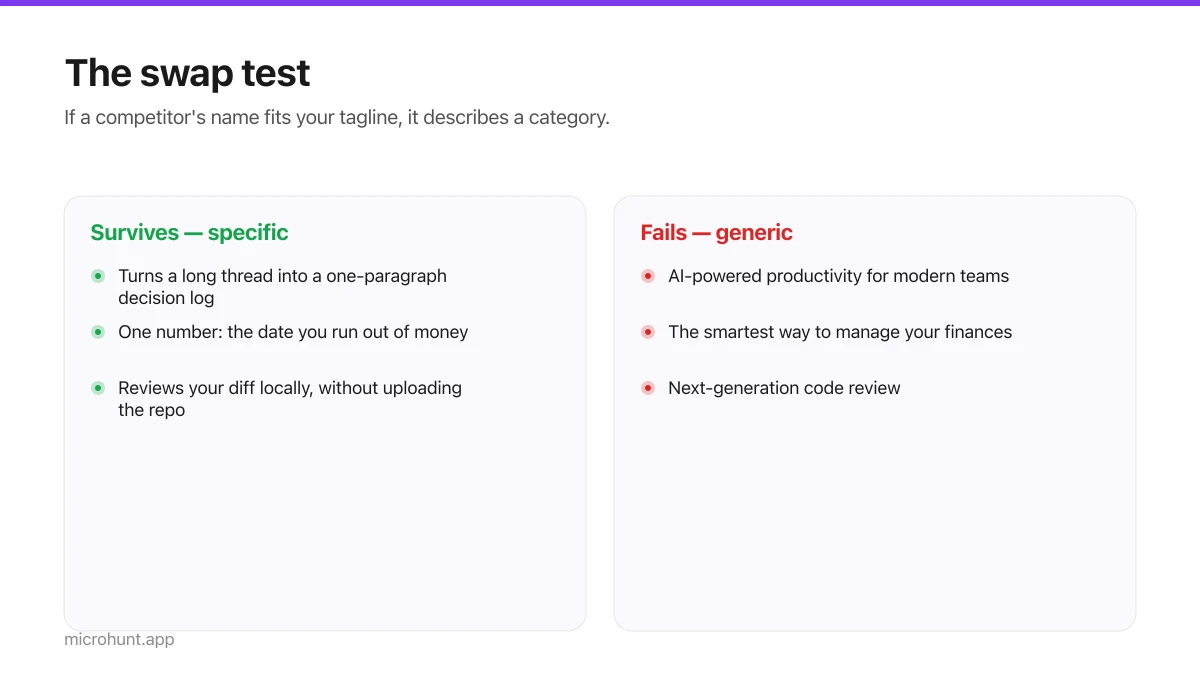
How to Write a Product Tagline That Actually Gets Clicked
The one line most people will ever read about your product, and a simple test for whether yours is doing any work.
7 min read
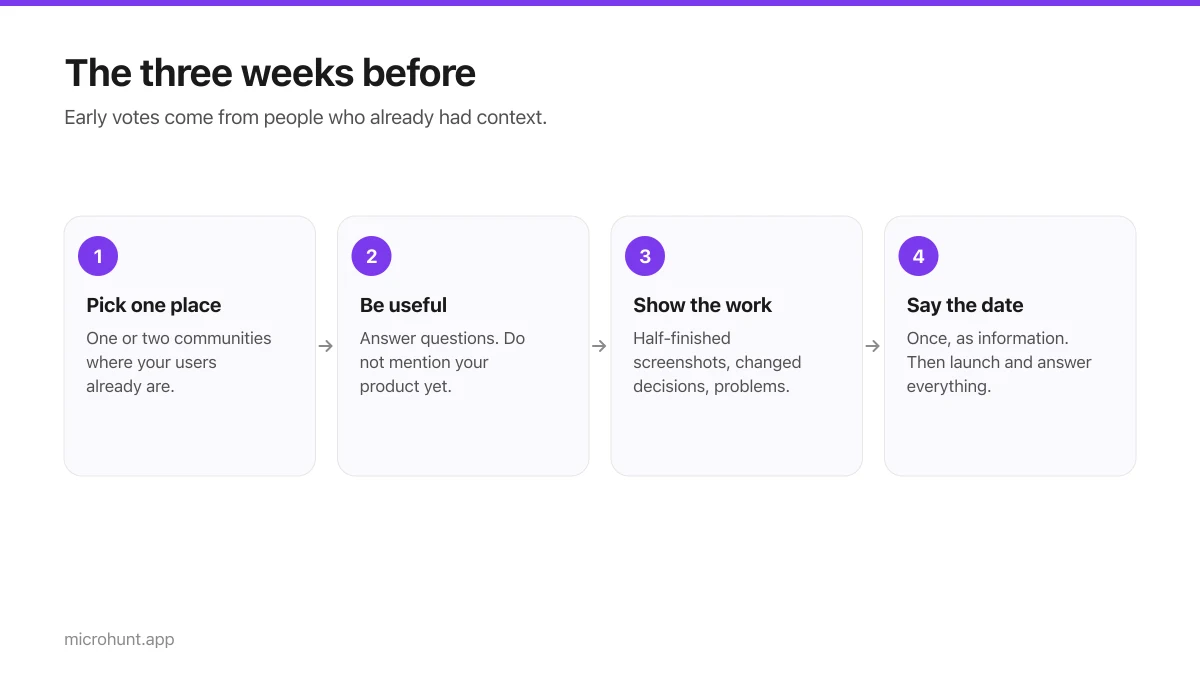
How to Get Your First Upvotes Without Begging
What actually generates early votes, why vote-for-vote groups do not work, and the approach that keeps paying off after launch day.
7 min read
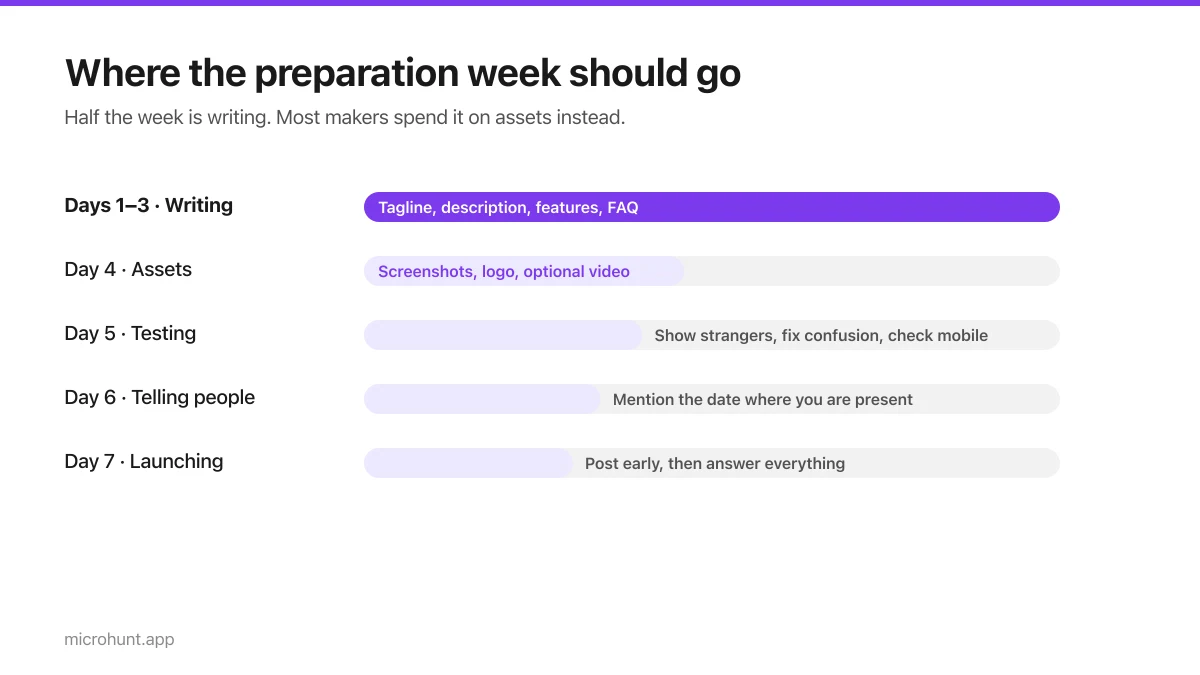
The Seven-Day Launch Checklist
A day-by-day plan for the week before you launch, weighted towards the things that actually change the outcome.
8 min read
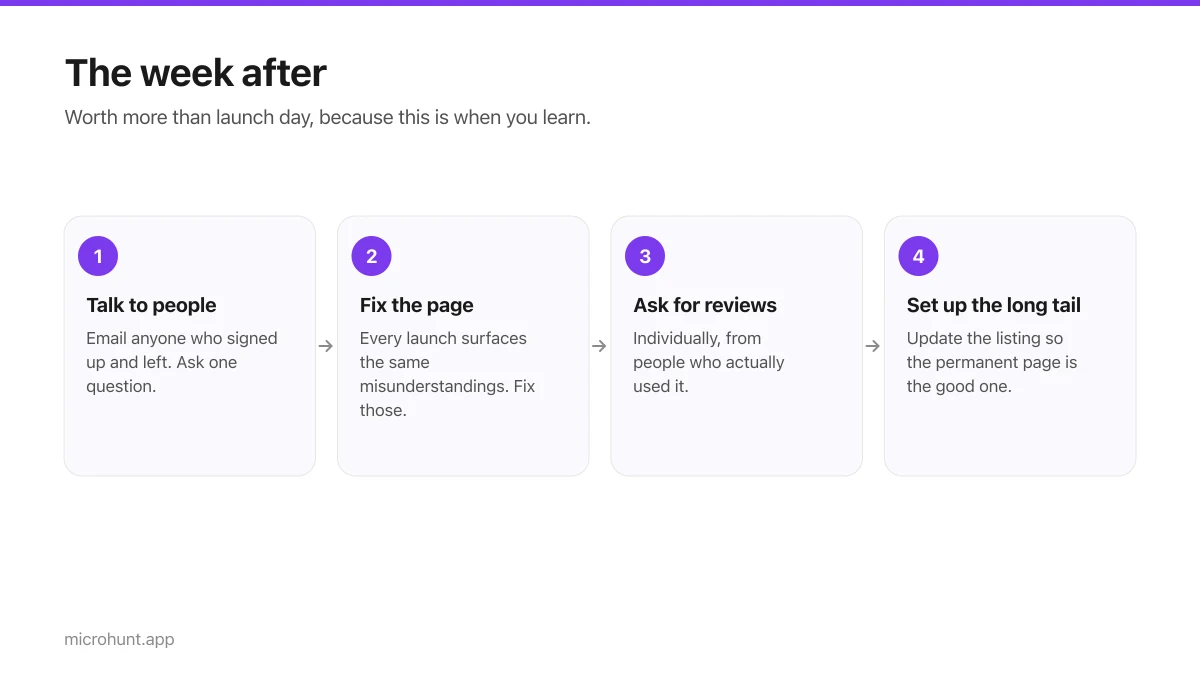
What to Do the Week After Launch Day
The traffic spike is over. Here is how to turn a day of attention into something that lasts longer than the graph.
7 min read