Sleep
Tracking, insight and wind-down tools.
Nothing launched in this category yet.
Be the firstAbout Sleep
Sleep tools cover tracking, environment, wind-down routines, sound, and the behavioural programmes aimed at insomnia. It is a subcategory where the most effective intervention is not a gadget, which is worth saying before browsing the gadgets.
On tracking, calibrate expectations. Consumer devices infer sleep stages from movement and heart rate, and while total sleep time and timing are reasonably accurate, stage classification is substantially less so when compared against clinical measurement. A chart telling you precisely how much deep sleep you got is a confident estimate rather than a measurement. Useful for trends over weeks; not useful for judging a single night.
There is a documented phenomenon of tracking making sleep worse — anxiety about the score creating exactly the arousal that prevents sleeping, then a poor score confirming the worry. If you find yourself checking the app first thing and feeling worse for it, the tool is the problem. Taking a break from tracking is a legitimate intervention.
What has strong evidence is behavioural: consistent wake time including weekends, limiting time in bed to roughly the time asleep, getting up when you cannot sleep rather than lying there, morning light exposure, and keeping the bed associated with sleep alone. The structured programmes built on this — digital versions of the standard behavioural treatment for insomnia — have genuinely good evidence, better than most consumer health software, and are recommended as a first-line approach ahead of medication in many clinical guidelines. If insomnia is the actual problem, this is the part of the subcategory to look at.
Environment tools are simple and effective. Dark, cool and quiet is not complicated advice, and blackout, white noise and temperature management deliver reliably. Sound tools work best when they are unremarkable; anything you attend to is keeping you awake.
Screen and light tools are more contested than the marketing implies. Evening light does affect circadian timing, and the effect of blue-light filtering software specifically is smaller than commonly claimed. Dimming everything and stopping earlier does more than tinting the display.
Persistent sleep problems, loud snoring with pauses, or severe daytime sleepiness warrant a doctor rather than an app. Sleep apnoea is common, consequential and treatable, and no consumer tracker diagnoses it.
From the blog
Reading on launching, ranking and sleep.
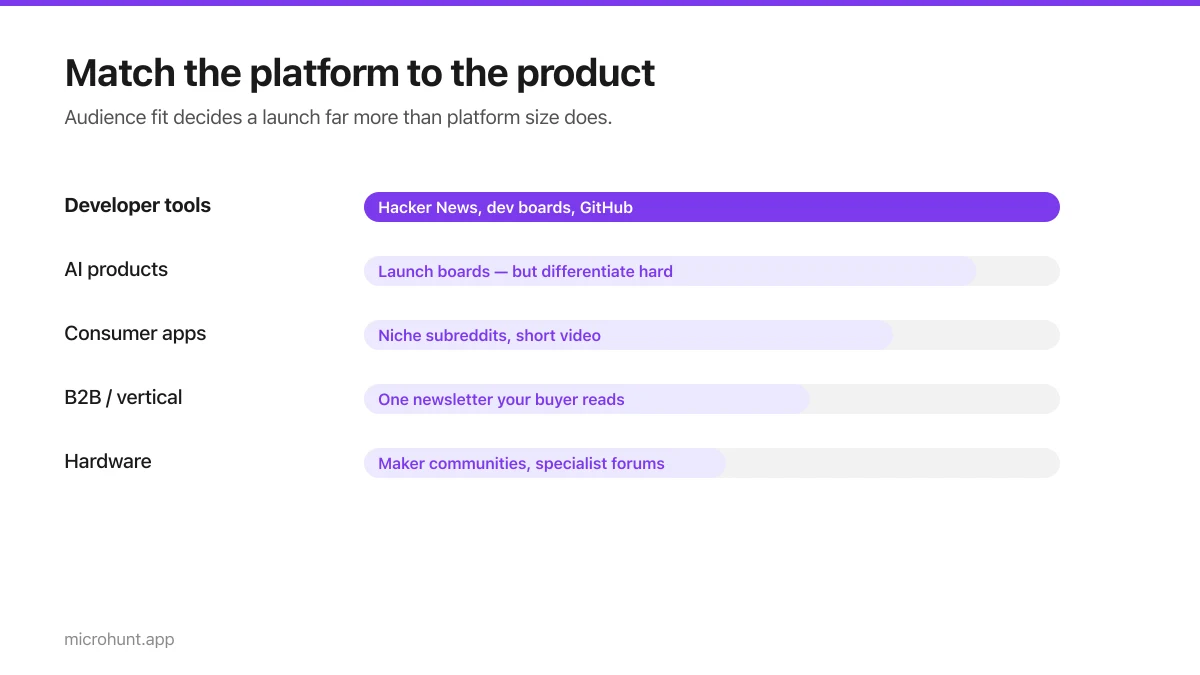
Best Product Hunt Alternatives for Launching in 2026
Where else to launch when Product Hunt is not the right fit — what each platform is actually good at, who shows up, and what it costs.
8 min read
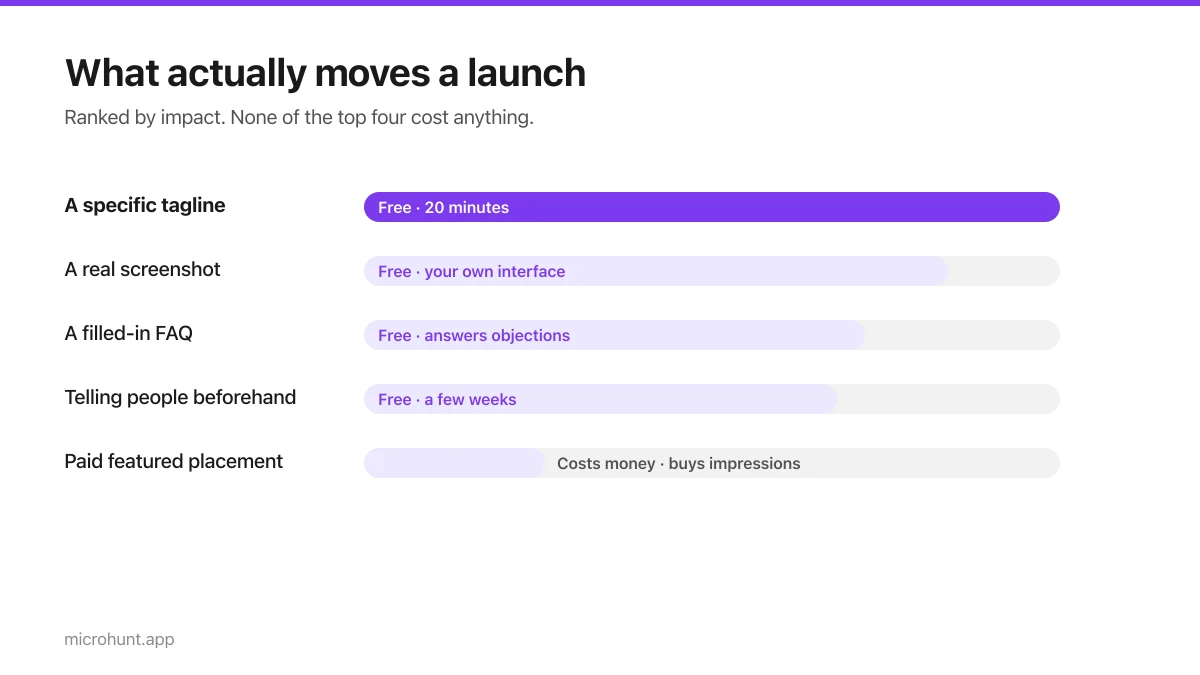
Free Launch Platforms for Indie Makers (No Budget Needed)
You do not need to pay to launch. Here are the places that are genuinely free, what each expects from you, and where paying is actually worth it.
7 min read
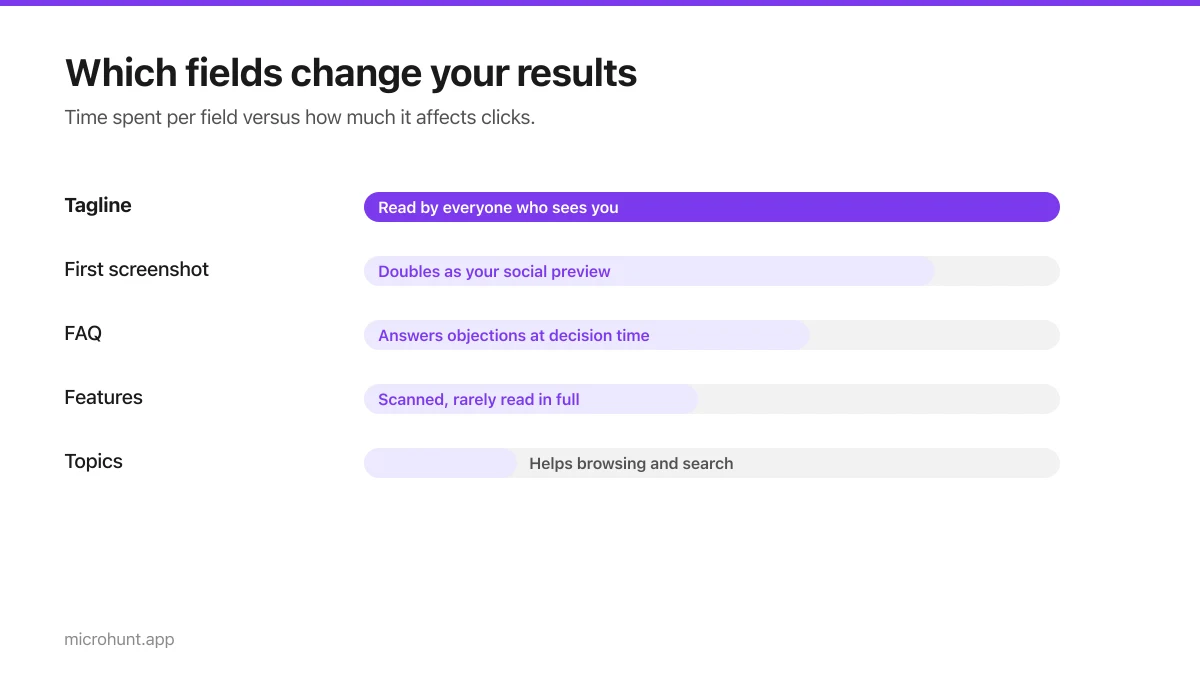
How to Submit a Product on Vuru (Step by Step)
A walk through the submission form, what each field does to your page, and the fields most people leave empty that they shouldn't.
7 min read
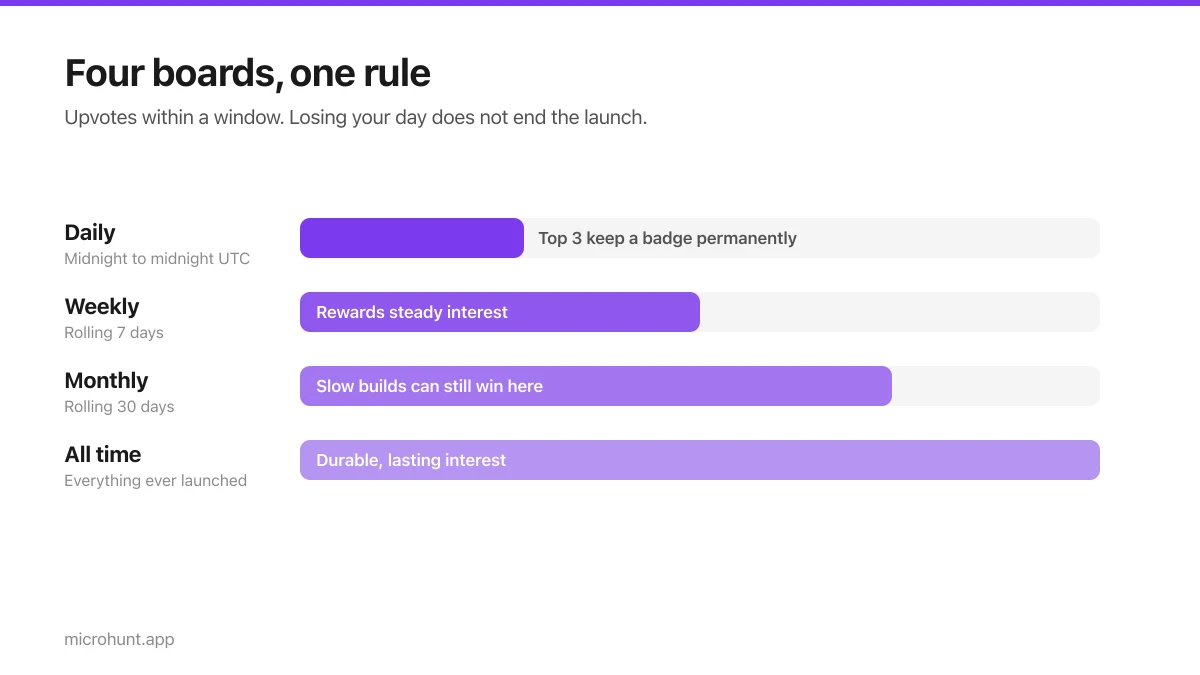
How Vuru Ranking Works (And How to Win a Badge)
Launch windows, upvotes, podium badges and what we do about vote manipulation — the whole ranking system explained plainly.
7 min read
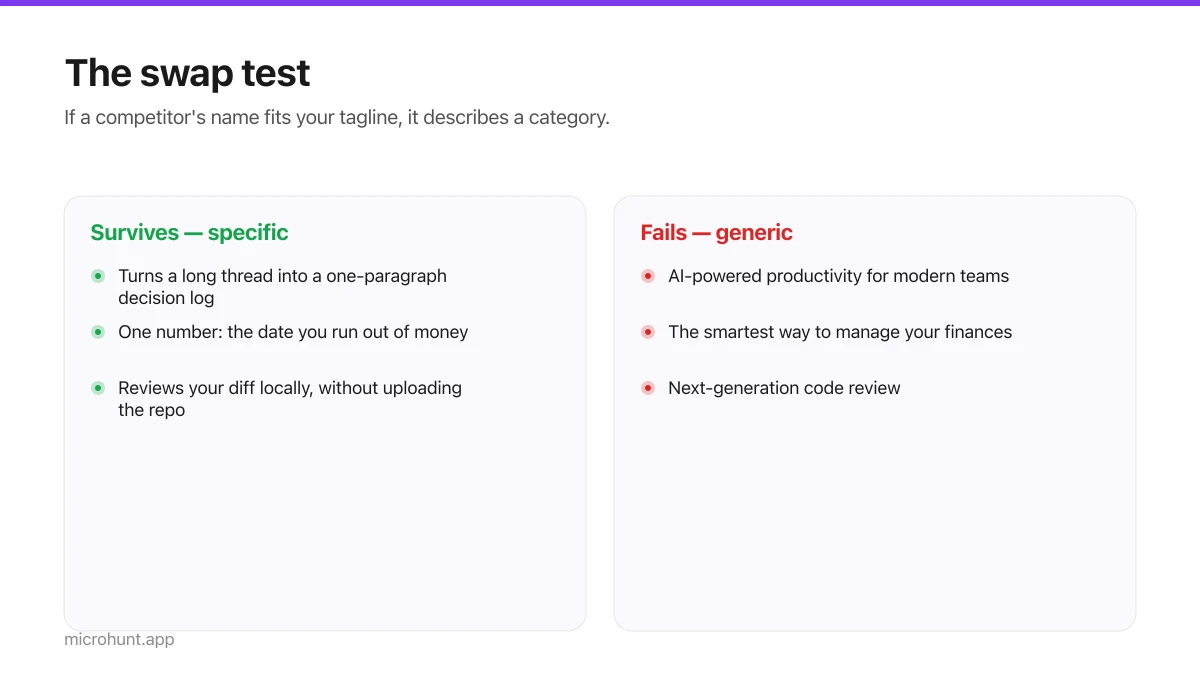
How to Write a Product Tagline That Actually Gets Clicked
The one line most people will ever read about your product, and a simple test for whether yours is doing any work.
7 min read
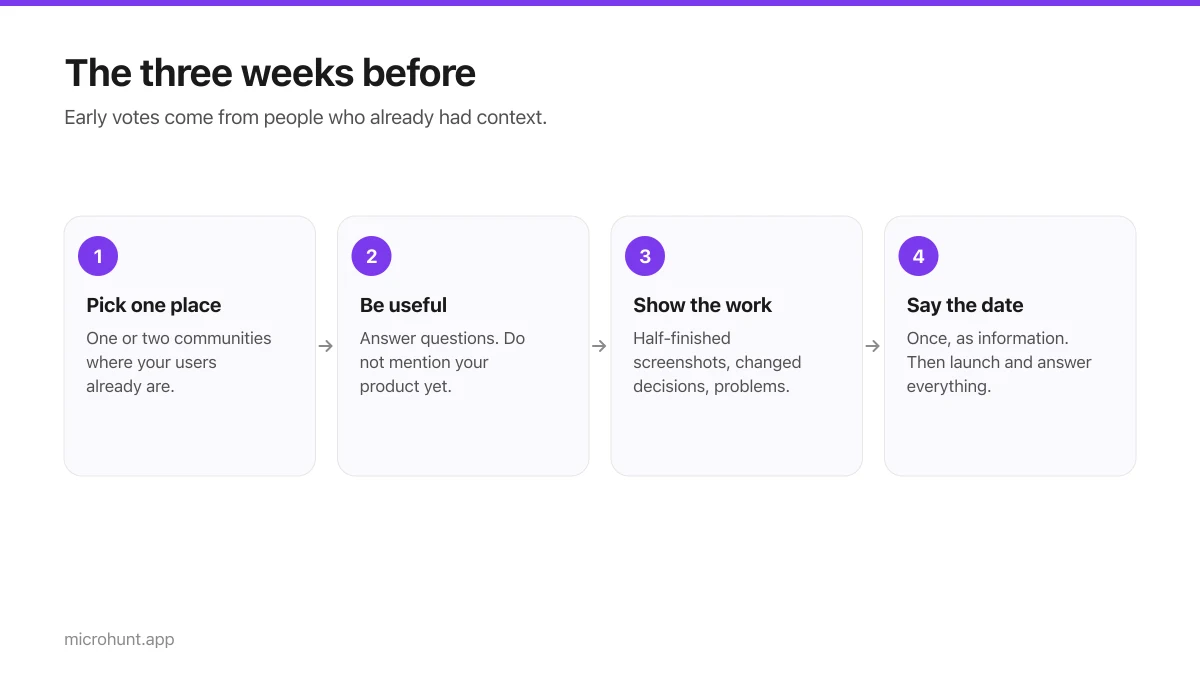
How to Get Your First Upvotes Without Begging
What actually generates early votes, why vote-for-vote groups do not work, and the approach that keeps paying off after launch day.
7 min read
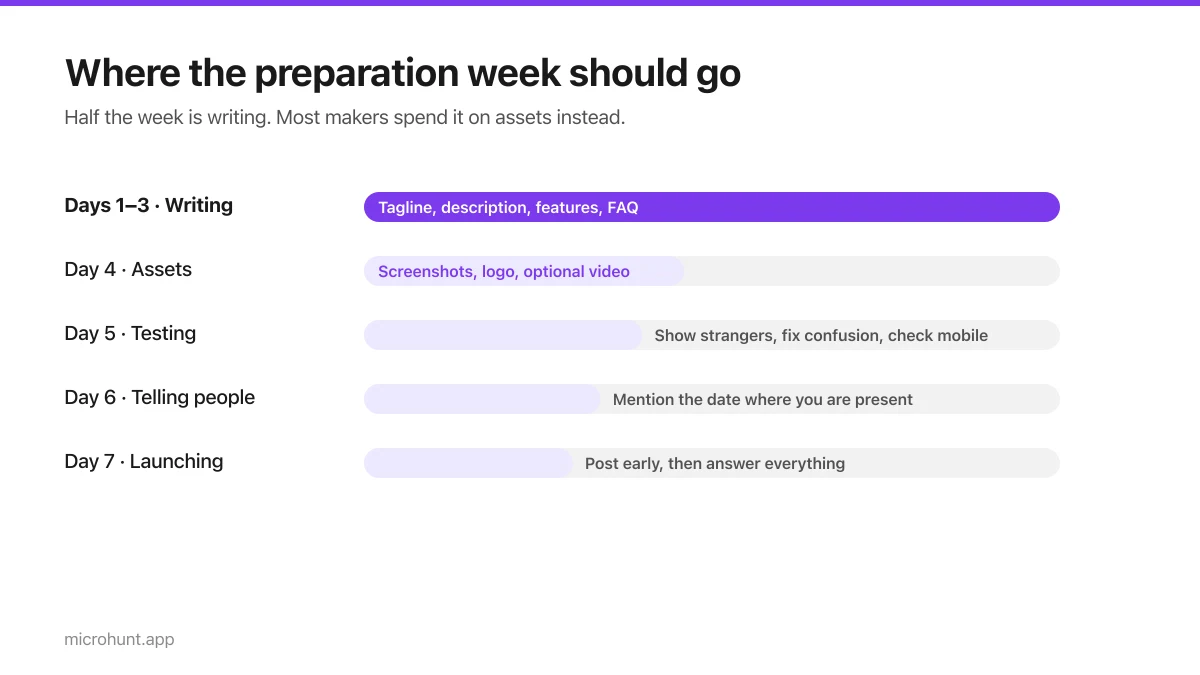
The Seven-Day Launch Checklist
A day-by-day plan for the week before you launch, weighted towards the things that actually change the outcome.
8 min read
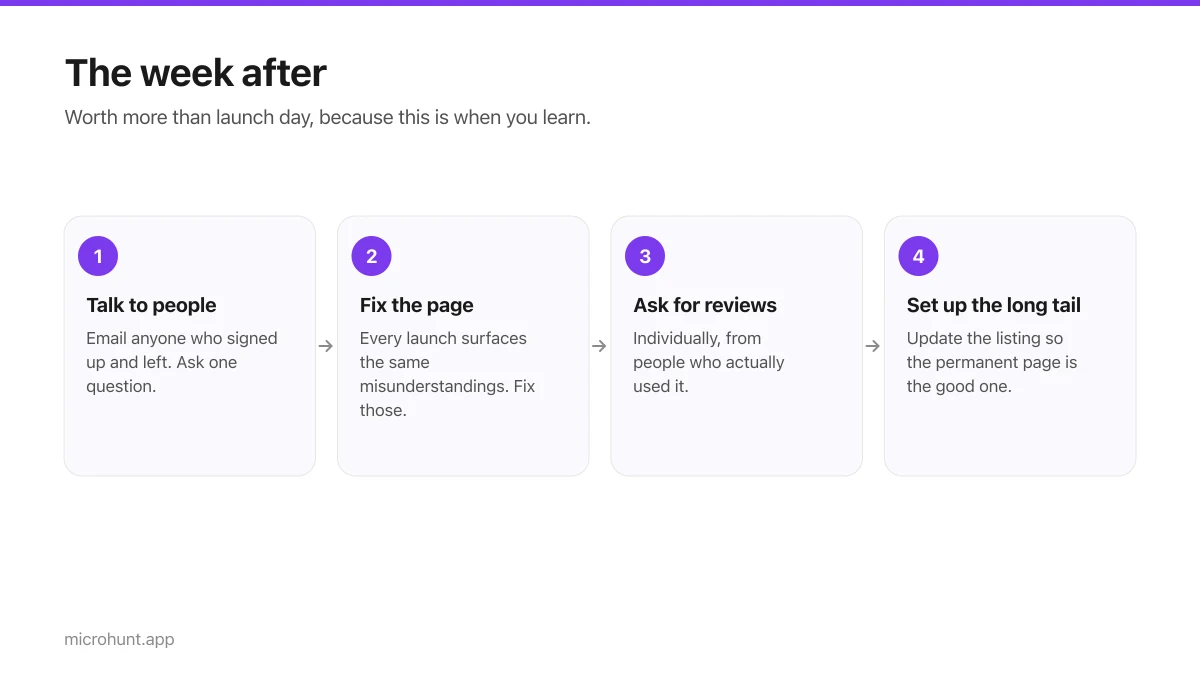
What to Do the Week After Launch Day
The traffic spike is over. Here is how to turn a day of attention into something that lasts longer than the graph.
7 min read