Business & Operations
Legal, admin, HR and the unglamorous machinery of running something.
Nothing launched in this category yet.
Be the firstAbout Business & Operations
Every business accumulates a layer of work that nobody started the business to do: contracts, incorporation, insurance, compliance, expense approvals, onboarding, offboarding, and the endless small administrative tasks that expand to fill whoever has least resistance to them. The tools here exist to shrink that layer.
What is collected in this category spans company formation and registered agents, contract templates and e-signature, HR and people operations, applicant tracking, equity and cap table management, compliance frameworks, internal knowledge bases, and the operational glue that holds a small team together when nobody has "operations" in their job title.
The pattern that separates useful tools from expensive ones is whether they reduce decisions or merely relocate them. A contract tool that gives you a sensible default agreement and explains the three clauses you actually need to think about has removed work. A contract tool that presents forty configurable options has moved a lawyer's job onto your desk without the training. The same test applies across the category.
Compliance deserves particular attention because it is where spending gets least examined. Certification frameworks have become a routine requirement for selling to larger companies, and an industry has grown around automating the evidence collection. The genuine value is real — continuous monitoring beats a scramble before an audit — but the pricing often assumes a company much larger than the one buying, and the scope creep from one framework to four is where budgets quietly disappear. Buy for the certification a customer has actually asked for, not for the set you might eventually need.
For very small teams, the highest-leverage tools are usually the boring ones. A shared inbox that stops customer emails landing in one person's personal account. A password manager with proper offboarding. A single place where the decisions live, so that the answer to "why did we do it that way" is not lost in a chat history. None of these are exciting and all of them prevent the specific failures that hurt most.
Data portability matters here as much as anywhere. Operational tools accumulate contracts, employee records and institutional history that you may need years later, sometimes for legal reasons. Check what a full export looks like before you commit, and check whether it includes attachments and audit trails or only the rows in a table.
For makers launching in this category, the buyer is usually someone doing this work reluctantly alongside their real job. Speaking plainly matters more than sounding authoritative — explain what the tool does in the words a founder would use rather than the words a compliance consultant would. And be explicit about which jurisdictions you actually support, because "we handle incorporation" means something very different in Delaware than it does in Germany.
From the blog
Reading on launching, ranking and business & operations.
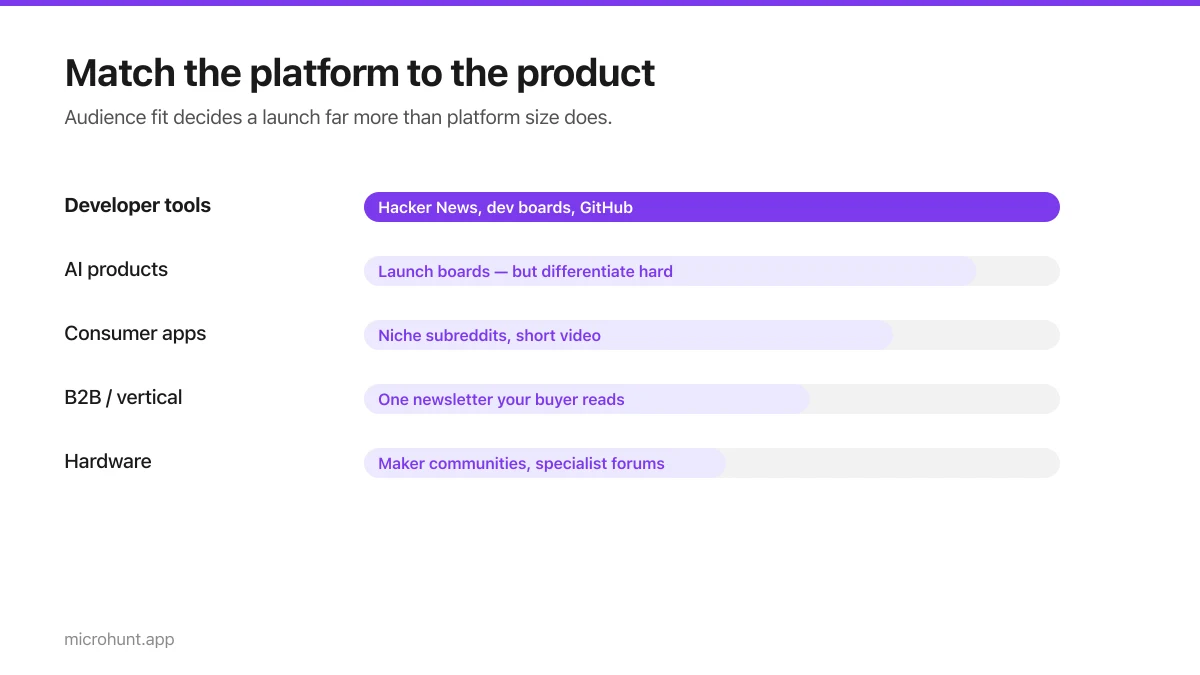
Best Product Hunt Alternatives for Launching in 2026
Where else to launch when Product Hunt is not the right fit — what each platform is actually good at, who shows up, and what it costs.
8 min read
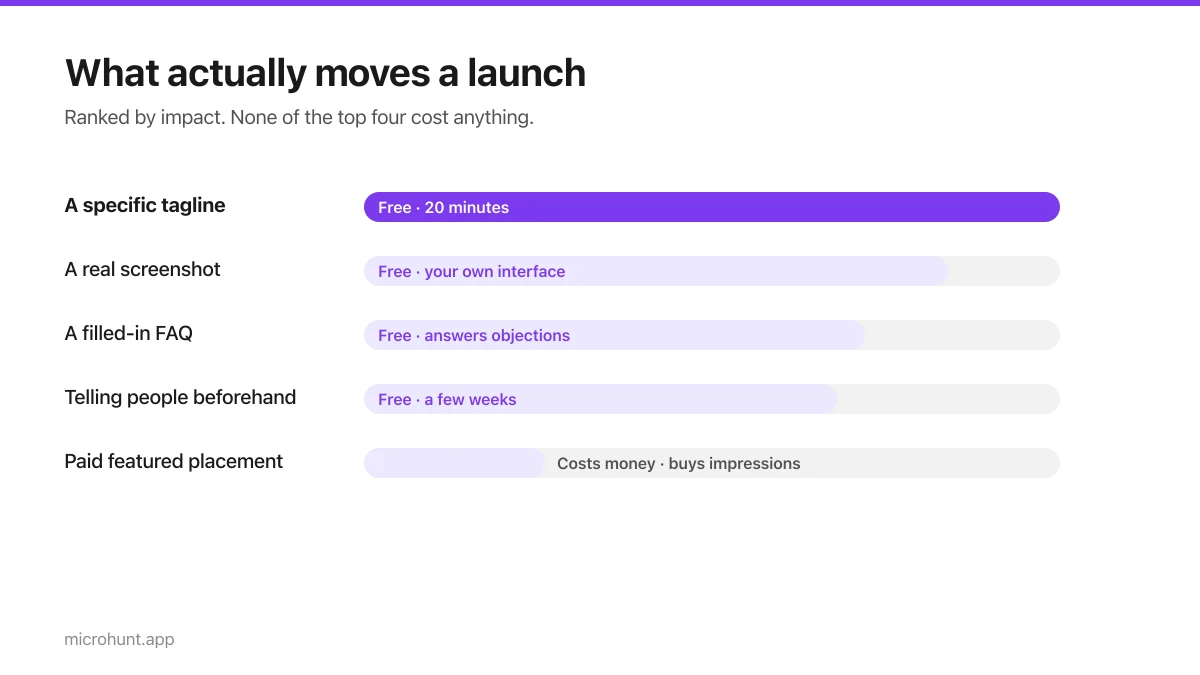
Free Launch Platforms for Indie Makers (No Budget Needed)
You do not need to pay to launch. Here are the places that are genuinely free, what each expects from you, and where paying is actually worth it.
7 min read
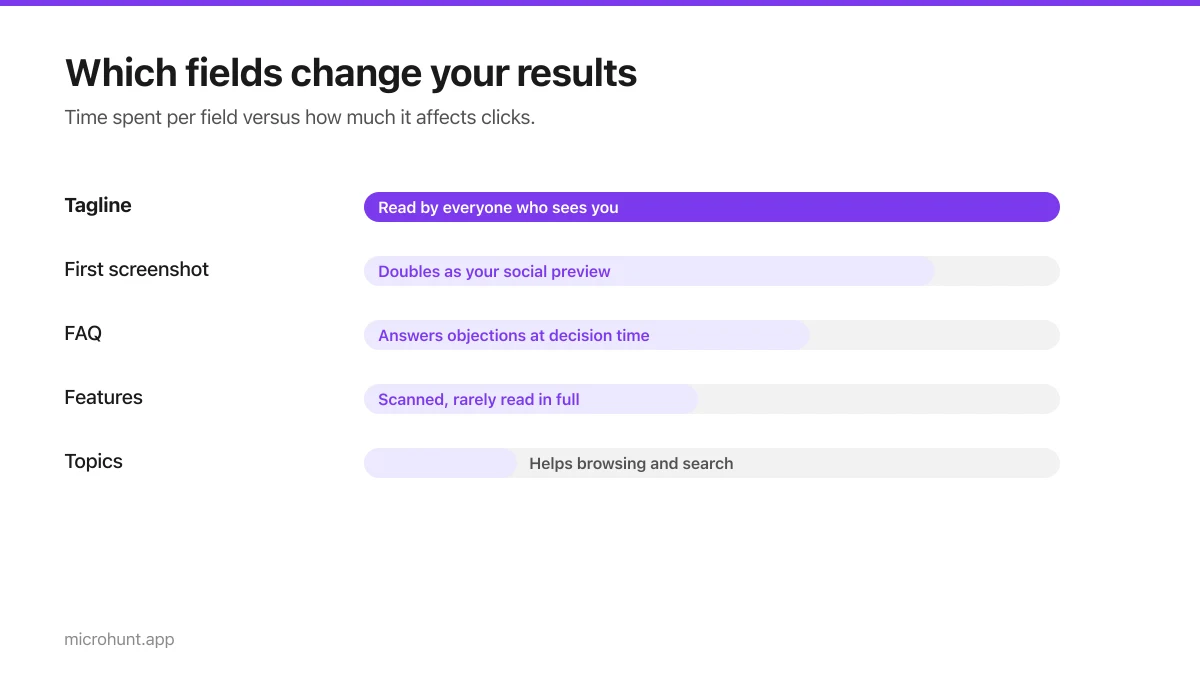
How to Submit a Product on Vuru (Step by Step)
A walk through the submission form, what each field does to your page, and the fields most people leave empty that they shouldn't.
7 min read
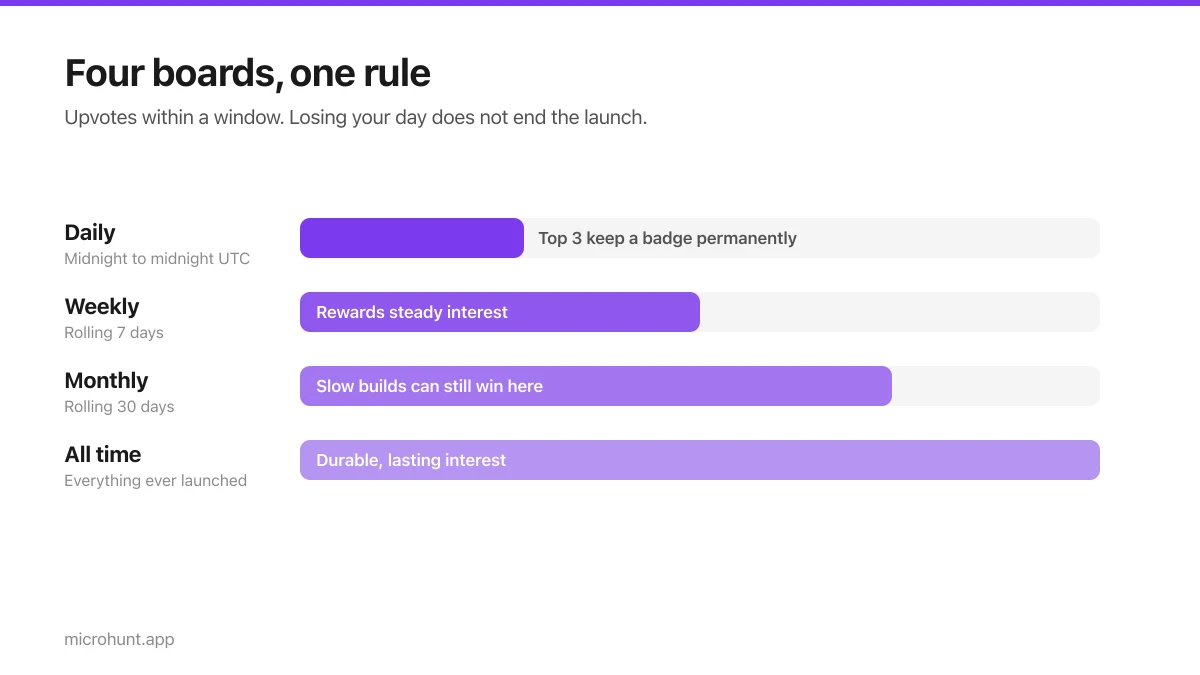
How Vuru Ranking Works (And How to Win a Badge)
Launch windows, upvotes, podium badges and what we do about vote manipulation — the whole ranking system explained plainly.
7 min read
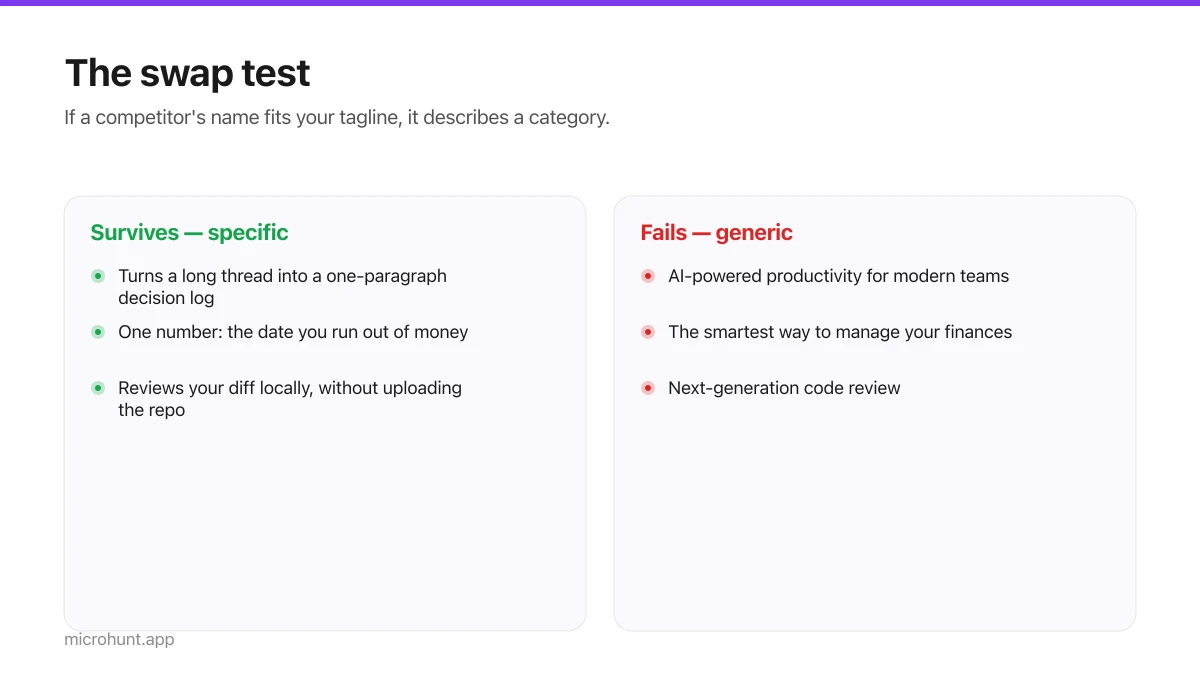
How to Write a Product Tagline That Actually Gets Clicked
The one line most people will ever read about your product, and a simple test for whether yours is doing any work.
7 min read
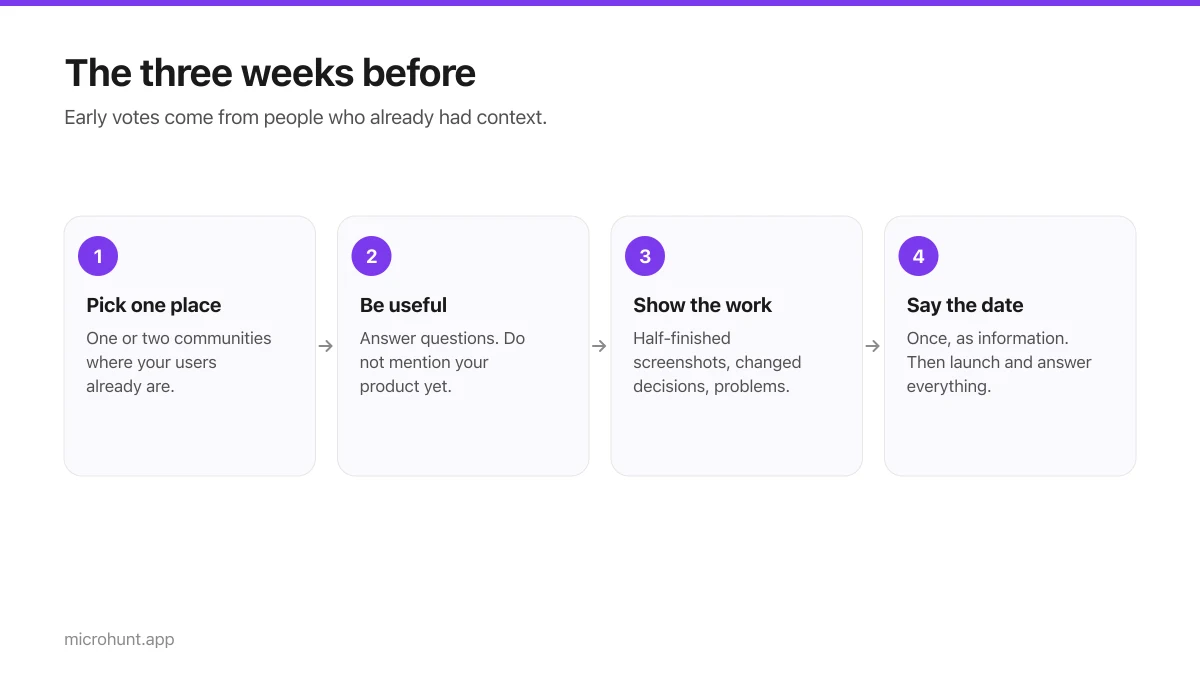
How to Get Your First Upvotes Without Begging
What actually generates early votes, why vote-for-vote groups do not work, and the approach that keeps paying off after launch day.
7 min read
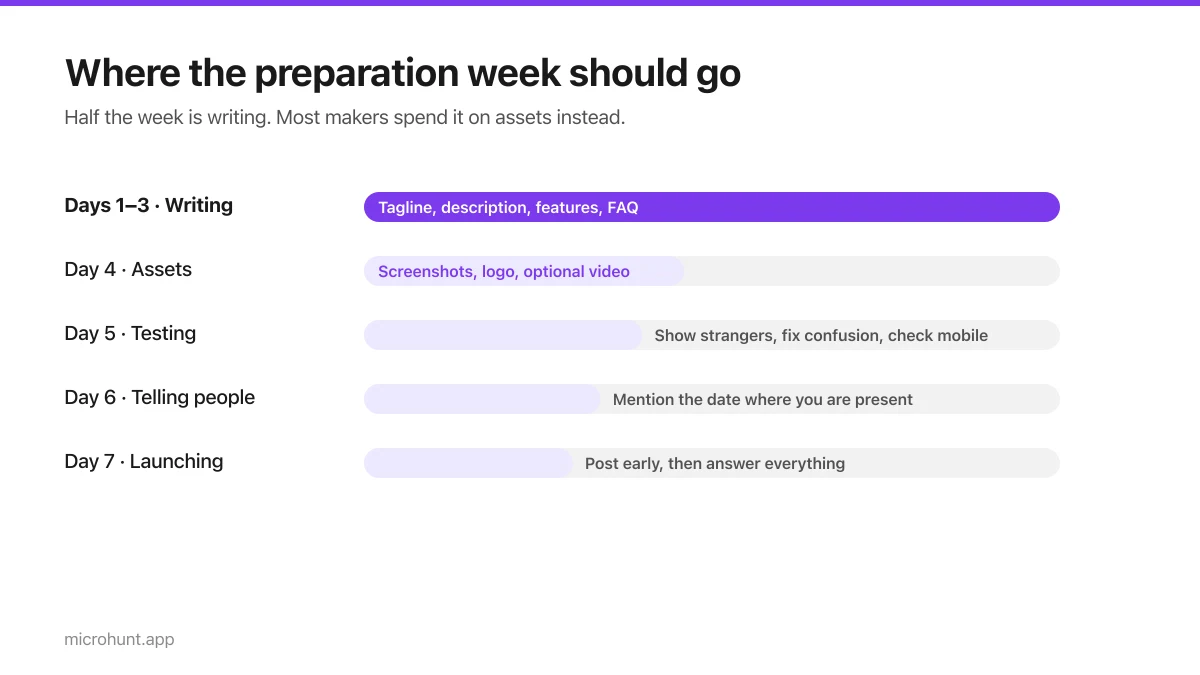
The Seven-Day Launch Checklist
A day-by-day plan for the week before you launch, weighted towards the things that actually change the outcome.
8 min read
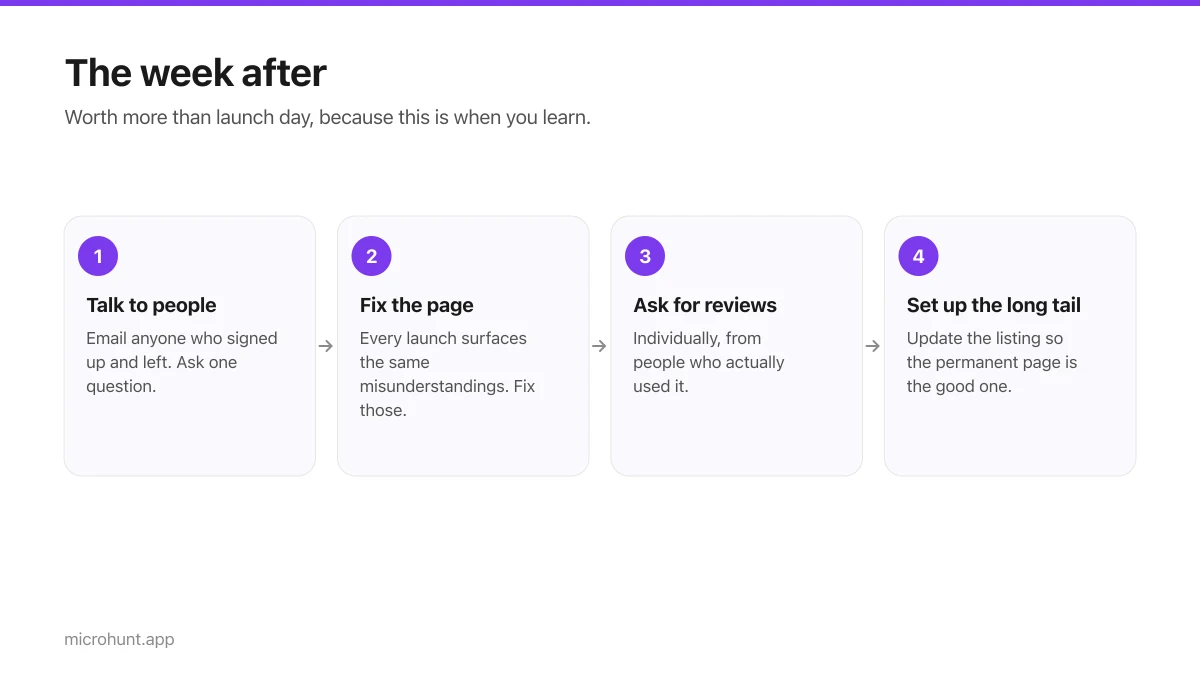
What to Do the Week After Launch Day
The traffic spike is over. Here is how to turn a day of attention into something that lasts longer than the graph.
7 min read